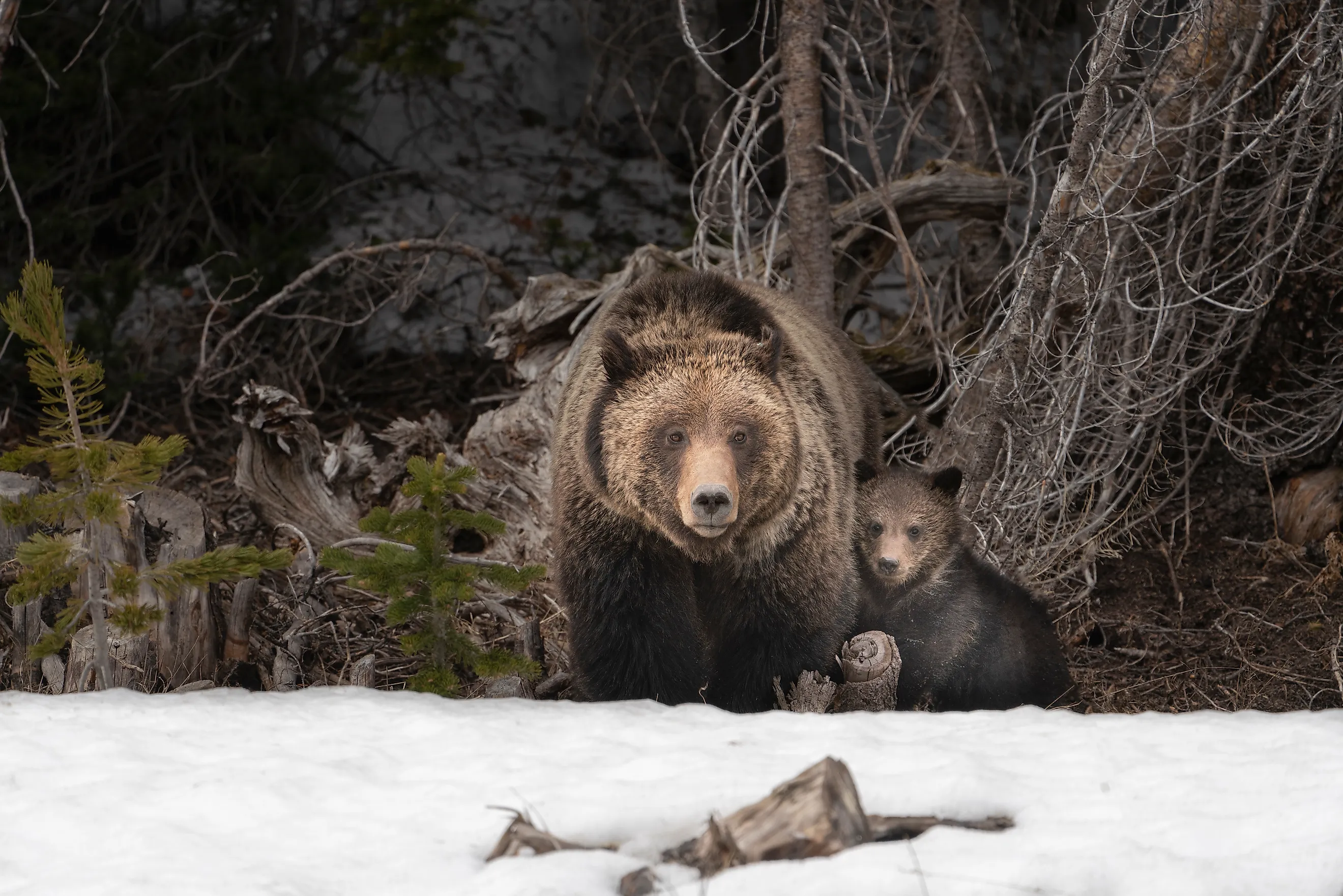
What Bear Spray Actually Does To A Grizzly
A grizzly at full speed covers about 50 feet (15 meters) of ground in a single second. Yellowstone National Park tells hikers to fire their bear spray when a charging bear is 30 to 60 feet (9 to 18 meters) away. That leaves about one second, often less, for a cloud of pepper to change the bear's mind.
The spray is made from the same compound that puts the burn in chili peppers, and it goes straight for a grizzly's face. That face holds a nose that can smell food 2 miles (3 kilometers) away. What the pepper does to it in that one second decides whether the bear keeps coming. Sprayed in the wrong place, it can even pull a bear closer.
It Puts A Wall Of Hot Pepper In The Bear's Path

Bear spray leaves the nozzle at about 70 miles per hour (113 km/h) and opens into a cloud, and most brands reach 20 to 30 feet (6 to 9 meters). Fired at a bear 30 to 60 feet out, the cloud hangs in the space the bear still has to cross. The Interagency Grizzly Bear Committee's standards call for a can of at least 7.9 ounces (225 grams) that sprays for at least 6 seconds and reaches at least 25 feet (7.6 meters).
The active ingredient is capsaicin and related capsaicinoids at a concentration of 1 to 2 percent. They come from oleoresin of capsicum, an oily pepper extract, and the Environmental Protection Agency registers every bear spray as a pesticide. The committee puts most bear sprays at about 2 percent capsaicinoids, stronger than the 1.33 percent typical of pepper sprays sold for personal defense.
Cold Weather Shrinks The Cloud The Bear Runs Into

How far that cloud carries depends on the pressure inside the can, and the pressure follows the temperature. In a 2021 study, biologist Tom Smith and his colleagues tested cans from −9°F to 77°F (−23°C to 25°C) and found pressure rising steadily with warmth, with warmer cans throwing a longer, wider plume. At the coldest temperature, the spray still carried more than 13 feet (4 meters), but in a narrow stream that barely formed a cloud. A new can lost more than half its pressure in its first second of spraying, so the researchers advise against test-firing cans and recommend retiring them at four years old.
In a 2008 study of bear spray use in Alaska, wind interfered with aim in 5 of 71 sprayings, and the spray still reached the bear every time. Yellowstone tells hikers to point the nozzle slightly down and adjust for a crosswind.
The Grizzly's Eyes Swell Shut

Once a bear runs into the cloud, the pepper lands on its eyes and nose together. Capsaicin locks onto a pain receptor called TRPV1 on pain-sensing nerve cells, and because the compounds are fat-soluble, they cling to the membranes of the eye and burn on contact. The membranes swell, and the eyes clamp shut and water heavily. For a short time, the bear loses nearly all of its sight, according to archived US Geological Survey bear research. In a study published in 1980, captive brown bears sprayed in the face with a dog repellent stopped their charges, then rubbed their eyes and blinked hard.
The Bear Loses Its Sense Of Smell And Struggles To Breathe

Yellowstone credits its grizzlies with an incredible sense of smell, from millions of nerves in their large snouts. Inside the cloud, that 2-mile nose stops working for a time. Pepper swells the nasal lining, and the bear temporarily loses its sense of smell along with its sight.
Breathed in, the capsaicinoids reach the throat and lungs. The 2008 Alaska study's review of capsaicin's effects lists coughing, sneezing, constricted airways, pauses in breathing, and paralysis of the larynx, all nonlethal. The archived USGS pages describe the combined result as a nearly total loss of sight and a severe restriction of breathing, hitting a bear that is still running.
Most Sprayed Grizzlies Turn And Leave

In the Absaroka-Beartooth Wilderness east of Gardiner, Montana, just north of Yellowstone, a grizzly charged hiker Keegan David from 35 yards out in May 2023. He sprayed for about three seconds. The bear was 10 to 12 feet away when it slowed, turned, shook its head, and loped back up the hill. It never charged again, and David walked away unhurt after emptying about 80 percent of his can.
A grizzly in Grand Teton National Park got its dose by accident. On May 19, 2024, a bear, likely a female with an older cub nearby, attacked a 35-year-old Massachusetts man near the Signal Mountain Summit Road before he could use his spray. It bit him several times and then bit into the can. When the canister burst, the park said, the bears immediately left.
The 2008 Alaska study, by Smith, Stephen Herrero, and their colleagues, covered 83 bear spray incidents from 1985 to 2006. Spray stopped undesirable behavior in 92 percent of the cases involving brown bears, the species that includes grizzlies, though only 18 of the 50 brown bears sprayed in defense were acting aggressively at the time. Of the 175 people carrying spray, 98 percent came through uninjured, and the three injuries were minor enough that none needed a hospital stay. The average spraying distance was about 13 feet (4 meters), close to where David's bear turned.
Some Bears Come Back For Another Pass

Grand Teton National Park says cans need at least 6 seconds of spray because a bear may circle or charge more than once. Yellowstone tells hikers to keep spraying until the bear changes direction, then leave the area quickly without running, and the Interagency Grizzly Bear Committee suggests carrying two cans. Bears do come back. In the Alaska study, bears went back to threatening behavior after a first spraying in 13 of 72 defensive cases, about 18 percent, and about one in five aggressive brown bears returned.
The Grizzly Recovers With No Lasting Harm

For the bear, the burning wears off. Guidance from the Center for Wildlife Information says a sprayed bear fully recovers, and the 2008 Alaska study noted that bear spray had never been reported to kill a bear. The Interagency Grizzly Bear Committee says spray leaves the bear alive and less likely to approach people later. Guns end more encounters with a dead bear. In 269 Alaska incidents involving firearms from 1883 to 2009, bears were killed 61 percent of the time, a 2012 study led by Smith found, and people carrying guns were injured at the same rate in close encounters whether they used them or not.
Pepper Sprayed On Gear Pulls Bears Closer

Pepper residue left after the cloud settles has the opposite pull. In the Alaska study, residue from practice sprays drew bears, and the Interagency Grizzly Bear Committee warns against putting bear spray on people, tents, packs, or other gear as a repellent. In seven cases, people had sprayed objects, and bears came to the coated property and destroyed it.
All of this plays out inside the 30 to 60 feet Yellowstone sets as the trigger distance, and the park is just as specific about where the can rides. It asks hikers to carry bear spray in a waist or chest holster and not inside a pack. Bear spray is banned from commercial flights in both carry-on and checked bags, so visitors who fly in can rent a can at the Bear Aware kiosk near the Canyon Visitor Education Center or at the yurt at Old Faithful. The researchers who tested cans in the cold found no reason not to carry spray wherever bears live, wind and cold included. Yellowstone's "A Bear Doesn't Care" safety campaign reports that only 28 percent of visitors heading into the park's backcountry carry it.