11 Most Unconventional Towns In North Carolina
Some states keep their oddities tucked away. North Carolina spreads them across 500 miles of mountain and barrier island and lets you drive between them. A ski mountain with a Wizard of Oz theme park on the summit. An island where a 300-year-old dialect is still spoken and linguists come to record it. A Main Street with the Appalachian Trail painted straight down the middle. These eleven towns each hold something you will not find elsewhere in the state, and in a few cases anywhere else at all.
Beech Mountain

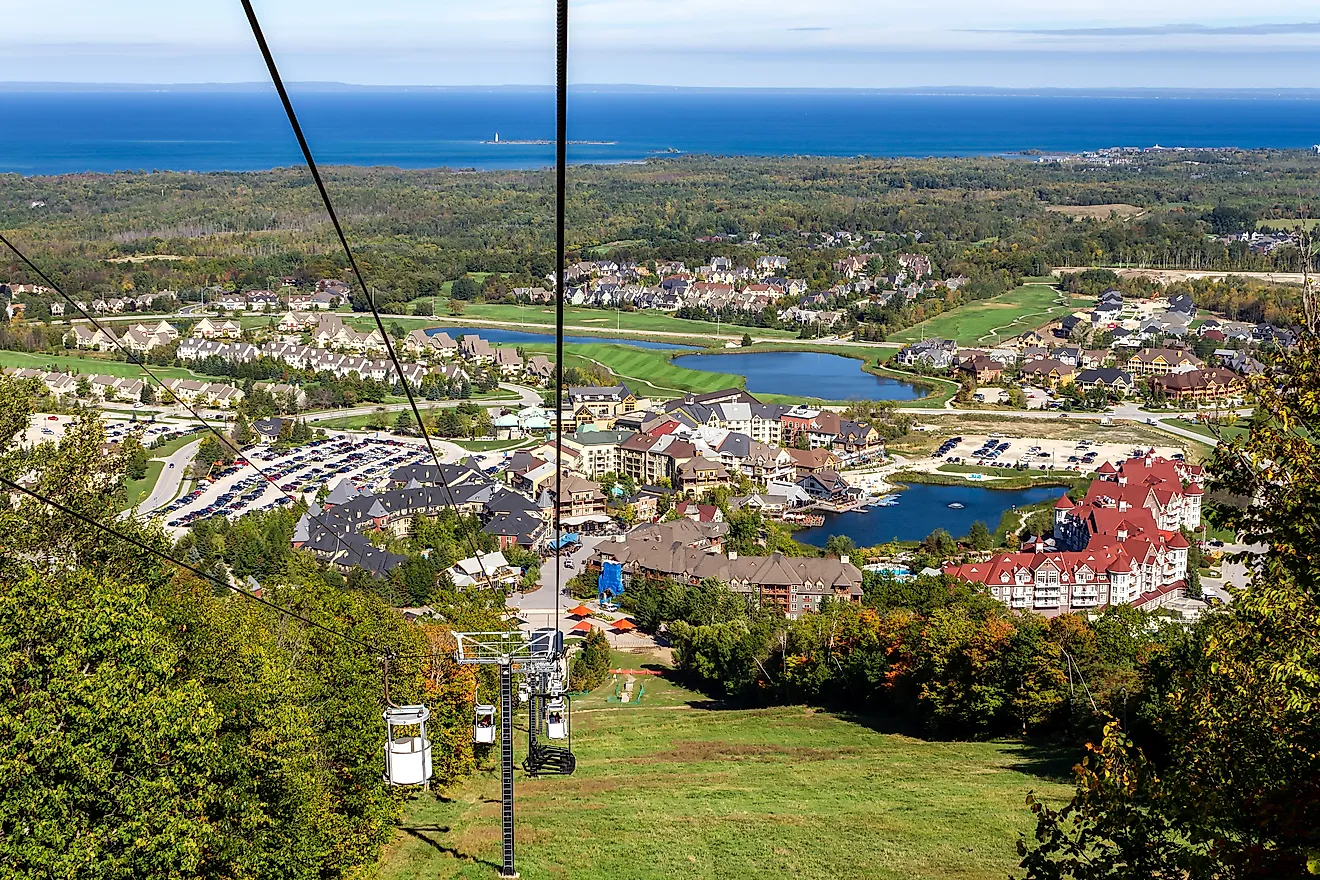
There is a Wizard of Oz theme park on top of a ski mountain. The Land of Oz opened in 1970, shut in 1980 after a fire and a decline in visitors, and sat abandoned on the summit for years while the Yellow Brick Road disappeared under leaf litter. It now reopens on a seasonal schedule, including the Autumn at Oz weekends, with costumed characters walking the restored path. The designer took his cue from the gnarled beech trees up here, which reminded him of the apple trees in the film.
At 5,506 feet, Beech Mountain is the highest incorporated town in the eastern United States, which is why summer temperatures rarely leave the 70s and why the town is nearly as busy in July as in February. The ski resort switches to lift-served mountain biking once the snow clears, and Beech Mountain Brewing operates at the base.
Ocracoke

Cut off from the mainland by water in every direction, Ocracoke developed its own accent and kept it. The Hoi Toider brogue, named for how locals say "high tide," traces back to 17th and 18th-century English and Irish settlers and sounds closer to the West Country than to anywhere in the American South. Linguists have been coming here for decades to record it before it fades, and fewer speakers remain each generation.

Blackbeard was killed in the inlet just off this island in November 1718, and the spot is still called Teach's Hole. The island is reachable only by ferry or small plane, the lighthouse dates to 1823 and is among the oldest still operating in the country, and a herd of Banker ponies descended from colonial-era stock is kept in a pasture on the Pony Pen road.
Hot Springs

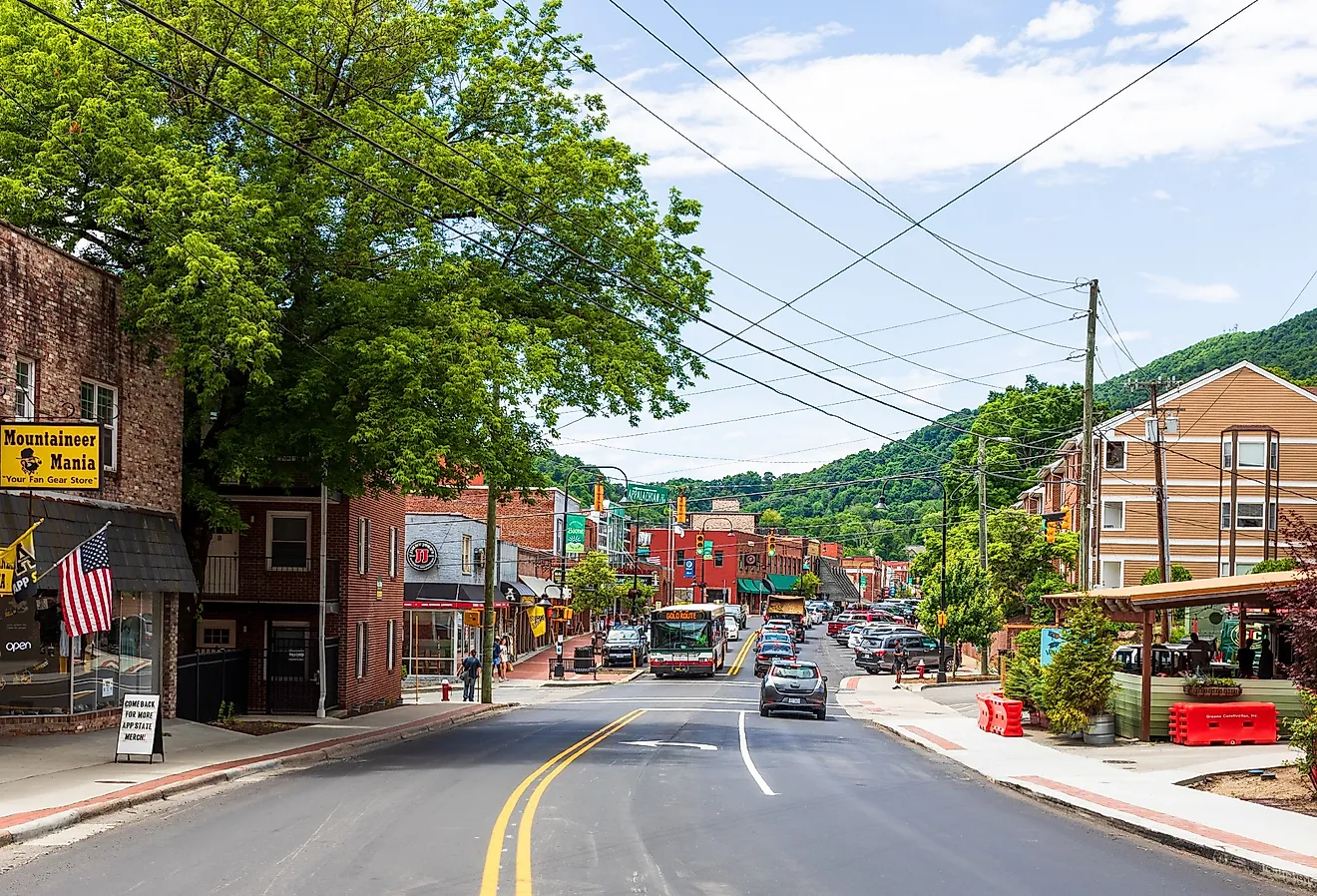
The Appalachian Trail does not pass near Hot Springs. It goes directly down Bridge Street, with the white blazes painted on the sidewalk and the utility poles, making this one of a small handful of towns the trail runs straight through. Thru-hikers walk out of the woods, into a diner, and back into the woods on the far side.
The springs themselves are the other half. Mineral water comes out of the ground here at around 100 degrees and has drawn visitors since the 1800s, when a grand resort hotel stood on the site; today the water is piped into private outdoor tubs beside the French Broad River. The town has roughly 500 residents, and in hiking season the population on any given night is a different matter entirely.
Brevard

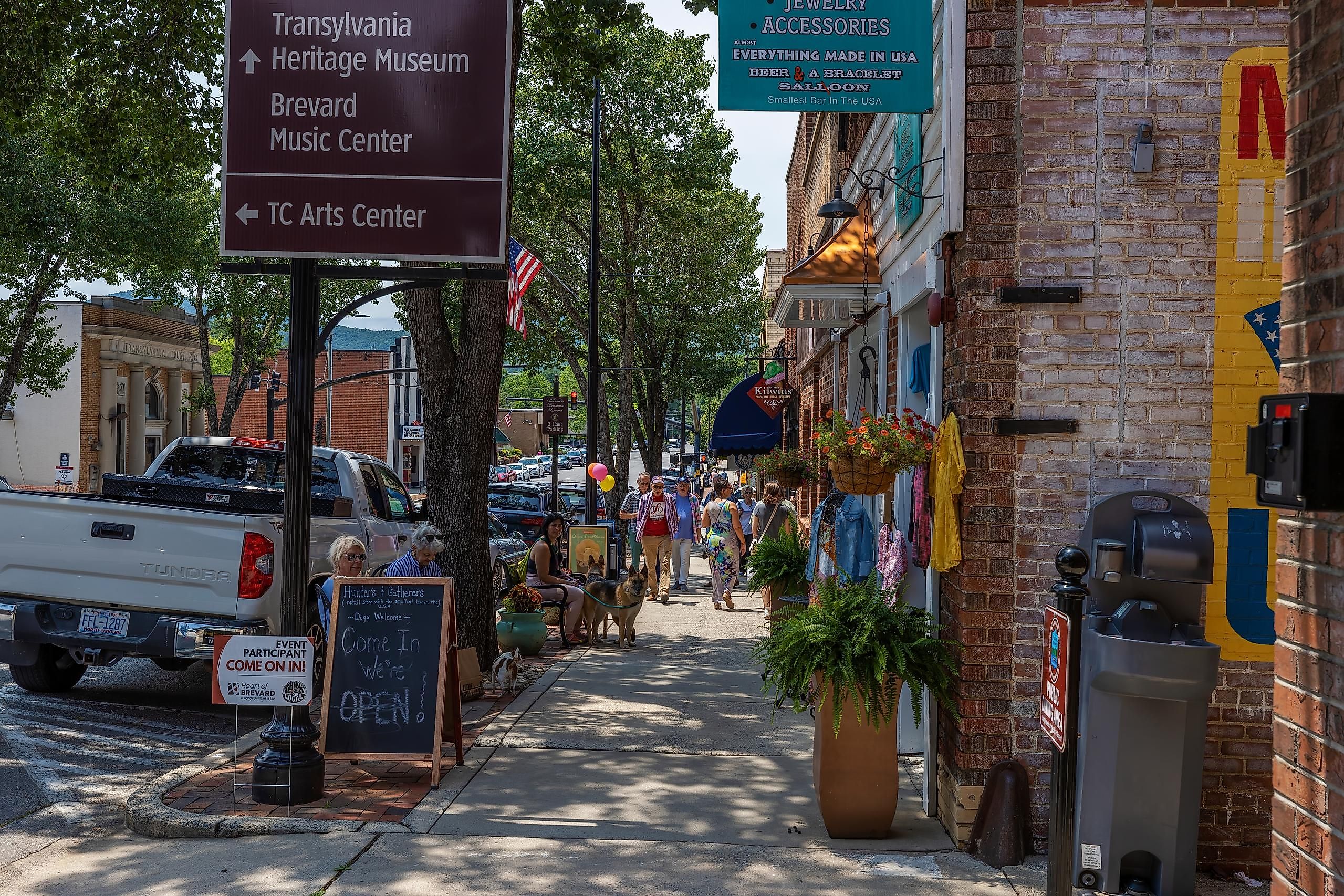
Brevard has white squirrels, and the town takes them seriously. They are not albino but a colour variant of the eastern grey, and local lore traces the population to a carnival truck that overturned in Florida in the 1940s, with a breeding pair eventually reaching Brevard as a gift. The town passed an ordinance making itself a squirrel sanctuary, runs an annual census, and holds a White Squirrel Festival each Memorial Day weekend.
The surrounding Transylvania County claims more than 250 waterfalls inside its boundaries, which is the other reason people come. Looking Glass Rock, John Rock, and the Art Loeb trailhead are all within a short drive, and the Transylvania Heritage Museum occupies an 1890s house downtown.
Bald Head Island

There are no cars on Bald Head Island. Not restricted, not discouraged: residents and visitors move by golf cart, bicycle, or on foot, and everything arrives on a passenger ferry from Southport, including the groceries and the building supplies. Fewer than 300 people live here year-round.
Old Baldy, built in 1817, is the oldest standing lighthouse in North Carolina, and you can climb its 108 steps. Roughly ten thousand acres of the island are protected as maritime forest and salt marsh, and loggerhead turtles nest on the beaches in summer under one of the longest-running conservation programmes on the coast. Cape Fear itself is at the island's southern tip, where the shoals that wrecked hundreds of ships run out to sea.
Beaufort

In 1996 divers found a wreck in shallow water off Beaufort that turned out to be the Queen Anne's Revenge, Blackbeard's flagship, lost in 1718. Thousands of artefacts have come up since, and the best of them are on display at the North Carolina Maritime Museum a few streets from the water, free to enter.
Across the channel, a band of wild horses lives on Carrot Island and the Rachel Carson Reserve, visible from the boardwalk and reachable by a short boat ride. Beaufort was founded in 1709, making it the third-oldest town in the state, and the old burying ground comes with a set of long-told stories, including a girl said to have been buried in a rum barrel and a British officer reputedly interred standing and saluting the crown.
Edenton

In October 1774, fifty-one women in Edenton signed an agreement to boycott British tea and cloth and sent it to London. The Edenton Tea Party is among the earliest known organised political actions by women in the American colonies, and the British press mocked it mercilessly in cartoons, which rather proves it landed. A bronze teapot on a cannon barrel marks the spot on the green.
Edenton was the colonial capital until 1743 and has kept the architecture better than almost anywhere in the state. The 1767 Chowan County Courthouse is a National Historic Landmark and has been in continuous use since it was built, St. Paul's Episcopal dates to 1736, and the Roanoke River Lighthouse on the waterfront is one of the last screw-pile lighthouses left in the country.
Bryson City

North of Bryson City there is a road that goes nowhere, and the sign at the entrance says so. The federal government began building Lakeview Drive in the 1940s to replace a route flooded by Fontana Dam, then abandoned the project over environmental problems, leaving six miles of highway that dead-end at a tunnel in the Great Smokies. Locals call it the Road to Nowhere, and you can walk through the tunnel to trails on the far side.

The Great Smoky Mountains Railroad runs excursions out of the depot downtown through river gorges and across trestles. The Nantahala Outdoor Center, twenty minutes west, has trained Olympic paddlers on a river cold enough that outfitters warn you about it in writing.
Lake Lure

The lake is man-made and was only ever a side effect. A developer dammed the Rocky Broad River in 1927 intending to build a resort city of 20,000 people; the crash came, the city never happened, and the lake stayed. Dirty Dancing was filmed around it in 1987, the town still holds an annual festival built on that, and the steps where the lift was practised are a minor pilgrimage site.
Chimney Rock State Park rises directly above, with a 315-foot granite monolith reached by an elevator cut through the rock and a trail to Hickory Nut Falls, one of the higher waterfalls in the east. Hurricane Helene did severe damage to this valley in 2024 and recovery is ongoing, so check what has reopened before planning a visit.
Little Switzerland

A lawyer from Charlotte bought this ridge in 1909, decided it resembled the Alps, and built an alpine village on it. The chalet-style buildings strung along the Blue Ridge Parkway are the result, complete with Swiss lettering, and the whole community sits at around 3,500 feet with the Appalachians falling away on both sides.

These hills were mined for mica, feldspar, and gemstones, and the Museum of North Carolina Minerals along the parkway explains why this particular geology is unusual. Crabtree Falls drops 70 feet at the end of a loop trail southwest. Helene hit this stretch hard in 2024, and the community has pulled tighter since.
New Bern

Pepsi was invented here. A pharmacist named Caleb Bradham mixed it at his soda fountain in 1893, called it Brad's Drink, and renamed it Pepsi-Cola five years later; the corner store downtown still operates on the spot and sells it from a fountain. Bradham later went bankrupt speculating on sugar after the First World War and lost the company entirely.
The other thing you notice is the bears. Painted fibreglass bear statues stand all over town, a nod to Bern in Switzerland, which founded the place in 1710 and carries a bear on its coat of arms. Tryon Palace, a reconstruction of the 1770 royal governor's mansion, anchors the historic district with sixteen acres of gardens, and New Bern served as both colonial and first state capital.
Where The Quirks Do The Work
What links these eleven is that the strangeness is the attraction, not a footnote to the view. Ocracoke kept a dialect the mainland lost three centuries ago. Bald Head Island decided against cars and never reconsidered. Hot Springs has a national scenic trail running past its diners, Bryson City has a federal highway that stops at a tunnel, and Beech Mountain has Dorothy's farmhouse above the chairlifts. The mountains and the coast are right there when the novelty wears thin, but in every one of these places the novelty is the reason to make the drive.