The Highest Lake In The United States
The United States has millions of lakes, but the very highest of them all sits in brutally thin alpine air where almost no one ever goes. Finding it means climbing to more than two and a half miles above sea level, into a world of boulder fields and year-round ice. The catch is that the answer hinges on a single word, "named," because there are higher patches of water out there that have never earned an official title. By the record books, though, the crown belongs to a tiny, frigid pool high in the Colorado Rockies. Here is the story of the highest lake in the United States.
The Answer: Pacific Tarn, Colorado

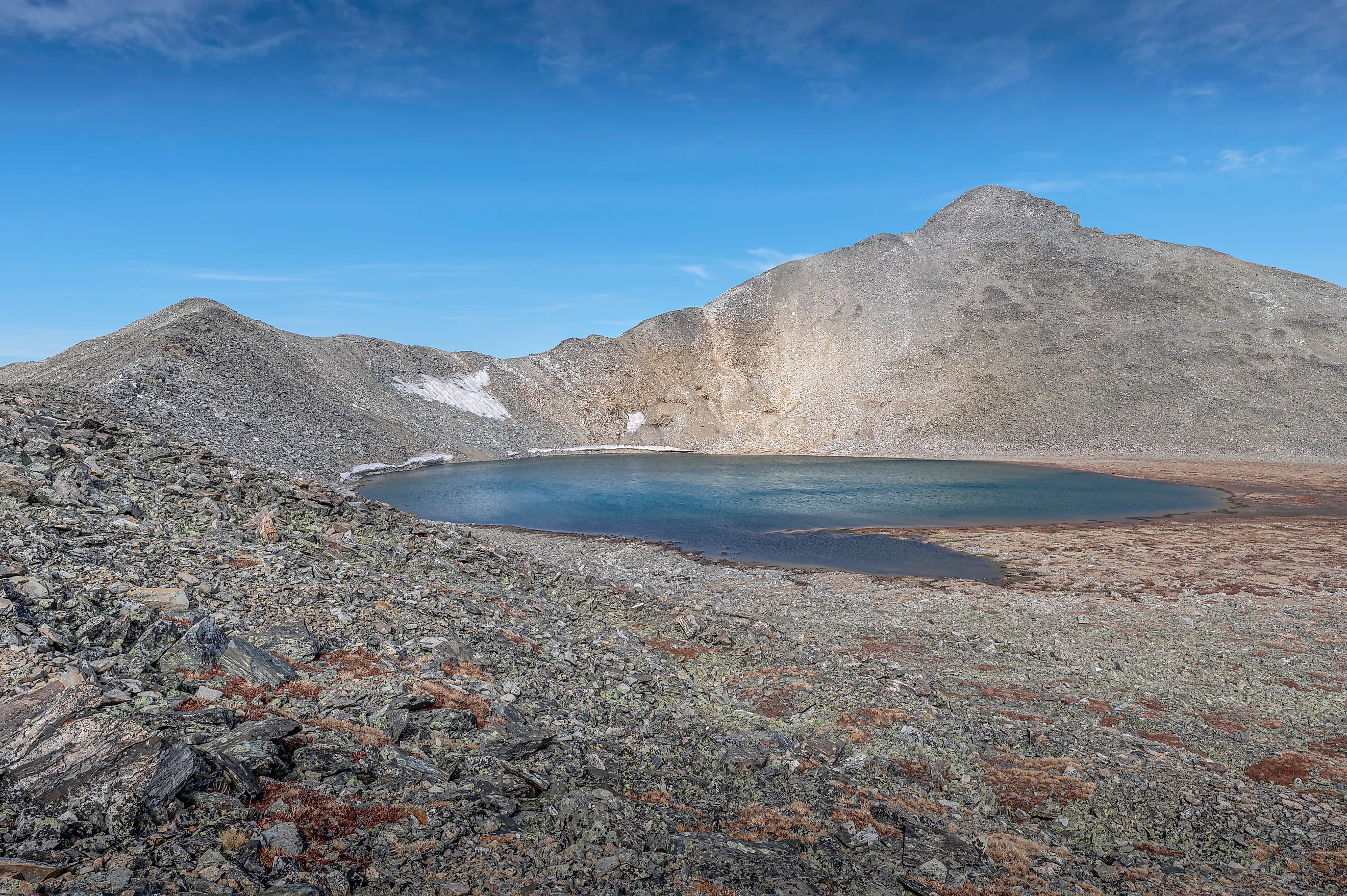
The highest lake in the US is Pacific Tarn, a small alpine pool perched at 13,420 feet on the eastern flank of Pacific Peak, in Colorado's Tenmile Range near Breckenridge. It is officially the highest lake in the country whose name is recognized by the US Board on Geographic Names, which approved the name "Pacific Tarn" back in 2004. For such a record-holder, it is remarkably tiny, measuring roughly 560 feet long by 464 feet wide, covering under five acres, and reaching a maximum depth of only about 28 feet. Even more remarkably, it sat unnamed and largely ignored until a Colorado naturalist named Carl Drews organized an expedition to measure it and then petitioned to give it a name.
A Lake Near the Roof of the Country

Getting to Pacific Tarn is not for the casual day-tripper. There is no maintained trail to the lake at all; reaching it means a strenuous off-trail scramble across unstable boulder fields, high above the treeline, with all the usual alpine hazards of sudden storms and oxygen-thin air. The tarn sits in the shadow of Pacific Peak, a 13er that just misses the 14,000-foot mark, and it spends most of the year frozen solid, thawing only briefly in late summer. Those who make the climb are rewarded with wildflower meadows, snow-streaked peaks, and the strange thrill of standing beside the highest named water in the nation. A few especially hardy souls have even taken a dip in it.
Why 'Named' Is the Catch

That word "named" is doing a great deal of quiet work. Scattered across the high country of the Colorado 14ers and California's Sierra Nevada are countless tiny ponds and tarns that sit even higher than Pacific Tarn, some of them well above 14,000 feet, but they have never been formally named. Because they do not appear on official maps with a title of their own, they simply do not count for the record. Pacific Tarn's claim, then, is specifically to being the highest lake in the US that actually carries an official name, which is a narrower and more precise crown than just "highest body of water." It is the highest lake you can point to on a map and call by name.
The Runners-Up

Pacific Tarn edged out some genuinely memorable competition. The most famous runner-up is Lake Waiau, which sits near the summit of Mauna Kea in Hawaii at about 13,020 feet, the only true alpine lake in the mid-Pacific and a place steeped in Hawaiian legend as a gateway for departing spirits. California's Tulainyo Lake, near Mount Whitney, is another high contender at roughly 12,829 feet, as is Colorado's own North Halfmoon Lake. Any one of these would be the highest lake in most countries on Earth; here, they are simply the chasers trailing behind a single Colorado tarn.
How Sky Lakes Form

Lakes like Pacific Tarn are known as tarns, and they are essentially a parting gift from the last ice age. As glaciers ground their way down the mountains, they scooped out bowl-shaped hollows in the rock called cirques, and when the ice finally melted away, those hollows filled with water to become small, deep, startlingly clear mountain lakes. Fed almost entirely by snowmelt and sitting far above the line where trees can grow, they stay bitterly cold and frozen over for much of the year, supporting very little life. It is a harsh, beautiful, and nearly lifeless corner of the country, and it is exactly where you have to go to find the highest lake in the land.