How Climate Change Is Warming The Great Lakes Faster Than The Oceans
The Great Lakes stretch so far that they feel almost oceanic when you're standing on the shoreline. Sadly, they have been warming faster than both the atmosphere and the oceans. Rising air temperatures, declining ice cover, and how heat moves through shallow freshwater drive this warming. Because these lakes are so important to the region, even small temperature shifts can have major consequences. These changes are beginning to ripple beyond the water, affecting wildlife, fisheries, and the communities that depend on them.
Lakes vs. Oceans

Lakes tend to heat up rapidly because they usually hold less water compared to oceans. The ocean is an enormous reservoir, with deep layers that can absorb and redistribute heat over long distances. Lakes are more shallow, and therefore, they can't distribute the heat the same way, particularly in their shallower sections. NOAA and EPA analyses of satellite observations show that average surface-water temperatures increased in all five Great Lakes between 1995 and 2023, with estimated warming ranging from about 0.26°C (0.47°F) per decade in Lake Superior to 0.53°C (0.95°F) per decade in Lake Ontario.
That doesn't mean every Great Lake warms at the same rate. Lake Erie, for example, is the shallowest of the five and responds relatively quickly to changes in air temperature. Deeper lakes such as Lake Superior can retain heat longer and in different ways. NOAA notes that depth and surface area influence how quickly individual Great Lakes warm and cool. In other words, you can't think of them all as one giant bathtub warming at the same speed. Each one has its own characteristics, shaped by its depth, size, location, currents, and surrounding climate.
Is Winter Vanishing?

Perhaps the most important piece of the puzzle happens in winter. Ice isn't just something that makes a Great Lake look frozen and beautiful. It acts like a giant reflective shield, bouncing off much of the incoming sunlight, while dark, open water absorbs that solar energy. This process is called the albedo effect. As the season warms, lakes spend less time covered in ice. NOAA analysis shows a long-term decline in Great Lakes winter ice cover, although individual years can still swing dramatically between almost no ice and extensive freezing. Between 1973 and 2017, average winter ice cover declined by about 69%.
The unusually low ice season in the year 2024 provided a striking example. At the end of February, when ice coverage normally reaches its seasonal peak, the Great Lakes were only about one-tenth of their average ice coverage. Less ice means more open water, meaning more sunlight being absorbed. This is what gives the lakes a head start on warming before summer even arrives.
A Feedback Loop

Losing ice can trigger a warming feedback loop. Imagine two different winters: one with a thick layer of ice covering most of the lake as spring approaches, reflecting sunlight into the atmosphere. In the other, the lake stays mostly open, and that dark water absorbs sunlight instead of reflecting it, adding more heat to the lake.
Less ice layer can also change the way the lake mixes. As surface water heats, it becomes lighter and stays above the colder water below, creating layers. This is called stratification. When ice disappears earlier, stratification can begin earlier too, making it harder for warm surface water to mix with the colder water underneath. In simpler terms, the effects of a warm winter don't necessarily end when the season is over. A lake that loses its ice early can carry that extra heat into spring and summer, potentially leading to higher water temperatures later in the year.
The Ripple Effect

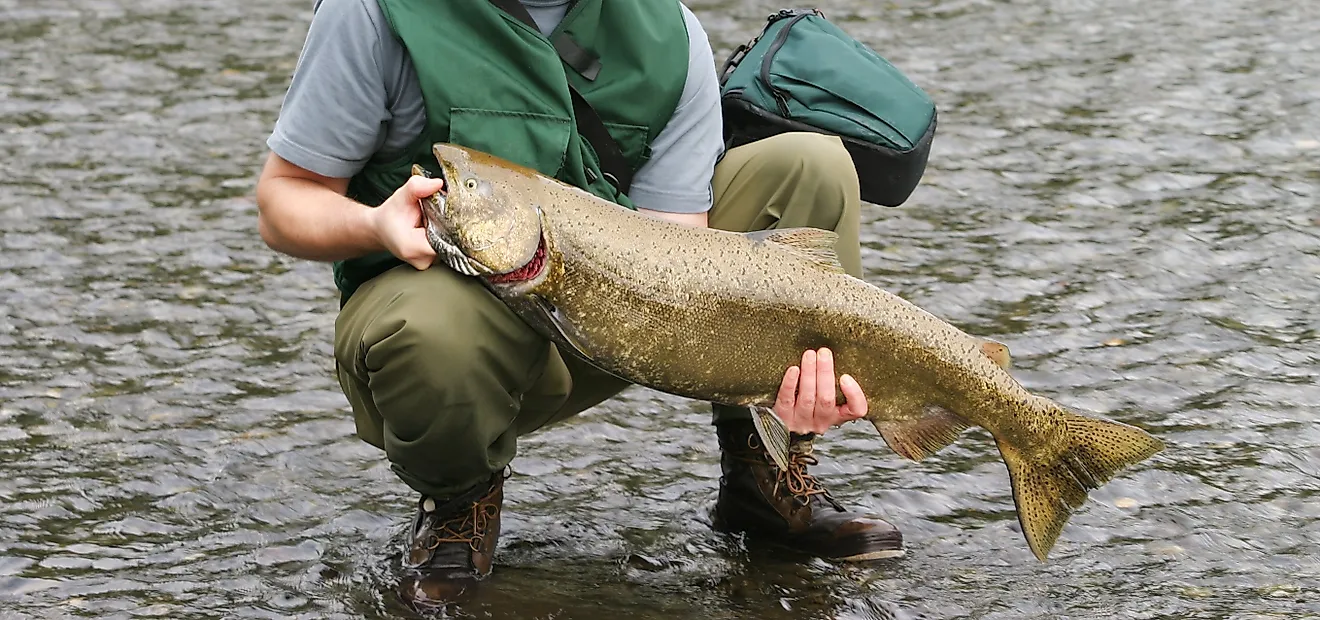
For people who live around the Great Lakes, warmer water may sound harmless, even welcoming. However, temperature affects nearly everything that's happening beneath the surface. Warmer water can alter fish habitats, shift the timing of biological activity, and affect oxygen availability, depending on depth. Cold-water species like salmon and trout can be particularly vulnerable as suitable ecosystems change. In Lake Erie, for example, heated and changing water conditions interact with nutrient pollution to influence harmful algal blooms.
Warmer water can also encourage cyanobacteria, known as blue-green algae, to grow more rapidly under favorable conditions. Some produce toxins that can harm people, wildlife including water fowl and birds, and aquatic environments. Higher temperatures in more open water can also increase evaporation, affecting lake levels, weather patterns, and even winter snowfall in the area.
Climate Changes Things
The Great Lakes have always changed. They are living systems, constantly responding to the world around them, as a changing climate reshapes the conditions under which they exist. Compared with the world's oceans, the Lakes are much smaller and shallower, so they respond quickly to shifts in temperature, sunlight, ice cover, and evaporation. What happens ultimately affects the millions of communities, businesses, wildlife, and ecosystems that depend on them.