The Top Geothermal Power States In America
Deep below the Earth's surface, water moves through rock heated by magma and accumulates enough energy to produce steam that turns turbines to generate electricity. It is an ancient force, largely hidden from view, yet increasingly integral to how some parts of the country power their industries and homes. Geothermal energy generated an estimated 15,628 gigawatt-hours of electricity in the United States circa 2025. What makes this figure especially interesting is how scattered the industry is across the map. A handful of states have spent several years, even decades, tapping into the heat beneath our feet while others are only beginning to discover what their geology might offer. The places leading the way and those poised to catch up reveal a new side of America's evolving energy landscape.
California

California has drawn electricity from underground steam since the 1960s, long before geothermal power became part of the national renewable energy conversation. North of San Francisco, beneath the Mayacamas Mountains, hundreds of wells tap a natural steam reservoir that powers turbines at The Geysers, the world's largest geothermal power complex. Calpine operates 13 plants across the 45-square-mile field, with a combined capacity of roughly 725 megawatts (MW). The state generated 10,899 gigawatt-hours (GWh) of geothermal electricity in 2025, roughly 70% of the country's utility-scale geothermal output.
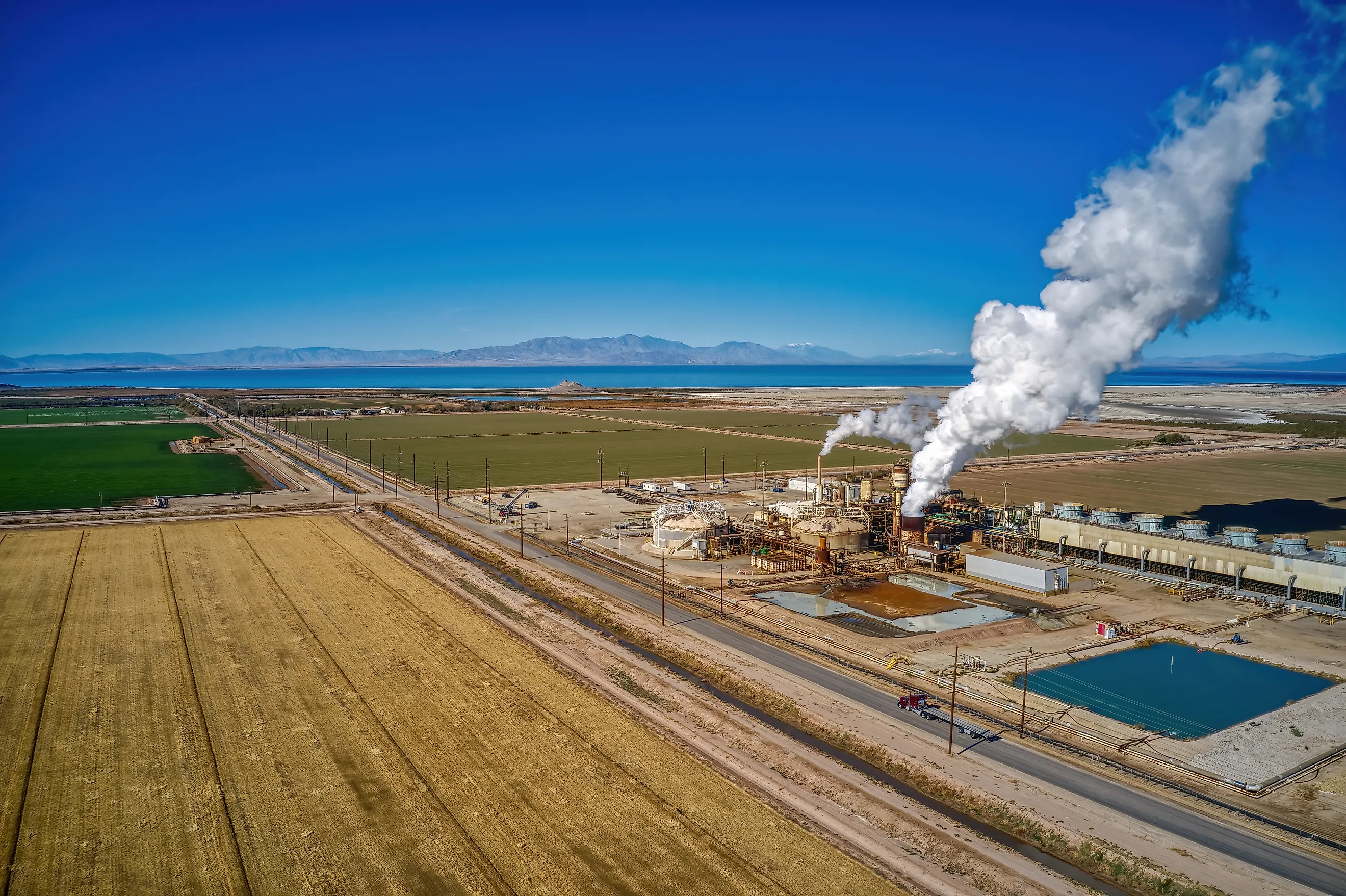
Further south in Imperial County, the Salton Sea geothermal region draws on a very different resource. Instead of the dry steam found at The Geysers, plants here bring superheated, mineral-rich brine to the surface to generate electricity. That brine also contains considerable deposits of lithium, a mineral used in electric vehicle batteries, and developers are working on methods to extract it while continuing to produce power. Additional fields near Mammoth Lakes and Coso Hot Springs give California a range of reservoirs that few states can rival, each shaped by its own geology.
Nevada

Nevada ranks second among US states in geothermal electricity production, producing roughly a quarter of the nation's output in 2025. Most of that power comes from conventional plants that tap natural hydrothermal reservoirs, where hot water already circulates through permeable rock. According to the National Laboratory of the Rockies, the state has 32 geothermal power plants with 892 MW of installed nameplate capacity, second only to California. Geothermal also accounts for a larger share of in-state generation in Nevada than in any other state, supplying more than 8% of its electricity in 2025.
Nevada is also where enhanced geothermal technology first reached the US grid. In late 2023, Fervo Energy's Project Red in Humboldt County began supplying power from two wells drilled about 7,700 feet deep and joined by horizontal sections roughly 3,250 feet long, running through hot, fractured rock so water can circulate. The 3.5 MW pilot feeds the grid that serves Google's Nevada data centers. Fervo is now developing Corsac Station in Churchill County, backed by a 115 MW agreement with NV Energy and Google and targeting commercial operation around 2030. Until then, that capacity remains a goal rather than part of Nevada's supply.
Utah

Utah is where Fervo Energy took enhanced geothermal from pilot to commercial scale. At Cape Station in Beaver County, the first 33 MW unit reached commercial operation on September 30, 2026, which the company describes as the first greenfield enhanced geothermal development in the world to achieve contractual commercial operations. Two more units, completing a first phase of roughly 100 MW, are expected to follow by early 2027. A separate 396 MW agreement with Google supports a new fleet of units projected to begin delivering power in 2028, with an option for Google to purchase an additional 600 MW.
That expansion builds on an established sector. Utah produced 470 GWh of geothermal electricity in 2025, ranking third nationally, from conventional plants in Beaver County, including Blundell, which has generated power since the 1980s, as well as Thermo No. 1 and Cove Fort. The same corner of southwestern Utah hosts the Frontier Observatory for Research in Geothermal Energy (FORGE), a field laboratory managed by the University of Utah and funded by the U.S. Department of Energy. FORGE does not supply the grid. Instead, specialists use it to test methods for creating and sustaining fractures in hot, low-permeability rock.
Hawaii

Hawaii's geothermal industry rests on a single commercial plant, Puna Geothermal Venture (PGV), on the eastern rift zone of Kilauea. In 2018, an eruption sent lava through the Puna district of the Big Island, burying two geothermal wells and forcing the plant to shut down. PGV resumed operations in 2020 after repairs and rebuilt production to around 25 MW by 2022. That one facility still earned Hawaii fourth place nationally, generating 208 GWh in 2025 and selling its power to Hawaiian Electric as a local source that does not depend on imported fuel.
Recovery has been uneven. PGV averaged roughly 25 MW during the state's 2025 fiscal year, and by fall 2026 its net output had dipped to about 15 MW, prompting new well drilling alongside a repowering project that replaces 12 aging energy converters with three more efficient units, raising approved capacity from 38 MW to 46 MW. Unlike the other states on this list, Hawaii has no other fields to fall back on. Its geothermal future depends less on new sites than on how reliably it can run and improve one plant in an active volcanic region, where the forces that supply its heat could also threaten it.
Oregon

Oregon ranks fifth nationally, generating 152 GWh of geothermal electricity in 2025, but some of its most notable uses of underground heat happen far from power plants. In Klamath Falls, a municipal district heating system warms public buildings, businesses, and sections of downtown sidewalks in winter. Pipe failures shut the system down in 1986, and it returned to reliable operation in 1991. Elsewhere, thermal wells and springs heat buildings, swimming pools, greenhouses, and farms. For electricity, Oregon Institute of Technology operates a 1.75-MW campus plant, while the 22-MW Neal Hot Springs plant sells power to Idaho Power.
The state's most ambitious projects are on the slopes of Newberry Volcano in Central Oregon, where companies are drilling into rock far hotter than that in ordinary geothermal reservoirs. Mazama Energy is developing Project Ceres, which it says comprises two horizontal wells that could produce 15 MW by 2027, while Quaise Energy is working on a separate venture called Project Obsidian. Neither operates as a commercial power plant yet, but both show the state's geothermal ambitions growing beyond the direct-use heating that has served its communities for decades. The next test is whether developers can turn rock once considered too hot and too deep into dependable electricity.
Idaho

Idaho generated 88 GWh of geothermal electricity in 2025, ranking sixth, but its influence on the industry reaches well beyond that output. In the 1970s and early 1980s, researchers at Raft River in Cassia County tested binary cycle generation, which produces electricity from water too cool for conventional steam plants. Rather than driving a turbine with steam, the hot water passes its heat to a second fluid with a much lower boiling point, which vaporizes and turns the generator. A 5 MW pilot plant began delivering power in 1981 but closed in June 1982, when high costs and cheap regional hydropower made it unattractive to utilities.
In 2002, U.S. Geothermal acquired the mothballed site, rehabilitated its wells, drilled new ones, and brought a binary cycle plant into commercial operation in January 2008, the state's first privately owned commercial geothermal power plant. Ormat Technologies, which now operates the facility, lists its capacity at 12 MW. Idaho's geothermal footprint remains small, with that single commercial plant, but Raft River helped prove that underground heat can generate electricity without the exceptionally high temperatures of traditional geothermal sites. That legacy gives the state a place in the industry's development far larger than its current output suggests.
New Mexico

New Mexico's geothermal resource was found by people looking for something else. In 1948, agricultural wells drilled in the Animas Valley near Lordsburg struck water of roughly 214°F at depths of less than 100 feet, revealing an underground field later called Lightning Dock that showed no obvious signs at the surface. The heated water was first used to serve commercial greenhouses and a fish-raising aquaculture operation. A 4 MW power plant opened there in December 2013 as the state's first commercial geothermal electricity facility, and a more efficient binary plant replaced it in December 2018, but temperatures in the two original wells fell by about 50°F over five years.
Zanskar Geothermal bought the struggling site in 2024 and used modern geological modeling to find hotter zones deeper in the reservoir. Its new production well reaches about 8,000 feet and taps water of about 325°F. Connected to the existing plant in May 2025, it sparked a sharp rebound: New Mexico produced 58 GWh of geothermal power that year, ranking seventh, as generation climbed 122.7% over the prior year, the steepest increase in the country. Lightning Dock shows that major gains do not always require new installations, since better subsurface imaging can revive fields once written off as exhausted.
Bringing More Heat to the Surface
Geothermal energy has never unfolded along a single, uniform path from one state to another. Even so, the heat resting beneath the Earth's crust represents far more than the megawatts it generates today. It is an immense, and still mostly untapped reservoir of energy that predates the earliest power station and will endure long after modern energy technologies evolve. The question facing the industry is no longer whether the planet contains enough heat to help power our future, but how much of that extraordinary force we can successfully bring to the surface.