The Top Wind Power States In America
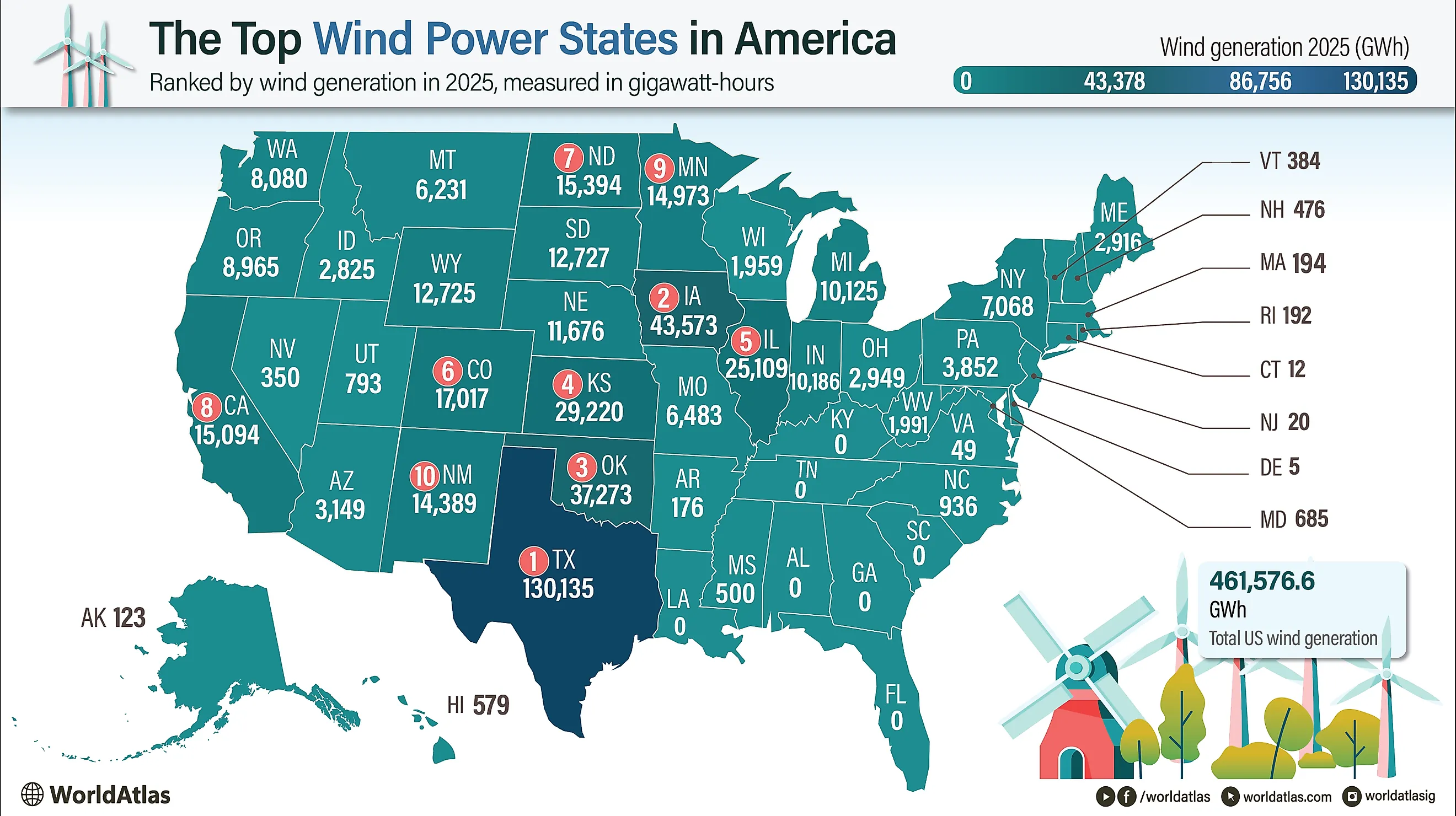
Texas made more electricity from wind in 2025 than Iowa, Oklahoma, and Kansas combined. Its 130.1 billion kilowatt-hours came to 28% of all the wind power generated in the United States.
The ten states below are ranked by U.S. Energy Information Administration figures for wind generation over the full 2025 calendar year. Together they produced about three-quarters of the nation's wind power. In three of them, wind made more than 40% of the state's electricity. In western Kansas, wind payments even helped buy a school district a new football grandstand.
1. Texas

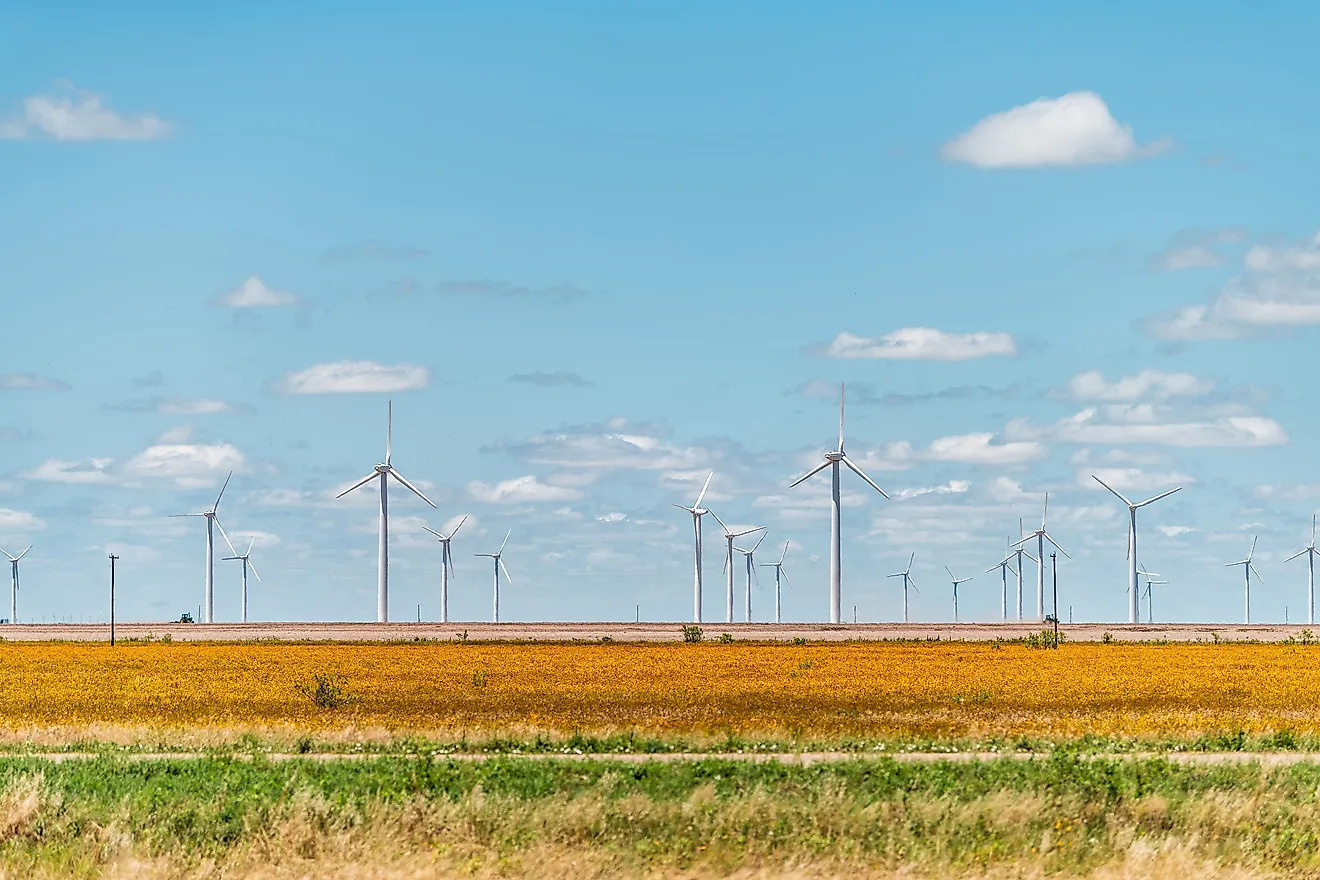
Drive Interstate 20 into West Texas and the turbines start lining the mesas on both sides of the highway. Sweetwater and surrounding Nolan County had more than 1,400 of them as of the city's 2021 count. The nearby Roscoe Wind Complex alone spreads 627 turbines across four counties and roughly 100,000 acres. It was the largest wind farm in the world when it was completed in 2009, and by 2023 it had paid more than $92 million in local taxes, according to the Texas comptroller.
Sweetwater is also where Texas State Technical College trains wind technicians, in what the Texas Tribune described in 2024 as the only program in the state developed in close collaboration with wind energy companies. Starting salaries for those technicians were about $47,000 a year, and experienced ones could earn up to $90,000.
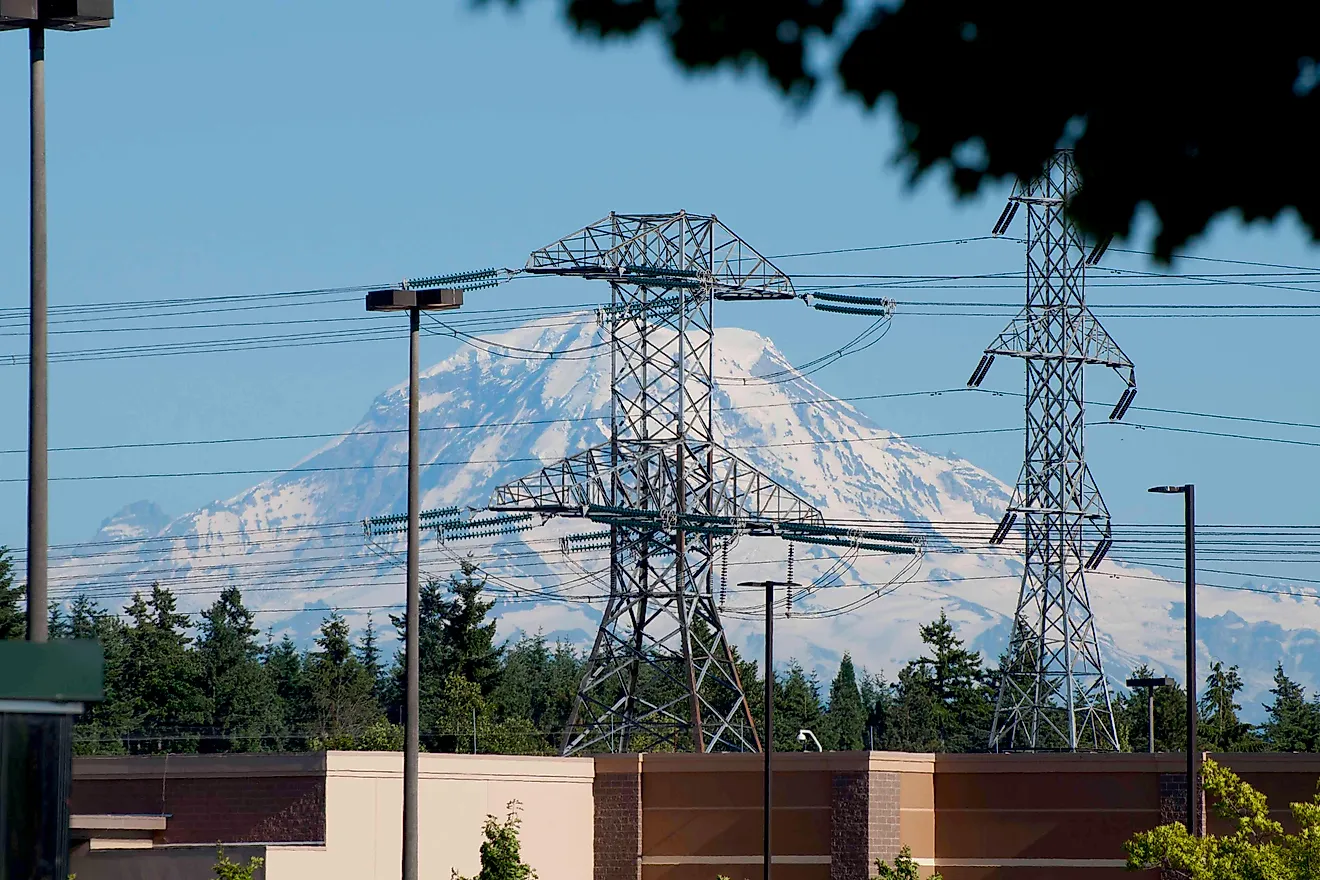
Wind produced about 22% of the electricity generated in Texas in 2025, and much of it has to travel to reach the people who use it. About 3,500 miles of high-voltage lines, finished in 2013, were built to carry wind power from West Texas and the Panhandle to the rest of the state.
2. Iowa

Wind turbines in Iowa come with a lease check. MidAmerican Energy, which operates more than 3,500 turbines across the state, paid landowners about $45.7 million in 2025, and the Iowa Land Company put the average payment at about $9,000 per turbine per year in early 2025. MidAmerican paid roughly $60 million more in property taxes on those turbines in 2025, spread across 35 counties, and drivers on Interstate 80 pass one of the state's wind farms in Adair County, west of Des Moines. Counting every company's turbines, wind generated 58.5% of Iowa's electricity in 2025, the highest share of any state in the top ten, from 43.6 billion kilowatt-hours of output.
3. Oklahoma

Oklahoma has a wind farm that a federal court has ordered removed. Its 84 turbines stand on 8,400 acres of Osage County between Pawhuska and Fairfax, and in December 2023 a federal judge ruled that the developer, Enel, had dug into the Osage Nation's mineral estate, which the tribe owns under a 1906 federal law, without the required mining lease. The removal order was put on hold during Enel's appeal, and the turbines were still turning in early 2026.
In Weatherford, a western Oklahoma city on Interstate 40, turbines are visible from city hall, and north of town, in Blaine and Custer counties, the 356-turbine Traverse wind farm was the largest wind farm built in a single phase in North America when it opened in 2022. Oklahoma generated 37.3 billion kilowatt-hours from wind in 2025, about 41% of its electricity, and public radio station KGOU reported that year that landowners collect an estimated $98.8 million a year in wind payments, while local schools have received about $660.5 million.
4. Kansas

Kansas got its first large wind farm in 2001, when 170 turbines went up in Gray County near the small town of Montezuma. Wind farms are exempt from property tax in Kansas, so counties negotiate their own payments, and the Gray County project meant $5.3 million for the county. The nearby Cimarron school district received $3.6 million from wind farms over a decade and spent part of it on a new grandstand at the district's football stadium. Orville Williams, who had farmed around the towers for 20 years by 2021, signed up for another 20-year lease.
By 2024, Kansas had about 4,000 wind turbines, and roughly one in ten stood taller than the Statue of Liberty. In 2025, the state's wind farms generated 29.2 billion kilowatt-hours, or 47% of its electricity. New wind installations are barred in about one-fifth of Kansas counties.
5. Illinois

Illinois generated 25.1 billion kilowatt-hours from wind in 2025, but in a state that produced 191.8 billion kilowatt-hours of electricity overall, that came to only about 13%. Much of the state's wind is made in the farm counties of central and north-central Illinois. Twin Groves, just east of Bloomington along Illinois Route 9, puts 240 turbines on two moraines in eastern McLean County. Since it began operating in 2007, it has paid $36.9 million to landowners and $47 million toward public services, according to its owner, EDP Renewables.
McLean County had five wind farms on its tax rolls in 2021, paying a combined $9.4 million in property taxes, and the industry group American Clean Power counted that as about 24% of the county's revenue that year. In nearby Logan County, the same group found that wind companies made 73% of the tax payments from the county's ten largest property taxpayers in 2021.
6. Colorado

Colorado's largest wind farm was built mostly from parts made in Colorado. Rush Creek, owned by Xcel Energy, began operating in 2018 with 300 Vestas turbines on 262-foot towers, and most of its components came from Vestas factories in the state. The company's blade plant in Windsor and nacelle plant in Brighton were hiring in 2026. The turbines themselves stand on the Eastern Plains across Elbert, Lincoln, Kit Carson, and Cheyenne counties, around towns such as Limon, Hugo, and Simla. Rush Creek and the state's other wind farms produced 30% of Colorado's electricity in 2025, a total of 17.0 billion kilowatt-hours.
7. North Dakota

Every spring and fall, endangered whooping cranes migrate through central North Dakota along a corridor that crosses the Great Plains. A U.S. Geological Survey study published in 2021 found that the number of wind towers in that migration corridor tripled between 2010 and 2016 and quadrupled in its center. The cranes avoided towers when they picked places to stop and rest.
North Dakota climbed from 10th in 2024 to seventh in 2025 on 15.4 billion kilowatt-hours of wind generation, which supplied about 36% of the state's electricity. The state's largest wind farm, Aurora Wind, entered service in early 2021 near Tioga in Williams County, in northwestern North Dakota.
8. California
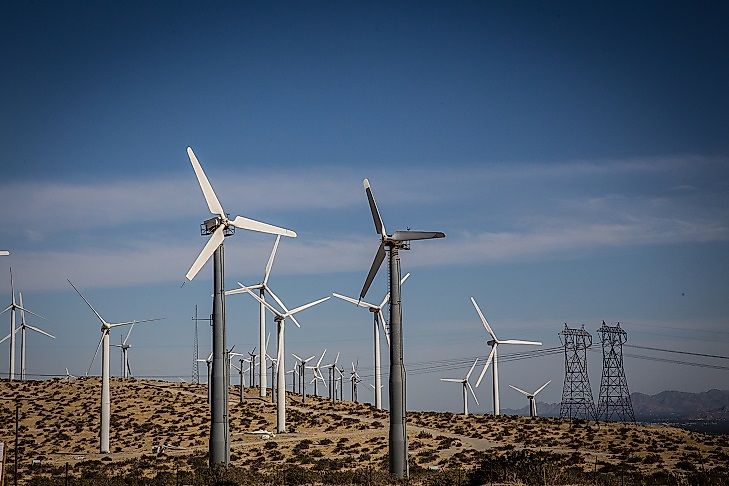
California's turbines cluster in windy passes and hills, and the most visible ones line both sides of Interstate 10 in the San Gorgonio Pass outside Palm Springs. Palm Springs Windmill Tours takes visitors behind the fence onto a private, working wind farm there. The state's largest project is farther north and west in the Tehachapi area of Kern County, where the Alta Wind Energy Center is the second-largest wind farm in the country.
East of the San Francisco Bay Area, the Altamont Pass wind area dates to 1980, and its older turbines have long been blamed for killing birds of prey, including golden eagles. Alameda County has pushed to replace them with newer machines to substantially reduce those deaths. Wind generated 7.4% of California's electricity in 2025, or 15.1 billion kilowatt-hours. In 2026, the federal government canceled one of two offshore wind leases off Humboldt County and one off Morro Bay, where a second lease is set for cancellation, and California has sued over the Morro Bay cancellations. No turbines stand in the ocean off the state's coast.
9. Minnesota

Lincoln County, in southwest Minnesota, collected about $3.91 million in wind production tax in fiscal year 2024, roughly $709 for every resident, according to state revenue figures compiled by the Center for Rural Affairs. More than 450 turbines stand along Buffalo Ridge in the county, where Minnesota's first utility-scale wind farm began commercial operation in 1994. The town of Lake Benton calls itself the "Windpower Capital of the Midwest" and runs the Heritage and Windpower Learning Center downtown. Statewide, Minnesota's turbines generated 15.0 billion kilowatt-hours in 2025, about a quarter of its electricity, and finished barely behind California.
10. New Mexico

For Dan Bell, a fifth-generation cattle rancher north of Corona in central New Mexico, wind lease income matters most during a drought, as he explained in 2022. The 377 turbines of the Western Spirit project stand on ranch country across Guadalupe, Lincoln, and Torrance counties in that part of the state. New Mexico's wind farms turned out 14.4 billion kilowatt-hours in 2025, and that came to about 36% of the state's electricity.
That total was set before the state's largest project switched on. SunZia Wind began commercial operation in June 2026 with 916 turbines in Lincoln, Torrance, and San Miguel counties and 3,650 megawatts of capacity, making it the largest wind farm in the country and more than three times the size of Alta in California. It nearly doubled New Mexico's wind capacity, from 3,997 megawatts to 7,647, and sends most of its power over a 550-mile transmission line to Arizona and California.
Most of America's wind power in 2025 came from farm and ranch country in the middle of the nation, and the people who live among the turbines collect their share close to home, in lease payments on Iowa farmland and in county tax money that, in Minnesota's Lincoln County, came to about $709 per resident. The electricity often goes much farther. Texas strung about 3,500 miles of high-voltage line to move West Texas and Panhandle wind power to the rest of the state, and SunZia's 550-mile line now carries power from central New Mexico's ranch land to Arizona and to California, the state with the smallest wind share in this top ten. SunZia played no part in the 2025 totals that placed New Mexico 10th, and its first full calendar year of output will come in 2027.