The Best National Forests In The Southern Appalachians
The Appalachian Mountains rise from northern Alabama and Georgia, then run through New England into eastern Canada. In their southern reaches, long ridges shelter hardwood forests and misty valleys where rushing rivers cut through deep gorges below. Chattahoochee-Oconee, Cherokee, Nantahala, and Pisgah National Forests protect some of the region’s best-known landscapes. George Washington and Jefferson bring mountain scenery to Virginia, West Virginia, and Kentucky. South Carolina joins the range through Sumter’s Andrew Pickens Ranger District.
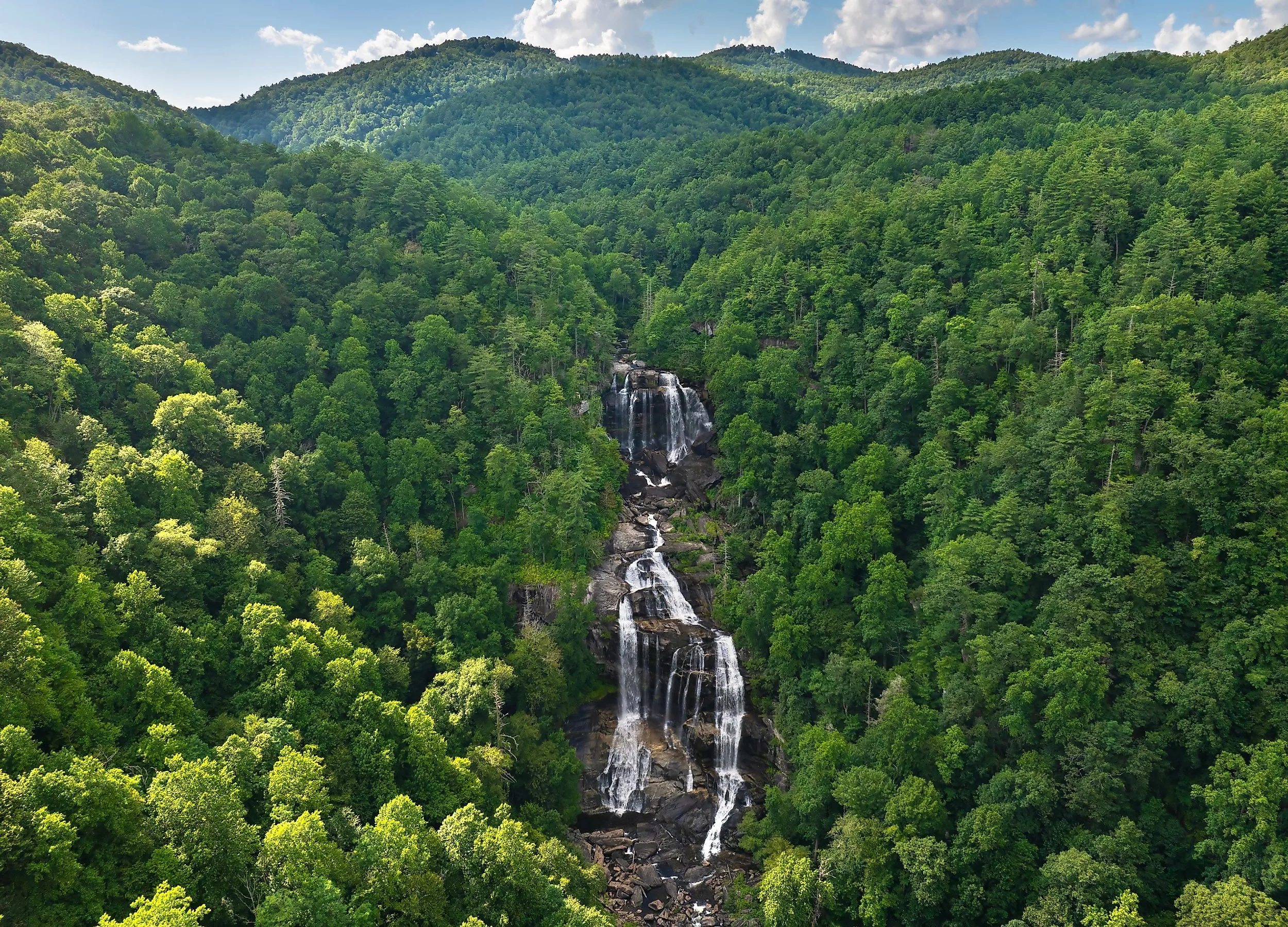
Memorable landmarks set these forests apart. Visitors can watch Whitewater Falls plunge through Nantahala or take the short trail to Looking Glass Falls in Pisgah. Cherokee offers Ocoee River rapids and forested drives along the Cherohala Skyway. In Georgia, Chattahoochee-Oconee leads to panoramic views from Brasstown Bald and the twin cascades of Anna Ruby Falls. Boasting stunning waterfalls, overlooks, and trails, these National Forests are among the best in the Southern Appalachians.
Cherokee National Forest, Tennessee

There is a north and a south section of the Cherokee National Forest, both in eastern Tennessee, separated by the Great Smoky Mountains National Park. There are more than 700 miles of trails running through its 660,000 acres of public land, which makes it the largest tract of public land in the state. Among those trails is the Appalachian National Scenic Trail, which contributes nearly 150 miles of that total.
Outdoor enthusiasts enjoy the many campgrounds, day-use facilities, whitewater rivers, scenic byways, and waterfalls. Seven whitewater rivers run through the forest, including the Ocoee and the Nolichucky. Class 1 hand panning is permitted only in the designated Lyons Creek and Wildcat Creek sites. Mechanized prospecting is prohibited, and panning in Coker Creek is limited to private property with permission. With 15 recreation areas and roughly 30 developed campgrounds, repeat visits mean plenty of variety. Autumn brings the heaviest visitation for fall color, and the Cherohala Skyway and the Ocoee Scenic Byway are the two Forest Service scenic byways that put the ridgelines in view from the road.
Pisgah National Forest, North Carolina

Pisgah National Forest is in western North Carolina, near Asheville, Brevard, and Morganton. Pisgah covers more than 500,000 acres and contains hundreds of miles of trails. A few of the more notable trails are the Overmountain Victory National Historic Trail, the 30-mile Art Loeb Trail, and the Mountains-to-Sea Trail. What also earns this forest a top rating is its waterfalls and towering hardwood trees. It is also where the first forestry school in the United States, the Biltmore Forest School, began in 1898 on land later folded into the forest; the site is preserved today as the Cradle of Forestry in America. Pisgah National Forest is also one of the first national forests in the eastern US. It was established in 1916. It was followed by the Nantahala National Forest in 1920 and the Croatan National Forest in 1936. Across all four of North Carolina's national forests, not Pisgah alone, there are more than 5,700 miles of streams and 38,000 acres of lakes. The waterfalls, such as Looking Glass Falls, a 60-foot waterfall, and scenic mountain views make a visit to Pisgah National Forest memorable. Driving open portions of the Blue Ridge Parkway offers extensive views of Pisgah, but visitors should check current NPS and Forest Service closure notices before traveling.
Sumter National Forest, South Carolina

Sumter National Forest reaches the Southern Appalachians through its Andrew Pickens Ranger District in northwestern South Carolina. The district is known for the Wild and Scenic Chattooga River, where visitors can fish, paddle, or camp near the water. Hikers can venture into the Ellicott Rock Wilderness or follow the easy 1.5-mile round-trip trail to Station Cove Falls. This stepped 60-foot waterfall tumbles through an Appalachian cove forest near Oconee Station State Historic Site. For a longer outing, the Yellow Branch Falls Trail crosses hardwood forests and several streams before reaching a broad cascade over a rocky ledge. With mountain rivers, wilderness, and rewarding waterfall hikes, Andrew Pickens offers some of Sumter National Forest’s finest Appalachian scenery.
Chattahoochee-Oconee National Forest, Georgia

The Appalachian Trail's southern terminus is at Springer Mountain in Chattahoochee National Forest, although the Appalachian Mountains continue southwest into Alabama. The jointly managed Chattahoochee-Oconee National Forest encompasses nearly 867,000 acres across Georgia, but its Southern Appalachian lands lie in the Chattahoochee portion in the north. The pair has roughly 850 miles of trails, which lend themselves to a wide number of recreation opportunities. What makes this national forest unique is that it is a popular location for off-highway enthusiasts. Its many miles of streams and rivers make it a great place for fishing and other water sports. Mountain lovers will appreciate the highest mountain peak in Georgia, Brasstown Bald, at 4,784 feet, complete with a 360-degree observation site where you can see four states. Anna Ruby Falls consists of twin cascades, the taller dropping more than 150 feet. A paved 0.4-mile trail reaches the viewing decks, but steep sections make it unsuitable for wheelchairs. More adventurous water lovers enjoy Chattooga River whitewater rafting and kayaking.
George Washington and Jefferson National Forests, Virginia, West Virginia, and Kentucky

The George Washington and Jefferson National Forests hold 1.8 million acres of Appalachian forest land across three states, about a million acres of it remote and undeveloped. The forests stretch over Virginia, West Virginia, and Kentucky, including 325 miles of the Appalachian Trail. The two forests were established separately and have been jointly administered since 1995, while retaining separate land-management plans. George Washington was established in 1918, originally as the Shenandoah National Forest, and took its current name in 1932. Jefferson followed in 1936, assembled partly from land carved out of George Washington south of the James River, and the two were combined in 1995. Not only does this forest have a larger footprint than others, but it also has more miles of trails. There are 2,200 miles of trails to enjoy hiking, OHV riding, biking, and more. Every season brings something to enjoy in the George Washington and Jefferson National Forests. Spending time in this area affords some unique experiences, such as viewing wild ponies on Mount Rogers, which is the highest point in Virginia (5,729 feet). Water activities are also popular, including trout fishing, swimming, and paddling on Sherando Lake and along the James River and the New River.
Nantahala National Forest, North Carolina

Nantahala National Forest spreads across more than 531,000 acres of mountains and valleys in southwestern North Carolina, making it the largest of the state’s four national forests. Its name comes from a Cherokee word often translated as “land of the noonday sun,” a fitting description for the deeply cut Nantahala Gorge. The Nantahala River draws rafters and kayakers through one of the Southeast’s best-known whitewater corridors, while calmer stretches offer trout fishing and riverside picnicking. For a quieter experience, Joyce Kilmer Memorial Forest protects old-growth hardwoods within the Joyce Kilmer-Slickrock Wilderness. The Appalachian Trail crosses high ridges near Standing Indian, and Whiteside Mountain rises to 4,930 feet along the Eastern Continental Divide. With whitewater, wilderness, scenic drives, and mountain trails, Nantahala offers one of the Southern Appalachians’ broadest ranges of outdoor experiences.
Choosing Between Them
About 3 million people visit portions of the Appalachian Trail annually; nearly 4,000 aspiring thru-hikers begin in Georgia in a typical year, and the Appalachian Trail Conservancy estimates that about one in three thru-hike attempts succeeds. Thru-hikers cross portions of the Chattahoochee, Nantahala, Cherokee, Pisgah, and the George Washington and Jefferson National Forests. Although the White Mountains and southern Maine are generally considered the A.T.'s hardest terrain, the Southern Appalachian sections remain strenuous, and hikers should choose a starting point based on experience, season, weather, and current trail conditions. Of course, just visiting one of the forests or quaint towns in the area for a vacation or a long weekend is a great way to spend time as well.