Why Kelp Forests Only Grow On One American Coast
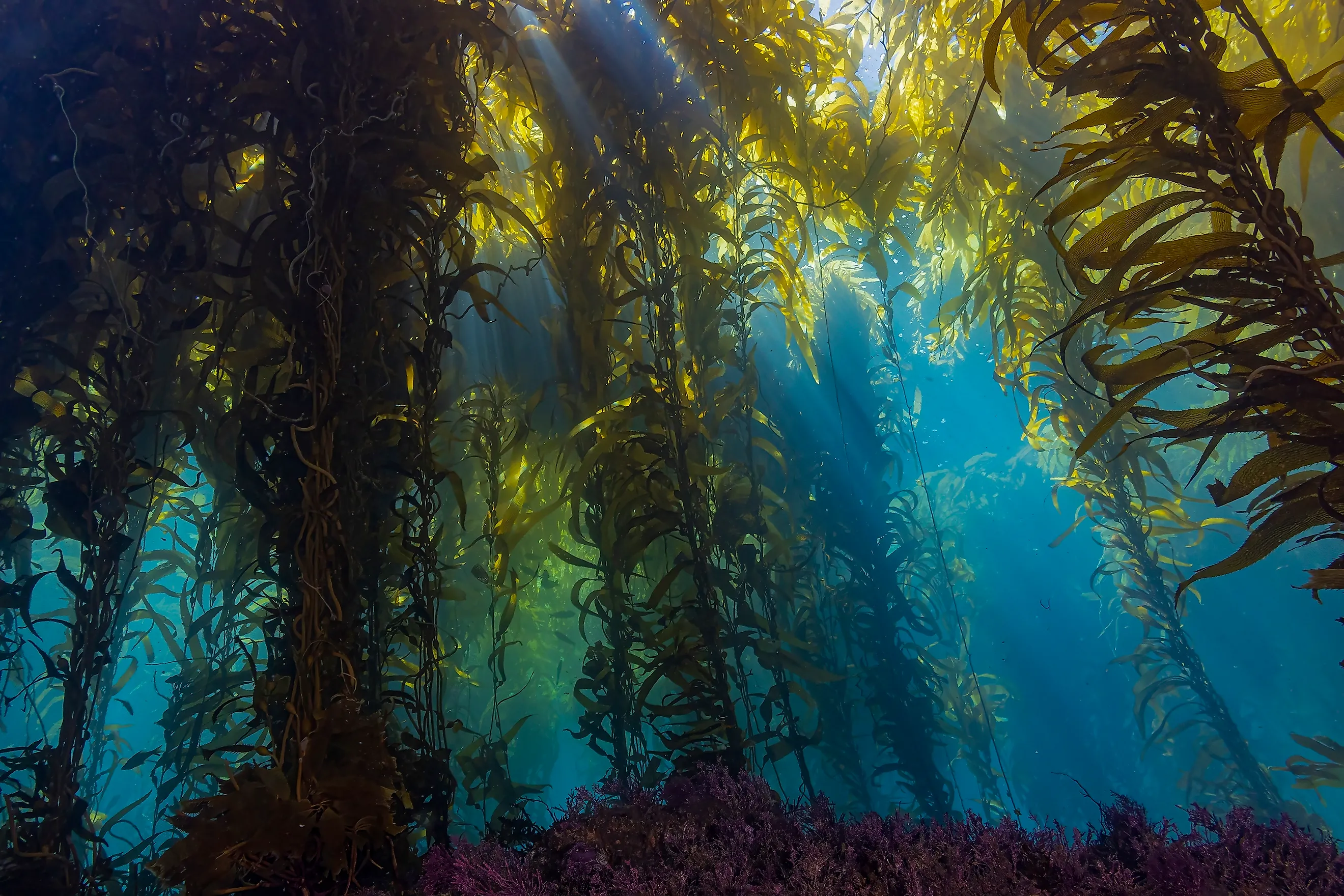
Kelp canopies rise more than 100 feet from rocky seafloors along the Pacific edge of North America, yet none of this massive growth appears off the shores of the U.S. Gulf or Atlantic coasts.
Giant kelp (Macrocystis pyrifera) and bull kelp (Nereocystis luetkeana), the species that make up these underwater forests, need water that stays below an estimated 70 degrees Fahrenheit year-round. Even in summer, the temperature can only rarely rise past this threshold if the forests are to survive. The California Current delivers exactly that condition along the West Coast, while the Gulf Stream pushes warm Caribbean water north along most of the Atlantic seaboard.
That difference in ocean circulation, combined with the rocky seafloor terrain that anchors the kelp and is absent from much of the Gulf and East Coast, explains why these species concentrate almost entirely between Alaska and Baja California.
Sea otters, rockfish, and more than 100 fish species documented along the West Coast kelp beds depend on this band of coastline to thrive. Several stretches of these oceanic forests now rank among the most accessible cold-water dive sites in the country.
The California Current Keeps the Water Cold and Nutrient-Dense Enough
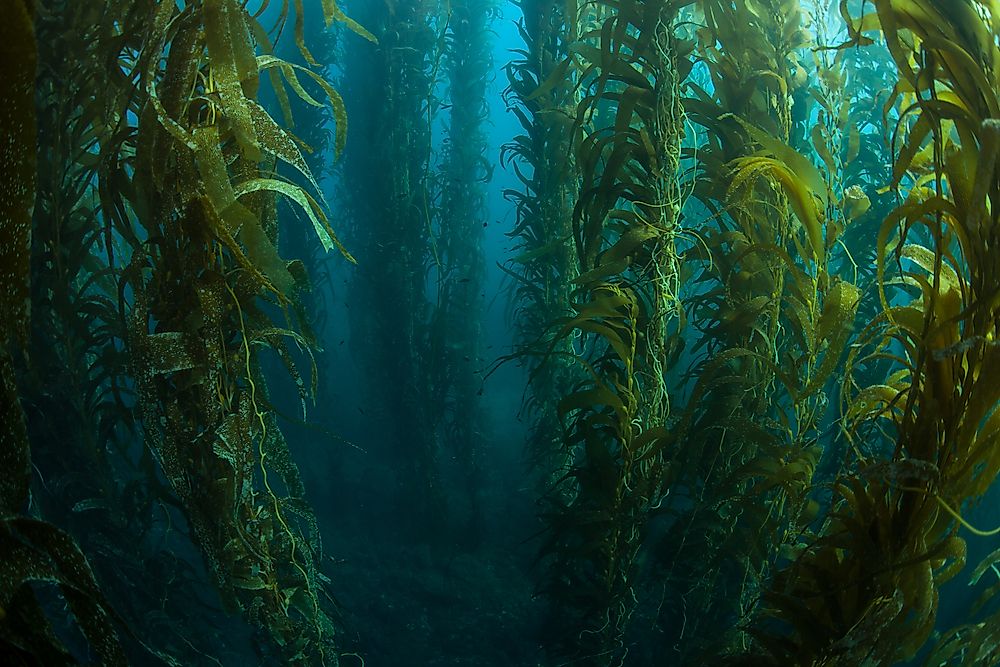
Ocean currents, not latitude alone, determine where kelp forests can survive. The California Current flows south along the Pacific Coast, carrying cold subarctic water from the Gulf of Alaska down the West Coast. This current keeps surface temperatures well within the range kelp need to thrive.
Wind patterns along this coast also drive upwelling, a process in which offshore winds push surface water away from the shoreline and pull colder, nutrient-dense water up from depths of several hundred feet.
That upwelled water carries nitrate and phosphate that fuel one of the fastest growth rates recorded in any organism. A single kelp frond can extend nearly two feet in a single day under strong upwelling conditions.
Atlantic circulation runs in the opposite direction. The Gulf Stream carries warm tropical water north from Florida past the Carolinas and toward New England. This current raises surface temperatures for most of the Atlantic seaboard well above the range these species of kelp require.
Nutrient upwelling along the East Coast also happens far less consistently, since the Gulf Stream sits offshore rather than driving the kind of persistent coastal mixing that defines the Pacific system. Marine heatwaves have reduced kelp cover along the southern West Coast in recent decades, with warming events in 2014 and 2015 contributing to significant canopy losses in central and southern California.
Rock, Not Sand, Anchors a Kelp Forest
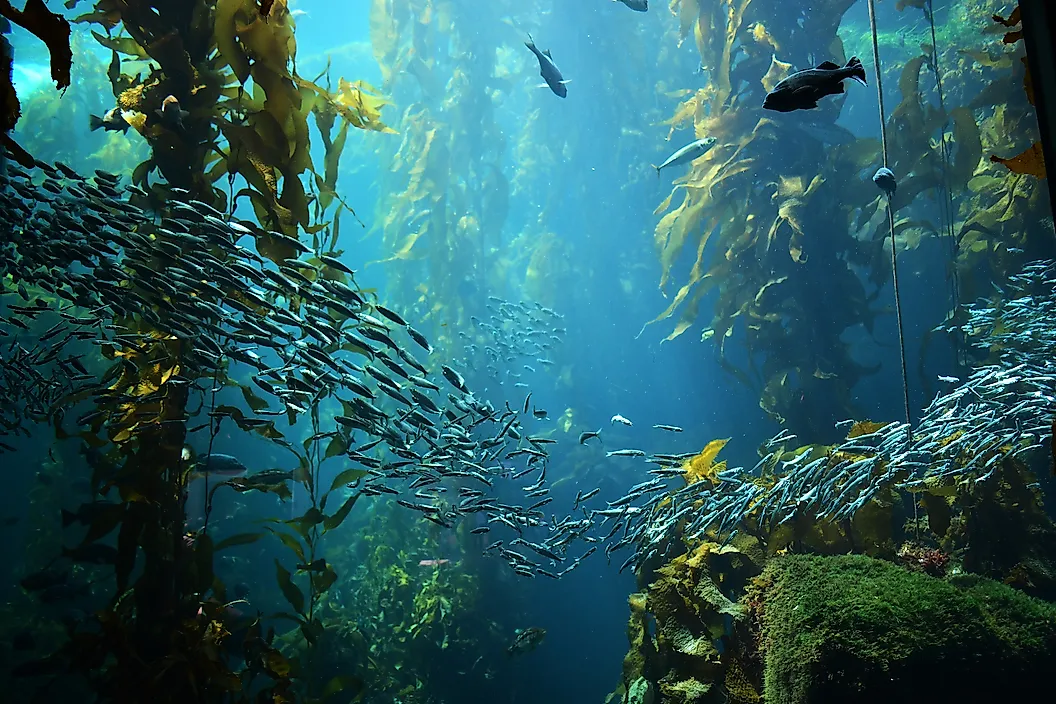
Cold water alone does not guarantee a kelp forest. Kelp anchors itself to hard rocky substrate using a root-like holdfast, typically at depths between ten and 100 feet. These sea plants cannot establish themselves on the sand or silt bottoms common along much of the Atlantic and Gulf coastlines.
California's continental shelf includes extensive rocky reef systems formed by tectonic activity along the Pacific plate boundary. This rocky structure provides miles of solid anchor points from Point Conception north through Oregon.
The Atlantic seaboard south of New England consists largely of sedimentary shelf built from river-deposited sand and mud, terrain that offers little for kelp to anchor into.
Populations of smaller, cold-water kelp species do grow in the rocky shallows of the Gulf of Maine and off Atlantic Canada, where granite ledges and boulder fields support species like Laminaria and Saccharina. Those beds remain smaller and lower to the seafloor than the towering Macrocystis canopies of the West Coast.
Where to Dive and Snorkel Through Kelp Forests

The San Juan Islands of Washington offer conditions for both new and advanced divers, with kelp beds off Lime Kiln Point and the waters around Orcas Island holding giant Pacific octopus, wolf eels, and sunflower stars among the swaying fronds.
Oregon's kelp forests cluster around a handful of headlands where rocky reefs break the surf enough to dive safely. Cape Arago, south of Coos Bay, holds some of the state's most extensive kelp forest, along with a resting colony of Steller sea lions and harbor seals on nearby Shell Island.
Port Orford supports both shore access from the town jetty and boat trips into Redfish Rocks Marine Reserve, where sheer walls and surge channels around five offshore islets shelter lingcod, red abalone, and rock scallops beneath the bull kelp canopy.
Near Newport, Otter Rock and the adjacent Devil's Punchbowl give kayakers and shore divers access to bull kelp stands thick with scallops.
Point Lobos State Marine Reserve, just south of Carmel, California, drops divers into kelp beds within a short swim of the shoreline. Visibility frequently exceeds 30 feet and a resident population of harbor seals swim through the reserve's granite coves.
Monterey Bay offers similar access at Breakwater Cove, a site shallow enough for beginning snorkelers to observe kelp canopy from the surface. More experienced divers can descend into the holdfasts of the kelp forests to spot nudibranchs and sculpin.
Farther south, La Jolla Cove and the adjacent Point Loma kelp beds near San Diego mark some of the largest remaining giant kelp stands in Southern California. This is an area researchers have tracked by satellite since 1983 to measure how the canopy area shifts with ocean temperature and nutrient cycles from year to year.
A Forest Bound to Its Current and Ecosystem

Kelp forests trace the same coastline the California Current has carved for millions of years. Researchers modeling kelp forest populations along California project that continued sea surface warming could push southern kelp beds toward local extinction by 2080 if marine heatwave frequency keeps rising.
For now, the cold current running down from Alaska keeps Pacific kelp forests intact enough to support most of the wildlife that depend on them.
However, the wildlife that live within the kelp forest must also remain in balance to support the health of their habitat. An explosion in purple sea urchin populations along the West Coast, driven by declines in predatory sea star populations, has led to vast overgrazing of kelp forests.
Over five billion sea stars across more than 20 species have died along the coast due to Sea Star Wasting Disease, an infection caused by Vibrio pectenicida, a bacterium that thrives and multiplies in the warming ocean waters fueled by climate change.
Protection efforts currently cover under eight percent of mapped giant kelp along the West Coast, and less than one percent of kelp off Baja California falls within a marine reserve. Several restoration efforts are underway, including the Greater Farallones Restoration project working to restore bull kelp forests off Northern California and the Palos Verdes Project, which has restored 80 acres of kelp off Southern California by reducing the overgrazing purple sea urchin populations.
The Puget Sound Kelp Conservation and Recovery Plan is also working to revitalize kelp forests from Washington into British Columbia.
The Future of the Pacific Canopies
The survival of North America's towering giant kelp forests relies on a delicate balance between cool water temperatures, nutrient-rich upwelling, and stable, rocky seafloors. As rising temperatures and recurring marine heatwaves threaten these submerged ecosystems, their ongoing protection becomes increasingly critical.
The kelp forests stand as a testament to the power of ocean currents, sustaining a vibrant marine ecosystem found nowhere else along U.S. shores.