The Most Poisonous Trees In American Forests
A tree does not need thorns, a foul smell, or an ominous appearance to be dangerous. In American forests, some of the most poisonous species look surprisingly inviting. Black cherry bears familiar edible fruits, Ohio buckeye produces glossy seeds that resemble chestnuts, and China berry hangs clusters of bright yellow berries from its branches. Yet a bite of the wrong part can trigger serious poisoning. The poisonwood can leave hikers with painful, blistering skin reactions, while the manchineel's caustic sap can cause injury even when rain washes it from the leaves. The toxins vary too, affecting everything from the skin and digestive system to the heart and the body's ability to use oxygen. These trees reveal a less familiar side of America's woodlands, where knowing what not to touch or taste can be a matter of safety.
Manchineel

The Manchineel is famous as one of the world’s most poisonous trees, even earning the Spanish nickname “arbol de la muerte,” meaning tree of death. Native to southern Florida, the Florida Keys, Mexico, the Caribbean, and Central America, this evergreen tree grows along coastal beaches and brackish wetlands. Its greatest danger comes from a milky sap containing highly irritating compounds. Mere contact with this substance can produce painful skin inflammation, blistering, and serious eye irritation.

Even rainwater dripping through its foliage can carry the sap and cause skin injuries. Meanwhile, its small, greenish-yellow fruits resemble apples, making accidental ingestion probable, which can prove fatal. In 2011, manchineel was recognized by Guinness World Records as the most dangerous tree on Earth.
Poisonwood

An aptly-named species, Poisonwood (Metopium toxiferum) is a particularly troublesome native tree of southern Florida, especially the Florida Keys and Everglades, where it grows in tropical hardwood hammocks, pinelands, and coastal woodlands. A hiker’s nightmare, the tree produces the same irritating oil found in poison ivy and poison oak, known as urushiol. Contact with its leaves, bark, resin, or almost any part of the tree can trigger intense itching, redness, swelling, and fluid-filled blisters that may persist for weeks. Even indirect exposure is possible through contaminated clothing, tools, animals, or rainwater dripping from its foliage. Burning poisonwood is especially hazardous because airborne oil particles can irritate the respiratory tract.
Yew

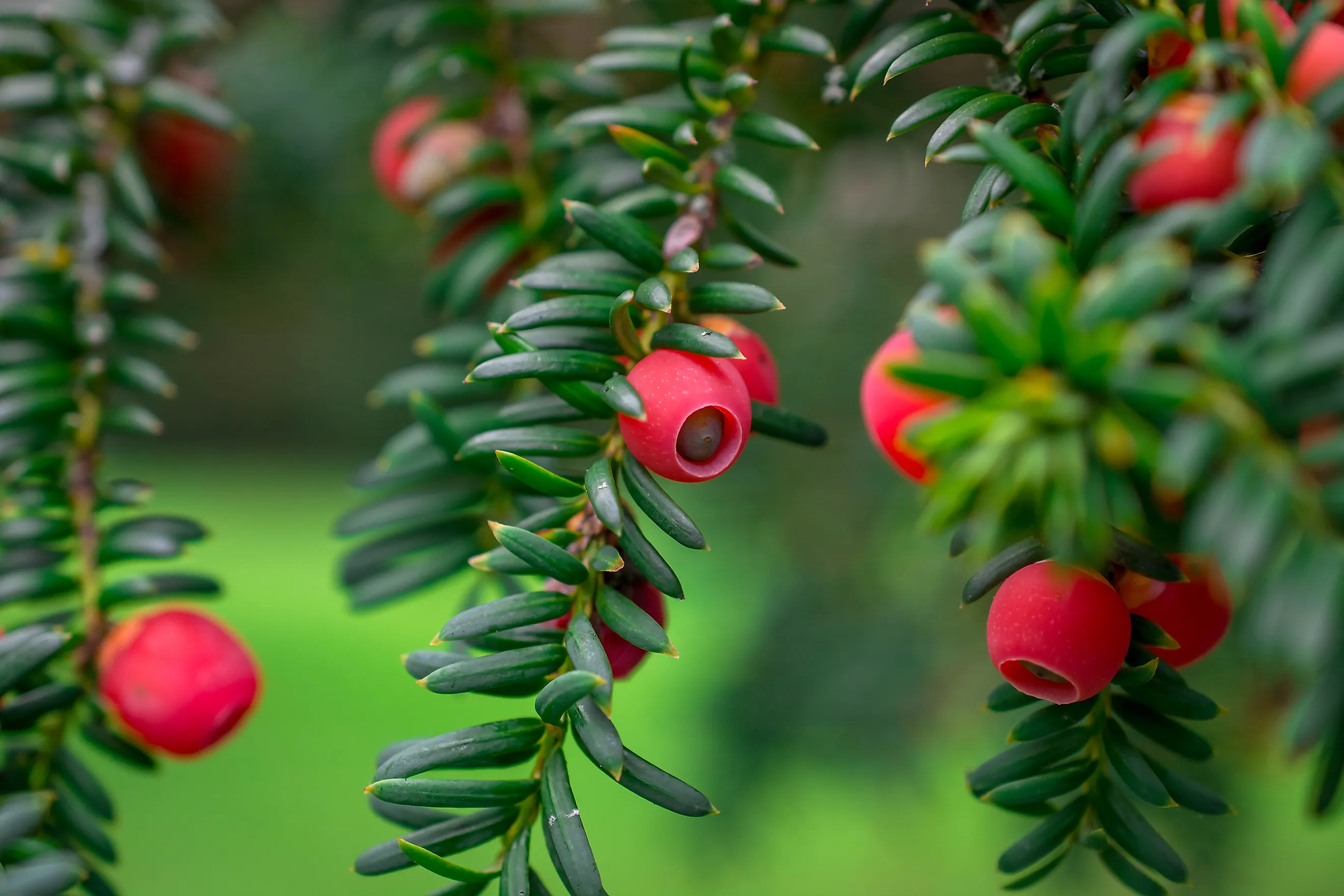
Yew trees gain notoriety as one of America’s most poisonous trees because their needles, bark, and seeds contain taxine alkaloids that interfere with the electrical activity of the heart. Native species include the Pacific Yew (Taxus brevifolia), found in the forests of the Pacific Northwest, and the Canadian yew (Taxus canadensis), found in northeastern woodlands. Resembling Christmas trees with decoration, contact with or ingestion of basically any of its parts can trigger dangerously irregular heartbeats, severe drops in blood pressure, cardiac arrest, and death. In 2008, a woman in Dublin died shortly after ingesting yew needles, highlighting the dangers of this tree.
Black Cherry

Black cherry (Prunus serotina) is a familiar sight in eastern American forests, but certain parts of this otherwise valuable timber tree contain potentially lethal cyanogenic compounds. Although it produces one of the most valuable hardwoods in the US and edible cherry fruits, the leaves, stems, and seeds of this tree contain glycosides that can release hydrogen cyanide when plant tissues are damaged. The danger becomes particularly pronounced when leaves wilt, as happens when branches are cut down or blown off during storms. When ingested or contact is made with large amounts of this compound, it interferes with the body’s ability to use oxygen, resulting in rapid breathing, weakness, convulsions, and sudden collapse. Livestock like cattle and horses are particularly vulnerable, as they can consume the leaves while grazing and develop cyanide poisoning, and although serious human poisoning is less commonly documented, chewing the seeds or consuming damaged plant material from this tree is strongly discouraged. The Black cherry is common throughout eastern American forests.
Black Locust

Black locust (Robinia pseudoacacia) is native to the eastern United States, specifically in Pennsylvania, the Appalachian Mountains, Georgia, Oklahoma, and Arkansas, and is mostly found on roadsides, and in disturbed areas. It is recognized by its deeply furrowed bark, thorny branches, and hanging clusters of fragrant white flowers. While at first glance, it may look harmless, its bark, leaves, and seeds contain poisonous proteins that can cause gastrointestinal and systemic poisoning. Symptoms include vomiting, abdominal pain, weakness, and, in severe cases, neurological complications. A documented American case involved an eight-year-old who developed repeated vomiting after chewing a piece of black locust bark and required treatment before recovering. The tree is also hazardous to livestock, with documented horse fatalities following bark consumption.
Chinaberry

Also called Texas umbrella tree, Chinaberry (Melia azedarach) is an introduced species that has become established across parts of the southern United States. Its attractive clusters of yellow berries conceal a potentially serious poisoning hazard. The fruits contain melatoxins, a group of toxic compounds that affect the gastrointestinal and nervous systems. Other parts, including the bark, leaves, and flowers, are poisonous. Ingestion can cause vomiting, diarrhea, weakness, confusion, and seizures. The danger to children is particularly concerning as the berries can be mistaken for ornamental fruits. A study examining nearly 1000 chinaberry ingestions reported to Texas poison centers between 2000 and 2018 found that most involved young children, although the majority resulted in no or only minor symptoms.
Ohio Buckeye

Ohio buckeye (Aesculus glabra) trees are native to several parts of the United States, particularly the central and eastern parts of the country. Their shiny brown seeds, sometimes called buckeyes, look harmless and can easily attract children who collect them as natural curiosities. However, the seeds, leaves, bark, and young shoots contain toxic compounds, and ingestion can cause vomiting, diarrhea, weakness, convulsions, and poor coordination. The seeds, in particular, look like edible chestnuts, which makes the tree even more dangerous; plus, there is no specific therapy or antidote for buckeye poisoning, making it important for livestock and people to stay far from it, especially in spring when new growth containing high concentrations of toxins emerges.
Red Maple

Red Maple (Acer rubrum) is one of the continent’s most recognizable trees, native to the eastern United States, and famous for its foliage, which turns into brilliant shades of red and orange during autumn. However, the wilted or dried leaves of this tree are deadly and can damage red blood cells, with horses particularly vulnerable to the toxin. Symptoms include weakness, rapid breathing, dark brown urine, and collapse. Fallen branches after storms are a particularly important source of accidental exposure because the leaves remain toxic even after drying. In an August 2024 case documented by Texas A&M’s Veterinary Medical Diagnostic Laboratory, a seven-year-old mare developed severe hemolytic anemia and died approximately three hours after treatment began, highlighting the dangers. Fortunately, red maple is not toxic to humans and household pets like dogs and cats.
Kentucky Coffeetree

Native to the central and eastern United States, the Kentucky coffee tree (Gymnocladus dioicus) is a considerably poisonous tree, identified by enormous compound leaves and thick, leathery seed pods. Its seeds, leaves, and the pulp around the seeds contain potentially toxic compounds that can affect the nervous and digestive systems. Within an hour of eating the raw seeds or pods, several symptoms can be noticed, including excessive salivation, abdominal pain, diarrhea, irregular heartbeat, convulsions, and potentially death if large quantities are consumed. Livestock and pet poisoning has been well documented, and usually occurs when animals consume fallen pods or young shoots. Interestingly, the tree has a history of human use, with the seeds once roasted and used as a coffee substitute by Native Americans and early settlers. So while heating destroys the toxins, eating raw seeds remains strongly discouraged.
Nerium Oleander

This species (Nerium oleander) is an introduced evergreen small tree found across the southern United States, particularly in California, Florida, Texas, and other warm-weather regions. While it is primarily cultivated and not native to American forests, it is a worthy mention as one of the most poisonous trees in the US. Despite its attractive pink, white, and red flowers, virtually every part of this tree is poisonous. Its leaves, flowers, stems, and roots contain cardiac glycosides, particularly oleandrin, which interfere with the electrical activity of the heart. Ingestion can cause nausea, vomiting, abdominal pain, dangerously slow heart rates, irregular heart rhythms, and potentially fatal cardiac arrest. Several cases of oleander poisoning have been documented in the past, including a 2022 case from the University of Utah Poison Control Center involving a 32-year-old woman who developed serious heart rhythm abnormalities after ingesting oleander leaves, but survived after treatment.
American forests offer extraordinary natural diversity, but not every tree is as harmless as its appearance suggests. Behind the attractive berries of the chinaberry, the familiar autumn foliage of the red maple, and the towering branches of the yew are natural chemical defenses capable of causing severe poisoning and, in some circumstances, death. What makes these trees particularly fascinating is how differently their toxins work. Some interfere with the heart’s electrical activity, others release cyanide that prevents cells from using oxygen, while species such as poison wood cause painful skin reactions without ever being eaten. Understanding these trees is more than an exercise in identifying poisonous plants; it is part of exploring America’s woodland safety. Admire these trees from afar, and in the case of poisoning, seek medical attention immediately.