The Tennessee State Parks With The Most Snakes
There are two types of people who look for snakes: those who want to avoid them and those who want to catalogue them and share photos for identification. In these Tennessee state parks, you're likely to discover both kinds of people, as these parks provide environments for snakes of all kinds, such as slow moving streams and lakes, south-facing slopes, forest debris to hide under, and plenty of small mammals and reptiles to feed upon.
For those looking out for venomous snakes, there are a handful in particular that roam through Tennessee, which can be turn up in these 7 snake-infested state parks in Tennessee.
Fall Creek Falls State Park

Fall Creek Falls State Park isn't any ordinary waterfall park. It contains the tallest waterfall in the state of Tennessee, beating out all others with its 256-foot-tall waterfall.
This is one of several waterfalls scattered throughout its close to 30,000-acre space of streams, lakes, gorges, and forests in the Cumberland Plateau. The streams here are also an ideal place for watersnakes to go hunting for fish.

Also known as the northern water snake, the watersnake can range in color from gray to brown, although adults tend to be darker. These snakes are nonvenomous, but can bite humans if they feel threatened. As far as venomous snakes are concerned, both copperhead and timber rattlesnakes can be found in Fall Creek.
Timber rattlesnakes are more likely to hide on rocky slopes, while copperheads can hide in underbrush, a hole, or any kind of debris in the park. Timber rattlesnakes have been spotted at the park by visitors, who have noted they have almost stepped on them. Both timber rattlesnakes and copperhead are capable of swimming.
Cumberland Mountain State Park

Cumberland Mountain State Park is smaller than Fall Creek, only consisting of 1,720 acres in the Cumberland Plateau. Early on, the park was used to resettle 250 families who had been impacted by the Great Depression in 1938.
Much of its infrastructure was built by the Civilian Conservation Corps, and the first superintendent of the park was Alvin C. York, a World War I veteran. However, these cabins and structures can also host venomous snakes.

With its location in the Cumberland Plateau, both copperheads and timber rattlesnakes live in this park, with copperheads found tucked beneath dead leaves or other coverage right off of trails. Copperheads in particular are known for being very adaptable, hiding underneath rocks in the backyards of homes, on the watch for small prey such as mice or other small mammals.
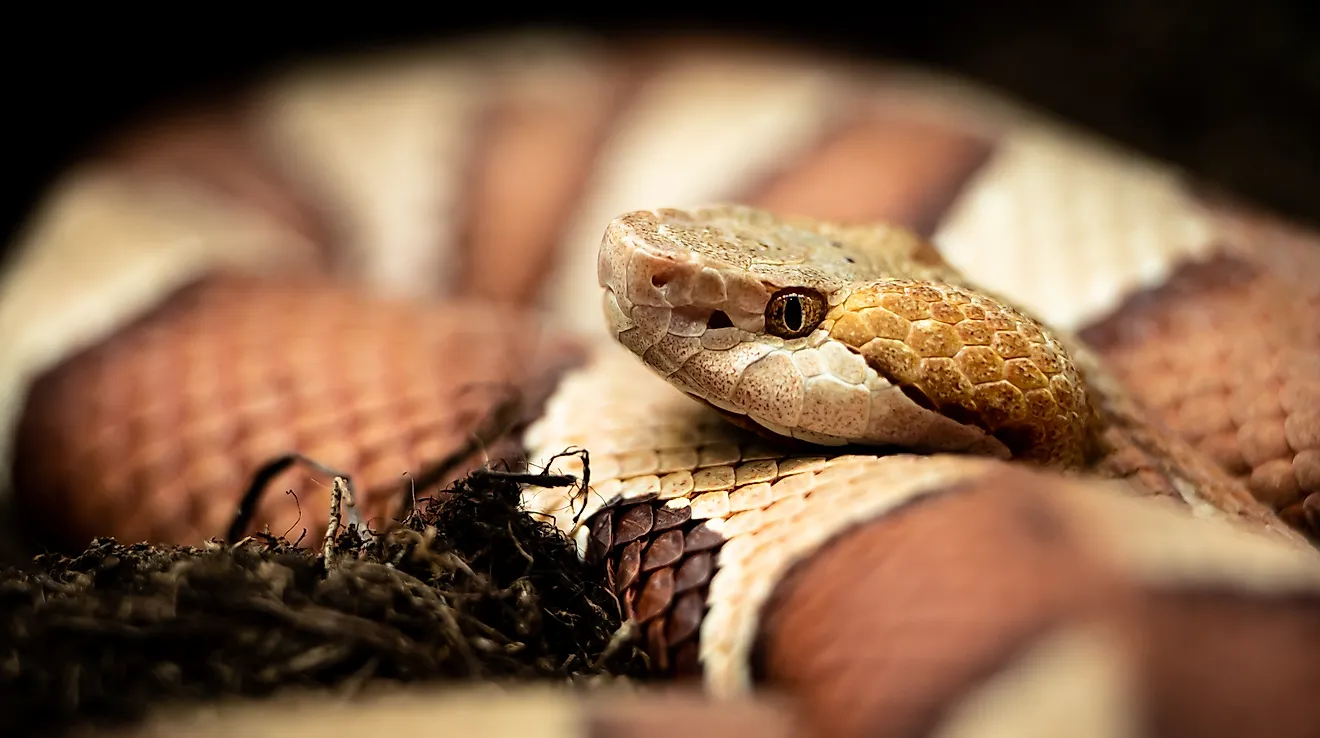
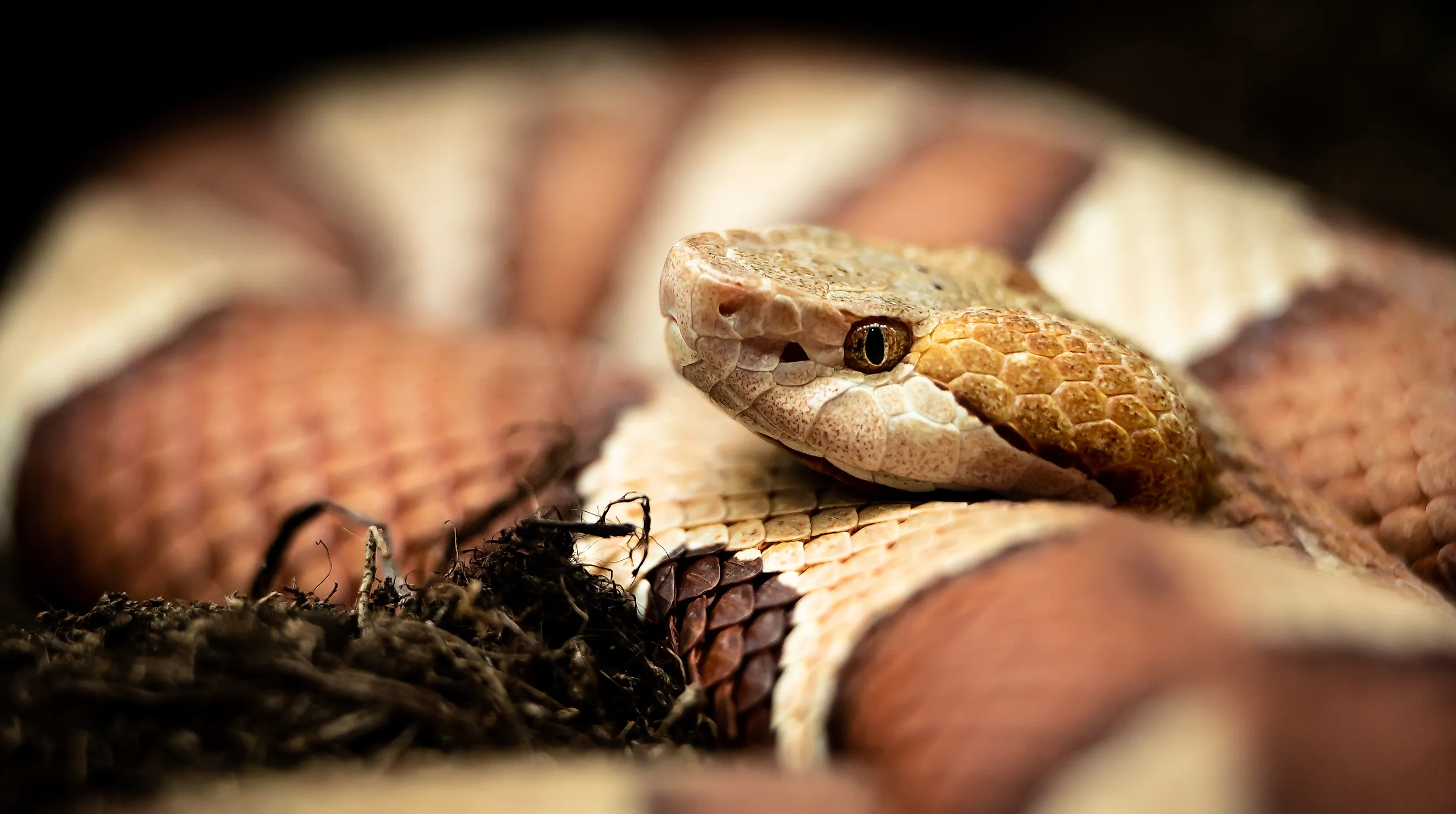
Copperheads' pattern of brown and dark dorsal scales can help them blend in with dead leaves or other darkly colored underbrush. Most of the snakes here are nonvenomous, such as water snakes or garter snakes that are common in the Cumberland Plateau.
Big Ridge State Park

Big Ridge State Park is just shy of 3,700 acres in the foothills of the Appalachian Mountains. Initially made of farmland and homesteads, it was acquired by the Tennessee Valley Authority, which transformed it with hiking trails leading to a lake, an abandoned home, and up through Chestnut Ridge.
One of its most famous hikes is on the Ghost House Trail, circling a cemetery and an alleged haunted house. But on this trail, one could just as easily get spooked by a snake.

The scariest snake one might see is a copperhead. These snakes are responsible for more snake bites than any other species, although there's debate as to what causes this. Some say this is due to the snake freezing in place when approached by a human rather than fleeing. It's also possible that this snake bites more because it is comfortable in residential areas.
Guests at the park have also reported catching sight of small and fast snakes, such as the worm snake, which only grows between 7 and 11 inches in length and feeds off of earthworms in the dirt. Another small snake one might see is the smooth earth snake, which only grows as large as 10 inches. Neither of these snakes is venomous.
Reelfoot Lake State Park

Reelfoot Lake was born out of a cataclysm. When an earthquake hit this section of the Mississippi River in 1811-1812, it moved the river backwards and sank the land, forming the cypress-filled Reelfoot Lake. The water here is quite shallow an average of 5 feet, making it easy for water snakes to find prey close to the surface.
The vast majority of snakes here are nonvenomous varieties of watersnakes, such as the northern watersnake, the plain bellied watersnake, and the diamond-backed watersnake, named after its diamond blotches on its back. On land, one might see the eastern milk snake, with its red on black on white coloring.

There is one venomous snake that lives in these waters: the northern cottonmouth. Sometimes referred to as a water moccasin, this semi aquatic snake can grow from 24 to more than 48 inches long. Their venom profile is hemotoxic and cytoxic, meaning it directly impacts circulation, damaging blood vessels and preventing blood clotting.
If threatened, the cottonmouth will reveal its most terrifying feature: its white, cotton-like mouth and fangs.
Norris Dam State Park

Located in eastern Tennessee, Norris Dam State Park was originally a recreation center for workers building the Norris Dam during the Great Depression. Today, the state park offers the same purpose to anyone who visits, with marinas, cabins, and trails both around the lake and in the surrounding valley. Northern water snakes can be found all throughout the park, including in live demonstrations at the park headquarters.
Norris Dam State Park regularly provides opportunities for guests to get up close and personal with snakes, whether that be water snakes or rat snakes. One such event is the charmingly named Make a Snake, Meet a Snake, letting children create their own craft snakes while also seeing real snakes. Venomous snakes are seldom spotted here, but timber rattlesnake sightings are possible in the rockier trails just outside of the lake. One of the best places to spot them is to look for a slope facing to the south, as it gives the snake enough sunlight to bask.
Roan Mountain State Park

Roan Mountain State Park sits at the border between Tennessee and North Carolina on a series of ridges known as the Roan Highlands. Previously a residential area and mining area, there are still remnants of those places in the park such as farmsteads and old mining trails. What often surprises visitors to this park is how close snakes get not just to the trails but even to the visitors center.
One frequently spotted snake here is the northern watersnake, with some guests reporting one can see several of them at once even while walking from the parking lot to the visitors center.

Despite their aquatic name, these snakes do come out onto dry ground to bask and restore their energy. This snake is most often misidentified as a cottonmouth due to both having dark colored scales and preferring the water.
This far out east on the border between Tennessee and North Carolina, the only two venomous snakes are copperheads and timber rattlesnakes. These snakes are important parts of the Appalachian ecosystem, keeping rodent and other small animal populations in control.
Warriors Path State Park

Warriors Path State Park has one of the most stirring names of any park, bringing to mind ancient warriors journeying off to battle. In the case of this park, it's named for the Great Indian Warpath, a route used by Cherokee and other nations who fought to protect these lands along Fort Patrick Henry Lake, but it could also equally apply to the warrior-like snakes who ambush prey either by the lake or up in the rockier ridges above it.
Visitors to the park regularly cross paths with these slithering warriors, such as nonvenomous ratsnakes, northern water snakes, and others.

There are no known cottonmouths here, with the primarily venomous ones hiding in the debris or in the higher elevations of the park, including copperheads and timber rattlesnakes.
Although some argue there are visual cues to tell venomous and nonvenomous snakes apart, these don't apply to every species, and it can be easy to misidentify a snake when seen from a distance or while it is moving. In addition, if one is close enough to a snake to see its features, the snake will be more likely to show defensive behavior.
Identifying snakes is no easy challenge
There are many features to look out for in venomous snakes, such as slit pupils and more triangular heads, but these are not sure-fire ways to tell if a snake is venomous or not. For example, nonvenomous snakes often flatten their heads and bodies against the ground when threatened, such as water snakes, which can make their heads appear more triangular. In addition, although not native to Tennessee, there are venomous snakes with round pupils.
There is no reason to fear any of these snakes; rather, all should show respect for these snakes by giving them space and observing from a safe distance. This is especially true in state parks, as humans are only visitors to these spaces, for snakes these mountains, lakes, and streams are their homes.