How Old Is The Average American Forest?
Stand in almost any patch of woods east of the Mississippi River, and there is a good chance the oldest tree around is not much older than a great-grandparent. That is not because American forests are dying, but because most of them were cut down, plowed under, or grazed at some point in the last two centuries. What grows today is what has come back afterward.
The United States had roughly 1.02 billion acres of forest around the time of European settlement. By 1920, logging and land clearing for farms had pushed that figure down to about 721 million acres, the low point in the nation's forest history. Forest cover has been climbing back ever since, reaching close to 811.6 million acres by 2023, or about 36% of the country's total land area. That rebound is the answer to how old the average American forest is. Most of it is regrowth, not remnant, and its age traces directly back to when the ax, the plow, or the fire finally stopped.
Young, Second-Growth, and Getting Older

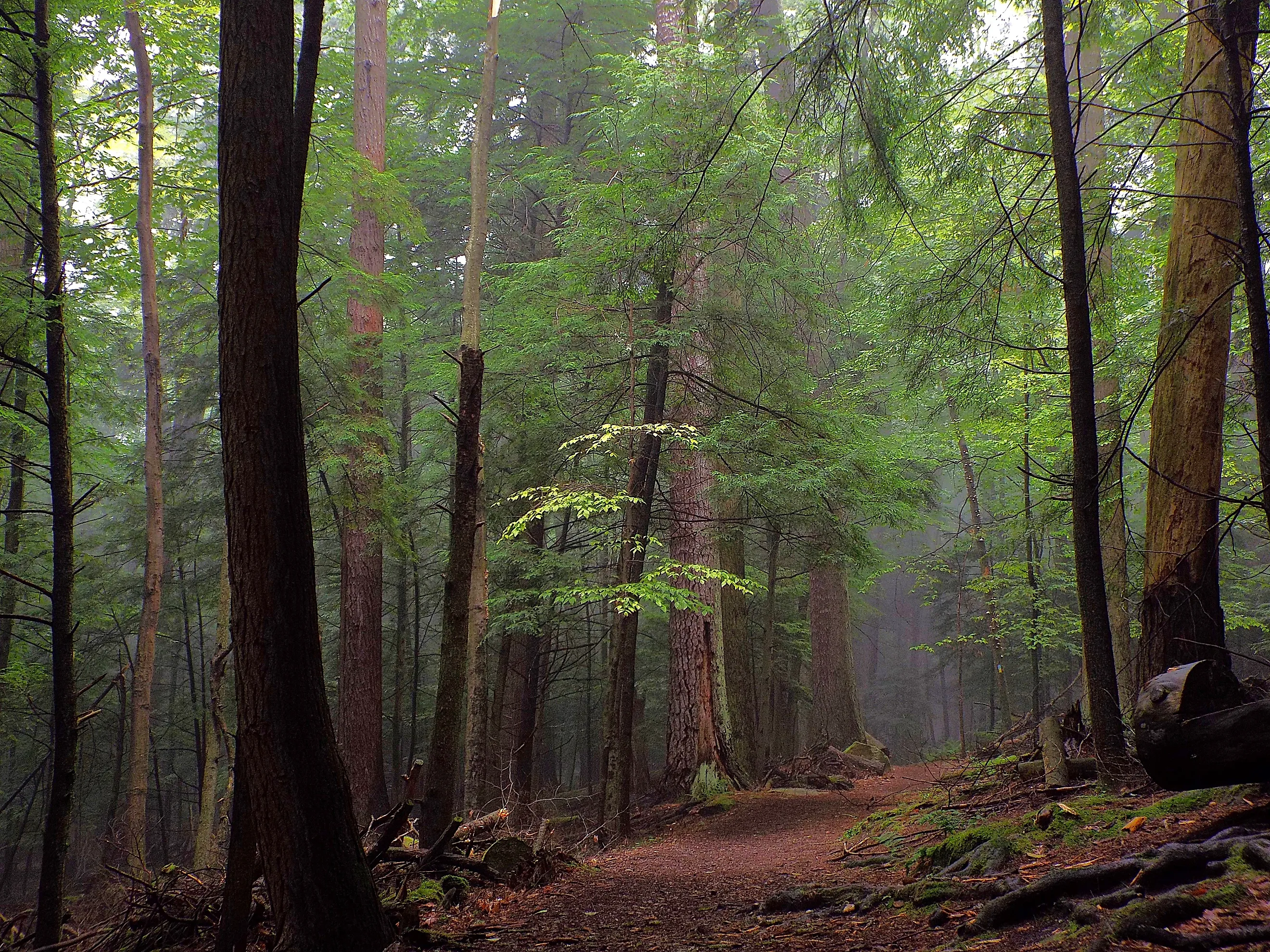
Tree age varies enormously by species, region, and disturbance history, and the Forest Service does not publish one flat figure. But the shape of the story is well established. Most eastern forest, which covers about 384 million acres of mostly privately owned land, grew back over the last 100 to 150 years, on land that was once cleared for agriculture in the 1700s and 1800s and then abandoned as farming shifted west, including the woods along the Appalachian Mountains and around the Great Smoky Mountains.
Western forest, spanning roughly 363 million acres and more likely to be publicly managed, includes older stands. However, it too was heavily logged in the late 19th and early 20th centuries. The Pacific Northwest bore most of the brunt, and even the best national forests in the Pacific Northwest still carry the marks of that era. Those two regional figures cover inventoried forest land, and they fall short of the national total for two reasons.
Roughly 58 million acres are classed as woodland rather than forest, and the vast boreal interior of Alaska has never been sampled by the national inventory at all. The result is a country where genuinely old, untouched forest is the exception rather than the rule, and "second-growth" is the default condition of most American woods.
Why American Forests Are So Young
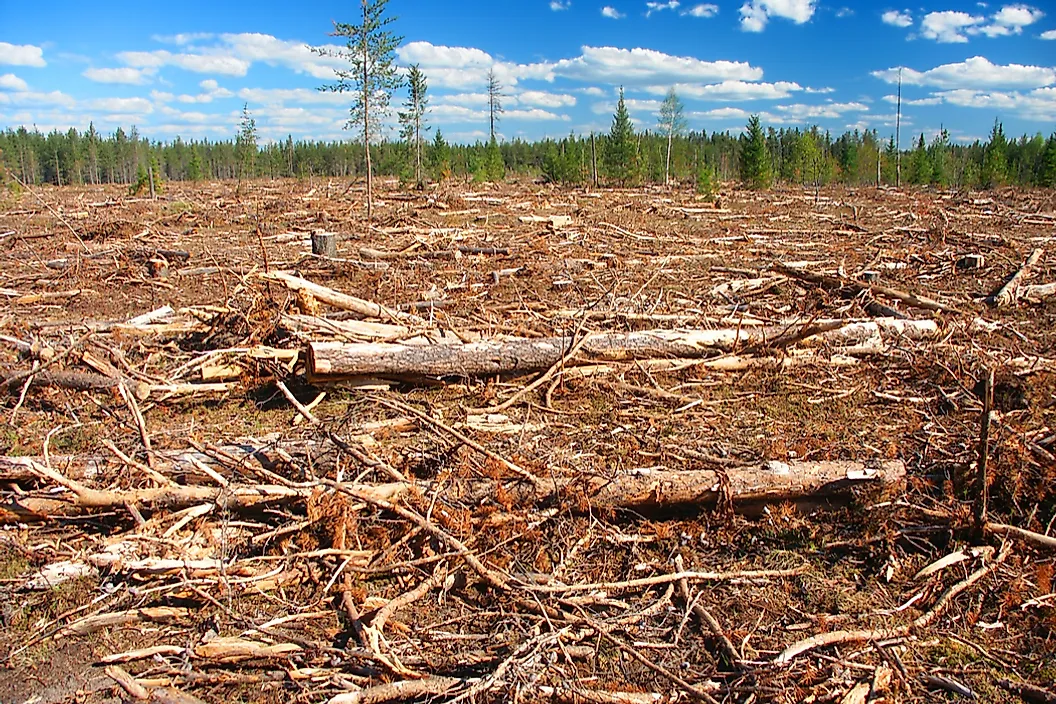
The timeline is fairly blunt. Colonial-era clearing for farmland and timber began in earnest around 1650 in the Northeast. Then, over the following two centuries, it removed more than half of the region's original forest cover, with eastern forest cover bottoming out around the mid-19th century. What reversed the trend was not conservation policy, it was economics. As agriculture expanded onto the more productive soils of the Midwest, farmers in New England and the Mid-Atlantic walked away from marginal, rocky fields, and forest naturally reclaimed them.
That wave of farm abandonment, concentrated from the late 1800s into the early 20th century, is why so much of today's eastern forest, including large stretches now inside places like the Adirondack and Appalachian Mountains, is functionally around a century old. One long-term study of northeastern forests found that even after more than 150 years of this natural reforestation, the region's ecosystems are still in early stages of recovery. Today, less than 1% of the East's original old-growth forest survives intact.
Nationally, forest cover kept shrinking until around 1920, driven by continued clearing in the South and the industrial-scale logging of old-growth stands in the Great Lakes states and the Pacific Northwest. Since then, regrowth, reforestation, and the retirement of marginal farmland have slowly rebuilt total forest acreage, though the mix of species and structure in that second growth rarely matches what stood there before.
Old-Growth, Second-Growth, and What's Left

"Old-growth" and "second-growth" get used loosely, but they describe genuinely different forests. Old-growth stands have never been cleared and show the structural markers of centuries of undisturbed growth, meaning large, old trees, standing dead snags, and a complex, multi-layered canopy. Second-growth forest has regrown, naturally or through replanting, after a previous stand was removed by logging, fire, or agriculture, and therefore tends to be more uniform in tree age and size.
In 2023, the Forest Service and the Bureau of Land Management completed the first nationwide inventory of mature and old-growth forest on the land they manage, ordered by executive order the year before. It found that old-growth stands cover about 18% (roughly 32 million acres) of forest on those two agencies' land, with another 45% (about 80 million acres) classified as mature forest. Together, they account for more than 60% of the more than 178 million forested acres those agencies oversee, most of it concentrated in the Lower 48. That 18% sits oddly beside the figure of under 1% for the East, and the two are not in conflict.
Federal forest land is concentrated in the West, at high elevation, on ground that was rarely farmable and often not worth logging, so it holds a far higher share of old growth than the country as a whole does. Nationally, something closer to 6% of precolonial forest survives, running at roughly 5% in the West against under 1% in the East. The federal share is also a far larger one than outside researchers had previously estimated, and it reflects a fairly generous federal definition of "mature." The inventory does not cover state, private, or tribal land, which make up the majority of forest acreage nationally and generally skew younger and more actively managed. Structural complexity like this is also one reason certain forests support outsized wildlife diversity, a pattern explored in the most biodiverse forests in the United States.
A Century of Fire Suppression Made Forests More Uniform

Age structure is not just about when a forest was last cleared, it is also about fire history. This is where national forests differ sharply from national parks. Many western forest types evolved with frequent, low-to-moderate-severity fire. Lodgepole pine carries a fire cycle of roughly 150 to 400 years and produces resin-sealed, or serotinous, cones that only release their seeds when heat from a fire melts the seal, clearing the ground and canopy for the next generation. Giant sequoia, which grows in isolated Sierra Nevada groves rather than as a widespread forest type, relies on the same mechanism through semi-serotinous cones and needs periodic fire to expose bare mineral soil for its seedlings.
For most of the 20th century, US fire policy aimed to suppress nearly all wildfire, on both Forest Service and Park Service land. That approach kept individual fires small in the short term, but it let dead wood, brush, and dense young trees accumulate for decades. More than a century of that fuel buildup is now a documented factor behind today's larger, more severe wildfires, including fires hot enough to kill even fire-adapted giant sequoias outright, a mortality pattern that was rare before recent decades.
Understanding which states see the most of this activity today starts with which US state has the most wildfires. Managed burns and thinning have become standard tools in recent decades precisely to undo some of that suppression-driven uniformity and restore more natural age variation to fire-adapted forests.
Where The Oldest American Forests Still Stand

The forests that dodged the clearing and the worst of the suppression era tend to cluster in a few places, and they are disproportionately on federal land. Alaska's Tongass National Forest, at 16.7 million acres the largest national forest in the country, protects the largest intact temperate rainforest left on Earth. Featuring old-growth Sitka spruce and western hemlock, the forest predates the country itself. It is followed by Chugach National Forest, also in Alaska, at roughly 6.9 million acres, and by Humboldt-Toiyabe National Forest in Nevada and eastern California, the largest national forest in the Lower 48 at 6.3 million acres.
Beyond Alaska, meaningful old-growth remains in pockets of the Pacific Northwest, including stands of centuries-old Douglas-fir in Willamette National Forest, and in the Southern Appalachians, where the old-growth remnants of the Great Smoky Mountains survive largely because the terrain was too steep to log profitably. A closer look at the country's largest surviving stands is in the biggest old-growth forests in the United States.
Every Forest Carries A Record Of What Happened

The answer to "how old is the average American forest" is not a single number, it is a pattern. Most of the country's forest is somewhere between 60 and 120 years old, having regrown since farm abandonment, the end of industrial-scale 19th and early 20th century logging, or both. The old-growth that remains is real, well documented, and worth seeking out, but it is a minority of what remains out there, concentrated in a handful of protected strongholds like Tongass and the steep, hard-to-log corners of the Appalachians.
Understanding that history changes how a hike through a "wild" eastern forest reads. That dense, even-aged stand of maple and oak is less a relic of untouched nature than a working record of what happened to the land a century ago, and what it is still doing to grow back. For the bigger picture on how forest cover has shifted more recently, see how much forest the US loses every year.