Biggest Old Growth Forests In The United States
Some of the trees in this article were already centuries old when the first Europeans stepped off their boats. That is the thing about old-growth forest: it is not just a stand of big trees, it is a whole ecosystem left alone long enough to get complicated, with massive ancient trunks, fallen logs feeding the next generation, and layers of life packed in top to bottom that a replanted timber lot simply cannot fake. The United States still holds some genuinely enormous stretches of it. One fair warning before we start, though: nobody fully agrees on how to measure old-growth, and many of the official surveys are decades old, so treat the acreages below as solid estimates rather than to-the-acre gospel. One thing is not in doubt. When it comes to sheer scale, Alaska wins, and it is not close.
1. Tongass National Forest, Alaska (about 5.4 million acres)

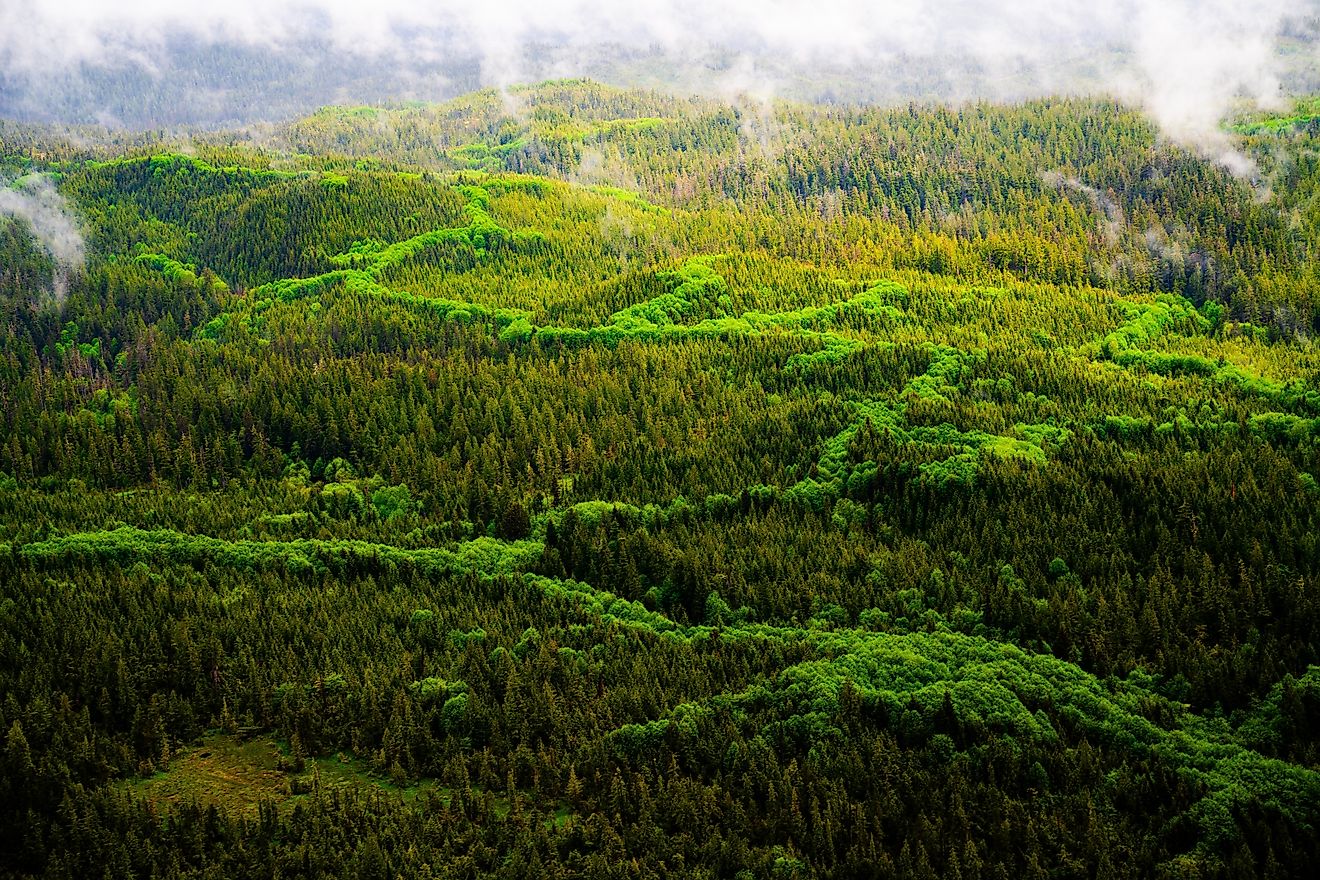
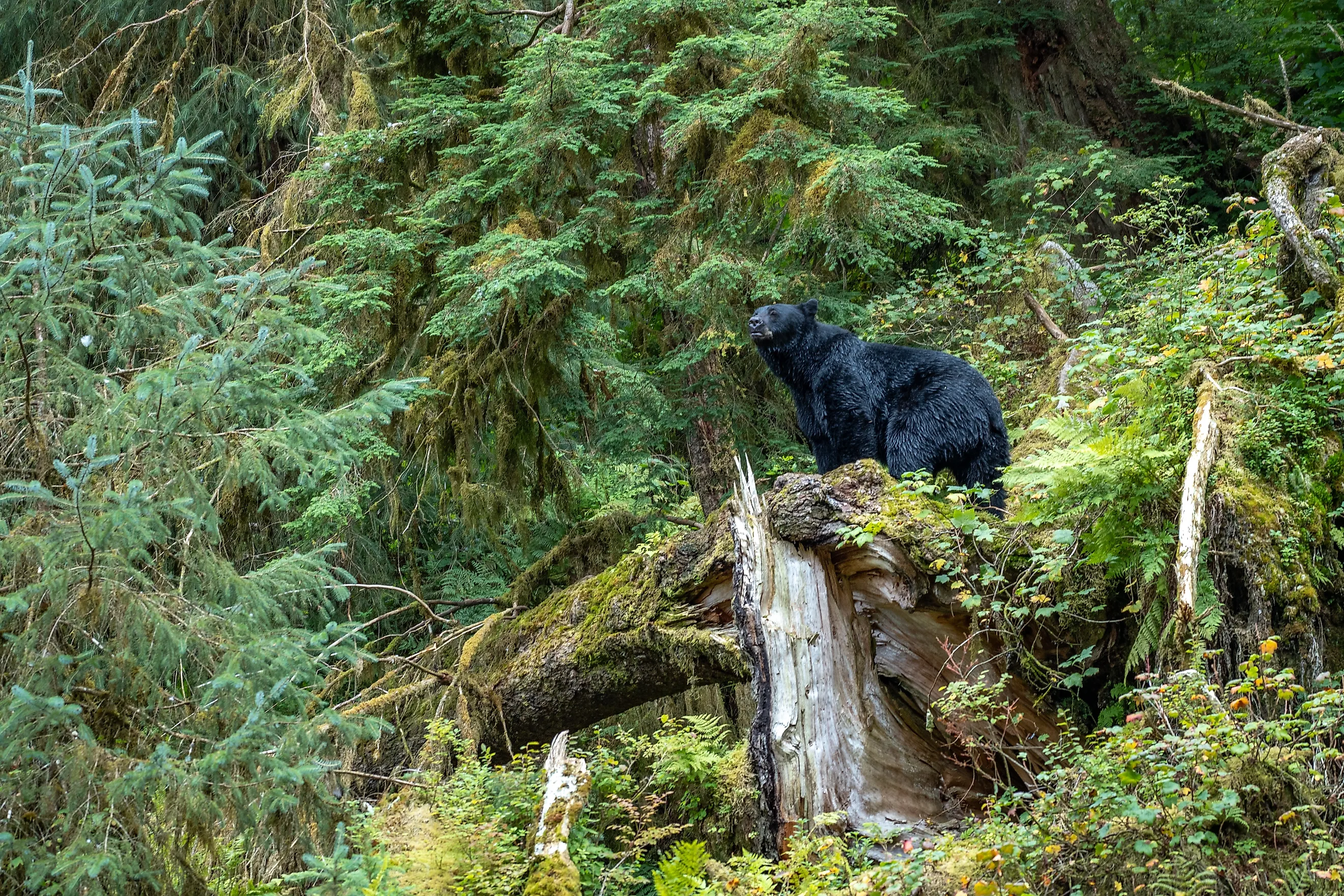
It is almost unfair to rank the Tongass against anyone else. This is the largest national forest in the country, nearly 17 million acres of Southeast Alaska, and roughly 5.4 million of those acres are old-growth coastal temperate rainforest, the biggest stand of its kind anywhere on Earth. To put that in perspective, the old-growth alone is roughly the size of New Jersey, draped in moss, fog, and silence. Step inside and you get thousand-year-old Sitka spruce and red cedar, salmon streams, brown and black bears, bald eagles, Sitka black-tailed deer, and the rare Alexander Archipelago wolf. It also does quiet work for the whole planet: the Tongass alone stores something like a fifth of all the carbon held across every US national forest combined. Its future has been a genuine tug-of-war. The 2001 Roadless Rule shielded it from new logging and roads; that protection was stripped away in 2020, restored in 2023, and as of 2025 the federal government is moving to undo it again, with a 2026 proposal to reopen part of the forest to the saws.
2. Ouachita National Forest, Arkansas (about 800,000 acres)

Down in the Ouachita Mountains, straddling Arkansas and Oklahoma, an estimated 800,000 acres of old-growth shelter more than 60 native tree species and a genuinely odd local celebrity: a bioluminescent earthworm that glows in the dark. The Ouachitas also run east to west, a rarity among American mountain ranges, which gives their slopes a split personality of sun-baked southern faces and cool, shaded northern ones. The bigger danger here is not only the saw, it is the absence of fire. These woods evolved with regular low burns, and decades of stamping out every flame let the understory thicken into an unnatural tangle, crowding out the open, grassy woodland that many species depend on. The Forest Service has since flipped its approach, deliberately reintroducing managed fire to nudge the landscape back toward what it used to be.
3. Mount Baker-Snoqualmie National Forest, Washington (about 644,000 acres)

Barely an hour from downtown Seattle, the Mount Baker-Snoqualmie forest tucks roughly 644,000 acres of old-growth into the North Cascades, and it is one of the most-visited national forests in the country. It also holds more glaciers, snowfields, and alpine lakes than any other forest in the Lower 48, which makes it a magnet for bald eagles and weekend hikers alike. On a clear day the glaciated cone of Mount Baker looms over everything, while the lower valleys stay green and dripping almost year round. Congress has locked up much of it as designated wilderness, so a good share of those ancient trees should stay ancient.
4. Willamette National Forest, Oregon (about 595,000 acres)

The Willamette runs for more than a hundred miles down the spine of Oregon's Cascades, and around 595,000 acres of it are old-growth: towering western redcedar, hemlock, and Douglas-fir, some of the firs eight feet across and five centuries old. More than 300 animal species live among them, including spawning salmon, wolverines, and cougars. Threaded through the forest is the McKenzie River, a ribbon of cold, glass-clear water that anglers and rafters guard jealously. The forest was logged hard for decades, though timber production has dropped sharply in recent years, and the surviving old-growth is now largely protected as wilderness.
5. Fremont-Winema National Forest, Oregon (about 550,000 acres)

Here is where the old version got tangled. It counted Winema and Fremont as two separate forests, but the two were administratively merged back in 2002 into the single Fremont-Winema National Forest, and a Forest Service survey put the combined old-growth at roughly 550,000 acres. The forest is a study in contrasts: wet, towering Cascade slopes on the west give way to dry, juniper-dotted high desert in the east. The Winema half wraps right around Crater Lake before spilling into marsh and meadow; much of it was once part of the Klamath Reservation before being transferred to the federal government in the 1960s and 70s. Mountain lions, mule deer, and threatened bull trout all live here, alongside hundreds of plant species.
6. Umpqua National Forest, Oregon (about 535,000 acres)

The Umpqua, also in Oregon's Cascades, carries about 535,000 acres of old-growth and an unusually varied cast of trees: spruce-fir stands, mixed conifer, and old Ponderosa pines all share the ground. That mix supports the usual Pacific Northwest crowd of black bears, deer, foxes, owls, and eagles. It is also waterfall country, threaded by the North Umpqua River and dotted with cascades like Toketee Falls, which pours over a wall of columned basalt. Like its neighbors, it faces steady pressure from logging.
7. Blue Oak Woodlands, California (about 500,000 acres)
This one is a bit of a ringer. The blue oak (Quercus douglasii) grows only in California, ringing the Central Valley through the Coast Ranges and the Sierra Nevada foothills, and its woodlands cover something like 500,000 acres of old growth. Calling it a "forest" is generous, since blue oak country is really an open, golden savanna of widely spaced trees rather than a closed canopy, but the oldest of these gnarled, drought-proof oaks have stood for centuries. In spring the ground beneath them turns electric green before fading to the famous tawny gold that gives California its summer color. They shelter a quirky lineup of California specialties, including Costa's hummingbird, the rosy boa, and the coast horned lizard, and they have been squeezed hard by development, farming, and dams.
8. Boundary Waters, Minnesota (about 400,000 acres)

Up on the Minnesota border with Canada lies canoe country: the Boundary Waters Canoe Area Wilderness, the US half of a vast lake-and-forest expanse within the Superior National Forest. Its Canadian twin across the line is Quetico Provincial Park, in Ontario. Threaded among the Boundary Waters' lakes and bogs are roughly 400,000 acres of old northern forest, including aspen, birch, maple, and stands of red and white pine that slipped through the logging era. With more than a thousand lakes linked by canoe portages, it is one of the most popular wilderness areas in the country, and its skies are dark enough to be a designated sanctuary for stargazing. Most of it is federally protected wilderness, which is exactly why it still looks the way it does.
9. Sierra National Forest, California (about 383,000 acres)

The Sierra National Forest holds about 383,000 acres of old-growth on the western slope of California's Sierra Nevada. Up high it is lodgepole pine and red fir, and because the forest climbs through montane, subalpine, and alpine zones, the scenery and the wildlife shift dramatically with every few thousand feet of elevation. It also keeps very good company, sitting between Yosemite and Kings Canyon and taking in a slice of the John Muir Wilderness, named for the man who did more than anyone to make Americans fall in love with these mountains.
10. Great Smoky Mountains National Park, Tennessee (about 187,000 acres)
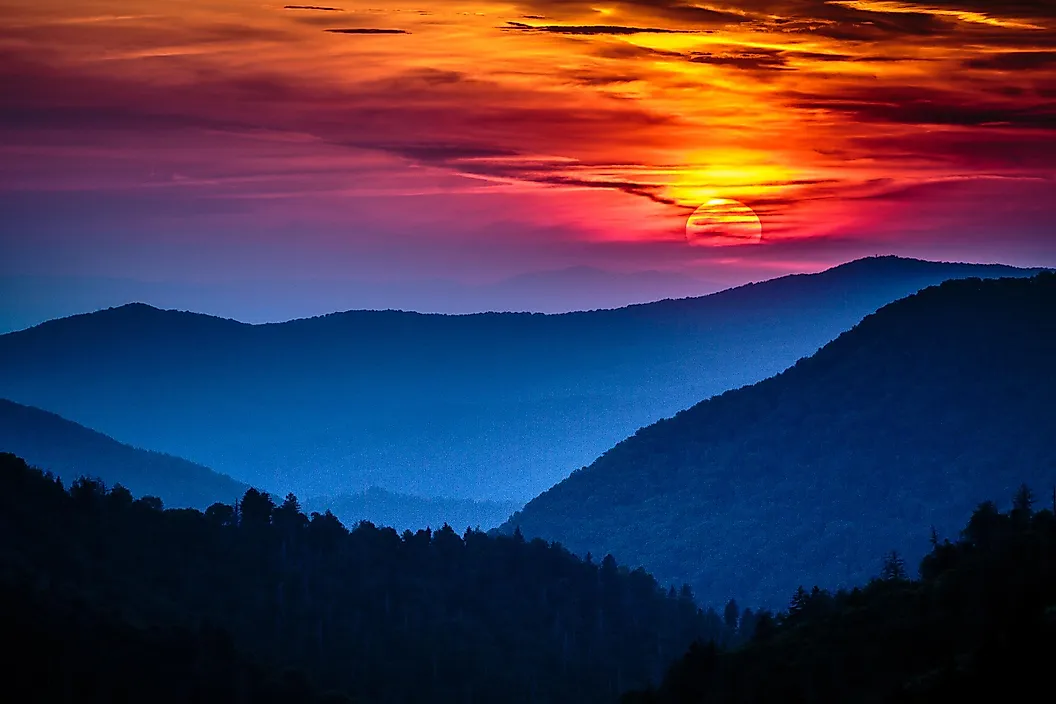
The only eastern entry on the list earns its place. The Great Smoky Mountains, straddling the Tennessee-North Carolina line, protect the largest stand of old-growth in the eastern United States, an estimated 187,000 acres of it (some surveys land closer to 100,000). The park dodged the worst of the early-1900s logging rush, and what survived is extraordinary: ancient tulip poplars and hemlocks, deep cove hardwood forests, and more native tree species than any other national park in North America. It is also the most-visited national park in the country by a wide margin, which makes its hushed old-growth groves a small miracle of survival.
Biggest Old-Growth Forests in the US
| Rank | Forest | State | Approx. Old-Growth Area |
|---|---|---|---|
| 1 | Tongass National Forest | Alaska | ~5.4 million acres |
| 2 | Ouachita National Forest | Arkansas / Oklahoma | ~800,000 acres |
| 3 | Mount Baker-Snoqualmie National Forest | Washington | ~644,000 acres |
| 4 | Willamette National Forest | Oregon | ~595,000 acres |
| 5 | Fremont-Winema National Forest | Oregon | ~550,000 acres |
| 6 | Umpqua National Forest | Oregon | ~535,000 acres |
| 7 | Blue Oak Woodlands | California | ~500,000 acres |
| 8 | Boundary Waters (Superior National Forest) | Minnesota | ~400,000 acres |
| 9 | Sierra National Forest | California | ~383,000 acres |
| 10 | Great Smoky Mountains National Park | Tennessee / North Carolina | ~187,000 acres |
The Legends That Win on Other Terms

The acreage chart hands the crown to the giant forests of the West and Alaska, but a couple of legends win on entirely different terms. California's coast redwoods are the tallest living things on Earth, topping 350 feet, while its giant sequoias are the most massive by sheer volume, single trunks weighing as much as a fleet of locomotives. Neither tops this list, because the groves themselves are fairly small, but for a walk among genuinely ancient trees they are tough to beat. Wherever you end up, the rule holds: old-growth takes centuries to grow and an afternoon to cut, which is why so much effort now goes into protecting what is left.