The Difference Between A County And A Borough
Just one Alaska borough can be bigger than an entire state. North Slope Borough covers about 88,824 square miles of land, more than Utah's roughly 82,377 square miles. In the United States, a county is the primary legal division in most states, while the meaning of "borough" depends heavily on where you are. In Alaska, boroughs are county equivalents. In states such as Pennsylvania and New Jersey, boroughs are municipalities. The term takes on a third meaning in New York City.
Why Counties Exist

Counties and boroughs both exist because states have created different systems for organizing local government. Most states divide their territory into counties, although the powers of those counties vary considerably. In Louisiana, the equivalent unit is the parish, and in Alaska the boroughs and census areas serve that role, both treated by the Census Bureau as county equivalents.
"Borough" is less consistent. It is a legal term whose meaning is determined by individual states. A Pennsylvania borough is a type of municipality within a county. In New Jersey, the borough is one of several municipal types defined in state law. An Alaska borough, however, operates on the regional level occupied by counties in most other states.
County Size

Counties are often larger than boroughs, but that is not a rule. In Pennsylvania and New Jersey, boroughs are municipalities located within counties, so they are generally much smaller than the counties containing them. The Alaska pattern runs the opposite direction. Its organized boroughs are regional governments, and some cover enormous areas. North Slope Borough's 88,824 square miles of land make it larger than Utah. New York City's five boroughs cover substantial portions of the city and correspond geographically with five New York counties. Size alone is therefore no guide to whether a place is a county or a borough.
Location Of Counties

Counties usually occupy one of the largest levels of local geography below the state. A county may contain cities, towns, or other municipalities, depending on state law. Boroughs can occupy very different positions. Pennsylvania boroughs sit within counties. Alaska boroughs occupy the county-equivalent level themselves and can contain cities. New York City's boroughs divide a single consolidated city while also matching the geographic boundaries of its five counties.
Governing Bodies

County governments also vary by state. Many use a commission or county council, while some have an elected executive. Their authority comes from state law and can differ substantially across the country. The same is even more true of boroughs. Alaska's organized boroughs are regional municipal governments with elected assemblies. Pennsylvania and New Jersey boroughs operate as municipalities under their respective state laws. Their governments should not be confused with Alaska borough governments simply because they share the same name. New York City's boroughs are different again. The Census Bureau does not consider the five boroughs to be functioning governmental units of their own. They are parts of New York City's unified government, although each has an elected borough president with limited responsibilities.
Differing Responsibilities

There is no standard list of responsibilities that separates every county from every borough. County governments commonly handle regional functions such as elections, public records, and court-related administration, although the details differ by state. A borough that functions as a municipality may instead concentrate on services within a smaller incorporated community.
In Pennsylvania or New Jersey, those can include local streets, zoning, and public safety. Alaska boroughs function at a regional level. Their powers depend partly on their classification and charter, and they can levy taxes and provide services across areas that may contain several communities.
Exceptions
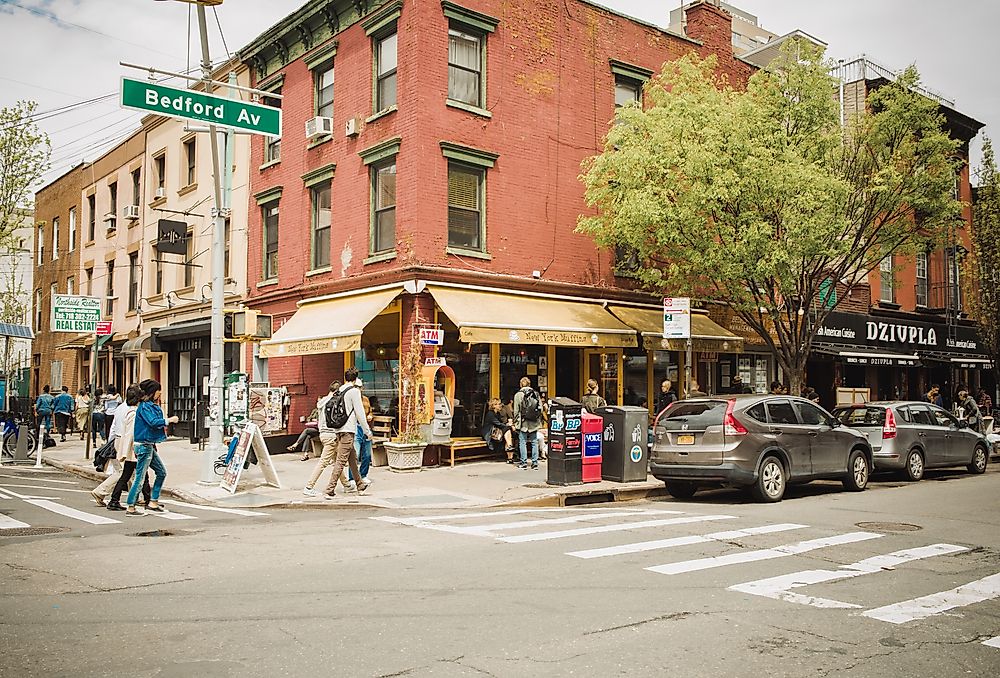
Alaska and New York City mark the far edges of what the word "borough" can mean. Alaska has no counties. Alaska.s framers wrote organized and unorganized boroughs into the 1959 state constitution in place of counties. Organized boroughs are regional municipal governments, while the Census Bureau divides territory outside them into census areas for statistical purposes. Both organized boroughs and census areas are treated as county equivalents in federal data.
New York City's arrangement is different. Each of its five boroughs corresponds to a New York State county. Manhattan corresponds to New York County and Brooklyn to Kings County. Staten Island corresponds to Richmond County, while the Bronx and Queens share their county names. Those counties are governmentally consolidated with New York City rather than operating like ordinary county governments elsewhere in New York State. The five boroughs remain important geographic and political divisions of the city, but they are not separate municipal governments in the way a Pennsylvania borough is.
Wrapping Up
Ultimately, the main difference between a county and a borough is how each state defines the terms. Counties are the primary legal divisions of most states, while "borough" can describe a municipality, a county equivalent, or one of New York City's five major divisions.
A Pennsylvania borough falls within a county. An Alaska borough stands at the county level itself. In New York City, a borough occupies the same ground as a county while forming part of one consolidated city government. The name stays constant, yet the geography behind it differs sharply from one place to the next.