The Counties That Changed Their Names
In 1843, Michigan changed the names of 16 counties in a single legislative act. Some lost names with Native American origins, while others received newly coined names, Irish place names, or names drawn from political figures. It was an unusually large renaming sweep, but far from the only time a United States county changed its identity on the map.
County names have changed for reasons ranging from revolution and political feuds to cultural recognition and simple shifts in local preference. A definitive national total is difficult to pin down because historical records also include counties that were abolished, divided, reorganized, or replaced. One major genealogical reference covering the period from 1790 to 1920 found county name changes or county abolishments in 37 states. The stories behind those changes are often more interesting than the names themselves.
The 1843 Wave of Michigan County Name Changes

Michigan's most dramatic round of county renaming came in 1843, when the legislature passed Act No. 67 of the Public Acts of 1843. Sixteen counties in the northern Lower Peninsula received new names at once. Many of these counties had only recently been set off and were not yet fully organized, so the changes happened before some had developed much of a local identity.
Among them was Animickee County, which became Alpena County. Alpena was a name created by Henry Schoolcraft, an author and Indian agent who coined several place names in Michigan by combining or adapting words from different languages. The name was said to carry the meaning of "the bird." Negewgon County became Alcona County, another Schoolcraft-created name, loosely associated with the idea of an "excellent plain." Kanotin County became Iosco County, a name Schoolcraft said meant "water of light."
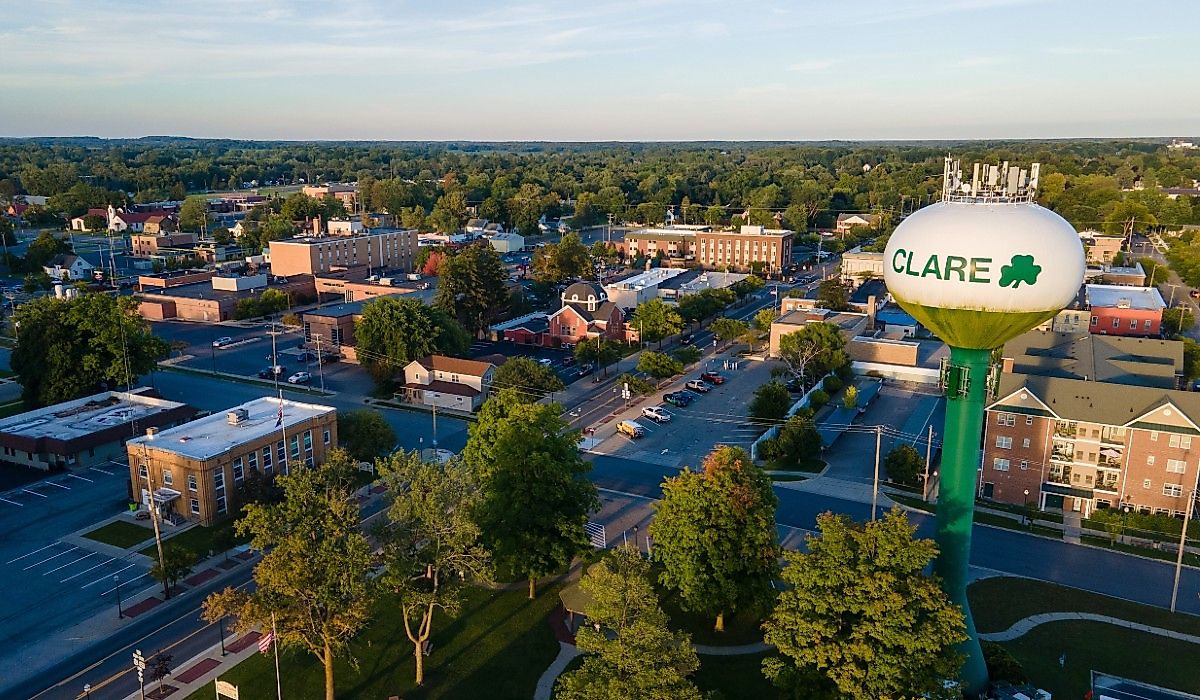
Not all of the replacements were invented names. Michigan also borrowed several county names from Ireland. Meegisee County became Antrim County, Kaykakee County became Clare County, Mikenauk County became Roscommon County, and Kautawaubet County became Wexford County. Another Irish connection came with Tonedagana County, renamed Emmet County for Irish nationalist Robert Emmet. Emmet was executed for treason in 1803 after leading an unsuccessful uprising against British rule.
Other counties took the names of American political figures. Notipekago County became Mason County, after Stevens T. Mason, Michigan's first governor. Then there was Wabassee County, renamed Kalkaska County. Schoolcraft is generally credited with creating the name, but its precise origin remains disputed. One theory connects it to his family name, Calcraft, with the spelling altered.
County Name Changes After the Revolutionary War

Another wave of county renaming came during and after the Revolutionary War, driven by political upheaval. Names tied to royal officials and members of the British monarchy suddenly became difficult to justify in a new republic. Virginia's Dunmore County had been created in 1772 and named for John Murray, the 4th Earl of Dunmore and the last royal governor of the Colony of Virginia. During the Revolutionary War, in 1778, the Virginia General Assembly renamed it Shenandoah County, taking its new name from the Shenandoah River.
North Carolina took a harder line with Tryon County, established in 1768 and named for William Tryon, a British royal governor who served first in North Carolina and later in New York. In 1779, the North Carolina legislature abolished the county entirely and divided its territory between Lincoln County and Rutherford County. Lincoln County took its name from Continental Army General Benjamin Lincoln, while Rutherford County was named for Brigadier General Griffith Rutherford of the North Carolina militia.
New York had its own Tryon County and settled on a similar course. In 1784, the state legislature renamed it Montgomery County in honor of General Richard Montgomery, an American officer killed during the attack on Quebec in 1775. That same year, legislators also struck another royal name from the map. Charlotte County, established in 1772 and named for Queen Charlotte, wife of King George III, became Washington County in honor of George Washington.
County Names That Changed With Political Winds

The Revolution was not the last time political pressure redrew the names on county maps. Several counties were named for nationally prominent figures only to have those honors revoked when political loyalties shifted. Vermont lawmakers created Jefferson County in 1810 to honor Thomas Jefferson. Just four years later, a change in the state legislature brought about another change on the map. Jefferson County became Washington County, the name it still holds today.
Florida's Hernando County had an even more complicated history. The county was renamed Benton County in 1844 in honor of U.S. Senator Thomas Hart Benton of Missouri. Benton later became increasingly unpopular among supporters of slavery's expansion, and in 1850 residents dropped his name and restored Hernando County, a nod to Spanish explorer Hernando De Soto.
Georgia's Cass County underwent a similar politically charged transformation. The county had been named in 1832 for Lewis Cass, a Michigan politician who later served as a U.S. senator and secretary of state. By the opening of the Civil War, Cass's support for preserving the Union had made his name deeply unpopular among Georgia secessionists. In 1861, the Georgia legislature renamed the county Bartow County in honor of Francis S. Bartow, a Confederate political leader and officer who had been killed at the First Battle of Manassas earlier that year.
Counties that Changed Names to Honor Native Americans
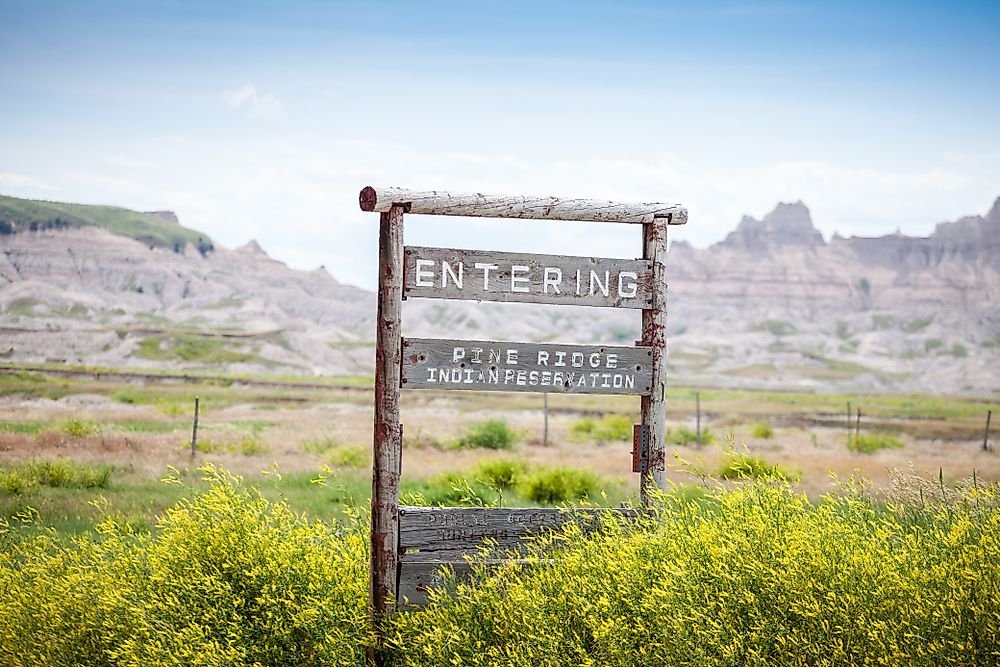
Some of the most recent county-level name changes have moved in the opposite direction, replacing names associated with outsiders with names tied more closely to the people who live there. For decades, Shannon County, South Dakota, covered much of the Pine Ridge Indian Reservation, home to the Oglala Lakota people. Yet the county's name did not reflect that connection.
In November 2014, residents voted to rename the county. The change took effect in 2015, when Shannon County officially became Oglala Lakota County. A similar change occurred in Alaska that same year, though Alaska does not have counties. Instead, it uses boroughs and census areas, which the U.S. Census Bureau treats as county equivalents.
The former Wade Hampton Census Area was named for Wade Hampton III, a Confederate general, South Carolina politician, and slaveholder. In 2015, the census area was officially renamed Kusilvak Census Area, taking a traditional Yup'ik name associated with the Kusilvak Mountains.
Some Counties Simply Outgrew Their Old Names

Not every renaming came from revolution or a political fight. Sometimes a name was replaced because another name seemed more appropriate for the place. Florida offers one of the most memorable examples. Mosquito County was created in 1824, covering an enormous stretch of central and eastern Florida. In 1845, it became Orange County. Whatever practical appeal the old name once had, "Orange County" proved to have considerably more staying power.
Another Florida county changed names during the Civil War. New River County, formed in 1858, became Bradford County in 1861, for Confederate Captain Richard Bradford, the first Florida officer killed during the Civil War, who died at the Battle of Santa Rosa Island. Alabama made one of its earliest county name changes only a few years after statehood. Cahaba County, created in 1818 and named for the Cahaba River, became Bibb County in 1820, for William Wyatt Bibb, Alabama's first governor.
Modifying County Monikers
The reasons for county name changes throughout history are many. Some changed because Americans no longer wanted British royal names after the Revolution. Others disappeared when political heroes fell out of favor. Michigan replaced 16 county names in one act, while South Dakota voters changed one nearly two centuries later to better reflect the Oglala Lakota community that lives there.
In some cases, even the reasons behind old names have become disputed or difficult to reconstruct. The lines on the map may stay in roughly the same place, but the names attached to them can tell a very different story from one generation to the next.