Biggest Threats To Coral Reefs
- The colorful coral reefs of the world are renowned for their high biological diversity and are also extremely beneficial to humans.
- Coral reefs are some of the world’s most fragile ecosystems and the condition of corals is a major indicator of the heath of the global ecosystem.
- Despite their significance, coral reefs are under extreme threat due to increased greenhouse gas emissions, ocean warming and acidification, pollution, and other human-caused issues.
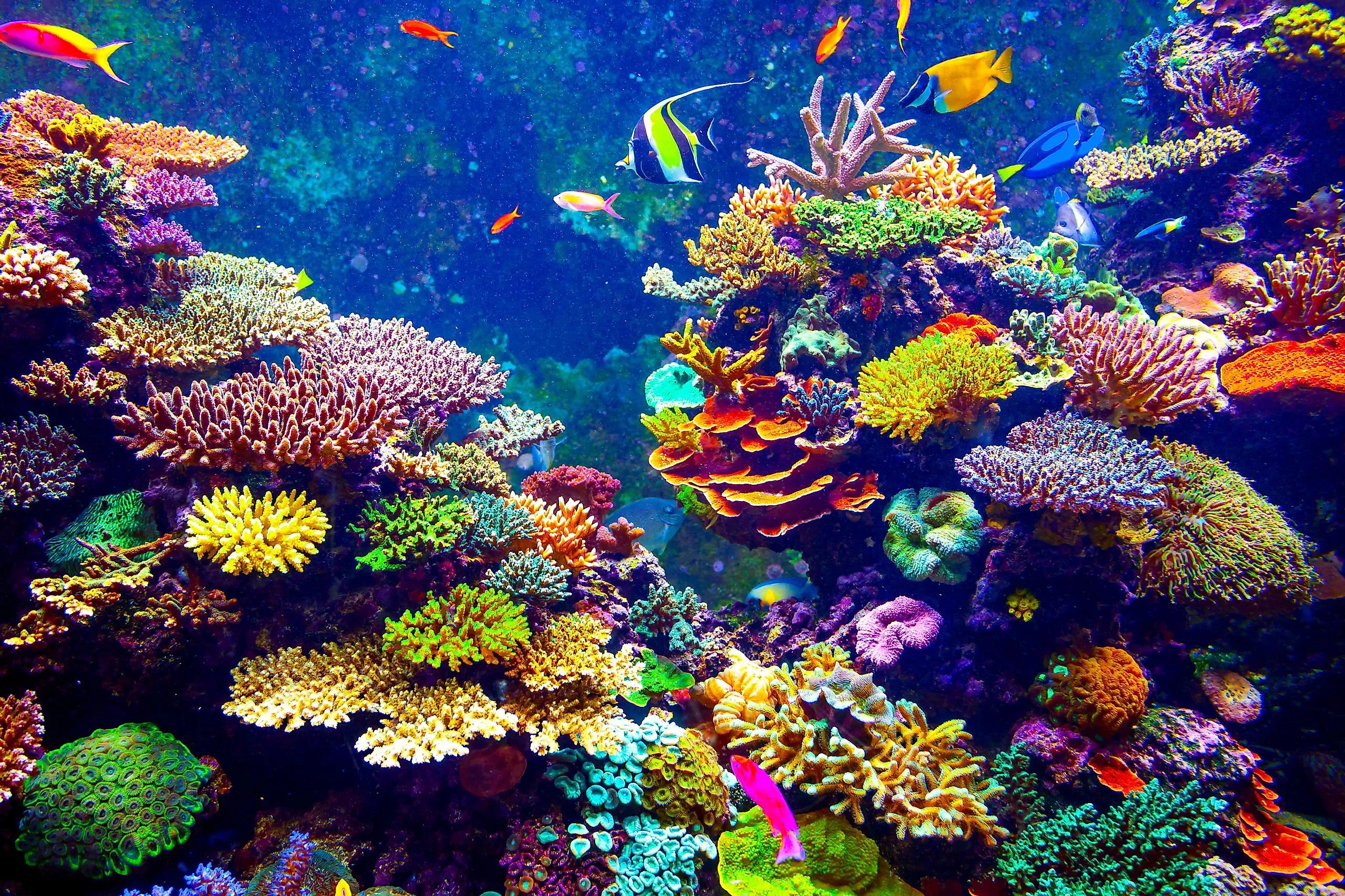
Sometimes referred to as the rainforests of the sea, the colorful coral reef ecosystems of the world are widely known for high biological diversity and their ability to provide a safe habitat, spawning, and nursery grounds for an incredible variety of marine species. Occupying less than 1% of the world’s ocean area, coral reefs are also extremely beneficial to humans in terms of the varied ecosystem goods and services they provide. Coral reefs are one of the world’s most fragile ecosystems and the condition of corals is a major indicator of the heath of the global ecosystem.
However, despite their significance to humans and other life forms, coral reefs are under extreme threat due to increased greenhouse gas emissions, ocean warming and acidification, pollution, and other human-made environmental threats. Scientists and researchers from the World Resources Institute have estimated that two-thirds of the world's coral reefs are facing serious threats. The following article discusses the different threats to the coral reefs.
Content:
- Climate Change
- Ocean Acidification
- Pollution
- Algae And Bacteria
- Increased Sedimentation
- Toxic Chemicals
- Marine Debris
- Destructive Fishing Practices
- Irresponsible Tourism
- Coral Mining
Threats To Coral Reefs
The major global threats to the coral reefs are as follows:
Climate Change

Coral reefs worldwide face the impacts of climate change because human-caused global warming has heated the Earth’s atmosphere and elevated the surface temperature of ocean waters. The microscopic algae living in coral polyps and contributing to coral health, called zooxanthellae, are sensitive to higher temperatures. Therefore, even a slight increase in ocean temperature can cause corals to expel the zooxanthellae, exposing their limestone skeletons and leading to the whitening or bleaching of coral tissues. When these bleached corals are exposed to warmer ocean waters for several days at a stretch, the corals will eventually die, and the reef will turn into a barren habitat. It has been estimated that the optimal water temperature for coral growth is around 20-28°C. However, if the water temperature falls below 18°C or rises above 30°C, most corals will bleach. With global warming continuing to heat the planet unabatedly, coral bleaching is expected to become more severe.
Ocean Acidification

An increase in atmospheric carbon dioxide levels due to the excessive burning of fossil fuels has led to ocean waters becoming increasingly acidic, a process referred to as ocean acidification. This, in turn, lowers the pH of ocean water, affecting coral reefs around the world. The carbonic acid formed as a result of this acidification process inhibits the ability of corals to build their calcium carbonate exoskeletons. The resulting weaker skeletons make coral reefs more vulnerable to disease and the subsequent destruction of the reef framework. Studies have also revealed that increased acidification leads to a decline in the biodiversity of coral reefs, resulting in the loss of important species required for the formation of healthy reefs.
Other climate change impacts, such as rising sea levels, stronger and more frequent tropical storms, and altered ocean circulation patterns (El Nino), also severely affect coral reefs. As sea levels rise, coral reefs are predicted to end up much deeper underwater, receiving much less sunlight and growing more slowly. Stronger tropical storms generate larger, more powerful waves that can break coral branches, overturn coral colonies, and destroy reef structure.
Coral reefs also face major threats from many local sources, which are as follows:
Pollution

Major pollutants that are released from various sources, mainly due to careless human activities, pose a serious threat to coral reefs and the wide array of marine floral and faunal species that are solely dependent on them. These pollutants are either directly dumped into the oceans or by runoff that flows from the land into the ocean via rivers and streams. A rise in the human population results in more development of coastal areas. This leads to the alteration of the landscape and an increase in land-based pollution sources threatening the health of coral reefs.
Algae And Bacteria

Nitrogen-rich fertilizers, animal wastes, human sewage, and untreated industrial effluents fuel rapid growth of harmful marine algae. This algae block sunlight and deplete oxygen in the water, causing ecosystem imbalance. The excess nutrients also promote the growth of dangerous microorganisms like bacteria and fungi, which can harm corals and increase their disease vulnerability. Additionally, hot water discharges from thermal power plants and oil spills can significantly damage coral reef health.
Increased Sedimentation

Sediments can enter water bodies through activities such as mining, farming, logging, construction, and urban stormwater runoff. When deposited on coral reefs, these sediments can smother the corals, hindering their growth and reproduction and threatening reef health. Higher volumes of suspended sediments decrease water quality and cause waters to become murkier, significantly reducing sunlight penetration vital for coral and benthic ecosystems.
Toxic Chemicals

Untreated effluents containing harmful chemicals released into water bodies from various industries pose a significant threat to coral reefs. Substances such as methylparaben and oxybenzone, common in many sunscreens, along with heavy metals like lead, copper, and mercury, interfere with coral reproduction and growth, ultimately causing coral bleaching.
Marine Debris

Abandoned fishing nets, discarded plastic bags, and fabrics also severely damage the coral reefs. It has been projected that by 2025, about 15.7 billion microplastics can come into contact with the coral reefs. Marine debris smothers the corals and prevents them from getting light and food.
Destructive Fishing Practices

Unregulated and unsustainable fishing practices like blast fishing, cyanide fishing, deep water trawling, etc., can physically damage coral reefs and eliminate the species inhabiting such reefs. Muro-ami, which involves banging on the reef with sticks to catch fish, is also another highly destructive fishing practice. Boat anchors and ship groundings crush some sections of the reef, ruining the reef habitat for other organisms.
Overfishing disrupts the food chain, impacting the ecological balance of coral reefs and destabilizing the entire ecosystem. When herbivorous parrotfish, which graze on seaweeds, are overfished, it allows uncontrolled growth of coral-damaging seaweed to smother corals. Additionally, many corals and tropical fish are collected for the aquarium market.
Irresponsible Tourism

The brilliant and vibrant hues of coral reef ecosystems attract tourists in great numbers. Fishing, diving, snorkeling, and boating are some popular recreational activities that tourists enjoy near the coral reefs. Touching the reefs, stirring up the sand and sediments in the seabed, and collecting corals are some of the activities that damage the reefs and disturb the species that inhabit such reefs.
Coral Mining
Corals are often harvested from reefs and are used for several purposes. Corals are used to make bricks, fill roads, or manufacture cement. They are also sold as souvenirs to tourists. These activities deplete the coral reefs of their main building blocks and lead to the degradation of the coral reef.