Which North American Cities Pay the Most For Electricity?
Here is a number that should make you check your own power bill: in San Francisco, the typical household pays roughly seven times as much per kilowatt-hour as a household in Montreal. Same continent, same basic technology, wildly different bottom line. Electricity prices swing on the cost of fuel, the age of the grid, the local regulator, and increasingly on who else is plugged in nearby. Every spring, Hydro-Quebec lines up the residential bills of two dozen major North American cities on one consistent yardstick, and the 2025 edition makes the pecking order clear. These are the cities where keeping the lights on costs the most, ranked by the average residential price for a household using 1,000 kWh a month, in Canadian cents per kilowatt-hour, before tax. One thing the ranking makes plain: this is not simply a story of cents per kilowatt-hour. Each city is served by a particular utility company, and that company, its fuel mix, its grid spending, and the charges its regulator lets it pass along, is often what decides where a city lands. Move the same household to a different utility and it can jump or drop several spots, which is exactly why this ranking shuffles the way it does. The name on the bill matters as much as the dot on the map.
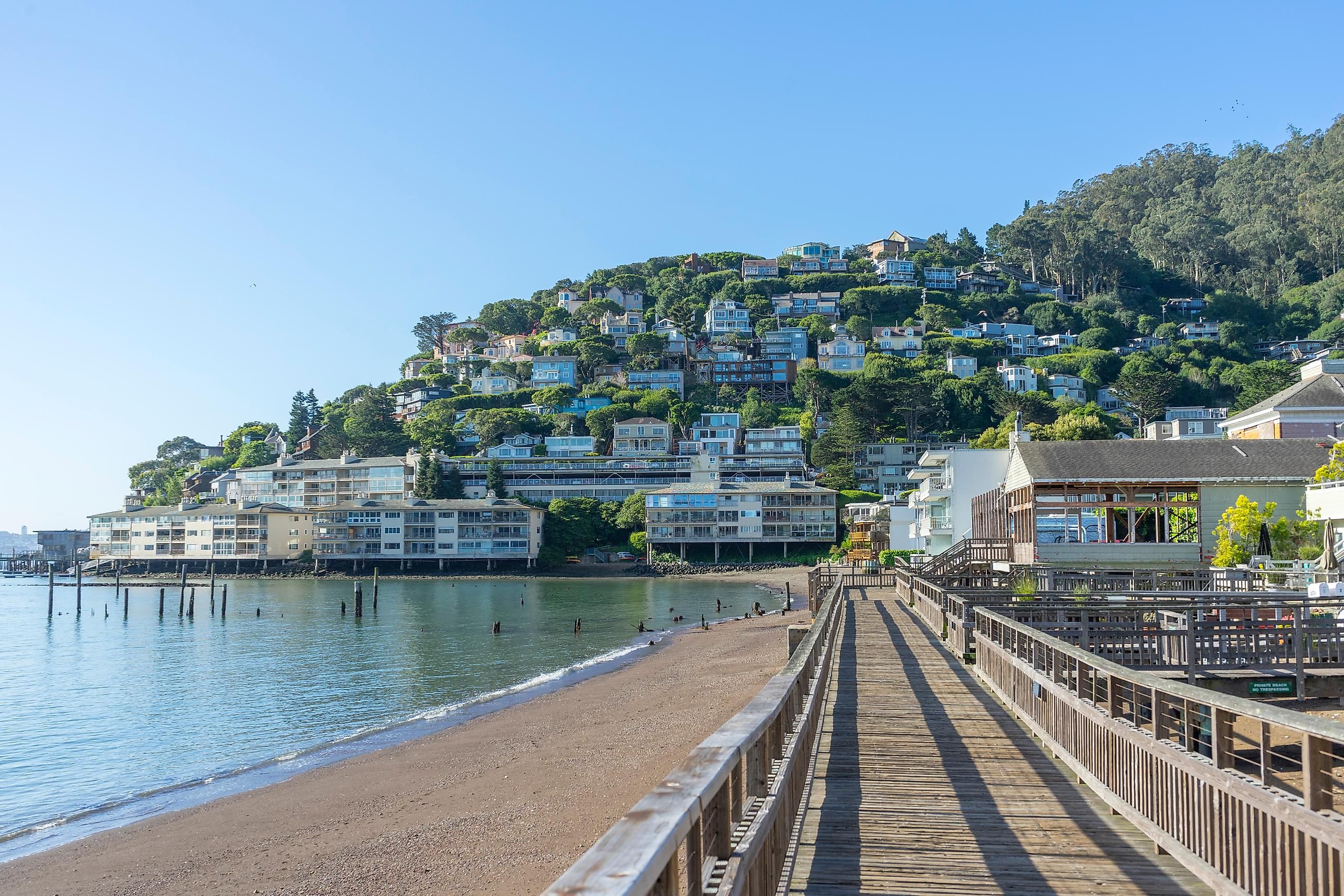
1. San Francisco, California - 59.94

No city comes close. At 59.94 cents per kilowatt-hour, San Francisco tops the continent, and the lead is not subtle. Pacific Gas and Electric, the utility serving the Bay Area, carries an extraordinary set of costs on its bills, including charges explicitly tied to wildfire mitigation and grid hardening after years of catastrophic fires linked to its equipment. Add California's broader spending on long-distance transmission and an aggressive clean-energy transition, and the math gets brutal. The state is a renewable-energy leader, yet its biggest city pays the highest household power price in North America, a paradox that defines the modern grid: building the future is expensive, and customers pay for it now.
2. New York, New York - 52.48

New York City takes the silver medal at 52.48 cents, more than six times what Montreal charges. Con Edison serves one of the most demanding and congested grids on earth, threading power through a dense maze of underground cables beneath the five boroughs, and that delivery network is staggeringly expensive to run and upgrade. The city also stacks on gross receipts taxes and a hefty sales tax, so the bill that lands in a New Yorker's mailbox climbs higher still. Powering an apartment in Manhattan, it turns out, is one of the priciest things about living there, which is saying something.
3. Boston, Massachusetts - 47.87

Here the numbers take a leap. Boston jumps to 47.87 cents, almost double Detroit's rate, and the gap captures New England's chronic problem. The region sits at the end of the natural gas pipeline network, so when winter demand peaks, fuel gets scarce and expensive precisely when it is needed most. Eversource, the local utility, layers on charges for grid modernization, renewable contracts, and storm recovery. One small mercy: Massachusetts charges no residential electricity tax, so the sticker price is the price. It is still enough to make a Bostonian wince.
4. Detroit, Michigan - 29.62

Detroit is the gateway to the truly expensive tier, and its rise is real. Michigan ran on coal for more than a century, and as DTE Electric retires those aging plants and rebuilds around gas, renewables, and a modernized grid, customers are footing the transition bill. The result is a residential rate of 29.62 cents, comfortably the highest in the Midwest and nearly the equal of some New England cities. The Motor City, long a symbol of cheap industrial muscle, now charges its residents more for electricity than all but three cities on the continent's major-city map.
5. Houston, Texas - 26.07

Texas likes to advertise cheap energy, and for businesses on its deregulated grid it often delivers. For Houston households, the story is less flattering. At 26.07 cents, the residential rate here lands fifth on this list, a reminder that the famous ERCOT market does not hand every customer a bargain. CenterPoint Energy delivers the power, retailers compete to sell it, and the bill still adds up, especially in a city where air conditioning runs for much of the year and summer demand sends prices climbing exactly when everyone needs the most relief.
6. Chicago, Illinois - 24.33

Among the giant American metros here, Chicago is the most affordable, which is a low bar to clear when the rest of the field includes San Francisco and New York. ComEd, the local utility, draws on a grid heavy with nuclear power, and Illinois generates more electricity from its reactors than any other state. That nuclear backbone helps keep generation costs in check. Even so, at 24.33 cents Chicago sits well above the prairie cities to its west, where surplus wind and gas keep prices low, proving that a dense, demand-hungry metro pays a premium no matter what is spinning the turbines.
7. Portland, Oregon - 23.90

Portland might surprise anyone who associates the Pacific Northwest with cheap hydro power. The dams still help, but they no longer set the whole price. PacifiCorp, the utility serving the city, has been folding in the cost of wildfire mitigation and grid upgrades, the same pressures squeezing utilities all along the West Coast. At 23.90 cents, Portland is a reminder that even a region blessed with rivers is not immune to the rising cost of simply maintaining and protecting the wires.
8. Calgary, Alberta - 22.90

Calgary edges out its provincial rival for the more expensive spot, and its recent history is even wilder. The same 2023 market chaos that hammered Edmonton sent Calgary, served by ENMAX, screaming up to 29.80 cents, nearly double its 2021 level of 17.26 cents. It has eased back to 22.90, but the lesson lingers: two Alberta cities now sit among the ten most expensive in North America, something that would have looked strange a decade ago, when cheap prairie gas kept the province comfortably mid-pack. Deregulation giveth, and deregulation taketh away.
9. Edmonton, Alberta - 22.00

Edmonton is the cautionary tale of a deregulated market, and the numbers tell the whole drama. Back in 2021 the city paid 16.99 cents. By 2023 it had spiked to a brutal 27.78 cents as Alberta's open-market prices went haywire. It has since settled back to 22.00 cents, which counts as relief only because of where it has been. EPCOR delivers the power, but Albertans buy the energy itself in a competitive pool rather than from a single regulated monopoly, which can mean savings in calm years and whiplash in volatile ones. The province runs largely on natural gas, so when gas gets expensive, so does the privilege of plugging in.
10. Halifax, Nova Scotia - 20.48

Nova Scotia's capital lands at the bottom of this list, but only by the standards of expensive company. At 20.48 cents, Halifax is the priciest Atlantic Canadian city in the survey, and the climb has been steady: it sat at 17.09 cents in 2021, so residents are paying about a fifth more than they were five years ago. The reason is sitting in the harbor and the smokestacks. Nova Scotia Power still leans on coal, natural gas, and petroleum coke, and fuel that has to be bought and burned tracks global prices in a way that hydro dams simply do not. Every time the utility wins a rate increase, and it has won several lately, the bill creeps up again.
How Things Have Changed
The old version of this story blamed cold snaps and coal plants. That script is out of date. The real drivers now are structural. Natural gas sets the price of roughly 40 percent of US electricity, so when gas climbs, bills climb with it. Utilities are pouring billions into hardening the grid against wildfires, storms, and floods, and those delivery costs land on every monthly statement. And a brand-new force has arrived: demand. After decades of flat growth, electricity use is surging, driven by AI data centers, electric vehicles, and new factories. Forecasters expect data centers alone could draw up to 17 percent of US power by 2030, up from roughly 5 percent today. The US residential average has jumped to about 17.6 cents per kilowatt-hour, up roughly 17 percent in just four years, with Washington, DC seeing a 22 percent spike in a single year.
A Quick Word on the Numbers
One caveat worth keeping in mind: these figures come from Hydro-Quebec's annual cross-border comparison, which converts every bill into Canadian cents and strips out taxes so the cities can be measured on the same footing. That makes the ranking consistent and fair, but it means the absolute numbers will not match the rate printed on your own bill at home, which arrives in local currency and usually with tax added. The order, though, tells the real story, and it is a story about companies as much as geography. The utility serving your block, the fuel it burns, and the costs its regulator lets it recover decide your place in line as surely as the state you live in. Whether you are in the Bay Area, the boroughs of New York, or the prairies of Alberta, the cost of keeping the lights on has become one of the defining household expenses of the decade, and for now it is still heading in one direction.