Where People Are Moving To In Scotland In 2026
Scotland's population barely grew between mid-2024 and mid-2025, increasing by about 2,200 people to roughly 5.55 million, but that small gain conceals substantial movement within the country. Deaths exceeded births by 16,200, while net migration added 17,900 residents, meaning Scotland would have lost population without people moving in. The figures here come from the National Records of Scotland (NRS), which published its mid-2025 population estimates in July 2026.
The national figure also hides a sharp split, because the population grew in only 12 council areas and fell in 20, while 121,420 people moved between council areas within the country. Growth is now clustered tightly around the two biggest cities, with East Lothian, Midlothian, and West Lothian all expanding on Edinburgh's edge and South Lanarkshire and East Renfrewshire absorbing people leaving Glasgow. Perth and Kinross is the exception, a regional centre beyond both city commuter belts that still recorded one of the highest migration rates in the country.
East Lothian

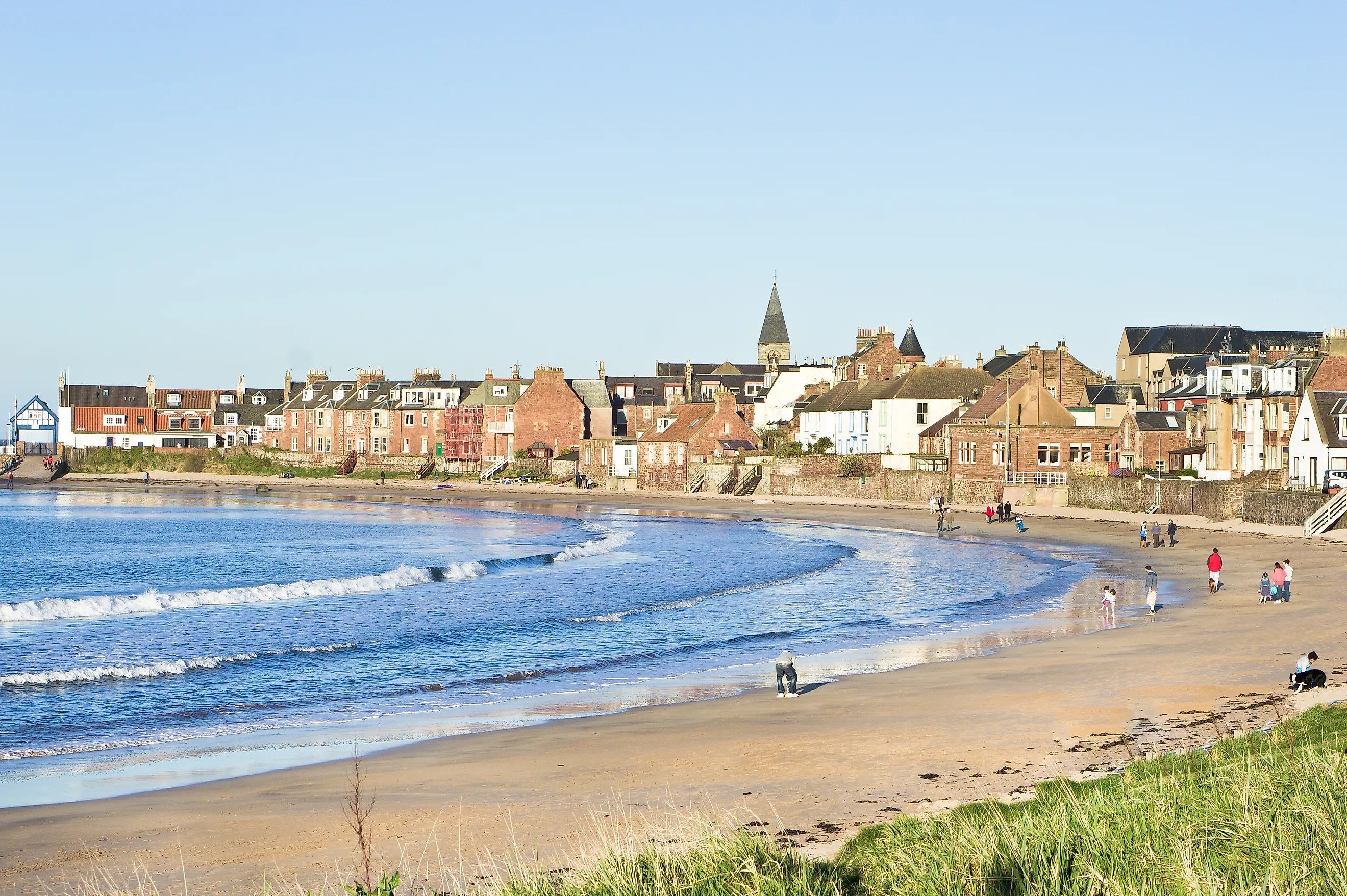
East Lothian recorded Scotland's fastest population growth between mid-2024 and mid-2025, adding 1,280 residents for a 1.1% increase and taking the council area to 116,460 people. Migration accounted for all of that gain. NRS estimated net migration at 1,520, or 13.2 per 1,000 residents, the highest rate of any Scottish council area. Most of it came from within Scotland, with a net gain of 1,370 people from other council areas, offset by a natural change of minus 245.
Much of the growth is occurring along East Lothian's western edge, where communities such as Musselburgh and Wallyford retain easy access to Edinburgh. Housing construction is expanding accordingly. East Lothian Council and its housing partners completed more than 100 affordable homes during 2025/26, with projects in Musselburgh, Wallyford, Tranent, and Longniddry, while additional homes have been approved around Wallyford. Musselburgh and Wallyford both sit on the North Berwick line, giving households a direct rail connection to the capital while new residential development expands the supply of homes outside the city boundary.
Midlothian

Midlothian added 670 residents between mid-2024 and mid-2025, a 0.7% increase that boosted the council area's population past 100,000. Its demographic position is unusual in Scotland. Midlothian was one of only two council areas, alongside Glasgow City, where births outnumbered deaths over the year. Net migration reached 650, and the within-Scotland component was larger still at 750, meaning Midlothian drew more people from other parts of Scotland than its overall migration total suggests.
The scale of housebuilding south of Edinburgh makes that growth visible. At Shawfair and Craighall Village, around 1,070 homes had been completed by July 2026, more than 1,100 were under construction, and approximately 3,000 more were moving through planning. Midlothian Council has separately approved a five-year programme to deliver 1,583 affordable homes. Shawfair's rail connection to Edinburgh gives the expanding communities direct access to the capital, while developments at Gorebridge and elsewhere are adding further housing. Midlothian is therefore absorbing population growth alongside a substantial physical expansion of Edinburgh's southern metropolitan edge.
West Lothian

West Lothian's population increased by 1,080 people, or 0.6%, between mid-2024 and mid-2025, reaching 187,240. Net migration of 1,300 drove that increase, and 1,050 of it came from elsewhere in Scotland. West Lothian also has one of Scotland's younger age profiles. Children aged 0 to 15 accounted for 18.1% of residents in 2025, the third-highest share of any council area, which marks it as a destination for households rather than solely for retirees.
Livingston is the district's principal population and employment centre, positioned between Edinburgh and Glasgow and connected to both by road and rail. Housing continues to expand there. Current council projects include new homes at Houston Road, Almondvale Crescent, and Simpson Parkway, while larger private proposals would add hundreds more homes alongside schools, employment space, and neighbourhood facilities. That development is already affecting public infrastructure, and West Lothian requires developer contributions toward education provision where new housing increases school demand. The result is a growth corridor where migration, housing construction, and service expansion are occurring together.
South Lanarkshire

South Lanarkshire recorded the largest within-Scotland migration gain of any council area in the year to mid-2025. Its population rose by 1,260 to 334,330, a 0.4% increase built on a net migration of 2,060. Almost all of the inflow originated next door. NRS flow data records 3,275 people moving from Glasgow City into South Lanarkshire and 1,724 moving the other way, a net transfer of more than 1,500 residents in a single year, with North Lanarkshire supplying the next-largest inflow.
Glasgow's own figures show that the city grew by 4,010 people over the year, but the gain came entirely from international migration, and Glasgow lost a net 4,740 residents to other Scottish council areas. South Lanarkshire absorbs a large share of that outward shift, and East Kilbride is the focal point. Council planners approved 600 homes in principle on the town's edge in June 2026, conditional on affordable housing and education contributions, as part of a designated growth strategy for the town. The council's Home+ programme completed 111 new homes over the past year and acquired 136 more through its Market Purchase Scheme, working toward a target of 1,300 additional homes by 2027. Construction is underway at Jackton and Newhouse Road in East Kilbride, Brackenhill Farm in Hamilton, and Cairnswell Avenue in Cambuslang.
East Renfrewshire

East Renfrewshire grew by 400 people, or 0.4%, to 99,840 between mid-2024 and mid-2025, and the composition of that gain is unusual. Net migration totalled 530, but the within-Scotland component alone was 740, because the council area lost residents both to the rest of the United Kingdom and to destinations overseas. Glasgow City again supplied most of the arrivals, with 1,916 people moving south into East Renfrewshire and 832 travelling in the opposite direction.
Schools and space account for much of that pull. East Renfrewshire has the highest proportion of children of any Scottish council area, with 20.1% of residents aged 0 to 15 in 2025, and since deaths there outnumbered births by 131 over the year, that age profile reflects families arriving rather than a local birth rate. Newton Mearns is where most of the building has happened. The Maidenhill and Malletsheugh masterplan area, bounded by the M77 and the Glasgow Southern Orbital, has delivered more than 100 council homes in recent years alongside private development. Supply remains short. The council declared a local housing emergency in 2024 and brought forward a 17-home scheme on Barrhead Road that had been scheduled for 2026, while a second masterplan area at Barrhead South, beside the railway line, carries the rest of its growth allocation.
Perth and Kinross

Perth and Kinross offers a different migration story from the council areas ringing Edinburgh and Glasgow. Its population grew by 440 people, or 0.3%, to 154,930 between mid-2024 and mid-2025. NRS recorded 6,710 people moving into the council area and 5,630 leaving, producing net migration of 1,080, or 7.0 per 1,000 residents, one of the highest rates in Scotland. Unusually for the areas covered here, that inflow was spread across all three sources, with net gains from other Scottish councils, from the rest of the UK, and from overseas.
Perth itself concentrates the area's employment, retail, education, and public services. Road and rail connections place the city on major routes toward Edinburgh, Glasgow, Dundee, and the Highlands. Unlike the other council areas covered here, Perth and Kinross does not depend on spillover from a neighbouring city. Its migration profile instead reflects the pull of a regional centre surrounded by smaller communities, allowing residents to retain access to urban employment and services while living across a much wider council area.
Where Scotland's Population Growth Is Heading
Scotland's migration map increasingly separates national population change from local growth. The country as a whole gained only 2,200 residents in the latest year, and 20 of its 32 council areas lost population, yet the growth that did occur clustered around the two largest cities. East Lothian, Midlothian, and West Lothian expanded on Edinburgh's edge, while South Lanarkshire and East Renfrewshire took in the residents Glasgow shed to the rest of Scotland even as the city grew overall on international arrivals. For people already living in those corridors, the redistribution shows up as competition for housing and pressure on school rolls, roads, and drainage capacity, which is why councils across the central belt increasingly tie planning consent to developer contributions for education. With deaths outnumbering births in 30 of Scotland's 32 council areas, where migrants settle inside the country will decide which communities continue growing and which only slow their decline.