The Most Picturesque Towns In Virginia
Virginia's photogenic side often hides in the details. Charlottesville earns its place because Thomas Jefferson designed the Academical Village himself. Wytheville's well-preserved 19th-century storefronts reward a closer look in the Blue Ridge Highlands. The other six towns ahead each work different angles on the camera. These eight Virginia small towns reward stopping the car and walking the blocks.
Danville

Dubbed the "City of Churches," Danville earns its place on this list through its revitalized River District and countless church steeples. The Riverwalk Trail, a paved pathway following the river behind historic tobacco warehouses, is home to some of the most photogenic urban scenery in southern Virginia. These red-brick heritage buildings now house eateries and attractions like the Danville Science Center, which also occupies the town's elegant Victorian-era train station.
Danville's Main Street is equally impressive. Walk up from the town's twin bridges, and you'll pass several grand old Victorian and Edwardian mansions that together make up the town's Millionaire's Row neighborhood. Along the way, you'll also see some of the state's most attractive Gothic churches, including the Mount Vernon United Methodist Church, dating to 1884, and the Episcopal Church of The Epiphany from 1879.
Wytheville

Located in the Blue Ridge Highlands where Interstates 81 and 77 meet, Wytheville always surprises travelers who venture off the highway. The downtown section of Main Street, lined with well-preserved buildings from the late 1800s and early 1900s, is a delight to walk. Landmarks include the Bolling Wilson Hotel. Named after President Woodrow Wilson's second wife, a native of Wytheville, this property dates from 1927 and has a rooftop terrace with panoramic views across the town and surrounding mountains.
The real showstopper for views, though, is Big Walker Lookout. Located along the Big Walker Mountain National Forest Scenic Byway, a few miles outside of town, a climb up this 100-foot observation tower places you at an elevation of 3,405 feet. Open since 1947 and still family-owned, the panoramas reach across the Jefferson National Forest in every direction.
Lexington

Set at the southern end of the Shenandoah Valley in the shadows of the Blue Ridge Mountains, Lexington's well-preserved 19th-century downtown is listed on the National Register of Historic Places. A walk through its tree-lined streets (or, better still, a horse-and-carriage ride) reveals handsome brick-and-limestone buildings that date to before the Civil War. Highlights include the Alexander-Withrow House from 1789 and the Stonewall Jackson House dating to 1801.
Lexington's prettiest green space, the grounds of Washington and Lee University, is a must-see. This park-like setting is where you'll find the University Chapel and Galleries, built in 1868. Just 15 minutes south of town, Natural Bridge State Park features a 215-foot limestone arch carved out of the rock that Thomas Jefferson once owned. A level trail leads through the gorge and places you directly under this natural wonder.
Williamsburg

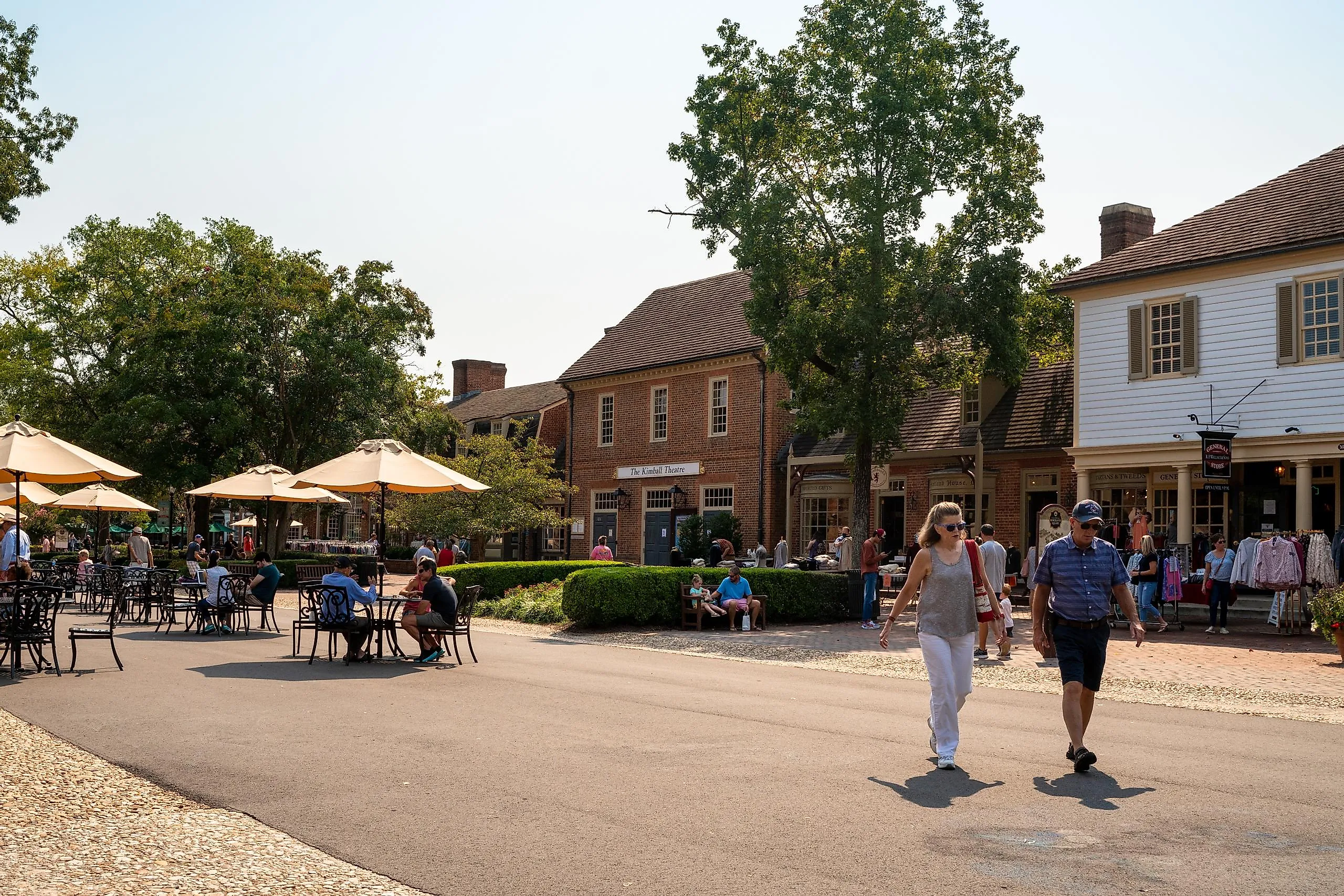
Few towns anywhere in America can equal the colonial-era architecture of Williamsburg. Colonial Williamsburg is the largest living history museum in the country. The Historic Area includes 88 original 18th-century buildings plus hundreds reconstructed on their original foundations, all spread across 301 acres along the mile-long Duke of Gloucester Street. Car-free and shady, this wide avenue connects the Capitol at one end to Merchants Square at the other. Along the way, it passes the Governor's Palace and dozens of photogenic colonial homes and shops.
It is one of the few towns in the US where, when you see a white picket fence and gate, you can go through them and explore. One of the prettiest fenced gardens is directly opposite Bruton Parish Church, built in 1711 and one of the country's oldest Episcopal churches. Williamsburg is also on the Colonial Parkway, a scenic 23-mile drive connecting to Yorktown and Jamestown.
Luray

Luray is unique in that the natural scenery below ground is equally impressive as that above ground. Below ground, the Luray Caverns, discovered in 1878, contain formations that took millions of years to create. Accessible via a 1.25-mile underground trail, highlights include mirror-like pools and towering stalactite-stalagmite formations reaching over 40 feet. The cavern's famous Great Stalacpipe Organ, which plays stalactites with rubber mallets spread across over three acres of caverns, is worth the price of admission alone.
Above-ground highlights include the Luray Singing Tower with its 47-bell carillon built in 1937. Luray is also considered a gateway to Shenandoah National Park and Skyline Drive. Dozens of overlooks are situated along the route, most notably the Franklin Cliffs Overlook and Oaks Overlook, both especially pretty during the fall colors.
Yorktown

Yorktown has a long and storied history and one of the nicest waterfronts on the York River. The mile-long Riverwalk at Riverwalk Landing follows the river's edge between the Yorktown Battlefield and the American Revolution Museum. This means you can stroll between these two major Yorktown attractions without losing sight of the river. On the way, you'll pass the west-facing Yorktown Beach, one of the best spots in the region to watch sunsets over the river.
Historic Yorktown Village overlooks the riverwalk and has retained its 18th-century character. Must-visits include the Nelson House, home of Declaration of Independence signer Thomas Nelson Jr., and the Grace Episcopal Church, one of the oldest in Virginia. The scene's even prettier in April when cherry blossoms add color across town and along the Colonial Parkway.
Onancock

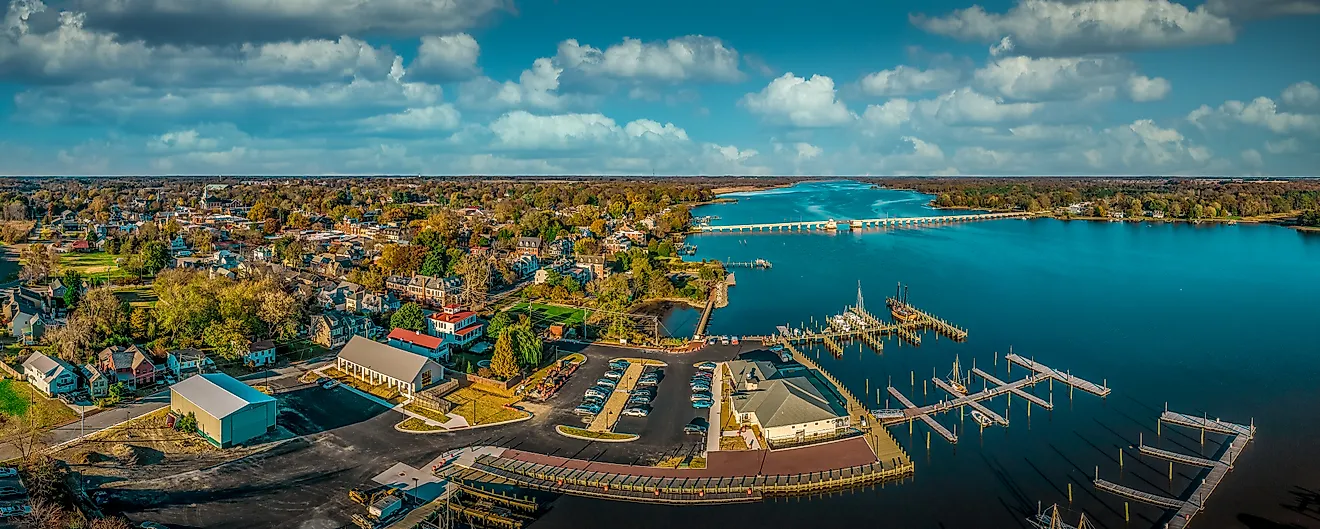
Famously described by Captain John Smith as "the Gem of the Eastern Shore" when mapping Chesapeake Bay in 1608, Onancock Creek is every bit as beautiful 400 or so years later. The deep natural harbor that so impressed Smith is now home to Onancock Wharf, which looks out over the same tidal creek as it winds its way to the Bay. From here, the town of Onancock grew quickly, its past as an important trading post still evident with the 19th-century Hopkins & Bros. Store.
Established in 1680 as one of Virginia's official colonial ports under the Cohabitation Act, the town's Historic District along Market Street is lined with centuries-old churches, including Holy Trinity Episcopal Church. Ker Place, a Federal-style mansion built in 1799, is now a museum with period-furnished rooms and an original 1904 oyster boat used by local watermen. For a comfortable stay, The Inn at Onancock, a bed-and-breakfast in an 1886 Victorian home, is just a short stroll from Main Street.
Charlottesville

When it comes to scenic college towns, Charlottesville takes top billing. The University of Virginia's Academical Village, designed by Thomas Jefferson and completed in the 1820s, is now a UNESCO World Heritage Site. The Lawn is a rectangular green flanked by 10 classically designed pavilions. The Rotunda anchors one end with its white dome and brick colonnades, and makes for an ideal photo.
The Historic Downtown Mall, a brick-paved pedestrian corridor stretching along Main Street, is also worth seeing. One of the longest pedestrian zones in the country, it's lined with many attractive heritage buildings, including the Paramount Theater, a 1931 cinema that still hosts live performances. Just a few miles southeast of downtown Charlottesville, Jefferson's Monticello is a neoclassical hilltop estate open for tours.
Virginia's Most Photogenic Small Towns
Whether you prefer colonial streetscapes or urban green spaces, Virginia has many small towns that'll make you want to get out of the car and start exploring. Together, these eight communities boast the kind of memorable scenery and eye-catching architecture worth slowing down for.