10 Most Vibrant Towns in North Carolina
What makes a North Carolina town vibrant is rarely its size. It is a downtown with something specific going on and a reason to be there year round. In New Bern, a pharmacy still pours the Pepsi it first mixed on the main corner. Brevard counts a colony of white squirrels among its downtown regulars. Up in Banner Elk, a caterpillar race settles the winter forecast every October. In each, the energy comes from a specific reason to gather, not from scenery alone.
Corolla

Corolla marks the north end of the Outer Banks, on the sand between the Atlantic Ocean and Currituck Sound. The Currituck Beach Lighthouse is its landmark. The tower rises 162 feet in bare red brick, the only Outer Banks light left unpainted. The climb to the gallery is 220 steps. It was first lit in 1875 and still marks the coast after dark. Historic Corolla Park gathers the lighthouse grounds, a 1920s hunting lodge called Whalehead, and a wildlife education center within a short walk.
North of the paved road, the beach belongs to about 100 wild horses. They descend from Spanish mustangs left on these banks some 400 years ago, which makes them older residents than anyone in town. A four-wheel-drive vehicle is required to reach them. The rules are short. Stay 50 feet back and do not feed them. Just south, the Currituck Banks Reserve protects a run of marsh and maritime forest with a boardwalk out to the sound.
Edenton

An early colonial capital of North Carolina, Edenton overlooks Albemarle Sound and held that role from 1722 to 1743. Its waterfront wears the history plainly. The 1886 Roanoke River Lighthouse, the last screw-pile lighthouse left in the state, marks the harbor. A few blocks inland, the 1719 Lane House is believed to be the oldest house in North Carolina. The 1758 Cupola House, a National Historic Landmark, remains the town's finest piece of Jacobean design.
The town's oddest claim is a protest. In 1774, 51 Edenton women signed a pledge to boycott British tea, the first known political action by women in the American colonies. Edenton marks it with a bronze teapot mounted on a Revolutionary War cannon. Everyday life plays out on Broad Street, where more than 30 shops and restaurants line a few walkable blocks. Pembroke Creek and Hollowell Park take the fishing and the picnic ground.
Banner Elk

Banner Elk perches in the high country of Avery County, within five miles of Sugar Mountain and Beech Mountain, the two largest ski areas in North Carolina. Winter is the obvious season here. The rest of the year has its own appeal. Wilderness Run Alpine Coaster, the first alpine coaster in the state, sends riders down a 3,160-foot track built into the slope. Wildcat Lake spreads across about 13 acres and comes with a sand beach, a swimming area, and a fishing pier.
The signature event is a weather forecast decided by caterpillars. Every third weekend of October, the Woolly Worm Festival races woolly bear caterpillars up strings. The winner's coloring sets the region's official winter prediction. The festival is nearly 50 years old and brings more than 20,000 people to town. Grandfather Mountain and its mile-high swinging bridge are about 20 minutes away, along with a stack of hiking trails.
Manteo

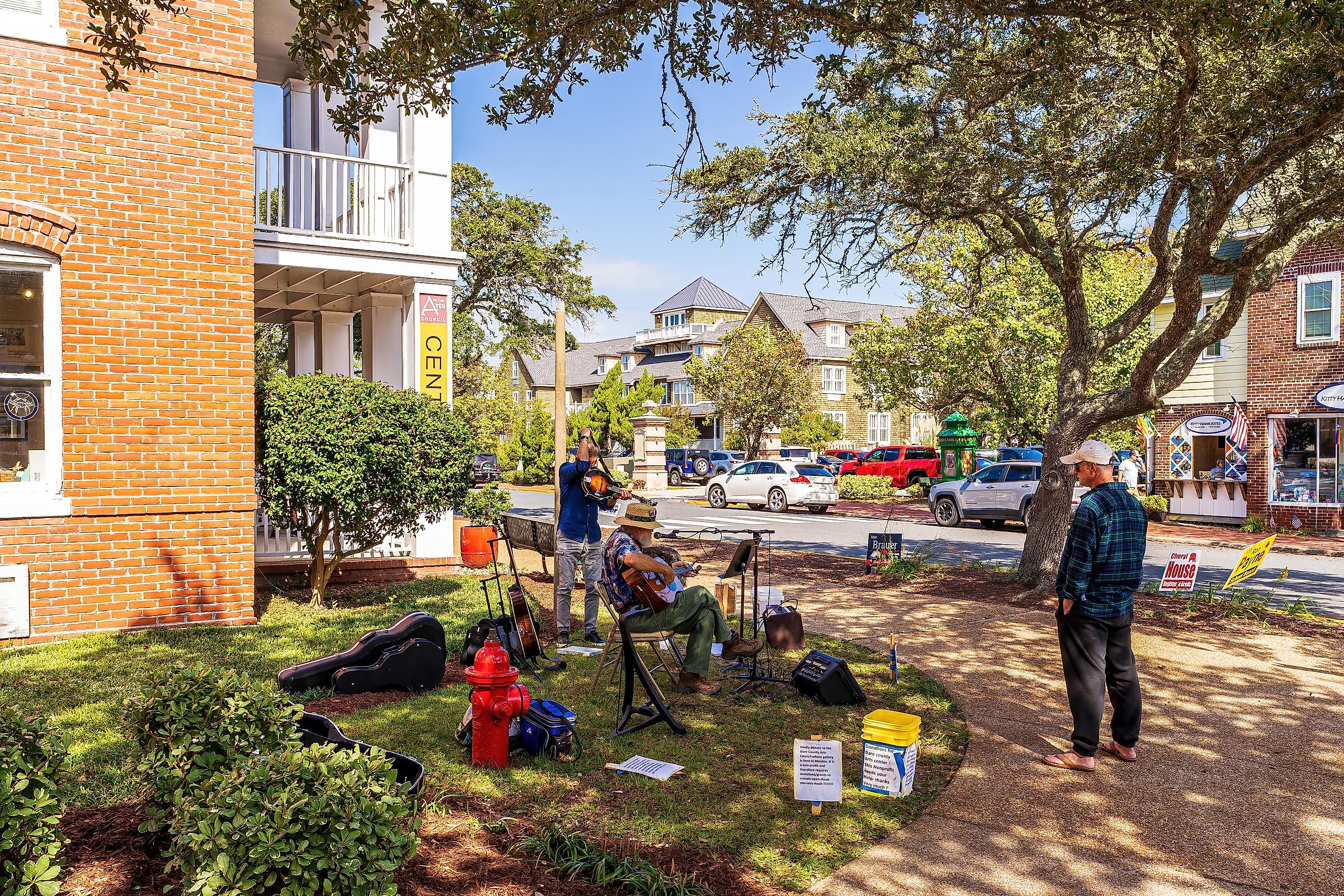
Roanoke Island, on the sound side of the Outer Banks, is home to Manteo. A boardwalk lines Shallowbag Bay through downtown, past more than 30 shops and restaurants. Roanoke Island Festival Park stages 16th-century settler life across the water, with a sailing-ship replica and costumed interpreters. Fort Raleigh National Historic Site preserves the ground where the Roanoke Colony landed, the first English settlement in what is now the United States.
That colony is the strange part. The settlers vanished in the 1580s and left a single carved word behind. The mystery was never solved. Manteo has answered by performing an outdoor play about the disappearance every summer since 1937, which makes it the longest-running outdoor drama in the country. The Island Farm, a restored 1840s homestead, shows the quieter end of the island's history.
Emerald Isle

Emerald Isle stretches along Bogue Banks, a barrier island on North Carolina's central coast, with about 12 miles of Atlantic beach. The year-round population is around 3,000. In summer, that figure multiplies many times over in a single week as families arrive from across the state and beyond. Anglers work the Bogue Inlet Pier. Paddlers take to Bogue Sound behind the island.
The west end narrows to a spit called The Point, where the sound meets the ocean. It is the town's preferred sunset spot. Emerald Isle Woods Park protects the maritime forest side, with trails for walking and birdwatching. The summer calendar carries a beach music festival and a Fourth of July fireworks show over the water.
New Bern

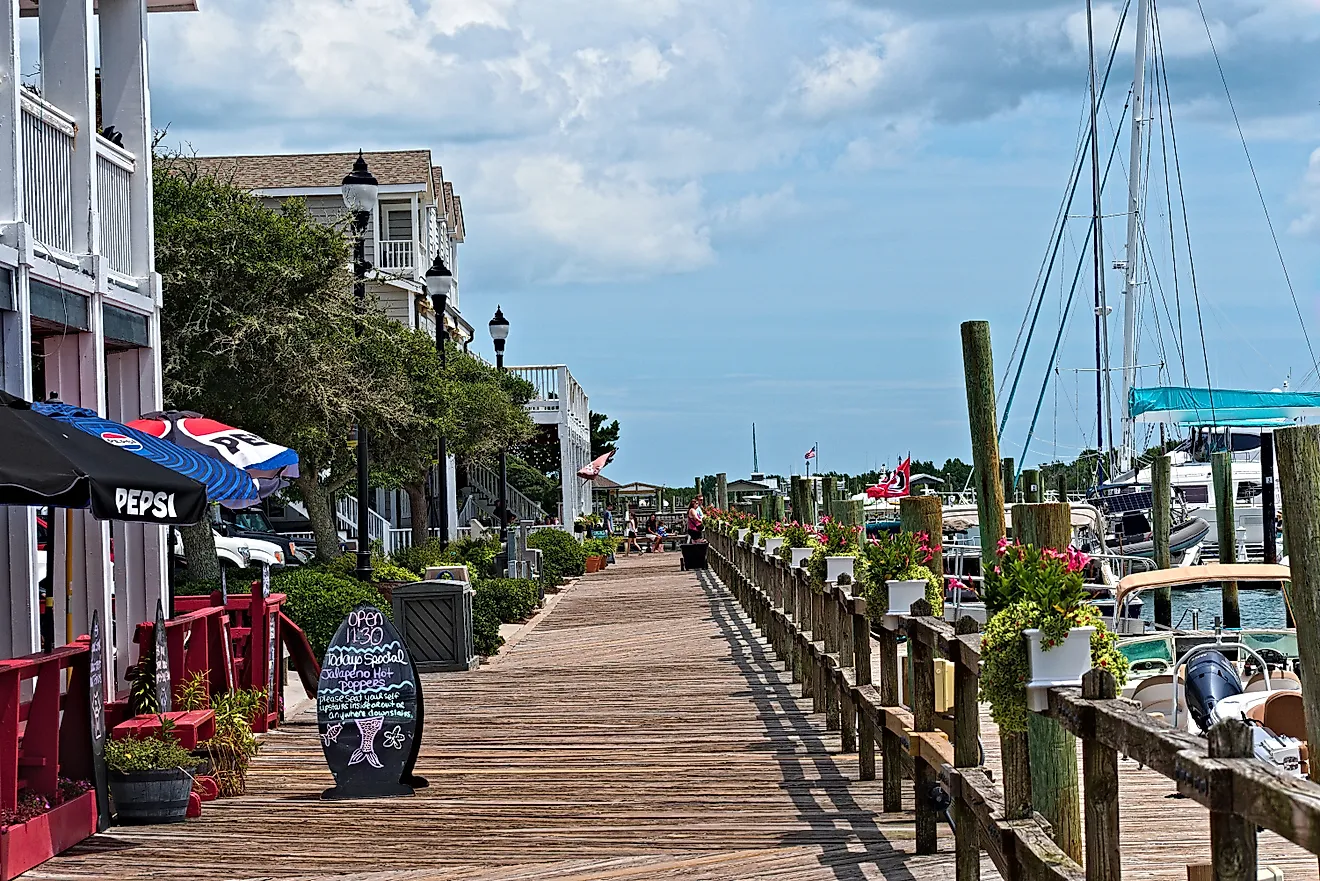
The first Pepsi came out of a downtown drugstore in New Bern, where the Neuse and Trent Rivers meet. A pharmacist named Caleb Bradham mixed the first batch in the 1890s. It took the name Pepsi-Cola in 1898. The Birthplace of Pepsi store now occupies the site and still pours it from a soda fountain.
The town's history reaches back well before the soda. New Bern served as North Carolina's colonial and state capital. Tryon Palace, the royal governor's reconstructed residence, was the seat of government until it moved to Raleigh in 1792. A 90-minute trolley tour loops the historic district, past colonial homes and the old Masonic theater. Lawson Creek Park is the outdoor counterpart, a waterfront green space with a boardwalk, boat access, and fishing piers on the Trent River.
Burnsville

Burnsville is the nearest town to the highest ground in the eastern United States. Mount Mitchell tops out at 6,684 feet, the highest peak east of the Mississippi River. The summit is a short drive up from the town square. The square itself carries murals, galleries, restaurants, and the Yancey County farmers market.
A half-mile trail in nearby Pisgah National Forest leads to Roaring Fork Falls, a 50-foot cascade. The Nu-Wray Inn on the square dates to 1833 and counts among the oldest buildings in the county. For darker skies, the Mayland Earth to Sky Park operates an observatory built for stargazing, one of the few dark-sky sites in the region.
Boone

High in the Blue Ridge Mountains, Boone takes its name from Daniel Boone, who hunted the area in the 1700s. Appalachian State University brings a student body that rivals the town's year-round population. The result is a downtown of bookstores, breweries, and live-music venues busy well past the academic calendar.
The mountains take over from there. A section of the Blue Ridge Mountains carries the Blue Ridge Parkway, the longest linear park in the country, close to town on its way along the ridge. The Watauga River brings whitewater rafters, kayakers, and anglers. Grandfather Mountain and Beech Mountain Resort are both a short drive out. The Daniel Boone Native Gardens honor the namesake close to home.
Black Mountain

Black Mountain lies just east of Asheville, in the Swannanoa Valley beneath the range that gives the town its name. Downtown centers on Town Hardware and General Store, an old-fashioned shop that stocks tools, toys, cast iron, and regional books under one roof. The Black Mountain Tailgate Market brings local growers and food to the same few blocks. The town square is open dawn to dusk, with a small waterfall, gardens, and a splash pad.
The calendar carries the louder moments. The Sourwood Festival and the LEAF gathering both bring crowds each year for music, crafts, and food. Away from the events, Lake Tomahawk offers a walking loop and quiet fishing. River Walk Park adds a shaded trail and picnic tables along the creek.
Brevard

Transylvania County counts 250 waterfalls. Brevard guards the gateway to most of them, at the entrance to Pisgah National Forest. Its downtown is compact and creative, with galleries, a toy store, and the Brevard Music Center, whose summer festival brings orchestras and bluegrass to an open-air campus. The town's mascot has four legs. Brevard is home to a colony of white squirrels, descended from a pair that escaped an overturned carnival truck in 1949. They are common enough to warrant a downtown statue and a festival of their own.
The waterfalls are the main event. Looking Glass Falls drops 60 feet right beside the highway, which makes it the most photographed cascade in the state. Sliding Rock doubles as a natural waterslide in summer. Moore Cove Falls lets hikers walk behind the sheet of water. For longer days, the Art Loeb Trail climbs about 30 miles through Pisgah toward the high balsam peaks.
What Makes These Towns Vibrant
The vibrancy in these towns is not seasonal or staged. It comes from places built around a reason to gather. Edenton has marked the same tea protest since 1774. The wild horses north of Corolla have had the beach to themselves for four centuries. Boone trades students for hikers by season and never fully empties. Each downtown gives its residents somewhere to be. That steady use is what visitors end up feeling as energy.