9 Off-The-Beaten-Path Towns In New Hampshire
Sugar Hill has fewer than 700 residents and one very good reason to visit each summer, when whole hillsides go purple with wild lupine. New Hampshire keeps its famous peaks and big lakes busy all summer, but the small towns just off the main routes stay quiet. These nine reward anyone willing to turn off the highway and stay a while. Each one sits within reach of the White Mountains, the Connecticut River, or Lake Winnipesaukee. None of them will feel crowded when you get there.
Sugar Hill

Every June, Sugar Hill throws its Lupine Festival, when thousands of wildflowers open across the fields and the town fills with people who drove up just to see it. The village sits on a ridge above the White Mountains, so the views come easy the rest of the year too. Scenic back roads and short hiking routes give you plenty of angles on the peaks. It is one of the smallest incorporated towns in the state, which is part of why it stays so calm.
Travelers can bed down at the Sugar Hill Inn, where the kitchen leans on local ingredients and the rooms carry the feel of an older New England. The Sugar Hill Historical Museum, a short walk away, fills an afternoon with the town's own story. Beyond that, Sugar Hill works best as a base: somewhere to sleep and eat while the surrounding forests and foliage do the heavy lifting.
Hancock

Almost every building on Hancock's Main Street is listed on the National Register of Historic Places, which tells you most of what you need to know about this Monadnock Region village on the shore of Norway Pond. Colonial architecture, tree-lined paths, and two centuries of preserved detail draw visitors who want history without a theme-park version of it.
The Hancock Village Historic District is the heart of it. On a walk down Main Street you pass the Inn at Hancock, the state's oldest continuously operating inn, open since 1789 and a stop for guests as notable as President Franklin Pierce. Nearby stands the white-steepled Hancock Meetinghouse, which holds a bell cast by Paul Revere's son.
Outdoor options sit close by as well. The Harris Center for Conservation Education anchors regional wildlife work and opens miles of hiking trails to the public, with birdwatching along the way and Norway Pond at the center of it.
Littleton

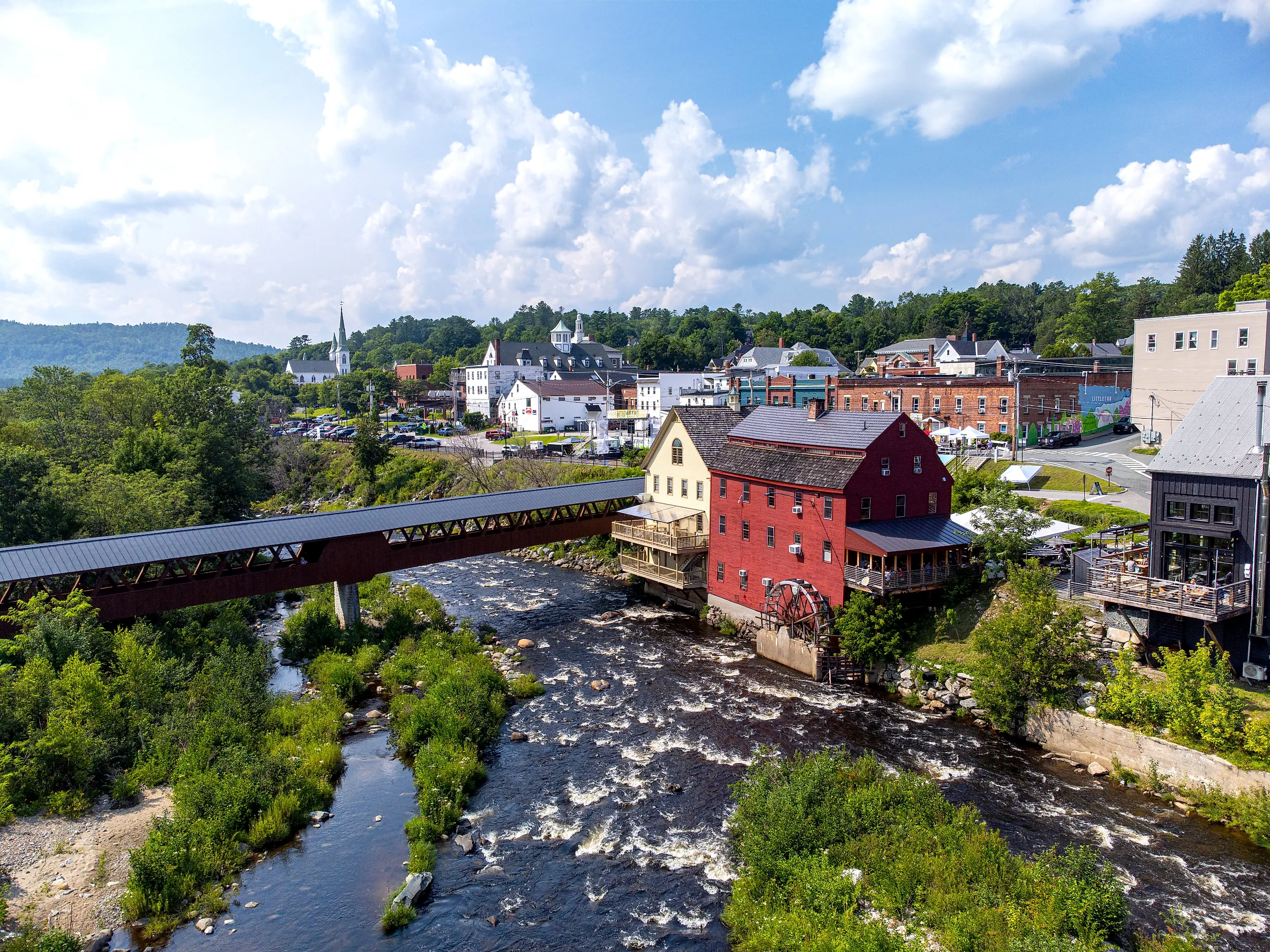
Chutters, on Littleton's Main Street, holds the Guinness record for the world's longest candy counter at 112 feet of glass jars. That is the kind of thing Littleton does well. This mountain town on the Ammonoosuc River pairs a genuinely strong downtown with a working arts scene, and its Main Street ranks among the best in New England. A bronze statue of Pollyanna honors Eleanor H. Porter, who wrote the famous character while living here.
Commerce keeps the street busy. Beyond the candy counter, Schilling Beer Co. turns out craft beer and wood-fired pizza in a riverside building, and it has earned a regional following. For a bed, the Thayers Inn has welcomed guests on Main Street since the 19th century, alongside a handful of smaller inns and boutique rooms.
Outside town, the Parker Mountain Trails carry hikers, snowshoers, and cross-country skiers depending on the season, while Moore Reservoir opens up kayaking, swimming, and fishing. Spring and fall are the standout months, when the water and the surrounding hills turn Littleton into a destination in its own right.
Meredith

Meredith sits on Lake Winnipesaukee, the largest lake in New Hampshire, and makes a quieter alternative to the busier towns around the same water. Its waterfront and historic downtown give it a lived-in feel rather than a resort one, and there is something to do here in every season.
The lake is the main event. You can walk along Meredith Bay, wander the town docks and marina, or board the MS Mount Washington for a cruise past the lake's islands. Smaller and calmer Lake Waukewan, just north, handles the kayaking, paddleboarding, swimming, and fishing when you want less company.
Downtown fills historic buildings with local boutiques, galleries, and specialty shops. The Mill Falls Marketplace gathers a cluster of them around a waterfall, and the connected boardwalk runs past restaurants and lodging, including the waterfront Church Landing.
Franconia

Franconia is the doorway to some of the most dramatic scenery in the state. Towering peaks, dense forest, and steep gorges surround a small town that most travelers pass through on the way to the notch, though it rewards a longer look.
Franconia Notch State Park is the reason most people come. Echo Lake and the Flume Gorge sit inside it, and sections of the Appalachian Trail run through, making the area a hub for hiking and sightseeing. The town itself carries its own history. The Frost Place, once the home of poet Robert Frost, now runs as a museum and literary center devoted to his work.
Winter changes the character entirely. Cannon Mountain Ski Area offers demanding downhill terrain, and the surrounding forest opens up for snowshoeing, cross-country skiing, and snowmobiling once the snow settles in.
Tamworth

The Barnstormers Theatre in Tamworth has staged professional summer productions every season since 1931, which makes it the oldest continuously operating summer theater in the country. It was founded by Francis Cleveland, the youngest son of President Grover Cleveland. That kind of history sits comfortably in a rural town between the Lakes Region and the foothills of the White Mountains, where the pace stays slow on purpose.
The theater is not the only draw. The Remick Country Doctor Museum & Farm combines a working farm with exhibits on rural medicine, agriculture, and local history, an unusual pairing that works better than it sounds.
Nature fills the rest. Tamworth holds the Hemenway State Forest, with hiking trails and wildlife viewing, and Chocorua Lake nearby ranks among the most photographed spots in the state. Its clear water reflects the sharp profile of Mount Chocorua, and photographers have been chasing that reflection for generations.
Cornish

Cornish drew an entire colony of artists to the banks of the Connecticut River in the late 19th and early 20th centuries, and their legacy still defines the town. The Cornish Colony gathered sculptors, painters, and writers near the western border, and its most famous resident was the sculptor Augustus Saint-Gaudens. His former estate is preserved as the Saint-Gaudens National Historical Park, where you can tour his home, walk the gardens, and see original works.
The town is known for its covered bridges as much as its art. The Cornish-Windsor Covered Bridge spans the Connecticut River into Vermont and stands as the longest wooden covered bridge in the United States. Nearby, Blow-me-Down Brook offers fishing, quiet walks, and canoeing.
Wolfeboro

Wolfeboro has called itself the Oldest Summer Resort in America since colonial governor John Wentworth built a summer estate on its shores in the 1760s. That title has held up through generations of visitors, and the town still moves at a lakeside pace despite being better known than most entries here.
Lake Winnipesaukee runs everything in Wolfeboro. You can boat, fish, and kayak, or simply walk the waterfront, and Brewster Beach fills with swimmers and picnickers through the summer. Like Meredith, Wolfeboro serves as a port for the MS Mount Washington.
Downtown lines up locally owned shops and galleries worth an afternoon. The Wright Museum of World War II ranks among the region's best on the subject, with immersive exhibits and artifacts drawn from the era on the home front and the battlefield.
Gorham

Gorham serves as a base camp for the northern White Mountains, the kind of town adventurers pass through to reach something bigger. Peaks, forest, and mountain roads surround it, and it often gets overlooked despite sitting at the doorstep of the Presidential Range.
That range includes Mount Washington, Mount Adams, and Mount Madison. The Mount Washington Cog Railway carries passengers to the summit of the Northeast's highest peak, and the Mount Washington Auto Road offers a steep drive to the same panoramic payoff.
Recreation is the whole point in Gorham. Trails lead straight into the White Mountain National Forest, and Glen Ellis Falls, Pinkham Notch, and the Great Gulf Wilderness show off the region's rougher edges. When the weather turns, the Gorham Historical Society and Railroad Museum keeps the town's rail past on display indoors.
Small-Town New Hampshire, Away From the Crowds
The mountain resorts and big-lake destinations get the attention, but these nine towns hold the quieter version of the state. Some lead with history, some with a single stretch of water or a ridge full of wildflowers, and each one rewards a visitor who slows down enough to notice.