The Cheapest Beautiful Towns To Live In Virginia
A handful of river towns in Virginia offer a mix of affordability and natural beauty. They come in well below the state's Home Value Index of $420,000, according to Zillow as of June, 2026, but you'd never guess it from the street. In Marion, Hungry Mother State Park and its 108-acre lake sit just north of town. Buchanan spreads across both banks of the upper James, where you can still walk a 366-foot swinging footbridge 57.5 feet above the current. South Boston is the cheapest here at $155,860, a Halifax County town where the old tobacco prizery houses a theatre, art gallery, and classrooms. These six beautiful towns highlight the river trade, National Register downtowns, and low cost of living that make southern and western Virginia worth a closer look in 2026.
Marion, Virginia

Marion's backyard is Hungry Mother State Park, just north of town. It opened on June 15, 1936, and Virginia dedicated its whole state park system the same afternoon. The ceremony took place here, in front of a crowd of more than 5,000, on land John and Mildred Lincoln had donated three years before. Six hundred men from the Civilian Conservation Corps cut the roads and raised the cabins, the dam, and the bathhouse over the eight years that followed, and their 108-acre lake still includes its popular sand beach.
Zillow's HVI puts a typical home in town at around $167,726, and Smyth County Community Hospital staffs an emergency room around the clock. The Middle Fork Holston River marks the northern and western edge of town, with Main Street bending around it. The Middle Fork Holston is a Class A stocked trout river, restocked eight times between October and May, and the town's fishing pier is built for universal access. The historic district around Main Street boasts 361 contributing buildings on the National Register, one of them the Lincoln Theatre of 1929, whose walls are stenciled with Mayan gods. Six painted murals of American and local history hang in the same room.
Narrows, Virginia

Narrows lies in Giles County, hard against the West Virginia line. Here, the New River pinches to its tightest point between Peters Mountain and East River Mountain, which is how the town got its name. Settlers reached it around 1778, and the gap is still visible from most of the streets. The Appalachian Trail also runs through, and the Appalachian Trail Conservancy counts Narrows among its designated trail communities. Camp Success, a primitive 16-acre campground, opens onto the water where Wolf Creek meets the river.
At $173,139, a house here lands roughly 59% below Virginia's ZHVI. The MacArthur Inn on MacArthur Lane is brick, with gabled pavilions at either end and a semicircular portico on heavy columns. It went up near the Norfolk and Western passenger and freight depot of 1927, which is what brought travelers here in the first place. Local services include Grants Supermarket and the Iris Brammer Public Library, while Mill Creek Nature Park offers gentle trails and wildlife spotting for daily leisure.
Pulaski, Virginia

Pulaski is the seat of its county, in the New River Valley of southwest Virginia. Two pieces of the Works Progress Administration job that built Calfee Park in 1935 remain. A rock wall still frames the north entrance, and the original canopy still stretches over the whole third-base grandstand. The Pulaski River Turtles of the Appalachian League draw hometown crowds in the summer, with houses backing onto the outfield.
A house in Pulaski averages $179,911, while the state average is closer to $420,000, a gap of nearly a quarter of a million dollars. Peak Creek cuts through the middle of downtown, and the Pulaski Historic Commercial District went on the National Register in 1986, taking in the Elks Theatre of 1911 and a freight depot from 1907. The town's Dora Trail joins New River Trail State Park, which traces 57 miles of abandoned railbed, 39 of them along the New River.
Buchanan, Virginia

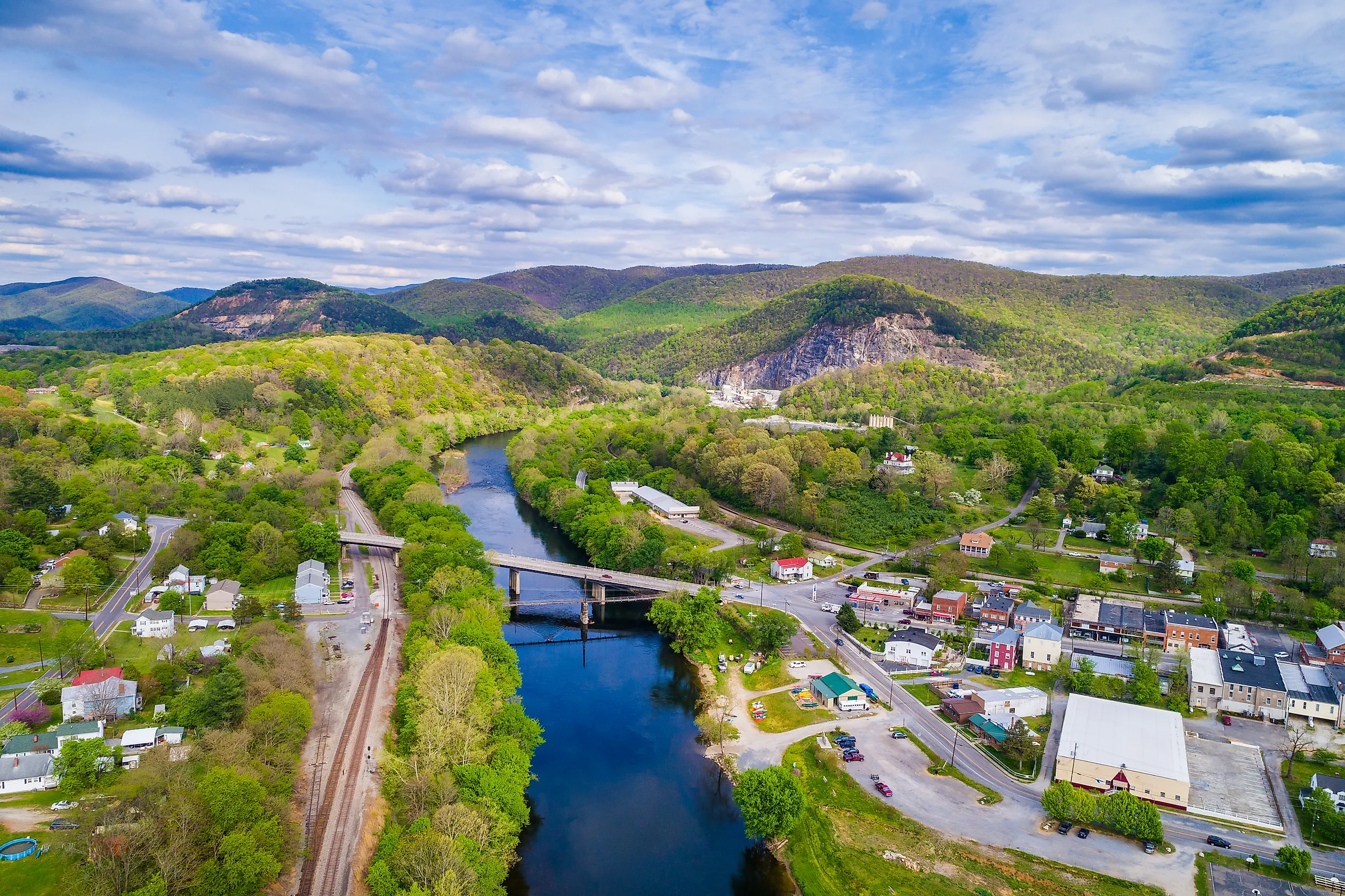
Buchanan is a Botetourt County town on the upper James, and the thing people recognize first is not a building but a footbridge. At 366 feet long, it crosses the James River at Buchanan, 57.5 feet above the current. Its stone piers went up in 1851 for a turnpike company that charged five cents a head, and every horse, mule, or ox cost another nickel, as did the wagon behind them. VDOT now owns the crossing, and it contributes to the town's historic district.
Buchanan is actually the combination of two towns: Pattonsburg was laid out on the north bank in 1788, Buchanan on the south bank in 1811, and the two did not become one until 1882. Pattonsburg still shows the street grid drawn on an 1818 map. The James River and Kanawha Canal pulled them together, reaching the town in 1851, the same year those bridge piers went up, and state records call it the longest canal ever built in the South. A house costs $226,373, nearly $190,000 cheaper than what a Virginia house typically fetches. Main Street answers most daily needs, down to a soda fountain and a river outfitter, and the Buchanan Theatre still shows off the Art Deco facade it gained in the 1940s.
South Boston, Virginia

South Boston is a Halifax County town that grew rich on tobacco. The Prizery takes its name from the job once done inside it. Prizing meant pressing tobacco leaf into hogsheads that could weigh 1,000 pounds, then rolling them down to the river or the rail siding. The building now houses a theatre, an art gallery, and classrooms, with the Southern Virginia Higher Education Center next door.
South Boston opened as a railroad depot in 1854, and by the early 1900s, state records put it as the second-largest bright leaf tobacco market in the country. That trade filled the National Register district with warehouses and factories, among them two prizeries, the Halifax Cotton Mill, and the Parkinson Block of 1899. The money went into houses as well as warehouses: a county history of 1924, quoted in the state register file, described streets bordered with homes large and small, some on grounds planted with shrubs and flowers. Those streets still lead down to the Dan River, and houses cost an average of $155,860, well below the Virginia average.
Emporia, Virginia

Emporia stands at the southeastern end of the state, a short drive from the North Carolina line. The Meherrin River meets the fall line at Emporia, so boats stopped there, goods changed hands, and a crossing turned into a market. Two villages grew up on either side of the water, Hicksford, where the old Fort Road came through, and Belfield, a little later. The two feuded long enough that the merger of 1887 needed a neutral name, and a member of the House of Delegates supplied one, after Emporia, Kansas, the home of a colleague from the Atlantic and Danville Railroad. The General Assembly then revoked the charter in 1888 and did not restore it until 1892.
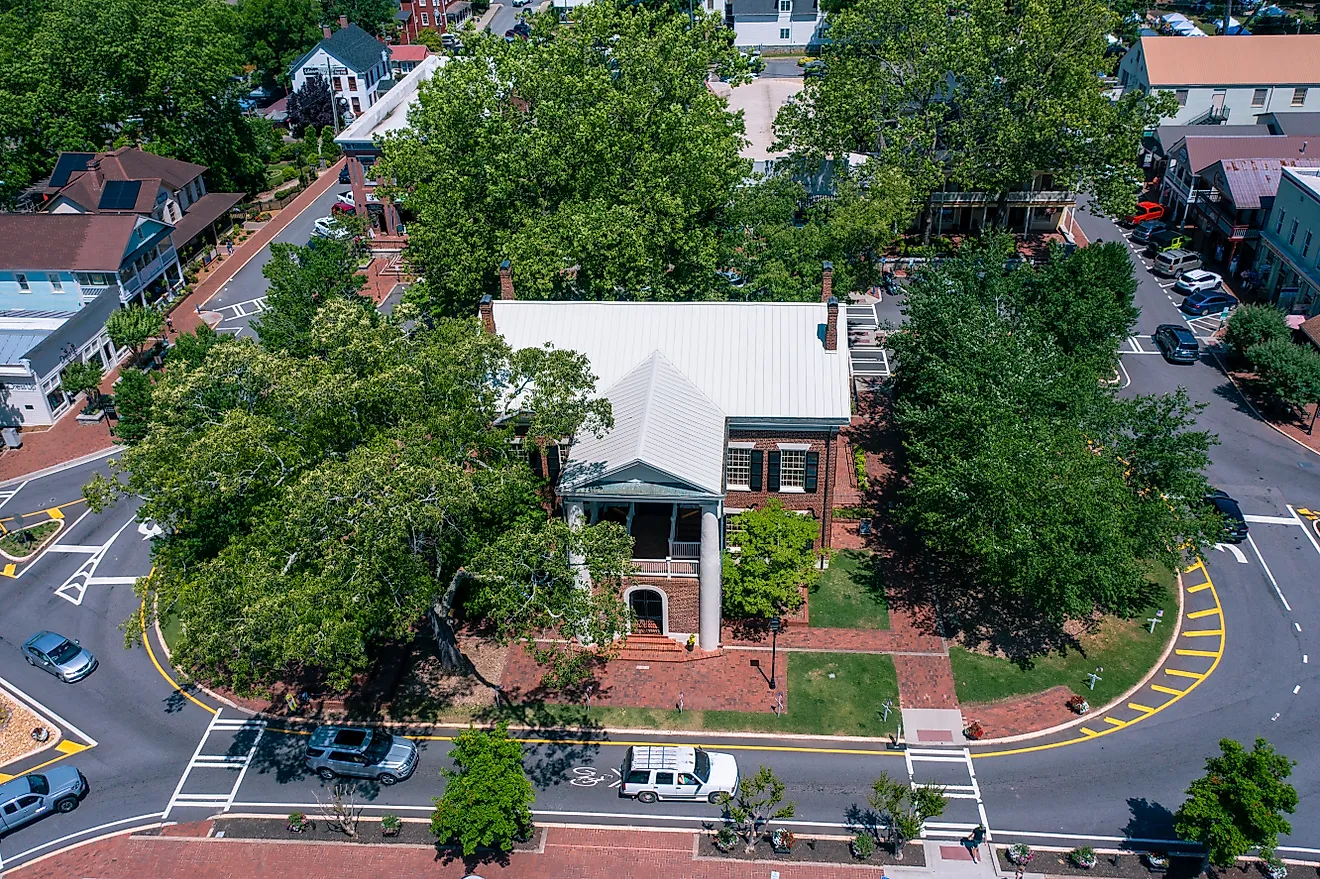
Houses average $162,367, about 61% below the Virginia average. Southern Virginia Regional Medical Center is the hospital, and groceries and a Saturday farmers' market provide essential local services. Greensville County has governed from this spot since 1787, though the courthouse itself dates to 1831, a plain three-part Palladian building that gained its Ionic portico only in the early 20th century. The old Greensville Bank of 1900 on the same square, now the county administrator's office, preserves an interior finished with decorative stamped sheet metal, locally pressed.
Where Virginia's Rivers Left a Bargain
If you want somewhere beautiful to live in Virginia without the statewide price tag, look to the rivers of the south and west. From the swinging bridge at Buchanan to the tobacco warehouses of South Boston, these six towns were built in brick and stone, and the setting stayed after the traffic moved on. Whether you are drawn to trout water, a ballpark, or a courthouse square, a National Register downtown in Virginia still costs 37% to 54% of what the same money buys elsewhere in the state.


_from_Hicksford_Ave;_Emporia,_VA.jpg)