The 9 Friendliest Little Towns In Delaware
Delaware's friendliest towns know how to make a visitor feel like a regular within an afternoon. The boardwalks help, like the Rehoboth Beach Boardwalk and the Joseph Olson Boardwalk in Bethany Beach. Each town carries a signature community event that runs every year and pulls neighbors and visitors into the same parade route or festival grounds. Some of these places also count among the oldest European settlements in the country, with original courthouses and Underground Railroad sites still standing. With no state sales tax in Delaware, the antique shops and bakeries on these main streets run free of the usual markup. The nine towns ahead live up to the welcome that earns the state its reputation.
Lewes

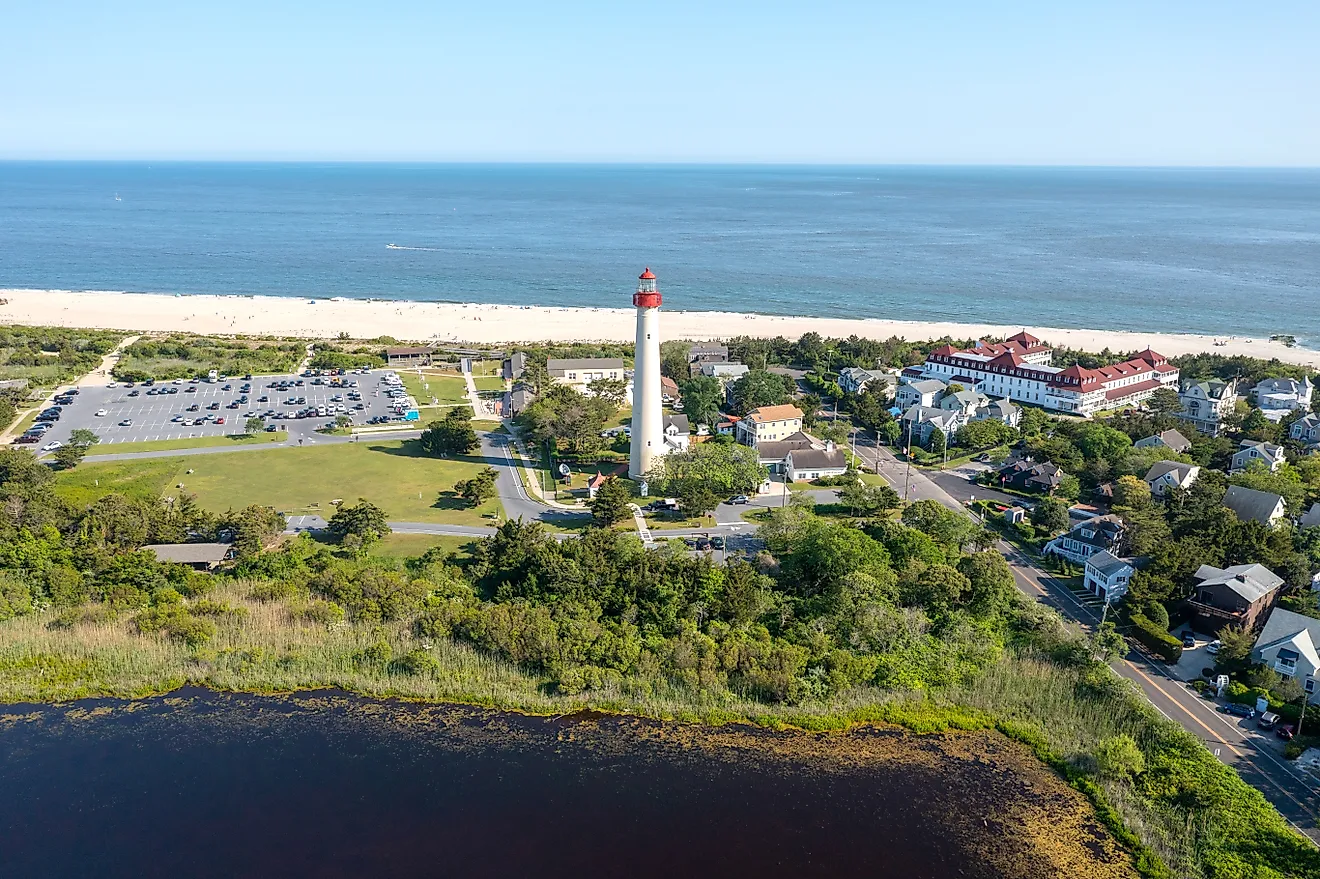
Lewes calls itself "The First Town in the First State," and the claim is no exaggeration. Dutch settlers founded the original Zwaanendael colony here on June 3, 1631, a year before the colony itself was wiped out by the Lenape. The town that grew back is now home to 3,303 people (2020 census) and sits where Delaware Bay meets the Atlantic, just inside Cape Henlopen. The Zwaanendael Museum on Kings Highway, built in 1931 in the stepped-gable style of the Dutch town of Hoorn, holds the local history collection and is hard to miss.

Most visitors split their time between the historic downtown along Second Street and Cape Henlopen State Park, which preserves Fort Miles, a WWII-era harbor defense site whose Battery 519 has been restored as a museum. The Cape May-Lewes Ferry runs across the mouth of the bay year-round, and the Junction & Breakwater Trail runs nearly six miles between Lewes and Rehoboth on a converted rail bed. The town's signature gathering is the Historic Lewes Farmers Market at George H.P. Smith Park each Saturday from May through September, a long-running producer-only market that has ranked among the country's top farmers markets in national surveys.
Rehoboth Beach

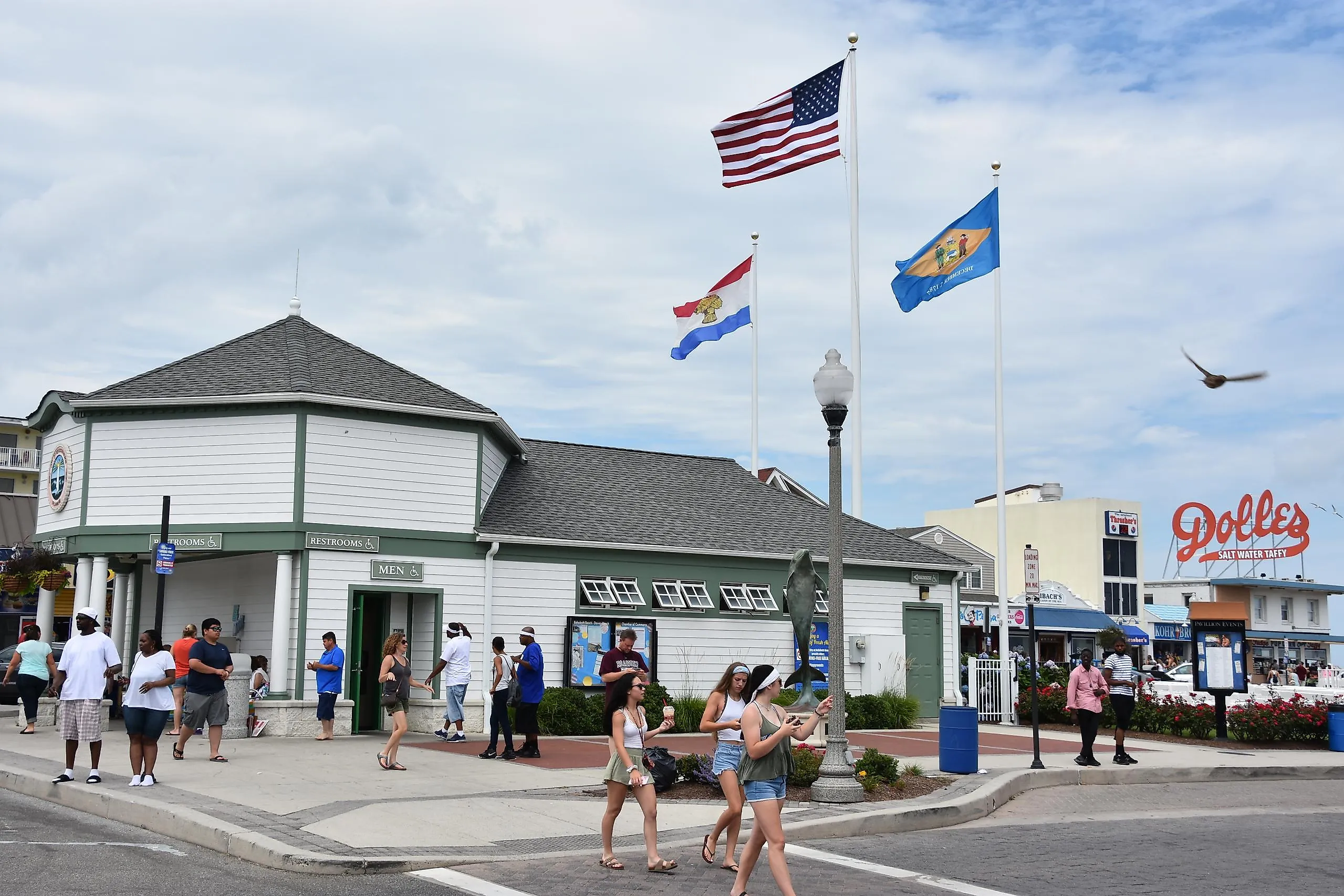
With a 2020 population of just 1,108, Rehoboth Beach makes more noise than its size suggests. About 25,000 day-trippers and renters pack the place on a peak summer Saturday, which is why locals nickname it "the Nation's Summer Capital." The town was founded as a Methodist camp meeting in 1873 and now runs almost entirely on a mile-long boardwalk along the Atlantic. Funland, a family-owned amusement park near the south end, has operated since 1962. Thrasher's French Fries serves fries in paper buckets with vinegar and salt, and Browseabout Books on Rehoboth Avenue has held downtown since 1975.

The flagship event is the Sea Witch Halloween & Fiddler's Festival, held the last full weekend of October since 1989. The weekend includes a costume parade with hundreds of marchers, a broom-tossing competition, and a town-wide Sea Witch hunt. USA Today and U.S. News & World Report have both listed it among the country's better fall festivals.
Milton

Fifteen miles inland from Rehoboth, at the head of the Broadkill River, Milton has roughly 3,200 residents and a downtown that bunches around a small theater and a brewery campus. English colonists settled the spot in 1672, and the Delaware Legislature renamed the place in 1807 for the poet John Milton, long after a half-century run as a serious shipbuilding town. The Lydia Black Cannon Museum, run by the Milton Historical Society, traces that maritime history and the town's later identity as the "Holly Capital of the World," when locally grown wreaths were shipped by train to Philadelphia and New York.

A particularly large employer is Dogfish Head Craft Brewery, which runs public tours that fill up months ahead. The 1910 Milton Theatre on Union Street programs live music, film, and theater year-round in a building that has weathered three major fires. The town's signature community event is the Horseshoe Crab & Shorebird Festival at Milton Memorial Park, organized by the Milton Chamber of Commerce in late May when migrating shorebirds and spawning crabs coincide along Delaware Bay. The free festival pairs with naturalist programming at the nearby Prime Hook National Wildlife Refuge.
Bethany Beach

Bethany Beach was incorporated in 1909 with 1,060 year-round residents at the 2020 census. The years between then and the mid-1950s are remembered locally as "the Quiet Years," and the town's marketing still leans on the contrast with louder beaches up the coast. Its self-applied nickname is "the Quiet Resort." The Joseph Olson Boardwalk runs only a few blocks but is wide enough to handle the summer crowd, and a totem pole at the entrance, carved by artist Peter Wolf Toth, stands at the central plaza.

Just north of town, the Indian River Life-Saving Station is a restored 1876 U.S. Lifesaving Service facility inside Delaware Seashore State Park, with original lifeboats and a hands-on rescue-line program. Free band concerts run from mid-June through August at the bandstand. The signature local event is the Bethany Beach Jazz Funeral, held every Labor Day Monday since 1985, when a Dixieland-band-led procession carries a casket representing the summer down the boardwalk to the bandstand, with proceeds benefiting the American Red Cross of Delmarva.
New Castle

Six miles south of Wilmington on the Delaware River, New Castle holds the distinction of being the oldest continuously occupied European settlement in the Delaware Valley. Peter Stuyvesant founded it in 1651 as Fort Casimir to lock down Dutch control of the river. The original cobblestone street grid, tree-lined Strand, and brick courthouse all survive. The New Castle Court House Museum on Delaware Street, completed in 1732, is one of the oldest surviving courthouses in the country and was the meeting place of the colonial assembly that voted Delaware's independence from Pennsylvania on June 15, 1776.

Battery Park, on the river behind the courthouse, has a 3.7-mile paved trail along the water with views of the Delaware Memorial Bridge to the north. The Old Dutch House and the Amstel House round out the in-town historic sites, while Jessop's Tavern on Delaware Street serves Belgian beer and colonial-themed food in a historic building. The flagship event is Separation Day, held the weekend closest to June 15 since 1976 to mark the 1776 vote, with a colonial-style parade down Delaware Street, an artisan and vintage market in Battery Park, and a fireworks display over the Delaware River.
Odessa

Tiny Odessa, population around 384 in New Castle County, ranks among the best-preserved colonial townscapes in the Mid-Atlantic. The Historic Odessa Foundation manages an approximately 72-acre enclave of period buildings across the town center, including the 1774 Corbit-Sharp House (a National Historic Landmark and Underground Railroad site where Mary Corbit hid fugitive Sam in 1845).

Cantwell's Tavern runs a farm-to-table menu and a raw bar in 19th-century dining rooms. The flagship community event is the Historic Odessa Brewfest, held on the first Saturday after Labor Day on the grounds of the Wilson-Warner House. The festival brings more than 50 regional and national craft brewers, live music, and food onto the foundation's lawns and serves as the organization's signature fundraiser. Tours of the historic houses run from March through December.
Laurel

More buildings on the National Register sit inside Laurel's town limits than in any other Delaware municipality, spread across a downtown of 4,055 residents. Just outside town, Trap Pond State Park preserves the northernmost natural stand of bald cypress in the country across 3,993 acres, with kayak rentals, cabins, and a campground. One documented specimen on the James Branch Nature Trail is over 550 years old and measures 25 feet around at the base. The 1772 Old Christ Church (also called Old Lightwood), a few miles southeast, is one of the few unaltered colonial wood-frame churches still standing anywhere in the Mid-Atlantic, with its original box pews and high pulpit intact. The town's annual gathering is the Broad Creek BASH (formerly the Broad Creek Bike & Brew Tour), run each fall by the Western Sussex Chamber of Commerce from Janosik Park with cyclists choosing between routes such as the 25-mile and 50-mile options.
Bridgeville

"If you lived here, you would be home now" reads the motto stamped on Bridgeville's water tower, a piece of plain-spoken signage that fits a farm town of 2,568 people (2020 census) sitting just west of US 13 on a branch of the Nanticoke River. The 1730 bridge that gave the town its name is long gone. Agriculture still runs the place, and the surrounding fields produce peaches, apples, watermelons, and pork while the Heritage Shores golf community on the south side has pushed steady population growth.
Downtown is held together by an 1866 Gothic Revival building, the former Bridgeville Public Library, and a few blocks of restaurants and shops including Jeff's Taproom & Grille and Jireh's Bakery. The headline event is the Apple-Scrapple Festival, held the second weekend of October since 1992. Its quirkier features include the Ladies' Iron Skillet Toss, the Scrapple Chunkin' Contest, and the Mayor's Scrapple Sling, alongside a carnival, a parade down Main Street, and the Little Miss Apple-Scrapple pageant. Some 20,000 visitors show up over the two days, roughly eight times the town's population.
Delaware City

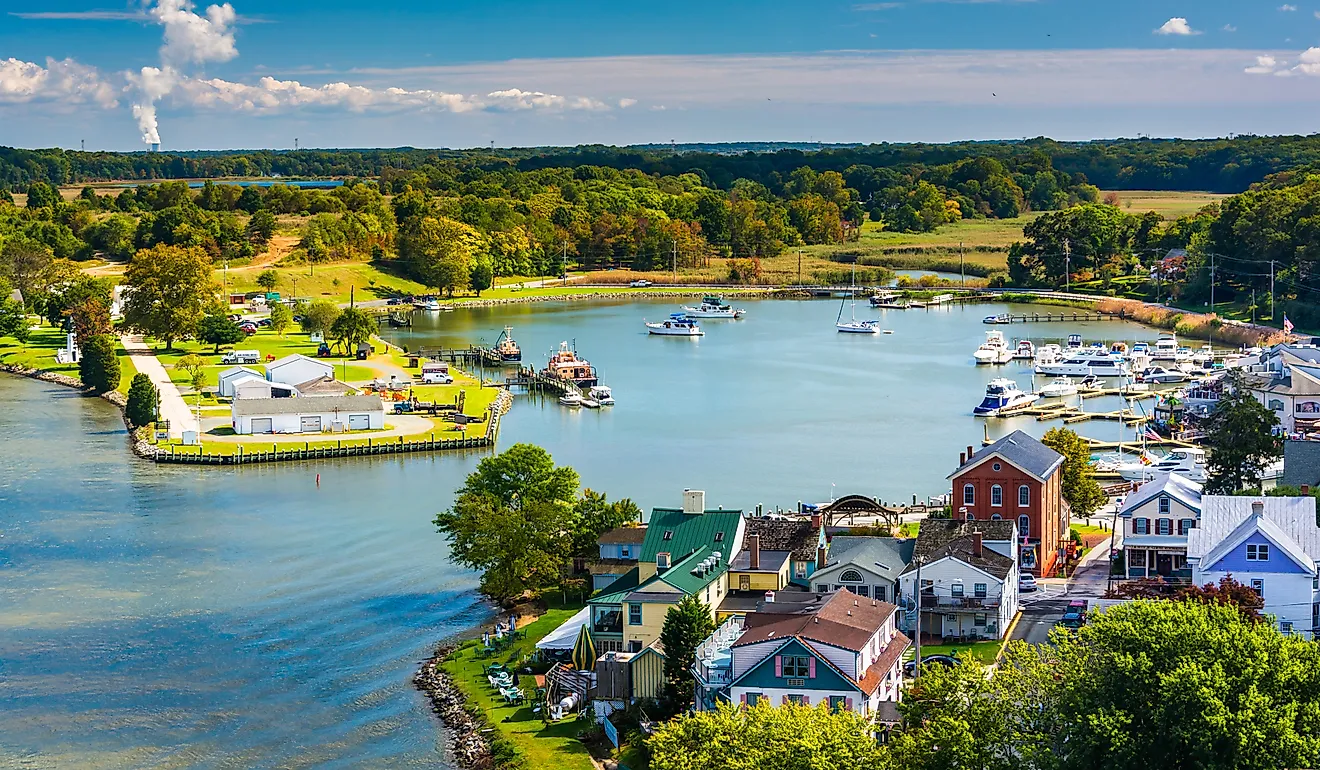
At the eastern end of the Chesapeake & Delaware Canal, where it meets the Delaware River, Delaware City was platted in 1826. The compact historic district along Clinton Street is listed on the National Register.
The town's most visited attraction is reached by ferry. The Forts Ferry Crossing departs 45 Clinton Street for Fort Delaware State Park on Pea Patch Island, a pentagonal fortress completed in the mid-19th century that held up to 12,500 Confederate prisoners of war during the Civil War. The island also holds one of the largest heron, egret, and ibis rookeries on the East Coast. Fort DuPont State Park, on the mainland just south of town, offers more walking trails and the home field of the Diamond State Base Ball Club, a vintage 1860s-rules team. Delaware City Day, held on the first Saturday of October since 1980, takes over Battery Park and the Clinton Street waterfront with a parade, more than 50 vendors, live music, and a fireworks display over the river.
Stack Your Visit Around The Festival Calendar
Most of these towns cluster geographically. Lewes, Rehoboth Beach, Milton, and Bethany Beach line up along Route 1 within a 30-minute drive of one another in southern Sussex County. June through September brings the beach festivals and farmers markets, and October is peak event month inland, with the Apple-Scrapple Festival, Sea Witch Festival, and Delaware City Day all stacking up within four weeks of one another. Delaware has no state sales tax, so the strip of antique shops and boutiques in any of these towns is worth the stop on the way through.