The 8 Friendliest Little Towns In Oklahoma
Locals will tell you Oklahoma’s friendliest towns are the ones where the festival downtown still brings the whole county together. Guthrie’s 89er Days Celebration fills Main Street with parades and reenactments of the 1889 Land Run. Sulphur’s Artesian Arts Festival packs downtown every spring just outside Chickasaw National Recreation Area. Pawhuska runs the country’s oldest tribally owned museum, opened by the Osage Nation in 1938, with the Pioneer Woman Mercantile drawing visitors year-round. Tishomingo’s red granite Capitol Building from 1898 still anchors a downtown that traces back to the Chickasaw Nation. The towns below run small but show up big when the community calls.
Medicine Park

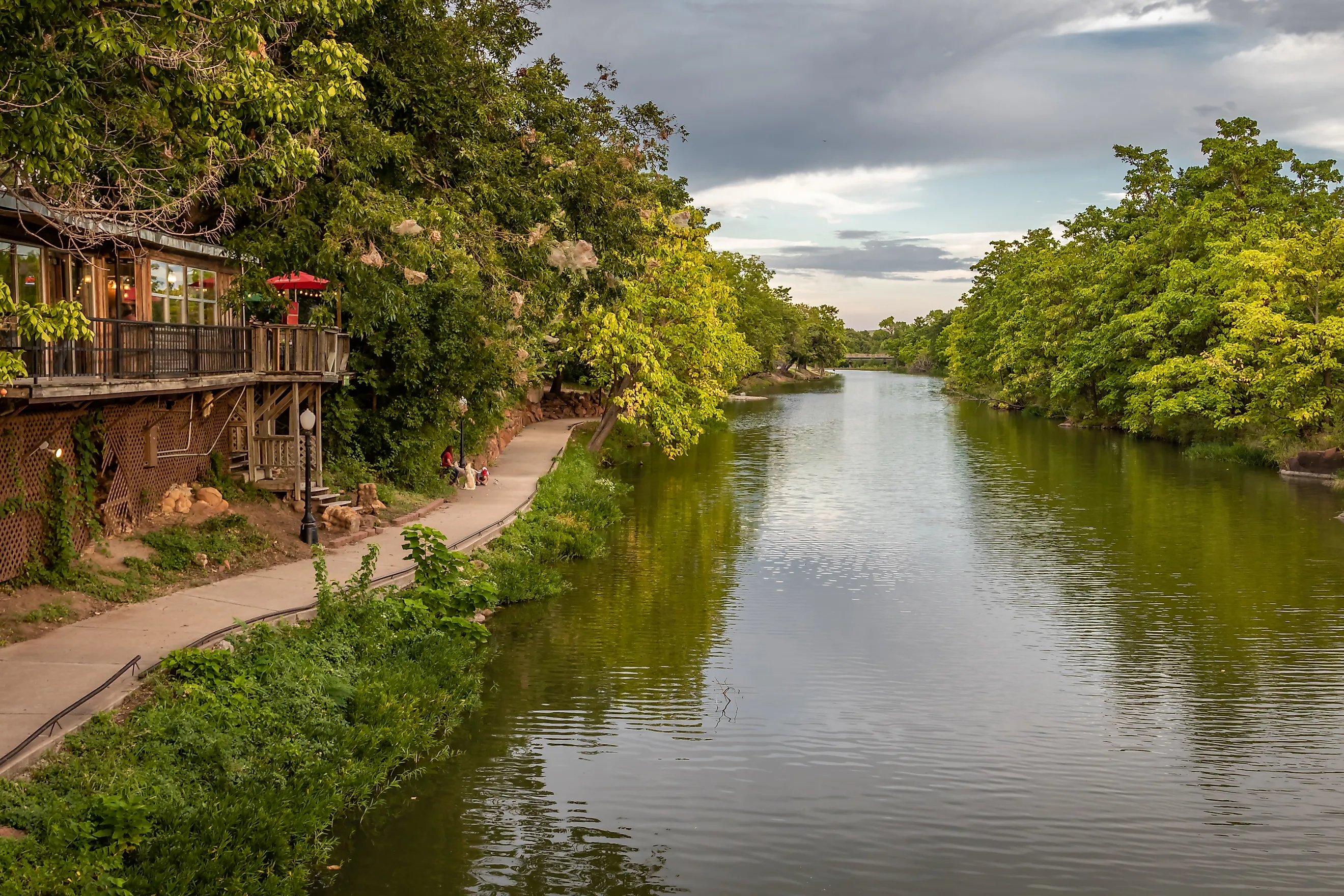
With fewer than 500 residents, Medicine Park sits at the edge of the Wichita Mountains. Bath Lake’s stone steps, low dams, and shallow swimming areas create a series of accessible entry points along the water, while adjacent walking paths connect the lake to nearby shops and gathering areas. The Medicine Park Aquarium and Natural Sciences Center adds a quieter indoor option, with exhibits focused on native fish, reptiles, and regional ecosystems. Just outside town, the Wichita Mountains Wildlife Refuge invites visitors to marked hiking trails, drive-through open-range areas where bison and longhorn cattle are commonly seen, or designated viewpoints across the granite landscape.
The Polar Plunge, held each winter at Bath Lake, remains one of Medicine Park’s most exciting annual events, drawing participants into the water and spectators along the shoreline. During the event, people meet at Park Tavern and head to Bath Lake for a dive in the cool waters.
Guthrie

Guthrie is known for its extensive historic district, one of the largest in the central United States. Its downtown features preserved Victorian-era commercial buildings and red-brick streets dating back to Oklahoma’s territorial period.
The annual 89er Days Celebration is Guthrie’s largest event, featuring parades, concerts, and historical reenactments tied to the Land Run of 1889. The carnival also hosts food trucks and rides for both children and adults. Active local businesses and a compact layout make the downtown area easy to explore on foot. Beyond the celebration, visitors can tour the Oklahoma Territorial Museum, explore the Logan County Courthouse, and browse antique stores along Division Street. The Pollard Theatre hosts live performances throughout the year, adding to the town’s cultural offerings.
Pawhuska

The Pioneer Woman Mercantile in Pawhuska draws visitors year-round with baked goods, shopping, and lodge tours offered during daytime hours. For more on Pawhuska’s history, the Osage Nation Museum provides historical insights. Founded in 1938, it is the oldest tribally owned museum in the United States, with exhibits detailing Osage arts, language, culture, and traditions. Just outside town, the Tallgrass Prairie Preserve offers access to one of the largest protected prairie ecosystems in the country, including a free-ranging bison herd.
The National Indian Taco Championship is held annually in Pawhuska, bringing together food and non-food vendors, and visitors from across the region to compete, eat, and take part in the Pow Wow. Visitors from all over can challenge themselves to eat these traditional tacos, enjoy Native American dance demonstrations, and buy souvenirs from local craft vendors.
Tishomingo

Tishomingo, named after the respected Chickasaw Chief, served as the Chickasaw Nation’s capital during the late 19th century. Its downtown is centered around historic government buildings and locally owned businesses. The Chickasaw Capitol Building is one of the town’s most prominent landmarks, a red granite structure completed in 1898 that once housed the tribal government and now contains exhibits and artifacts tied to Chickasaw governance. The Chickasaw Council House Museum offers exhibits on the tribe’s history, including traditional clothing, tools, photographs, and records that document daily life and political structure. Nearby, the Blue River provides opportunities for fishing, kayaking, and swimming, with clear spring-fed water and public access points that are especially popular in warmer months.
The annual Chickasaw Annual Meeting and Festival features live music, traditional Chickasaw meals such as frybread and pashofa, and local food vendors alongside craft booths and community activities. The festival’s parade culminates in a cavalcade of horses from the Chickasha Rodeo Foundation, often accompanied by riders in traditional attire and community groups, creating one of the town’s most well-attended gatherings of the year.
Wewoka

The Wewoka Sorghum Festival, held each year in the autumn, features local artisans, vendors, and live entertainment. Drawing thousands of visitors from across the country and abroad, this family-friendly festival features Native cultural cuisine, handmade crafts, and agricultural exhibits, while teaching visitors about sorghum, a grain long used across the South to produce syrup and other foods.
Reflecting its history as an oil boomtown during the early 1900s, Wewoka’s downtown features more modern history than some of Oklahoma’s other small towns, with brick commercial buildings dating back over a century. Visitors can stop by the Seminole Nation Museum to learn about local history through photographs, tribal artifacts, and exhibits detailing Seminole culture and the region’s oil-era growth.
Broken Bow

Broken Bow is located in southeastern Oklahoma, near the Ouachita Mountains. While tourism has grown significantly in recent years, the town itself remains relatively small and serves as a gateway to nearby outdoor attractions. Beavers Bend State Park and Broken Bow Lake are the primary draws, offering boating, kayaking, hiking, fishing, and camping across more than 14,000 acres of forest and water area. In town, local restaurants, outfitters, and small shops provide services for visitors exploring the surrounding region. Papa Poblanos is a popular spot where people can enjoy some Mexican bites and chat with the locals.
The Beavers Bend Folk Festival and Craft Show is one of the area’s best-known annual events, bringing traditional musicians, craft makers, and food vendors to nearby Beavers Bend State Park each fall. The festival features folk music performances, blacksmithing and woodcarving demonstrations, handmade crafts, and heritage exhibits that reflect the culture and traditions of southeastern Oklahoma.
Sulphur

Sulphur hosts many annual events, such as the Artesian Arts Festival, which brings artists and visitors into the downtown area each year, spotlighting a featured local artist while showcasing modern and traditional works side by side. The festival also includes live performances, Native American art displays, craft vendors, and food stands that fill downtown streets during the event.
Known for its location at the entrance to Chickasaw National Recreation Area, Sulphur’s downtown is compact and easy to navigate, with a mix of historic and modern buildings. The Chickasaw Cultural Center offers a detailed look at tribal history and culture through interactive exhibits, traditional demonstrations, and reconstructed village areas spanning more than 180 acres. Nearby, the Travertine Nature Center offers access to walking trails and streams that flow through the recreation area.
Alva

The Nescatunga Arts Festival, held annually in the summer, features artists, gourmet food vendors, bakers, and live performances, along with art festival bingo, drawing visitors from across Oklahoma and neighboring states. The festival also includes children’s activities, craft booths, and regional musicians performing throughout the day, helping turn the downtown area into one of Alva’s busiest community gatherings of the year.
Alva serves as a regional hub for surrounding rural communities in northwestern Oklahoma. Northwestern Oklahoma State University contributes to local activity, bringing several thousand students and hosting athletic events, concerts, and public programs throughout the year. Downtown Alva features a mix of historic storefronts, local restaurants, and community services, while the Cherokee Strip Museum showcases exhibits on early settlement, ranching, and pioneer life. Hatfield Park remains one of the town’s main outdoor gathering areas, with open green space, sitting areas, and paths used for walking, picnics, and community events.
The Friendliest of Oklahoma’s Communities
Oklahoma’s small towns invite visitors from far and wide through their festivals and culture. Their friendly atmospheres stand out through engaging, immersive experiences that teach about history and modern culture. Whether visiting the United States’ oldest tribal-owned museum in Pawhuska or feasting on pashofa in Tishomingo, the events and communities of these small towns are as warm and welcoming as they are engaging.