6 Best Natural Wonders To Visit In Maine This Year
Cadillac Mountain catches some of the earliest sunrises in the United States for half the year. Mount Katahdin marks the northern terminus of the Appalachian Trail and the highest point in Maine at 5,269 feet. Moosehead Lake holds more water than any other single lake in New England. The Bold Coast runs along Maine’s far eastern shore with cliffs, lighthouses, and a stretch of coastline that’s stayed almost entirely undeveloped. The wonders below make the case that Maine still has terrain in its own backyard most residents haven’t fully covered.
Cadillac Mountain

Cadillac Mountain in Acadia National Park is the highest peak on the US East Coast at 1,530 feet and one of the best places to watch the sunrise for half the year, from fall to early spring (October to March). If you’re not an early riser, the best time of year to visit Cadillac Mountain is from September to early October to see the fall foliage. Originally called Green Mountain, the mountain was renamed Cadillac Mountain in 1918 after the French explorer Antoine de La Mothe Cadillac, best known for founding Detroit in 1701 and for whom the Cadillac automobile is also named.
Acadia National Park covers about 49,050 acres, including much of Mount Desert Island, parts of the Schoodic Peninsula, and several smaller islands like Isle Au Haut, Baker Island, and Bar Island. To reach the summit of Cadillac Mountain, the 3.5-mile windy Cadillac Summit Road takes you to the top, where you’ll find a parking lot, a small gift shop, and granite overlooks.
Driving is a very popular way to reach the top of the mountain, so reservations are recommended. Once there, experience the panoramic views and walk the 0.5-mile Summit Loop Trail. Hikers can get to the top via several summit trails, including the 4.4-mile round-trip North Ridge Trail and the longer seven-mile round-trip South Ridge Trail, which features sweeping views of the Atlantic Ocean along the way.
Tumbledown Mountain

The 3,068-foot Tumbledown Mountain is known for its scenic hiking trails, rocky peaks, and the alpine pond, Tumbledown Pond (sometimes called Crater Lake). Designated an important conservation area called Tumbledown Public Lands, much of the mountain, the high-elevation pond, and surrounding trails are protected, as they encompass one of the state’s largest alpine ecosystems and rare plant, endangered, and at-risk animal species, such as peregrine falcons and the spring salamander. Moose sightings are often reported.
The mountain is familiar to all types of hikers, with family-friendly trails like the 1.5-mile Brook Trail, which rewards kids with a swim in the alpine pond at the top. The 2.2-mile Parker’s Ridge Trail is the oldest trail up Tumbledown and is more challenging. Backcountry camping is not allowed on the mountain, but a 136-site campground is available at nearby Mount Blue State Park, Maine’s largest state park at nearly 8,000 acres. You can visit the mountain year-round, but late fall is the best time of year to avoid the summer crowds, especially on the weekends.
Mount Katahdin

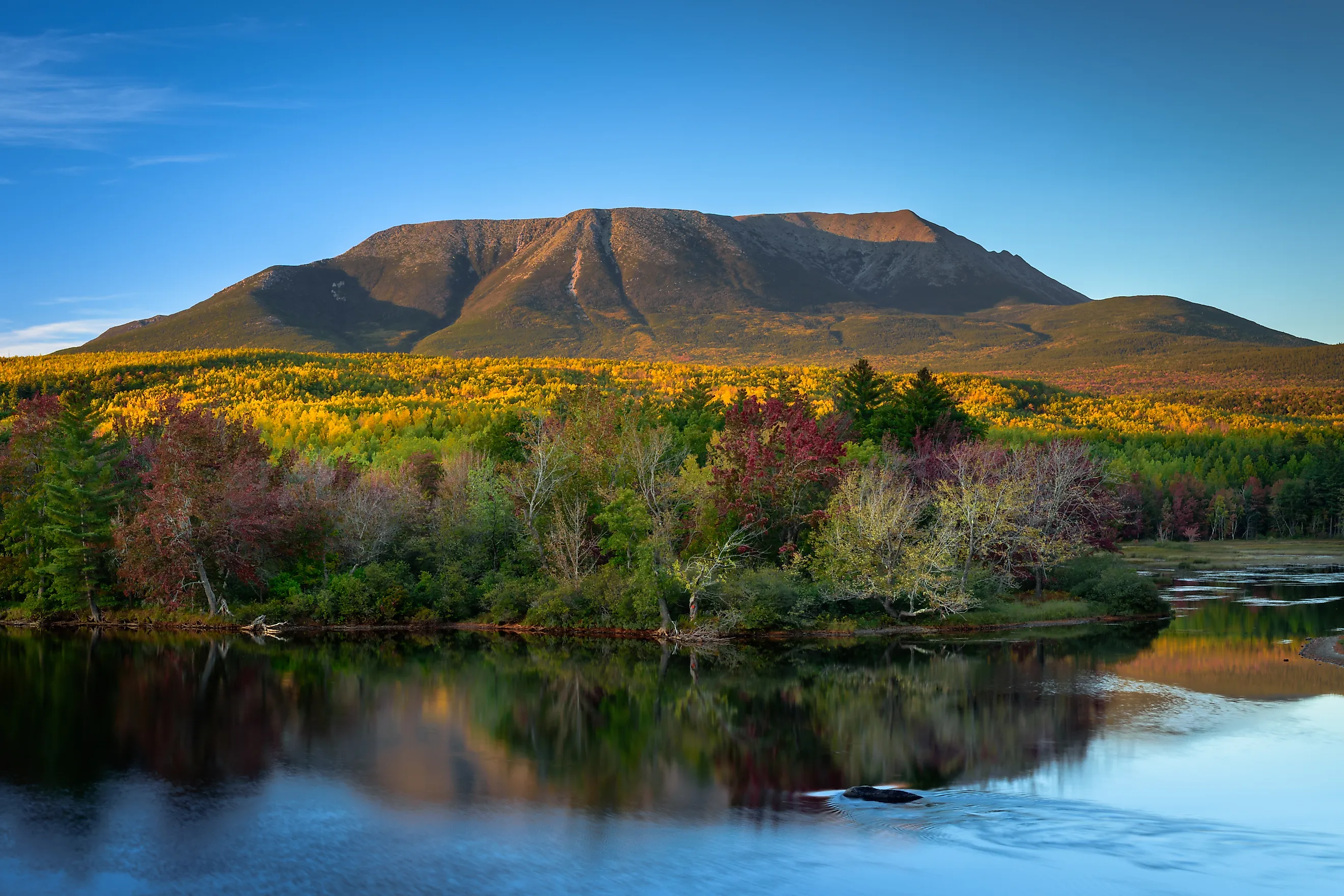
At 5,269 feet, Mount Katahdin is the tallest mountain in Maine. The mountain holds a special place in the hearts of many outdoor enthusiasts, as it marks the endpoint and the highest point of the storied 2,200-mile Appalachian National Scenic Trail, which traverses the eastern United States from Springer Mountain in Georgia to Maine.
Simply referred to as “Katahdin” by hikers around the globe, it is a popular hiking and backpacking destination in the 200,000-acre Baxter State Park for adrenaline-seeking adventurers. It is widely considered one of the most challenging hikes in the Appalachian Mountains, with round-trip hikes to the summit taking 8 hours to 12 hours. To protect the wilderness, access to the roadside trailheads is limited, and reservations are required.
For a less strenuous visit to this designated National Natural Landmark, you can spend a few hours at Katahdin using the Togue Pond Gate entrance. Bring your own kayak or rent a canoe at the Visitor Center, pack a picnic, and enjoy the view of the mountains surrounding you. The best time of year to hike the mountain is from September through early October, when the summer crowds thin out and the fall colors are at their peak.
Moosehead Lake

The best time to visit Moosehead Lake is late spring through early summer, especially June, if you’re hoping to see moose. The largest lake in Maine, and the largest lake entirely within New England, the moosehead-shaped body of water covers about 75,000 acres and offers 400 miles of shoreline in the north-central Maine wilderness near the town of Greenville. For water lovers, the lake is a popular spot for kayaking, canoeing, and stand-up paddleboarding, with rentals available from local outfitters such as Northwoods Outfitters and Wilsons on Moosehead Lake.
Another activity is the stargazing at the nearby Far Reach Observatory, a two-story tower and dome-house that hosts regular Sky Watch parties and education programs as part of the AMC Maine Woods International Dark Sky Park. Taking part in a moose safari is also a fun excursion around Moosehead Lake with Northeast Whitewater, a local guide service that offers morning and evening tours on the water by canoe or on land by van from May to October.
Bold Coast

The Bold Coast is a rugged stretch of coastline in Maine, near the US-Canada border. To explore this undeveloped part of the state, use one of the off-grid towns as a base camp, like Cutler, Lubec, and Machias, and choose your own adventure.
You can hike one of the trails along the Bold Coast in the 12,334-acre Cutler Coast Public Reserved Lands for views of the Atlantic Ocean toward the Bay of Fundy. Visit the Quoddy Head State Park in Lubec to see one of the most photographed lighthouses in the US, the striped West Quoddy Head Light, or see waterfalls in Bad Little Falls Park in downtown Machias.
Thanks to its spread-out landscape, one of the benefits of choosing a wilderness adventure along the Bold Coast is that it offers a quieter alternative to Maine’s more popular destinations, with fewer crowds. Any time between late spring and fall is ideal for going.
Rangeley Lakes Region

The Rangeley Lakes region sits in the western mountains near Maine’s border with New Hampshire, centered around the town of Rangeley, where winding roads connect a chain of wild, remote lakes, including Rangeley Lake, Cupsuptic Lake, and the oddly named Mooselookmeguntic Lake, the fourth-largest lake in the state. Thanks to the surrounding mountains, the landscape is characterized by elevation changes, ridgelines, and water in almost every direction.
The 869-acre Rangeley Lake State Park is a good place to pitch a tent on one of the park’s 50 lakeside sites so that you can enjoy hiking, salmon and trout fishing, boating, and birdwatching. A premier destination for rare boreal bird species like the Bicknell’s Thrush and the Black-backed Woodpecker, the Rangeley Birding Festival is an annual three-day event based in Rangeley and the wider Saddleback Mountain resort area that attracts birders, naturalists, and photographers from across New England.
Be sure to visit the Rangeley Lake Trail Center, the gateway to over 30 miles of secluded recreational trails for hiking, running, and biking, guided tours, and cold drinks and snacks in their yurt lodge. The best time to enjoy camping, swimming, and birding in the natural wonder is during the warm summer months.
Maine’s Natural Wonders
Maine’s natural wonders offer a quieter way to experience the state, away from crowds and celebrations. From the sunrise views atop Cadillac Mountain in Acadia National Park to the alpine pond on Tumbledown Mountain, the state is a combination of rugged coastlines, rocky cliffs, and mountain beauty. Adventurers can tackle Mount Katahdin, relax on Moosehead Lake, explore the rugged cliffs of the Bold Coast, or the watery Rangeley Lakes Region. Together, these off-the-beaten-track destinations showcase a side of Maine worth the journey.