5 Wild Animal Hotspots in Virginia
Virginia's wilderness areas protect some of the East Coast's most biologically diverse animal communities spanning nearly every major ecosystem type between the Atlantic Coast and the Appalachian interior. Their scale and complexity reflect decades of conservation work and recovery programs. Across barrier islands, tidal marshes, southern swampland, mountain forests, and high-elevation boreal zones, five public lands capture the full range of Virginia's biodiversity.
Chincoteague National Wildlife Refuge

Established in 1943 primarily to protect migratory birds, the 14,000-acre Chincoteague National Wildlife Refuge on the Virginia side of Assateague Island is now a haven for a range of animal communities. This refuge holds the designation of a Globally Important Bird Area and has membership in the Western Hemisphere Shorebird Reserve Network. More than 300 bird species use the refuge across the year, a number that reflects the diverse habitats of maritime forest, freshwater wetlands, saltmarsh, and open beach found within its boundaries.
The refuge sits directly within the path of the Atlantic Flyway, a major north-south migratory route for birds across North America. In late September and October, raptors including merlins, peregrine falcons, and sharp-shinned hawks pass through on their way south. Shorebird concentrations during fall migration make this refuge one of the most critical stopover areas in the US east of the Rockies.
In addition to its immense array of bird life, Chincoteague National Wildlife Refuge has a population of wild ponies. These hardy ponies are descended from feral populations that have lived freely on the island for centuries. Early morning and twilight hours offer good chances to view the animals along the refuge's 3.25-mile Wildlife Loop. Delmarva fox squirrels, song birds, and sika deer are present along the trail as well.
The area is home to abundant marine life that can be viewed from the island. Atlantic bottlenose dolphins, humpback whales, and sea turtles are often spotted. In spring, spawning horseshoe crabs attract migrating shorebirds in concentrations that make Chincoteague second only to Delaware Bay as a feeding area for ruddy turnstone, red knot, dunlin, semipalmated sandpiper, and sanderling.
Great Dismal Swamp National Wildlife Refuge

The Great Dismal Swamp National Wildlife Refuge protects nearly 113,000 acres of forested wetland in southeastern Virginia, the largest remaining fragment of a once million-acre swamp. Although the swamp overlaps into North Carolina, it is mainly within Virginia. In the spring, over 200 species of birds inhabit the land, including 35 species of warblers. The refuge also supports 87 species of reptiles and amphibians alongside populations of black bear, bobcat, and river otter.
The refuge participates in an active red-cockaded woodpecker recovery program that has brought the species back to the Great Dismal Swamp. Between 2015 and 2016, 18 juvenile red-cockaded woodpeckers were translocated to the refuge from healthy populations in the Carolinas. In 2017, the program recorded the first successful breeding within the refuge. It's a small but crucial step in saving their population.
The program also focuses on restoring pond pine and pocosin habitat ecosystems. The US Fish and Wildlife Service monitors them closely because of the refuge's exposure to climate change-driven severe weather and sea level rise. Wetland restoration helps protect critical habitats for threatened species, and the effort is producing visible results. Bald eagles returned to nest in the swamp after a 50-year absence, and tundra swans and snow geese use Lake Drummond as a resting area during migration.
There are a few options for visiting the refuge. The nine-mile round trip Washington Ditch Trail is one of the over 40 miles of earthen road trails across the refuge. It passes through the interior forest of mature Atlantic white cedar and bald cypress forest where the warbler diversity peaks during the spring migration window between mid-April and mid-May. Lake Drummond Wildlife Drive, a six-mile self-guided route accessible from the Railroad Ditch trailhead, covers the core of the black bear and river otter habitat along the drainage corridor. Both options access Lake Drummond, a 3,142-acre body of water at the center of the swamp, which is one of only two natural lakes in Virginia and anchors the ecological structure of the surrounding wetland forest.
Shenandoah National Park

Running 105 miles along the crest of the Blue Ridge Mountains, Shenandoah National Park functions as the largest contiguous block of protected forest habitat in the mid-Appalachian interior. The 200,000-acre park supports over 50 species of mammals, more than 190 bird species, and over 50 reptile and amphibian species across a landscape that is 93 percent forested. Within the park boundaries, the black bear population has recovered from two known individuals in 1937 to several hundred today, a trajectory of recovery that speaks to decades of conservation efforts in the region. The backcountry trails off the Milam Gap produce the highest documented density of bear activity.
In addition, other animal populations have experienced a comeback within the park. Through the Shenandoah Peregrine Restoration Program, peregrine falcons have been reintroduced in several waves beginning in 1989. In 2023, the program ended after successfully releasing over 200 falcons in the park between 1989 and 2022. Now, the Center for Conservation Biology and park partners continue monitoring the small, but established breeding population.
Another site of high animal activity is Big Meadows. In the spring, white-tailed deer and wild turkey move through the open fields at Big Meadows and a diverse range of butterflies flit between acres of wildflowers. In the nearby cold mountain streams, the endangered eastern hellbender, a giant aquatic salamander that functions as a water quality indicator, persists in small populations within the more remote drainages.
Skyline Drive stretches 105 miles, giving visitors access to multiple elevation zones and wildlife habitats without ever leaving the road. The winding north-south path along the mountaintops of the Blue Ridge Mountains, serve as the only public road through the park. It passes through four entrance points, connects to more than 500 miles of hiking trails, and offers 75 overlooks with sweeping views of the Shenandoah Valley to the west and the Piedmont to the east.
Back Bay National Wildlife Refuge

Established in 1938 to protect and provide habitats for migratory and wintering waterfowl, Back Bay National Wildlife Refuge encompasses about 9,200 acres of beach, dunes, shrub-scrub, freshwater wetlands, and woodlands across a thin strip of barrier island coastline.
The refuge sits along the Atlantic Flyway, one of the four major north-south migratory corridors in North America, stretching from the Arctic tundra of Canada down the East Coast of the United States to South America and the Caribbean. Every season, the refuge draws significant numbers that reflect its critical position along the East Coast migration corridor. Thousands of tundra swans, snow geese, and Canadian geese move through during fall and winter migration, with waterfowl populations peaking in December and January.
More than 300 species of birds have been documented at the refuge, and its geographic position along the Atlantic Coast creates overlapping ranges for both northern and southern species, producing high biodiversity across a relatively compact area. Threatened and recovering species, including the loggerhead sea turtle, brown pelican, and bald eagle, inhabit the interior and shore areas of the refuge. River otters, bobcats, white-tailed deer, and cottonmouth snakes are documented permanent residents.
The Dune Trail runs north along the barrier island through the shrub-scrub zone where songbird migration concentrates each spring and fall. The freshwater impoundments along the main entrance road hold the highest waterfowl densities and birding opportunities during the peak winter months. From April through October, a public kayak launch at the end of Horn Point Road provides access to wildlife viewing via paddling across the bay and along the coastline of the refuge's islands.
Mount Rogers National Recreation Area

Home to one of Virginia's rare boreal summit ecosystems, Mount Rogers National Recreation Area harbors a distinctly unique wildlife community within the central Appalachian region. It encompasses a 200,000-acre section of the Jefferson National Forest where the summit of Mount Rogers reaches 5,729 feet and supports a boreal forest community.
Nearly 160 different species of birds have been identified in the area. Several of them typically only breed in more northern climates of the US but are able to nest within the higher altitude environment of Mount Rogers, adding to the rarity of the area's ecosystem. These include the Blackburnian warbler, black-capped chickadee, golden-crowned kinglet, red crossbill, and northern saw-whet owl. Salamander diversity at these elevations includes an abundance of Jordan's salamander and rare species such as the golden pygmy salamander.
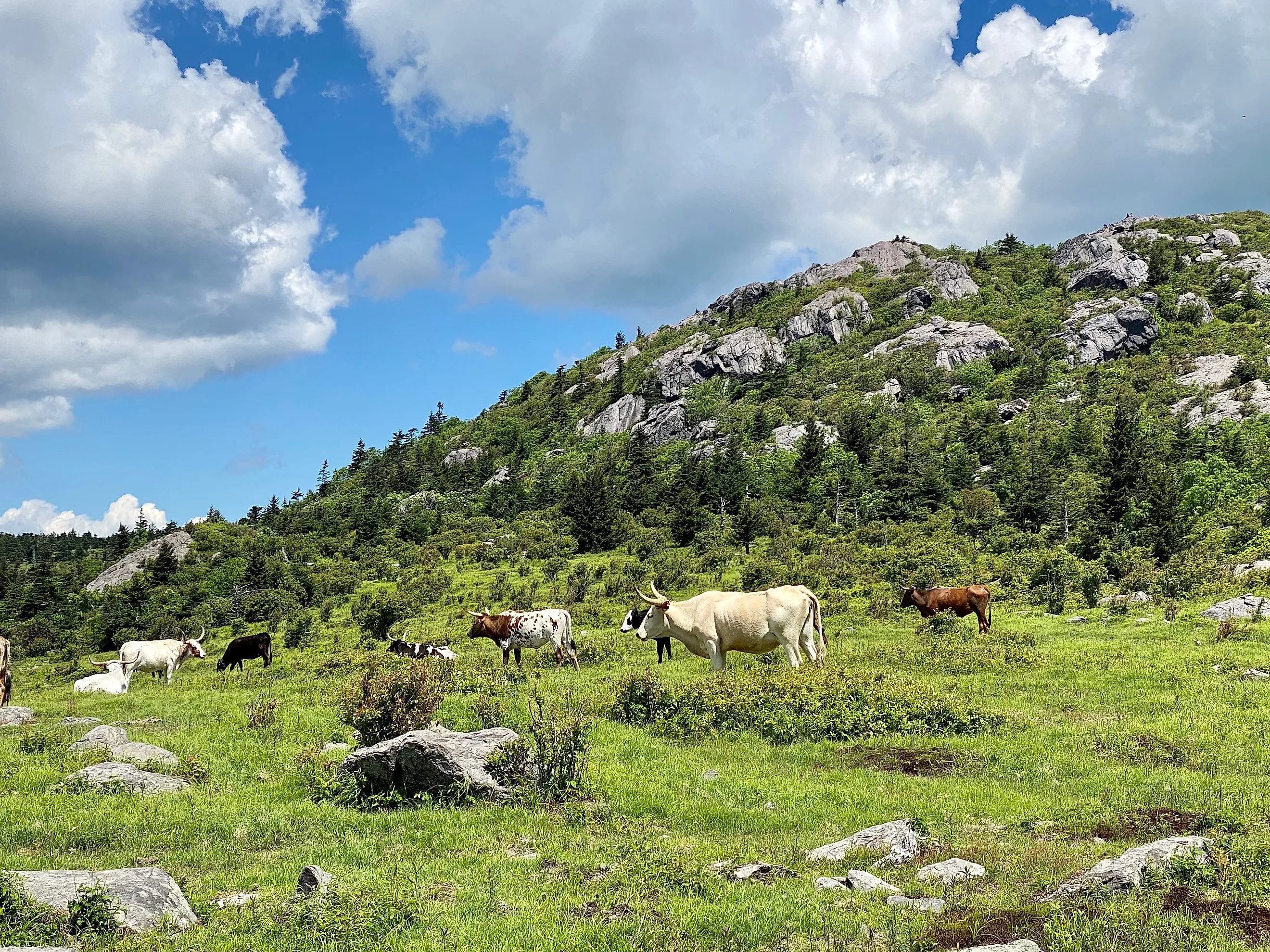
The elevation gradient across the area, dropping from the summit spruce-fir zone down to roughly 2,000 feet at the New River, produces a unique set of wildlife communities that shift noticeably with altitude. The recreation area even supports a herd of about 100 wild ponies, managed under an agreement between the Wilburn Ridge Pony Association and the US Forest Service, that graze and forage 3,500 acres of the open mountain balds of Wilburn Ridge year-round. Hiking the Appalachian Trail segment from Elk Garden to the Mount Rogers summit represents the highest concentration of the area's boreal species and offers visitors the chance to pass through the full elevation transition.
The Diverse Landscapes of Virginia's Wildlife Hotspots
Five of Virginia's most active wildlife areas span barrier islands, Atlantic Flyway corridors, coastal swamps, and Appalachian forests. Few East Coast states contain such a dense range of ecological transitions within a few hundred miles, a diversity reflected in their wildlife. Each area safeguards irreplacable species nurtured by decades of dedicated conservation.