9 Towns in Vermont With the Best Downtown Areas in 2026
Vermont's best downtowns make small-town life feel full within a few blocks. Some gather around a village green and others run along old commercial blocks full of bookstores and cafés. A few sit right beside a river or a set of falls. What they share is a downtown that looks lived in rather than staged. The nine that follow pair walkable streets with scenery, history, and a reason to linger.
Woodstock

Woodstock has one of Vermont's most recognizable downtowns. Brick storefronts, white clapboard buildings, and old inns line streets framed by close-in mountain slopes, and Central Street stays busy with shops, galleries, and restaurants. The Middle Covered Bridge gives the village its signature view, crossing a branch of the Ottauquechee River right at the center of town. Billings Farm and Museum, a short walk or drive away, ties the area to Vermont's farming history, and the Marsh-Billings-Rockefeller National Historical Park adds forest trails and a historic mansion just beyond the downtown blocks. The pieces fit together, the shops and the bridge and the farm and the wooded hills all reading as one village scene.
Stowe

Stowe's downtown is built around its mountain views and the steady movement of visitors who still find reasons to slow down. Main Street stays compact enough to walk between shops, galleries, and cafés, and the white steeple of Stowe Community Church marks the skyline whenever Mount Mansfield rises behind it. The Stowe Recreation Path starts near the village and runs through fields, woods, and river scenery on a paved route. The Vermont Ski and Snowboard Museum brings the area's ski history downtown, and the Helen Day Art Center adds a cultural stop beyond the shops. The scenery is the obvious draw, but the history and the walkable streets are what hold attention after the first view.
Manchester

Manchester mixes historic New England character with a more upscale shopping and arts scene. Main Street and Manchester Center stay active with bookstores, outlet shops, restaurants, and galleries, giving the town a resort-town rhythm different from Vermont's smaller village greens. The clearest landmark is Hildene, the Lincoln family home, set just outside downtown with gardens, trails, and mountain views. Northshire Bookstore anchors the center from inside the historic Colburn House on Main Street, and the Southern Vermont Arts Center adds exhibitions and wooded grounds nearby. The Equinox Preservation Trust keeps trails close to town, so a day might include shops, a historic estate, and a forest trail without feeling scattered.
Middlebury

Middlebury has one of Vermont's best small-college settings. Its center gathers around Main Street, Merchants Row, and the falls of Otter Creek, with historic storefronts, bookstores, and college buildings close together. Middlebury Falls is the town's signature natural feature, dropping right through the heart of downtown. The Henry Sheldon Museum sits near the main blocks with art, furniture, and documents tracing Vermont history, and Middlebury College brings architecture, performances, and student energy within walking distance. Just outside the center, the UVM Morgan Horse Farm connects the town to one of Vermont's most recognizable symbols. The downtown is not only handsome, it carries water, history, and daily life in the same few blocks.
Brattleboro

Brattleboro's downtown carries more edge than most Vermont centers. Main Street feels busy in a way that fits its spot near the Connecticut River and the New Hampshire border, with brick buildings, bookstores, theaters, and sloping side streets giving it a creative, lived-in feel. The Brattleboro Museum and Art Center anchors the arts scene inside a former railroad station. Retreat Farm sits just outside the main blocks with trails, farm animals, and open land, and the Estey Organ Museum tells the story of one of the town's most unusual industries. The nearby Creamery Covered Bridge brings the classic Vermont covered-bridge view without pulling far from downtown. The appeal is the energy, artistic and historic and a little unpredictable.
Montpelier

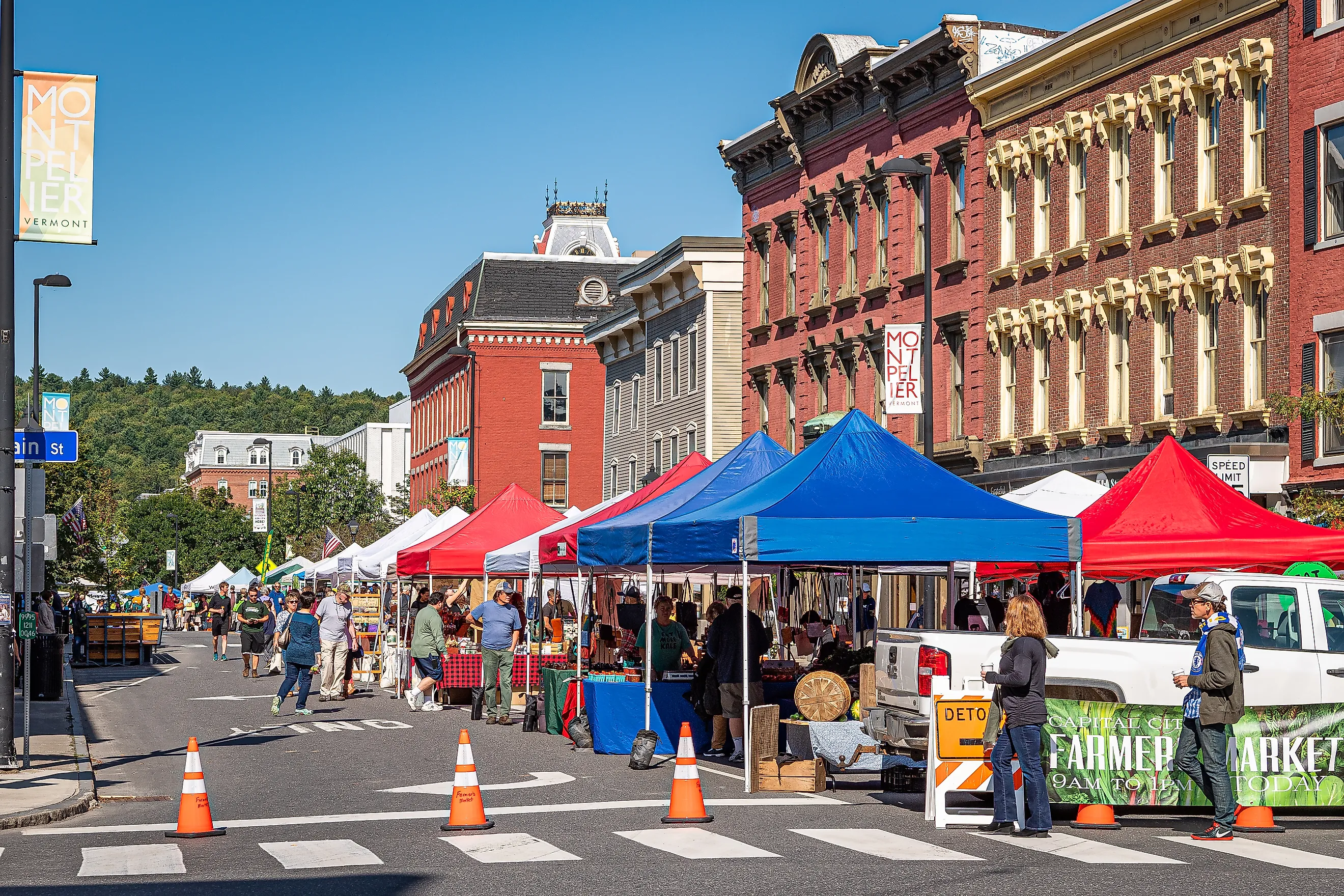
Montpelier is both small and civic, the smallest state capital in the country. Its downtown still carries the presence of government buildings, local shops, theaters, and historic streets, and State Street leads toward one of Vermont's most recognizable buildings. The Vermont State House anchors the capital district with its gold dome and broad front lawn. The Vermont History Museum adds context on the state's past near the main blocks, and Lost Nation Theater brings live performance into Montpelier City Hall. Just above downtown, Hubbard Park gives the city trails, woods, and tower views. The scale stays human, capital-city importance with streets small enough for coffee and an afternoon walk.
Bennington

Bennington layers southern Vermont together, with old commercial blocks, college-town influence, Revolutionary history, and mountain views all close at hand. Its center is more than a photo stop, and shops, diners, and galleries give downtown a local rhythm while Old Bennington just up the road holds the area's strongest historic landmarks. The Bennington Battle Monument is the most visible, rising 306 feet above town to mark a key Revolutionary War battle. The Bennington Museum holds art, regional history, Bennington pottery, and one of the best-known Grandma Moses collections. Old First Church adds another historic stop, its cemetery tied to Robert Frost. The downtown does not have to carry the visit alone, the history around it gives the streets more depth.
St. Johnsbury

St. Johnsbury gives the Northeast Kingdom more culture than most towns its size. Main Street carries a strong civic and architectural presence through museums, libraries, churches, and older buildings, reading as a regional center without being a large one. The St. Johnsbury Athenaeum combines a historic library and an art gallery in a grand nineteenth-century building. The Fairbanks Museum and Planetarium adds natural history, science exhibits, and Vermont's only public planetarium, and Catamount Arts brings films and performances into the downtown scene. Just outside town, Dog Mountain offers trails, views, and the well-known Dog Chapel. The buildings are the draw, but the museums and local institutions are what keep the center alive.
Waterbury

Waterbury sits near some of the state's best-known food, beer, and outdoor stops. Its historic downtown gathers restaurants, breweries, shops, and inns along walkable streets near the Winooski River, lively without losing its local scale. The Waterbury Reservoir is the major outdoor anchor, with swimming, paddling, and trails nearby. The Ben and Jerry's Factory sits just outside downtown and remains one of Vermont's most familiar stops, while Prohibition Pig gives the center a well-known restaurant and brewery. The surrounding blocks add cafés and historic architecture. The stops fit together easily, downtown to reservoir to a famous brand without turning the day into a long drive.
Vermont Downtowns Worth Wandering
Vermont's best downtowns are not all built around the same kind of beauty. Woodstock and Stowe carry the classic village image, while Manchester and Middlebury pair strong downtowns with culture and historic estates nearby. Brattleboro, Montpelier, and St. Johnsbury lean civic and creative, and Bennington and Waterbury show how a town center can work alongside history, food, and outdoor access. The downtown blocks make the first impression. The best of them also keep rivers, churches, museums, and trails within easy reach.