9 Prettiest Main Streetscapes In Florida
Florida's most memorable downtown streets tell stories that have little to do with theme parks or beachfront resorts. Some grew from bustling ports where shrimp boats still unload their catch. Others flourished alongside railroads and lakes or around historic town squares that continue to anchor community life. Walking these streets means discovering independent bookstores, preserved architecture, and neighborhoods where history is part of the everyday scenery. These nine downtown districts reward travelers who enjoy slowing down and seeing another side of Florida.
Fernandina Beach

Many first-time visitors are surprised by how naturally Fernandina Beach's waterfront blends into its downtown. Before you even reach Centre Street, shrimp boats rock gently at the Amelia River Marina while fishermen prepare for another day on the water. Looking uphill from the docks, glimpses of historic brick buildings peek between palms, making it easy to see how the harbor and downtown have depended on one another for generations.
Centre Street rises gradually from the river through one of Florida's best-preserved historic business districts. Late nineteenth-century commercial buildings now house independent bookstores, clothing boutiques, cafés, bakeries, and art galleries, but much of the original architecture remains intact. Decorative cornices, tall windows, cast-iron balconies, and weathered brick façades give the street a sense of authenticity that never feels manufactured. Even on an ordinary weekday, you'll find residents meeting for lunch, browsing local shops, or chatting outside coffeehouses, giving downtown an energy that extends well beyond the busiest tourist months.
History isn't confined to plaques or guided tours here. The Palace Saloon has welcomed patrons since 1903 beneath its pressed tin ceilings and carved mahogany bar, while the Amelia Island Museum of History explores the remarkable story of the island's eight different national flags. Those historical threads still connect to modern community traditions, especially each spring when the Isle of Eight Flags Shrimp Festival fills Centre Street with seafood vendors, local artists, live music, and thousands of visitors celebrating the industry that helped shape Fernandina Beach.
One of the best moments comes in the early evening as the sun begins dropping behind the Amelia River. The light catches the upper floors of the historic buildings while boats continue moving through the harbor below, creating a view that feels distinctly coastal without losing its small-town character.
Mount Dora

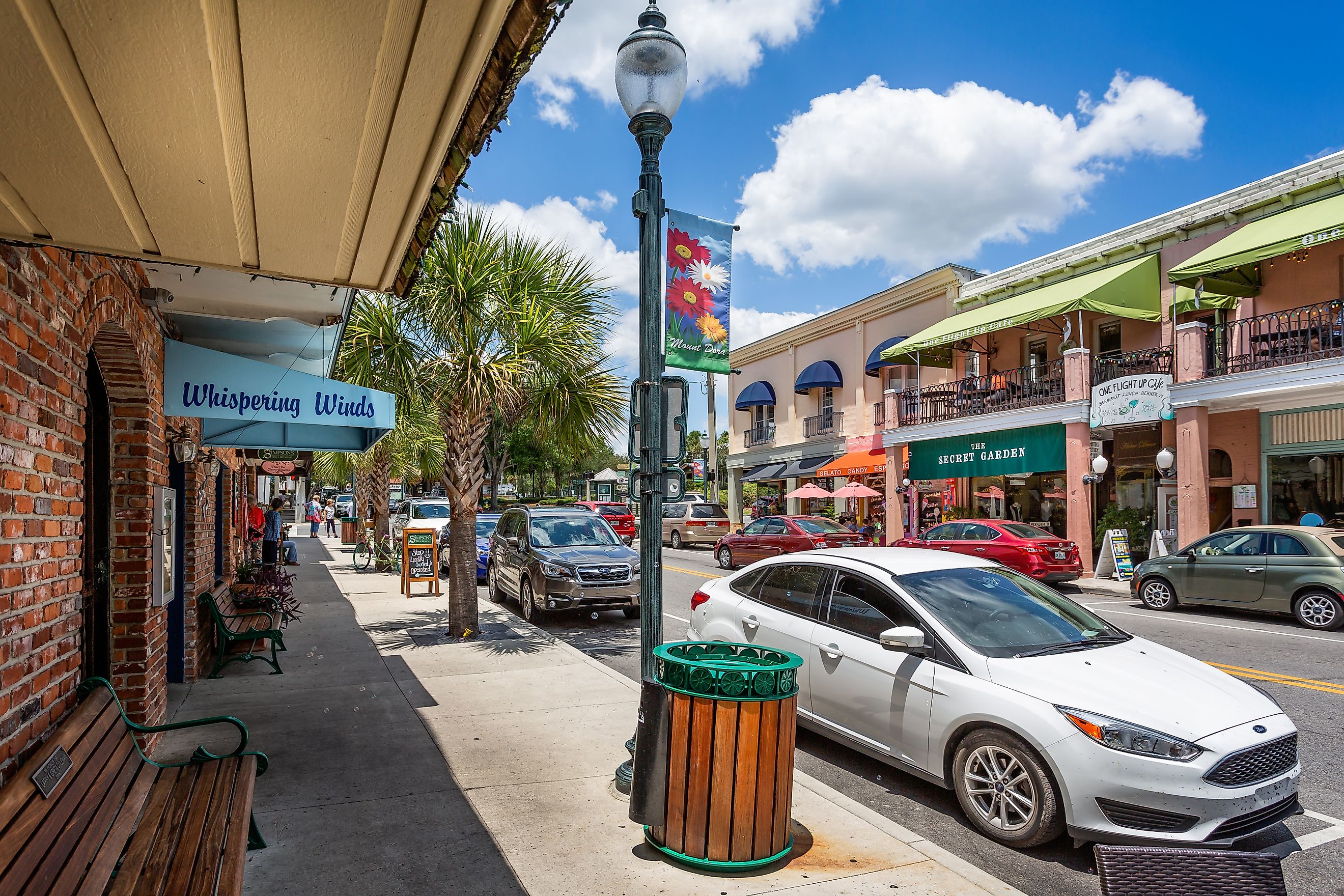
The pace changes almost immediately in Mount Dora. Instead of busy intersections and crowded sidewalks, Donnelly Street encourages visitors to wander without much of a plan. Mornings begin quietly as coffee shops welcome regulars before antique stores open, and by late morning the sidewalks fill with people browsing storefronts beneath mature oak trees draped in Spanish moss. Flower baskets, brick sidewalks, and colorful awnings give the downtown warmth without overshadowing its historic architecture.
Mount Dora has built a national reputation as an antiques destination, but the appeal goes beyond simply having a large number of shops. Each storefront feels different. One may specialize in Victorian furniture while another focuses on vintage advertising, estate jewelry, fine china, rare books, or artwork collected over decades. Even visitors who don't consider themselves antique enthusiasts often end up spending far longer here than expected, moving from one discovery to the next.
The town's creative side is equally visible. Local galleries showcase paintings, pottery, photography, and handcrafted jewelry by Florida artists, while the Mount Dora History Museum, housed inside the community's original fire station, tells the story of how the railroad transformed what was once a small lakeside settlement into a thriving destination.
Following Donnelly Street toward Lake Dora rewards visitors with an entirely different perspective. Grantham Point Park opens onto wide views across the Harris Chain of Lakes, where sightseeing boats glide past cypress trees and wading birds throughout the day. During festival weekends, especially the nationally recognized Mount Dora Arts Festival, the sidewalks become an outdoor gallery filled with artists, musicians, and visitors from across the Southeast. Yet on quieter weekdays, the same streets feel comfortably local, making it easy to understand why so many people return year after year rather than treating Mount Dora as a one-time stop.
DeLand

The glowing marquee of the Athens Theatre is usually the first thing people notice in downtown DeLand. Whether it's lit for a concert, a community play, or a classic movie, it has been drawing people to Woodland Boulevard since 1922. Long before many visitors realize they're standing in one of Florida's best-preserved historic downtowns, the theater has already introduced them to the city's enduring character.
Woodland Boulevard feels like a place designed to be explored on foot. Broad medians shaded by mature oaks separate the traffic from rows of restored storefronts, creating a downtown that is both lively and relaxed. Locally owned coffee shops, bakeries, bookstores, boutiques, and restaurants fill buildings that have served the community for generations. Rather than replacing its historic architecture with modern development, DeLand has found ways to keep these older spaces active and relevant.
That balance between preservation and everyday life is part of what makes the boulevard memorable. Office workers stop for lunch, Stetson University students gather in cafés, and residents browse local shops without the district ever feeling overly tourist-oriented. It feels like a downtown people genuinely use instead of simply maintaining for visitors.
Art has become another defining feature of Woodland Boulevard. The Museum of Art - DeLand regularly rotates exhibitions ranging from contemporary works to selections from its permanent collection, giving repeat visitors something new to discover throughout the year. Just a short walk away, Persimmon Hollow Brewing Company occupies a restored historic building that has become a favorite gathering place before theater performances or weekend events.
Each autumn, the DeLand Fall Festival of the Arts transforms Woodland Boulevard into one of Florida's premier outdoor art shows. Painters, sculptors, photographers, and jewelers line the sidewalks beneath the historic façades, but even outside festival season, the downtown retains the welcoming atmosphere that has helped it remain the heart of the community for more than a century.
Apalachicola

Apalachicola doesn't separate its downtown from its waterfront because the two have always belonged together. Walking along Market Street, it's common to spot shrimp boats tied up along the river just a few minutes after passing brick mercantile buildings that once supported one of the Gulf Coast's busiest ports. The connection between the working harbor and downtown remains obvious, giving the city an authenticity that can be difficult to find in larger coastal destinations.
Many of the historic buildings have found new life as bookstores, seafood restaurants, galleries, and specialty shops, but they still reflect the city's nineteenth-century prosperity. Former warehouses and trading houses now welcome visitors instead of cargo, yet the architecture continues to tell the story of a community built around commerce on the Apalachicola River.
Seafood is woven into daily life here in a way that goes beyond restaurant menus. Local markets sell fresh catches brought in from nearby waters, while family-owned restaurants continue preparing oysters, shrimp, and fish using recipes that have been passed down through generations. Conversations often drift toward oyster seasons, changing water conditions, or the day's catch because those subjects remain part of everyday life for many residents.
The Apalachicola Maritime Museum offers a deeper look at the people who built their livelihoods on the river, bay, and Gulf. Through exhibits, traditional boatbuilding demonstrations, and guided excursions, visitors gain a better understanding of why the waterfront still matters so much to the community.
As evening approaches, Market Street becomes especially inviting. The historic storefronts glow under warm lights, diners fill outdoor tables, and fishing boats ease back toward the docks along the river. It's the kind of place where many visitors find themselves lingering long after dinner simply to enjoy the atmosphere.
Tarpon Springs

The sponge boats usually steal the spotlight before visitors notice the shops lining Dodecanese Boulevard. Their weathered decks, diving equipment, and stacks of natural sea sponges remind everyone that Tarpon Springs remains the Sponge Capital of the World, not simply because of its history but because the industry continues today. Watching a working boat return to the docks adds a sense of authenticity that few waterfront districts can match.
That maritime heritage blends naturally with the city's Greek roots. Family-owned bakeries fill display cases with baklava, loukoumades, and koulourakia, while restaurants serve recipes that have been part of local family traditions for generations. Walking between the shops, it's just as common to hear Greek spoken as it is to catch the aroma of fresh pastries or grilled seafood drifting onto the sidewalks.
Hellas Restaurant & Bakery has become one of the district's signature destinations, but it is far from the only place reflecting the community's heritage. Specialty markets stock imported olive oils, cheeses, spices, and sweets, giving visitors the chance to take a small piece of Greece home with them. Many of these businesses have remained family operated for decades, contributing to the neighborhood's welcoming atmosphere.
For those wanting to understand the sponge industry more fully, sightseeing cruises depart regularly from the Sponge Docks. Captains share stories of the Greek divers who helped establish Tarpon Springs while boats travel along the Anclote River and nearby Gulf waters. Even travelers who skip the cruises often spend plenty of time strolling the waterfront, watching boats unload their catches and browsing shops filled with natural sea sponges and handcrafted goods.
Unlike many historic waterfronts that have shifted almost entirely toward tourism, Dodecanese Boulevard still feels connected to the work that built it. That combination of living history, strong cultural traditions, and an active harbor gives Tarpon Springs one of the most distinctive main streets in Florida.
Dunedin

You don't have to spend long on Main Street to notice that Dunedin moves at its own pace. Cyclists roll in from the Pinellas Trail, neighbors stop to chat outside coffee shops, and people linger on shaded benches instead of hurrying to the next stop. The trail cuts directly through downtown, creating a steady flow of locals and visitors that gives the district energy throughout the day.
Historic storefronts house independent bookstores, gift shops, art galleries, boutiques, and cafés that reflect the city's creative spirit. Colorful murals brighten brick walls, while outdoor patios spill onto the sidewalks beneath mature trees. National chains are noticeably scarce, allowing small businesses to shape the character of the downtown rather than blend into it.
Pioneer Park sits at the center of it all, providing a shaded gathering place beneath towering live oaks. Nearby, the restored railroad depot recalls the years when rail service helped establish Dunedin as an important Gulf Coast community. It's easy to spend an afternoon moving between the park, local shops, and nearby restaurants without ever feeling rushed.
Dunedin has also earned a reputation among craft beer enthusiasts. Opened in 1996, Dunedin Brewery is recognized as Florida's oldest microbrewery and continues to host live music alongside its house-made beers. Throughout the year, festivals often close portions of Main Street to vehicle traffic, replacing cars with artists, musicians, food vendors, and families enjoying one of the state's most walkable downtowns.
Micanopy

Stepping onto Cholokka Boulevard feels like stepping into another era. Massive live oaks stretch across the street, their branches draped with Spanish moss that filters the afternoon sunlight onto weathered storefronts and white picket fences below. The setting is so distinctive that filmmakers chose Micanopy as the backdrop for Doc Hollywood, but the town's appeal extends well beyond its Hollywood connection.
Unlike larger antique destinations, Micanopy encourages visitors to browse at a slower pace. One shop may specialize in early American furniture, while the next offers vintage signs, rare books, architectural salvage, or collectible glassware. Many owners enjoy sharing the stories behind their collections, making conversations just as memorable as the items displayed on the shelves.
The downtown remains small enough that it's easy to explore on foot without feeling hurried. Historic homes stand alongside nineteenth-century commercial buildings that continue serving the community much as they have for generations. Rather than trying to reinvent itself, Micanopy embraces the quiet character that has always defined it.
Just outside downtown, the Micanopy Historical Society Museum chronicles the area's past through photographs, maps, and artifacts donated by local families. Only a few miles away, Paynes Prairie Preserve State Park offers a completely different experience. Wild bison, horses, alligators, and hundreds of bird species roam the expansive grasslands, making it possible to pair one of Florida's most historic downtowns with one of its most remarkable natural landscapes in a single afternoon.
Cedar Key

The Gulf is never far away in Cedar Key. Along Dock Street, fishing boats and oyster skiffs remain tied to weathered wooden docks while pelicans perch on pilings waiting for an easy meal. Salt air drifts through the downtown, and nearly every walk eventually leads back to the water.
Life here has always revolved around the coast, and that influence appears everywhere. Seafood markets, waterfront restaurants, and family-owned businesses continue serving a community shaped by commercial fishing and clam farming. Visitors can watch boats come and go while enjoying fresh seafood harvested from the surrounding waters only hours earlier.
Artists have long been drawn to Cedar Key's quiet beauty. Galleries lining Dock Street feature paintings, photography, pottery, and handcrafted jewelry inspired by the island's marshes, barrier islands, and unforgettable sunsets. The creative community feels like a natural extension of the landscape rather than something developed solely for tourism.
The Cedar Key Museum State Park introduces visitors to another chapter of the island's history through exhibits on writer and naturalist Saint Clair Whitman and the area's early residents. As evening approaches, people naturally gather along the waterfront to watch the sunset spread across the Gulf. It's one of those daily traditions that doesn't require an organized event. Locals and visitors simply find a place along the shoreline and enjoy the view together.
Venice

West Venice Avenue offers something few Florida downtowns can match. Within a short walk, visitors can browse Mediterranean Revival storefronts, relax beneath shady palms in Centennial Park, and continue straight to the Gulf of Mexico. That easy connection between downtown and the beach has helped define Venice since the city was planned in the 1920s.
Arcades, clay tile roofs, decorative courtyards, and low-rise commercial buildings give the avenue a cohesive architectural style that remains remarkably intact. Independent restaurants, boutiques, galleries, and cafés fill the historic spaces, while public art and seasonal landscaping add color throughout the year without overwhelming the original design.
Centennial Park serves as the community's gathering place, hosting farmers markets, outdoor concerts, holiday celebrations, and festivals that bring residents together throughout the seasons. Nearby, Venice Theatre continues a tradition of live performances inside one of the largest community theaters in the country, adding another cultural landmark to an already lively downtown.
Many visitors eventually make their way west to Venice Beach, famous for the fossilized shark teeth that regularly wash ashore. It's common to see people returning downtown with small mesh scoops and sifters after spending the morning searching the shoreline. That simple scene captures what makes Venice unique, a downtown where historic architecture, community life, and one of Florida's most recognizable beaches exist only a few blocks apart.
Where Florida's Streets Tell Their Stories
Florida's prettiest main streets aren't defined by flashy attractions or towering skylines. Their appeal comes from places that have grown naturally over generations, where working waterfronts, historic architecture, family-owned businesses, and local traditions continue to shape everyday life.
Whether you're strolling Centre Street in Fernandina Beach, browsing antique shops in Mount Dora, watching sponge boats return in Tarpon Springs, or ending the day along the Gulf in Cedar Key or Venice, each streetscape offers a different perspective on Florida's history. Together, they prove that some of the state's most rewarding destinations are found one block at a time, where every storefront, sidewalk, and town square has a story worth slowing down to discover.