5 Quietly Charming Towns In Florida
Florida’s character is often easiest to see in its smaller towns. For many travelers, it’s these often overlooked communities that hold the most appeal, places defined by working docks in Apalachicola, clam boats in Cedar Key, and historic streets like Micanopy’s Cholokka Boulevard.
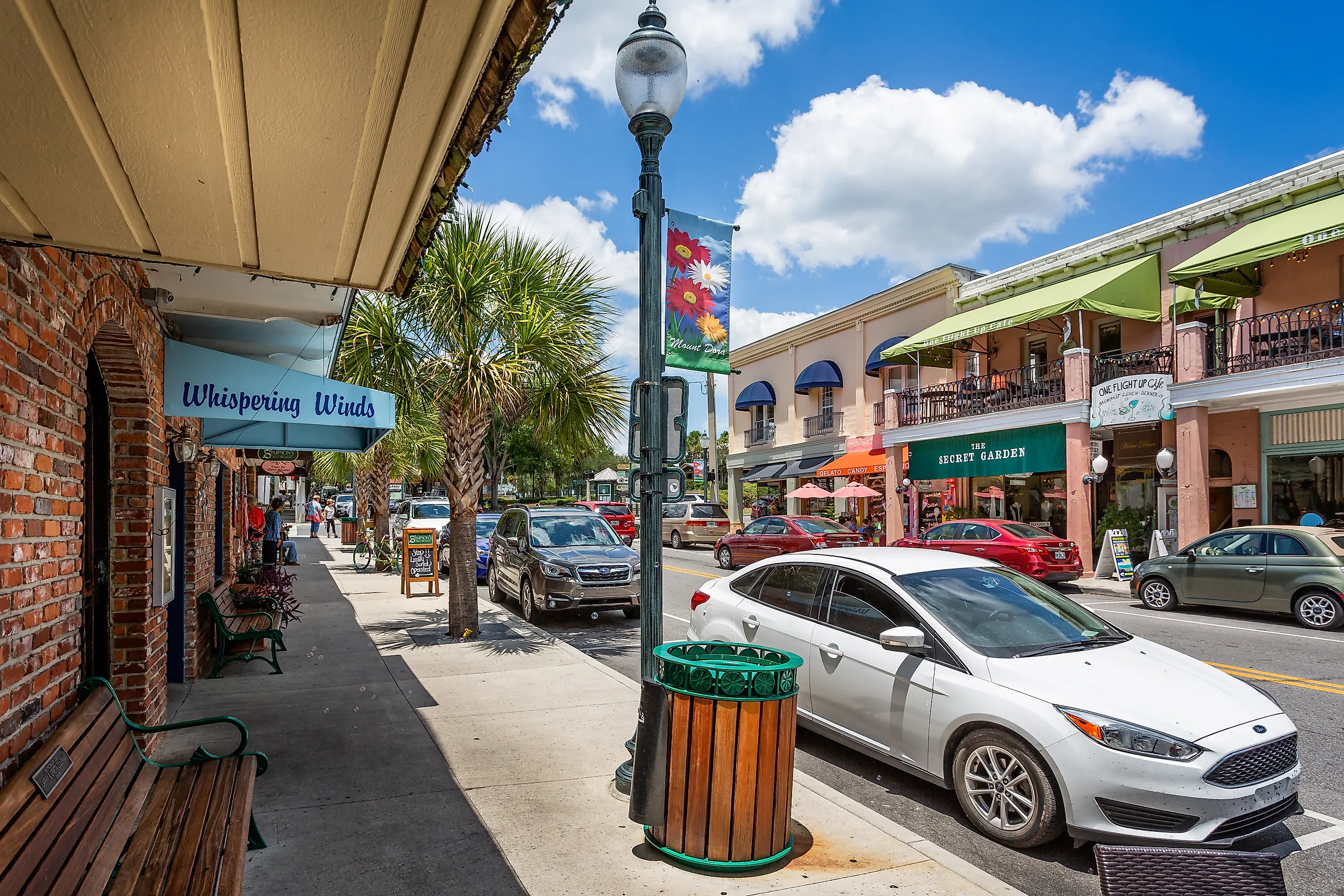
Here, working docks and old general stores still shape the town center, along with landmarks such as the Lakeside Inn in Mount Dora and the 1886 Walton-DeFuniak Public Library.
Apalachicola

Apalachicola’s waterfront functions much as it has for the better part of two centuries, with shrimp boats and oystermen still active. While the steamboats that once brought cotton south from Georgia and Alabama have long since disappeared, signs of the wealth they brought with them live on. Laid out in a well-planned grid, the wide avenues and public squares of the Apalachicola Historic District contain 652 structures listed on the National Register of Historic Places, among them Trinity Episcopal Church. Built in 1838 as a prefabricated building from White Plains, New York, it’s a shining example of the town’s early prosperity.

The town's strong connection to seafood, especially oysters, still lingers. While Apalachicola Bay once produced most of Florida's oyster harvest, more modest catches are normal today due to reef preservation initiatives. Nowadays, it’s the town’s oyster aquaculture operations that supply local restaurants like Up the Creek Raw Bar, Half Shell Dockside, and the Owl Café. They also form the backbone of the town’s Florida Seafood Festival, which draws visitors each fall for shucking contests, boat parades, and live music.
Apalachicola’s also where you’ll find some of Florida’s calmer state parks. John Gorrie Museum State Park commemorates the local physician who invented a mechanical ice-making process, a precursor to modern air conditioning, while trying to cool the rooms of yellow fever patients in the 1840s. Meanwhile, St. George Island State Park offers nine miles of undeveloped Gulf beach and some of the most uncluttered shoreline in the state, while Orman House Historic State Park preserves a picturesque pre-Civil War mansion on the river.
Cedar Key

In Cedar Key, you’ll find yourself hard-pressed to believe this small community was once the second-largest city in Florida. Booming by the 1880s thanks to the completion of the Florida Railroad connecting the Gulf Coast to the Atlantic Coast city of Fernandina Beach, the town is now a low-key coastal community with about 750 residents.
Set on a cluster of barrier islands roughly 50 miles southwest of Gainesville, the town’s early fortunes were the result of its being home to the Eagle Pencil Company. Drawn to the region's virgin eastern red cedar stands, the company exported its high-quality pencils worldwide until there were no more trees to log.

Clam aquaculture was the next industry to flourish here, and today Cedar Key accounts for around 90 percent of Florida's farm-raised clam production. Drive along the town's main drag, Dock Street, and you’ll see local restaurants put this bounty to good use. Tony's Seafood, housed on the ground floor of the 1880 Hale Building, has won multiple awards for its clam chowder, while the Island Hotel & Restaurant, built in 1859, serves seafood in a building long associated with local ghost stories.
Cedar Key Museum State Park documents the island’s early industries and cultural history. In addition to displays about the island's Timucuan people, you’ll learn more about its famous pencils. The Cedar Keys National Wildlife Refuge, established by President Hoover in 1929, protects major nesting colonies for herons, egrets, and brown pelicans.
Micanopy

Known as “the town that time forgot,” a visit to tiny Micanopy is a quieter counterpoint to Florida’s busier destinations. Just 12 miles south of Gainesville and minutes from I-75, Micanopy is not only one of Florida’s smallest incorporated towns but also the state’s oldest continuously inhabited inland settlement. Established in 1821, the same year that Florida became a U.S. territory, it’s named after Seminole chief Micanopy, whose tribe occupied the area during the Second Seminole War.

Consisting of a charming two-block commercial strip along Cholokka Boulevard, Micanopy's downtown hasn’t changed much. Most of its buildings were added in the late 1800s and once housed general stores, a bank, a theater, and a post office. Today, they’re home to antique shops like Delectable Collectables, which famously doubled as a bank in the 1991 Michael J. Fox comedy, Doc Hollywood.
For an overnight stay, the Herlong Mansion is a classy bed and breakfast that’s just steps from downtown Micanopy. Built in 1845, the inn features period antiques, claw-foot tubs, and broad verandas just steps from downtown.
DeFuniak Springs

Situated on the northern Panhandle about 50 miles inland from the beaches of Destin, DeFuniak Springs owes its existence to Lake DeFuniak, a 40-acre, spring-fed body of water that’s famous for being almost perfectly round. Known for its near-perfect round shape, Lake DeFuniak is among the most unusual natural lakes in Florida. You can drive the entire shoreline in a continuous loop, passing some 200 historic structures along the 1.25-mile circuit.
Named after Frederick DeFuniak who, as legend has it, won the naming rights in a card game, the settlement grew rapidly. It became especially popular among members of the Chautauqua movement, a Methodist educational organization based in New York, which chose the town as its winter retreat. As a result of this connection, thousands of wealthy Northerners arrived by train between 1885 and 1922, filling hotels and building the Queen Anne and Colonial Revival homes you see around the lake today.

One of the most impressive buildings from this period is the Chautauqua Hall of Brotherhood. Completed in 1909 with 40 columns representing the 40 states that existed at the time, it seated 4,000 people for lectures, concerts, and theatrical performances. Though its auditorium was destroyed by Hurricane Eloise in 1975, the front lobby and classroom wing survive and are still used for community events.
Established in 1886, the Walton-DeFuniak Public Library is the oldest structure in Florida and houses a medieval weapons collection and several first-edition volumes. The Walton County Heritage Museum, set in af restored 1882 railroad depot, traces the town’s story from its railroad beginnings through the Chautauqua movement.
Mount Dora

Overlooking Lake Dora, the town adopted the lake’s name in the early 1880s, with the Lakeside Inn opening soon after. The hotel, now the oldest continuously operating in Florida, hosted President Calvin Coolidge and his wife for more than a month in the winter of 1930. Subsequent guests included President Eisenhower, inventor Thomas Edison, and Henry Ford. The inn's west-facing verandah still offers up idyllic sunset views over Lake Dora.

From the inn, you’re just steps from Mount Dora Historic District. Highlights of a peaceful wander here include seeing the 1893 Queen Anne home of the town's first mayor. Mount Dora Lighthouse is also an easy stroll away. Located in Grantham Point Park, although a relatively new structure (it was built in 1988), it’s the only inland freshwater lighthouse in Florida.
Where Florida Moves at Its Own Pace
Together, these five towns trace a consistent thread in Florida’s history. Each remains closely tied to the waterfronts, rail lines, lakeshores, and downtown blocks that shaped its early growth. In places like these, historic districts are not preserved as backdrops but continue to frame daily life.