9 Offbeat Louisiana Towns To Visit In 2026
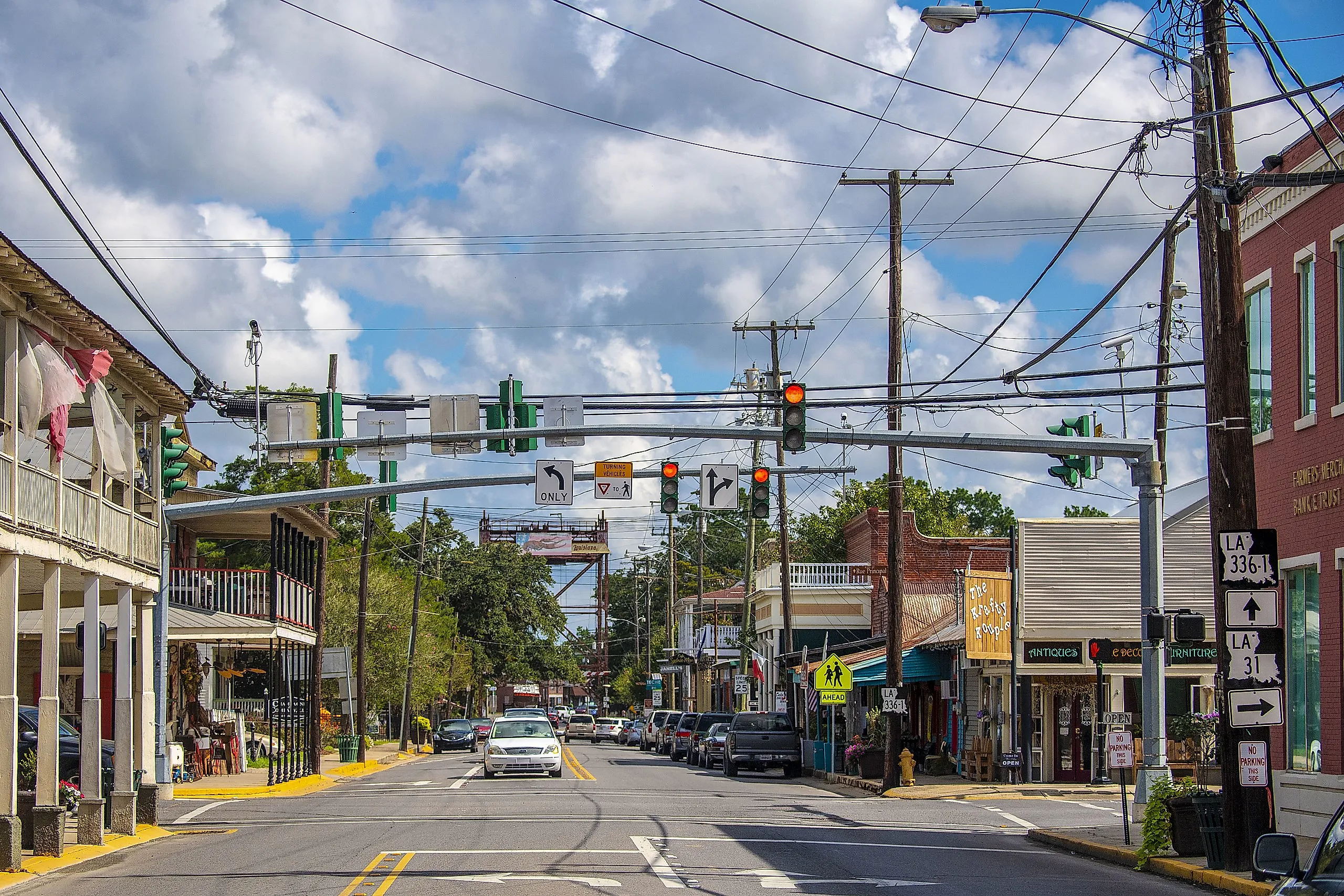
Louisiana doesn't rush. Out past the casinos and jazz clubs of New Orleans, the state slows to the pace of a flat-bottomed boat drifting through cypress shadow. This is a place where you can hold a baby alligator in the morning, watch rice tumble through a mill that's run since the 1930s by afternoon, and pick cotton on a plantation that predates the Civil War before dark. The nine towns below trade in the offbeat and the half-forgotten: swamp, Cajun kitchens, Zydeco accordions, and the kind of history you can walk straight into.
DeRidder

DeRidder is not far from the western border of Louisiana and has plenty of mysterious offerings. Best known for the Beauregard Parish Jail, dating back to 1914, this building features Gothic-style architecture and an eerie history of hangings that occurred above the structure's spiral staircase. Tours of this supposedly haunted jail reveal its unique jail cells with skylights and personal bathrooms, as well as the stories that remain from its time in operation. For an even spookier adventure, take the Lantern Tour at night with the jail lights dimmed low.
Visitors can appreciate more of DeRidder’s eccentricity with a stop at the Lois Loftin Doll Museum inside the town's 1934 Old Post Office, where thousands of dolls are on display. The Beauregard Museum further communicates the town’s history and the surrounding parish by displaying military and Native American objects, musical instruments, and furniture.
Jean Lafitte

This southern Louisiana town is over 200 years old and is named after a pirate who helped defend the US during the Battle of New Orleans. Jean Lafitte rests on the Bayou Barataria and will show visitors true bayou territory.
Wetland Trace Nature Boardwalk features trails through swamps, bayous, and marshes, all of which showcase the region's plants and animals. A boat tour will help sightseers get closer to the swamp. Fishing spots are plentiful, and charters with guides can bring fishers further out onto the water. Indulge in one of several seafood restaurants in town that will show off local catches and Creole cuisine.
Morgan City

The Atchafalaya River runs right through this town next to Lake Palourde and Flat Lake in southern Louisiana. Morgan City is home to the Mr. Charlie Oil Rig Museum, which features an offshore drilling rig that operated from 1954 to 1986. It was the first mobile unit in the world and is the only rig of its kind that allows visitors to take a tour to learn about its history and how it revolutionized the oil industry.
Morgan City shares more Cajun sea culture through the Paddle Trails, which allow kayaking and canoeing through marsh and bayou passages lined with cypress trees. Anglers will delight in freshwater fishing in the Atchafalaya Basin and saltwater fishing near the Gulf of Mexico. If visiting in late summer, be certain to check out the annual Louisiana Shrimp and Petroleum Festival that praises the town’s economic and cultural foundations.
Opelousas

Opelousas is one of Louisiana’s oldest communities, founded in 1720. A walking tour of the town's historic district presents different architectural styles spanning over 175 years. There are churches, homes, and business buildings with Victorian, antebellum, and Art Deco designs. Be sure to see the Greek-style 18th-century Venus House, the 1888 City Hall, and the Jim Bowie Oak, a live oak estimated to be over 350 years old.
Opelousas is also best known for its Zydeco culture. Zydeco is a musical genre that specifically flourished in rural Louisiana starting in the mid-20th century. The music combines blues and folk, which traditionally involve the fiddle, washboard, and accordion, while updated versions add drums, keyboards, and guitar. Zydeco is so ingrained in Opelousas that it earned the title Zydeco Music Capital of the World. Tour the Zydeco Music Exhibit, visit in late summer during the Southwest Louisiana Zydeco Music Festival, or simply sit in various restaurants to hear live Zydeco while enjoying Cajun cuisine.
Breaux Bridge

This southern Louisiana town was formally established in 1829 and has since earned the title "Crawfish Capital of the World.” Take a crawfish tour to view their ponds, to witness the process of catching them, and to hear about the history of the crawfish industry. Then go dine at a local restaurant and try the crawfish etouffee, said to be invented in Breaux Bridge.
More crawfish can be seen and eaten at the Breaux Bridge Crawfish Festival during the spring season. The town also offers more than crawfish. On a walking tour, you can see old buildings such as 19th-century cottages, a theater, a hardware store, and a cemetery. Right outside of town is Lake Martin, which is on The Audubon Society’s top ten list for bird watching in the U.S.
Houma

Houma is located in a wetland environment that represents genuine Bayou culture. Mandalay National Wildlife Refuge spans over 4,000 acres of marsh and swamp, and fishing can be done on land or by boat. The Bayou Terrebonne Waterlife Museum shares history about the region’s environment and settlements. A nearby alligator farm allows visitors to feed and hold alligators while learning about them and the swamps they live in.
Away from the water is the Southdown Plantation and Museum, dating back to 1858, where tours take guests through enslaved persons’ quarters and a worker’s cabin, while displaying photographs, furniture, and other regional objects. A visit to Houma during Mardi Gras will bring excitement and plenty to see, as it has the second-largest Mardi Gras celebration in the state.
St. Martinville

This town deserves a visit for those who want to see old Louisiana. A great place to start is Evangeline Oak Park to see the famous Evangeline Oak, a live oak estimated to be over 350 years old. The Duchamp Opera House and Mercantile, built in 1830, hosted theater and opera, and a tour today lets visitors see the restored interior and artworks. Other old buildings worth a view are the classical-style La Maison Duchamp mansion from 1876 and the St. Martin de Tours Catholic Church from the 1840s.
For more history, go to the Museum of the Acadian Memorial to learn about the Acadian settlers of Louisiana or to the African-American Museum to hear about the region’s history of slavery. The Annual Acadian Memorial Heritage Festival in the spring celebrates Cajun culture with food, dancing, music, and more.
Frogmore

Frogmore is a snapshot of early plantation life in Louisiana’s central region near the state’s eastern border. The Frogmore Cotton Plantation and Gins will guide visitors on a tour that explores the history of cotton picking, production, and the tools used from the 18th century to today. Guests can even pick cotton if they choose. There is also a sugar cane mill with an accompanying exhibit, and a Delta Music Tour at a 19th-century plantation church, where the history of plantation life is conveyed through songs.
Observe further back in time at the nearby Elkhorn Plantation Mound, dating to the fifth century and part of the Indian civilization. Retreat to nature and visit the Atchafalaya Basin to see its abundant wildlife, including a variety of birds.
Crowley

This town has secured the title of "Rice Capital of America." Supreme Rice offers tours of its mill, which has operated since 1936, and Cajun Country Rice also lets visitors look at its mill, which has been operating since the 1950s. Then visit one of Crowley’s restaurants to eat Cajun and Creole specialties that feature the rice from the town’s mills.
Crowley boasts other special histories, such as the Motor Co. and Ford Building from 1920, which has the Ford Automotive Museum. The Grand Opera House of the South, dating back to 1901, was restored in 1999 and is now a venue for the performing arts. It is open to visitors to roam its interior and see its architecture and decorative designs, including wooden staircases, balconies, and early 20th-century furniture.
Louisiana may be the best place to be immersed in the bayou, Cajun, and Creole cultures of the Deep South. The marshes and swamps showcase the region's exotic wildlife, and several towns offer unexpected yet remarkable attractions. Not every day presents the opportunity to hop aboard an oil rig, tour a haunted jail, or stand in the presence of an oak tree over 350 years old. Do not pass up the chance to take part in the unusual and extraordinary histories these towns have to share.