9 Of The Quietest Montana Towns
Montana's many quiet small towns don't interrupt your view of the wide open skies; instead, they add to it with peaceful fishing holes and relaxing museums. In Big Timber, you can explore a nearly 1 million-acre wilderness or go fishing for trout by a downtown creek, while Big Arm gives you access to an island within a lake where wild horses still roam. If you are looking for a quiet historical town, you can see the remains of the first settlement in Montana at Stevensville or explore a pristine ghost town just outside of Dillon. Read on to learn more about the quietest towns in Montana.
Ennis

Ennis is a gentle fishing town located on the shores of the Madison River in southwestern Montana. Just over 900 people call this community home, which sits at nearly 5,000 feet in elevation. Right from downtown, you can take a fishing pole out onto the Madison River to hunt for trout. One of the best spots to cast a line is at the Ennis Fishing Access Site on the Madison River or a bit to the north at the Madison Valley Ranch, which also sells good meals in case the fish don't bite! Despite the town's tiny size, it has a fun downtown area where you can enjoy vintage sodas at Yesterday's Soda Fountain and Restaurant or have lunch at an old-timey Long Branch Saloon.
Big Timber

Montana has a lot of "big" places that are actually small towns. But you will certainly see big places in Big Timber. It sits on the Absaroka-Beartooth Wilderness, a more than 940,000-acre park bordering Montana and Wyoming. This wilderness is filled with lakes, plateaus, and Granite Peak, the highest point in Montana at 12,799 feet. One way to explore the wilderness is by hiring the Absaroka-Beartooth Outfitters in town, which offers fishing and other guided experiences. You don't have to go out into the wilderness to have a good time in Big Timber. You can try out trout fishing at Otter Creek Fishing Access Site or visit a charming small history museum in a log cabin called Crazy Mountain Museum.
Big Arm

The big experiences continue in the small lakeside community of Big Arm. It is named after a bay on Flathead Lake. This freshwater body of water is what is left of the glacial Lake Missoula. Today, it is filled with several islands, of which the most noteworthy is Wild Horse Island. By taking a boat out to this island, you can catch a glimpse of wandering groups of wild horses. You can begin your journey in Big Arm at the Big Arm/Flathead Lake State Park, featuring a campground, fishing, and places to dock your boat to reach Wild Horse Island. If you don't have a boat available for the waters, you can rent one from Big Arm Boat Rentals and Rides.
Lewistown

Lewistown sits in the exact geographic center of Montana, and it prides itself not just on being close to all of Montana's experiences, but also on maintaining a tight-knit community. That's why the around 6,204 residents created the Lewistown Community Labyrinth Garden as a way to reconnect with nature and relax while exploring the manicured maze. The Big Spring Creek flows through the center of town, passing by the Creekside Park and down by the Central Feed Co./Big Spring Brewing Co. With its position in the Great Plains, Lewistown is a good place to learn about the ecosystem and prairie environments via the American Prairie National Discovery Center. Visitors can also explore the lands around Lewistown through the city's City Trail System.
Dillon

Named after a former president of the Union Pacific Railroad, Dillon sits at the convergence of the Big Hole and Beaverhead Rivers. As expected from a Montana river town, fly fishing is a big activity here, especially for blue-ribbon trout. That's why the town has fly fishing guides through Frontier Anglers to help visitors find the best trout spots. But there is more to do here than just catch fish; you can also explore the original territorial capital of Montana at Bannack State Park. Today, Bannack is a ghost town, but it is impressively well-preserved, with 50 buildings still standing, and historic reenactors on site. You can step back further into history at Clark's Lookout State Park. This park marks the spot where William Clark stood in 1805 as part of his legendary expedition to the Far West.
Fort Benton

First established in 1846 on the Missouri River, it's the only navigable port this far upstream, which has earned it the name "the world's innermost port." From its founding, it's been a bustling place for steamboats, fur trading, and other industries. Today, it's a quiet town with under 1,500 residents, with plenty of spots to take a photo or go exploring on the river. To the west of downtown, you can take a photo of the Missouri River from the Missouri River Overlook. For those looking to get into the water, there is the Canoe Launch Campground, or you can book a river tour through Upper Missouri River Guides. Also overlooking the river is a small statue dedicated to the memory of a border collie dog called Shep. The Shep Memorial honors this loyal dog who watched as his shepherd owner's casket was loaded onto the Great Northern Railway station and taken off to be buried. He stayed by that station for the next five and a half years until his death.
Whitefish

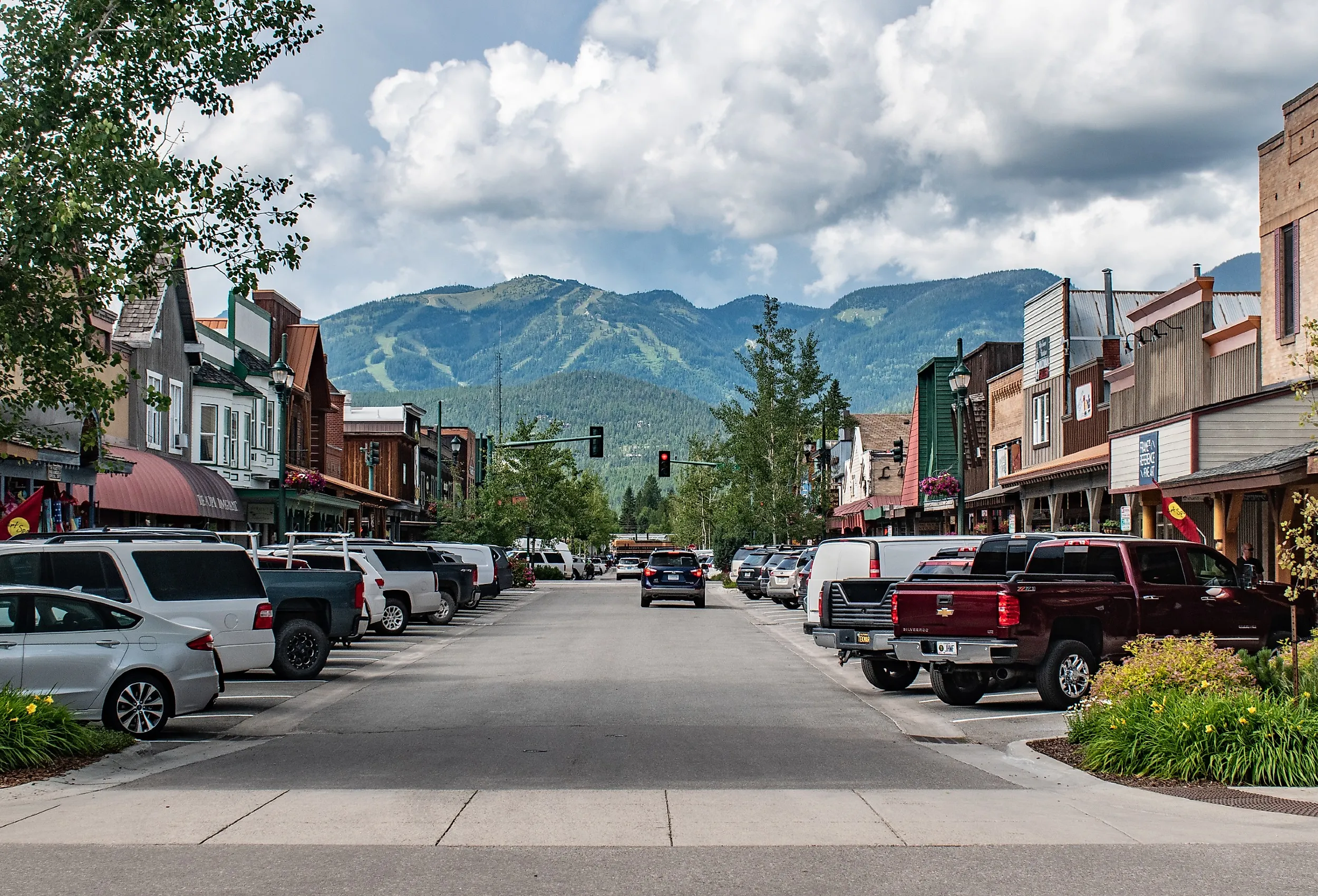
Yellowstone National Park is the most popular national park to visit in Montana, but by visiting the small community of Whitefish, you can see some of the most majestic glacial views in the United States. This town of just under 10,000 people is the entry point to the Glacier National Park, which straddles the border between Montana and Canada. Hiking through this park will take you by several glaciers, such as the Hidden Lake Overlook by Logan Pass. You can also drive up through all the peaks, lakes, and other sites in the park on the Going-to-the-Sun Road. When you come back to Whitefish, you can try out a frozen treat from Sweet Peaks Ice Cream or go for a swim at the City Beach on the shores of Whitefish Lake.
Ekalaka

Around 400 people call Ekalaka home. The town was named after a Lakota girl, whose name translates to Restless. However, the town is anything but restless. It is a serene place that sits next to a Dark Sky Sanctuary at Medicine Rocks State Park. These weathered rock formations have several holes that make them resemble Swiss cheese. Native Americans used it as a gathering place, while Teddy Roosevelt said it was "as fantastically beautiful a place as I have ever seen." Visitors can go hiking around this park or take pictures of the inscriptions carved into the rock. Back in town, you can learn about Ekalaka's wider history from the Carter County Museum or grab lunch from the TSO Cantina.
Stevensville

48 years before Montana became a state, Jesuit missionaries traveled to this remote land in southwestern Montana to establish a mission. That mission would become Stevensville in 1841, making it the oldest founded settlement in the state. Today, that mission is preserved as part of St. Mary's Mission, with a historic church and a Native American Teepee. Just a short walk from the mission is Fort Owen State Park, which was set up to protect the fledgling settlement. The park has small remnants of the park left over, including the East Barracks and a root cellar. Just outside of Stevensville is a rich landscape of wetlands, grasslands, and mountainous forests that is part of the Lee Metcalf Wildlife Refuge. From here, you can go birdwatching for migratory birds, including bald eagles.
Stargaze in These Peaceful Communities
What makes these communities special is how easy it is to bask in Big Sky country and absorb all of your surroundings. You won't feel rushed as you look at the Milky Way Galaxy at Medicine Rocks State Park, or fish for trout at the Madison River in Ennis. You can take your time pulling off along the road to see all of the best glaciers and lakes in the Going-to-the-Sun Road in Glacier National Park, or by hiking the Absaroka-Beartooth Wilderness. You won't feel in a rush at all in these quiet towns.