7 Best Natural Wonders To Visit In Iowa This Year
Iowa's natural allure is more than its nutrient-rich soil. Across the state are rare natural wonders shaped by glaciers, ancient seas, and river systems. The Maquoketa Caves date back over 400 million years, long before the age of dinosaurs. Pikes Peak State Park towers 500 feet above the Mississippi River confluence. Crystal Lake Cave near Dubuque holds dripping mineral formations discovered in 1868. These seven natural wonders show Iowa's geological depth.
Pikes Peak State Park

Pikes Peak State Park is a remarkable natural wonder in northeast Iowa, famous for its 500-foot bluffs that overlook the point where the Mississippi River meets the Wisconsin River. These bluffs date to over 500 million years ago, and visitors today are invited to hike a four-mile trail to Point Ann Overlook to soak in the memorable views of the formations and the river confluence below. The park also boasts a half-mile trail that leads to a small waterfall known as Bridal Veil Falls, and both trails wind through wooded areas full of historical treasures, including fossil remains, and animal-shaped mounds built by Native Americans. Additionally, the park offers opportunities to fish in the Mississippi River, and campsites with hookups are available for overnight visitors. The park is open year-round, and the best time to visit is during the fall as the surrounding colorful leaves make the views even more striking.
Maquoketa Caves State Park

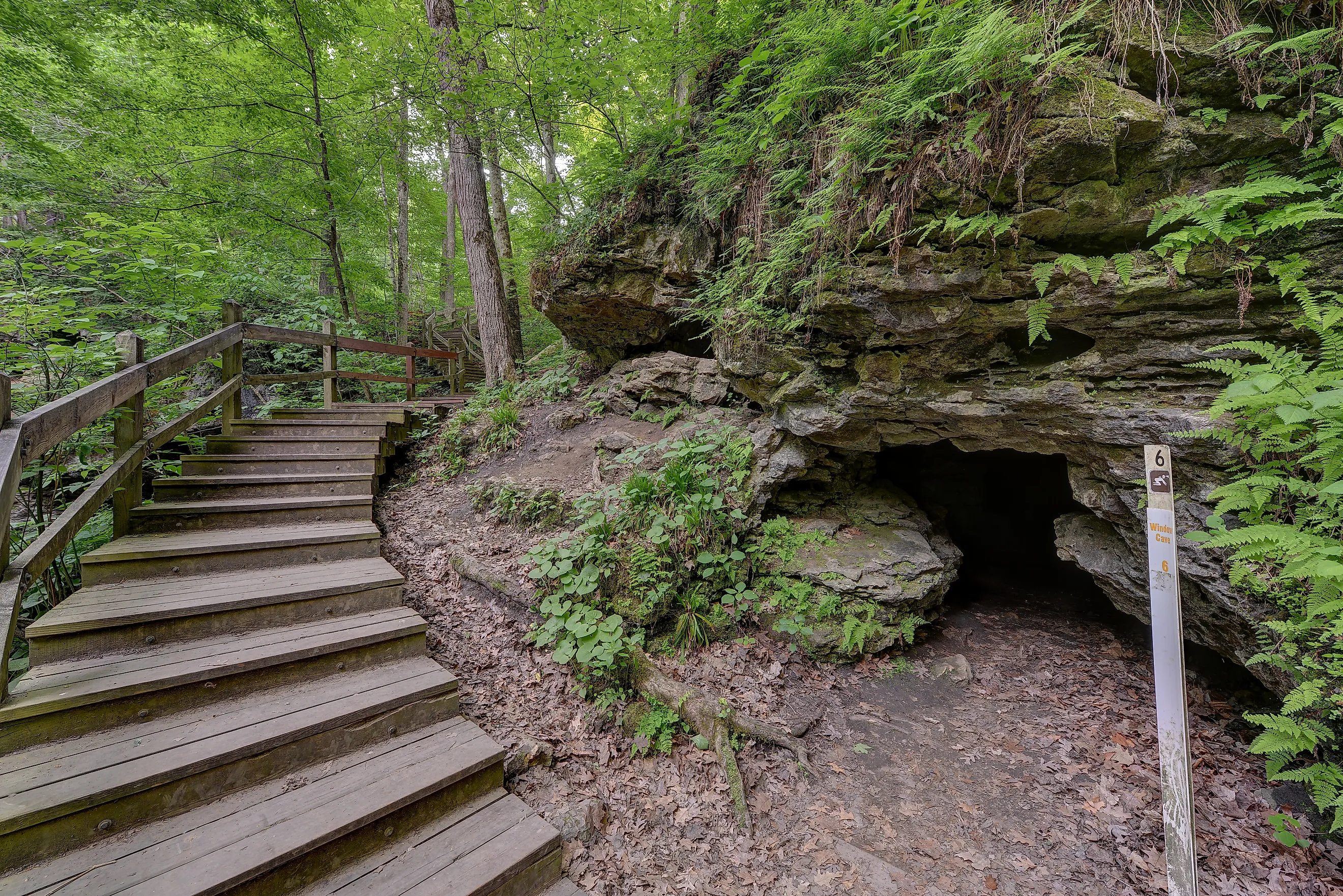
Set deep in Iowa's Driftless Area is this park, featuring thick hardwood forests and the state's largest collection of caves and geological rock formations. The formations, which include bluffs, over a dozen caves, a balanced rock, sinkholes, and a natural bridge, date to around 430 million years ago, when they formed part of a lime sediment deposit in a sea filled with diverse creatures. A six-mile trail network offers access to the park's geological wonders, including Dancehall Cave, the largest in the area, stretching 1,100 feet long and featuring flowstone, stalactite, and other formations. Spring through fall is a good time to visit, but note that the caves at Maquoketa Caves State Park close annually from November 15 until April 1 to protect overwintering bats.
DeSoto National Wildlife Refuge

Situated on the Missouri River, DeSoto National Wildlife Refuge preserves a vast landscape that's a paradise for wildlife. Covering an 8,300-acre area and encompassing parts of Nebraska, the refuge contains wetland habitats, the oxbow DeSoto Lake, ponds, tall grass prairie, and bottomland forests that support dozens of mammal species, such as beavers, coyotes, and white-tailed deer. Its location on the Missouri River floodplain also puts the refuge in the migratory bird corridor where it hosts thousands of birds year-round, especially in the spring and fall. Over 100 species of birds have been documented in this refuge, including yellowthroats, bald eagles, and migratory waterfowl. Several miles of trails provide access to the preserve's best areas, like the one-mile Green Heron Trail, which begins from the visitor center and leads to a wetland where birds and frogs can be seen, particularly between April and October. DeSoto Lake is open for fishing, kayaking, and canoeing in spring through fall. Plus, the preserve has a five-mile paved trail for biking.
Devonian Fossil Gorge

Located near Iowa City, beside the Iowa River, this gorge is a true wonder of nature, evidence of an unimaginably distant geological period. This gorge dates to 375 million years ago, and represents the remains of an ancient seabed that once hosted prehistoric creatures such as trilobites and brachiopods. The seabed had remained hidden for thousands of years of human presence in the area, but was eventually exposed when the catastrophic flood of 1993, caused by the overflowing Coralville Lake, washed off the top layers of limestone and sand. Today, fossils of extinct creatures that once lived on Earth millions of years ago can be seen embedded in ancient limestone seabed. Visitors are invited to the gorge today to get a glimpse of life in the unimaginably distant Devonian period and to hunt for fossils. The gorge is free to visit and open year-round, though spring and fall are the best times to explore for cooler temperatures.
Loess Hills

The Loess Hills are distinctive landscapes in western Iowa known for their steep prairie-covered ridges, slopes, and hollows winding up and down. This unique landform is the result of a clay-like sediment deposit left along the Missouri River floodplain during the last Ice Age. Over time, the huge swathes of soft soil were transported mostly by wind, redeposited over vast areas, and stabilized by grass, forming the unique landscape seen today. One of the best ways to witness the beautiful scenery of this natural wonder is by driving on the Loess Hills National Scenic Byway, which stretches 220 miles between Akron and Hamburg, near the Missouri border. The byway stretches through various viewpoints, including the Murray Hill Scenic Overlook, which provides unobstructed views of the Loess Hills and the Missouri River valley.
This byway also provides access to the Loess Hills State Forest, where a more intimate experience can be enjoyed. Pisgah is the headquarters of the forest and hosts the Loess Hills State Forest Visitor Center, where one can learn more about the unique formation. From here, hikers can explore over 60 miles of trails that lead through the heart of the ridges and valleys of the Loess Hills. Spring and fall are the best times to visit this natural wonder for views of the colorful vegetation and prime birdwatching.
Crystal Lake Cave

Crystal Lake Cave is one of Iowa's most interesting natural wonders, set deep in the state's eastern edge, near Dubuque, the Mississippi River, and the border with Illinois. The cave was discovered in 1868 by a group of miners who were awestruck by the abundance of crystal formations, leading to its name. The cave is also full of stalagmites, stalactites, and other rare formations often dripping with water. Today, visitors are invited to explore the interior of the well-lit cave and see the intricate formations. The cave is open daily from Memorial Day until Labor Day, weekends only in September and October, and closes for the winter season from November 1 through May 1.
Big Spirit Lake
Big Spirit Lake is the largest natural lake in Iowa, encompassing an area of approximately 5,684 acres. The lake is located in northwest Iowa, on the border with Minnesota, and is part of the group of lakes referred to as the Iowa Great Lakes. Big Spirit Lake was formed around 13,000 years ago, as part of a glacial pothole, and reaches a maximum depth of 24 feet. Over 40 species of fish call the lake home, making it a paradise for anglers, with endless opportunities to catch catfish, bass, walleye, and many other types of fish. Additionally, the lake's shallow waters and sandy shores make it perfect for swimming, kayaking, and canoeing. Several recreation areas offer access to the lake, including Marble Beach State Recreation Area, which has the largest campground in the Iowa Great Lakes region and connects to several miles of area recreational trails.
In ancient times, the lake spooked Native Americans, who then developed stories of an evil spirit that inhabited the waters and named it Mini-Wakan, which translates to lake of the spirits. With those stories in mind, early French explorers also named the lake Lac d'Espirit. In modern times, however, the only semblance to the so-called spirit is the strong winds that make the lake a paradise for windsurfers. The windiest part of the year lasts between September and May, with April featuring the strongest winds. The warmer months are typically calm, making it the best time to visit.
Natural Iowa in Brief
Iowa is the only US state whose eastern and western borders are defined by the Missouri and Mississippi rivers, an attribute that partly explains its fertile land and these natural wonders. The rare Loess Hill formation, found in only a few places around the world, sits alongside Pikes Peak, with its incredible location overlooking two legendary rivers. These wonders reflect Iowa's natural wealth and are worth visiting year-round. For the best experiences, be sure to visit at the best times and don't forget to check the weather before you go, especially at locations near large waterbodies like the Mississippi River.