10 Biggest Cities In Japan
Japan is one of the most urbanised countries on Earth. Although its overall population fell to 124.33 million by January 2025 (down from a 2010 peak of 128.5 million), most of the decline has hit rural communities while the country's largest urban regions have held steady or grown modestly. The list below ranks Japan's ten largest urban agglomerations using the UN's 2025 World Urbanization Prospects (released November 2025), the standard international measure of city size based on contiguous built-up area rather than administrative city limits. This methodology folds neighbouring municipalities such as Yokohama, Kawasaki, Kobe, and Kyoto into the broader Tokyo and Osaka agglomerations, and it is the figure used for international comparisons such as the global megacity ranking, on which Japan has three entries in the top 50.
1. Tokyo - 33.4 Million
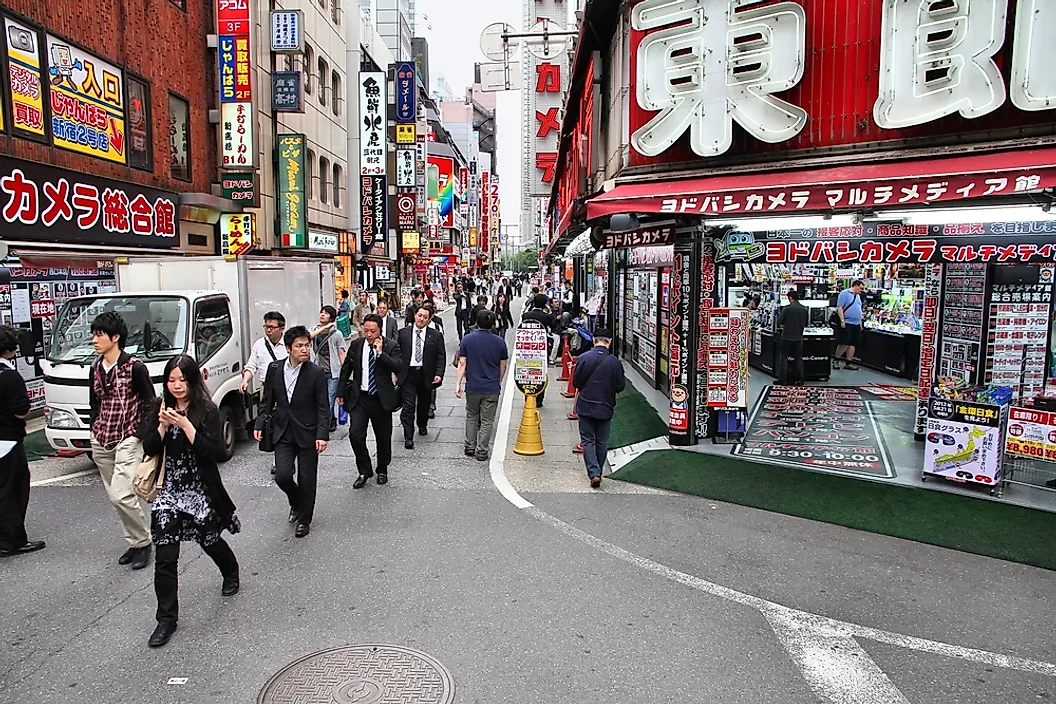
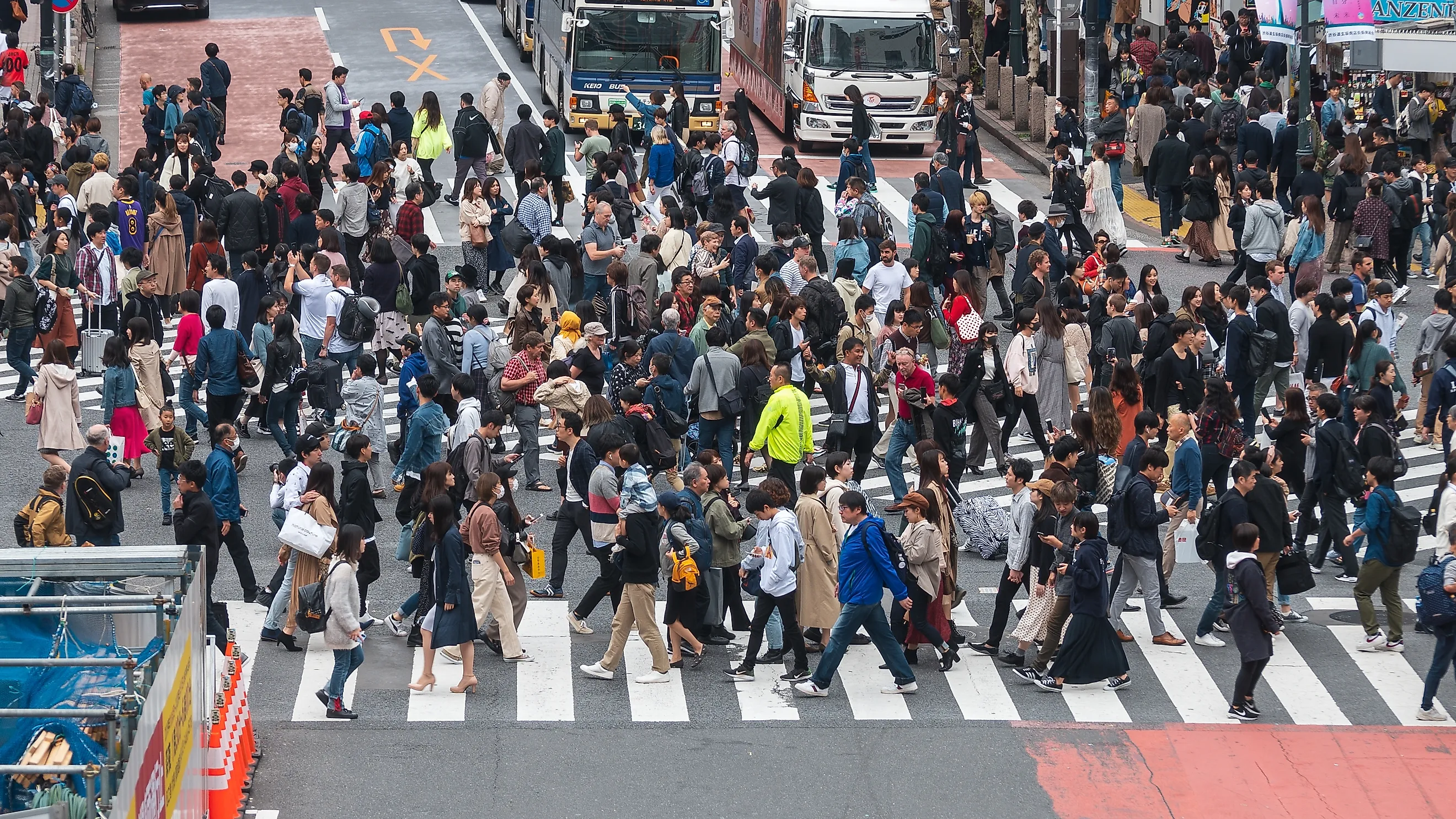
The Tokyo urban agglomeration is the third-largest in the world per the UN's 2025 World Urbanization Prospects, with 33.4 million residents in the contiguous built-up area that includes the 23 special wards of Tokyo plus Yokohama, Kawasaki, Saitama, Chiba, and most of the surrounding Kanagawa, Saitama, and Chiba prefectures. Tokyo held the global top spot continuously from 1955 until the 2025 revision, when Jakarta (41.9 million) and Dhaka (36.6 million) overtook it after a methodological update. Even so, no other Japanese city comes close: Tokyo is roughly 2.5 times the size of Osaka, Japan's next-largest agglomeration.
The administrative complexity of "Tokyo" is the result of a 1943 reform that merged the historical city of Tokyo (the 23 wards) into Tokyo Prefecture, abolishing the city as a legal entity. The 23 wards alone hold about 9.88 million people; the broader Tokyo Metropolis (the full prefecture) carries 14.0 million. Within the urban agglomeration, individual cities have major identities of their own: Yokohama (3.75 million) is the most populous single municipality in Japan, Kawasaki (1.55 million) anchors the Keihin industrial corridor, and Saitama (1.34 million) is the youngest large city in the country, formed by municipal merger in 2001. Tokyo Prefecture is the only one of Japan's 47 prefectures that grew in population in 2024.
2. Osaka (Keihanshin) - 13.0 Million
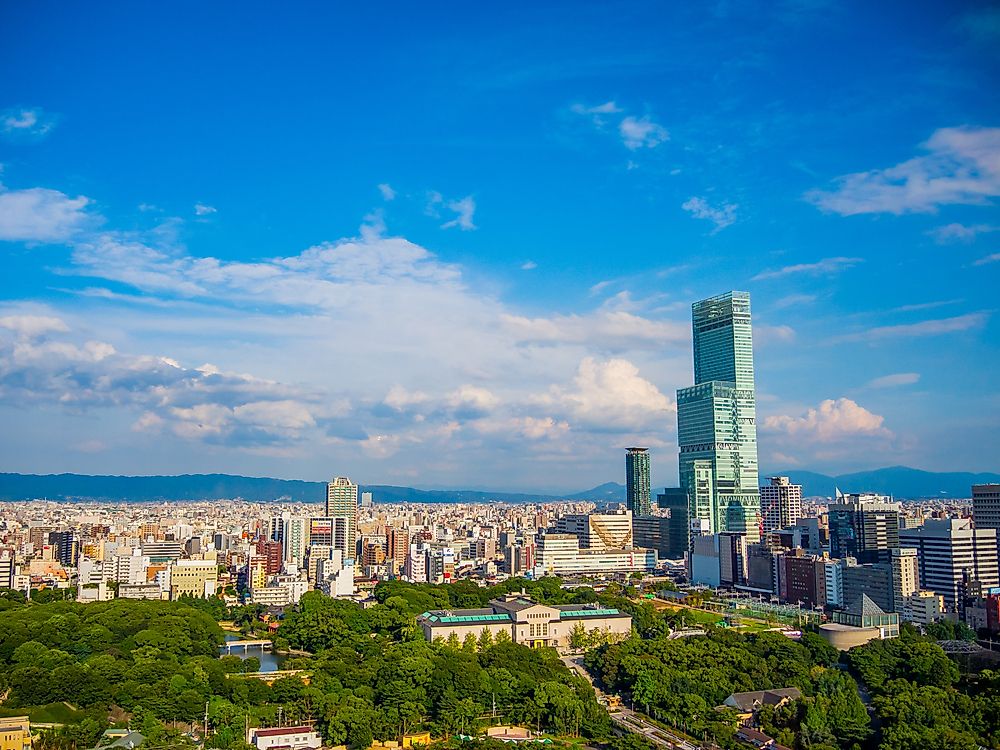
The Osaka (or Keihanshin) urban agglomeration ranks 25th in the world per UN 2025 data, with 13.0 million residents across the contiguous built-up area that includes Osaka proper, Kobe, Kyoto, and dozens of smaller cities across Osaka, Hyogo, and Kyoto prefectures. The agglomeration's name (Keihanshin) is constructed from the Japanese readings of its three anchor cities: Kyoto (Kei), Osaka (Han), and Kobe (Shin). Osaka has been the historical commercial centre of Japan since the early Tokugawa period, earning the nickname "the kitchen of the nation" for its dominant role in the rice trade.
The city of Osaka itself holds 2.76 million residents and hosted the 1970 World Expo (then the largest such event in history at 64 million visitors) as well as Expo 2025 between April and October 2025 on Yumeshima, a man-made island in Osaka Bay. The Abeno Harukas building (300 metres, completed in 2014) is the tallest structure in Japan. Kobe (1.50 million), about 30 kilometres west, was rebuilt after the magnitude 6.9 Great Hanshin earthquake of January 17, 1995, which killed 6,434 people. Kyoto (1.46 million), to the northeast, served as the imperial capital of Japan from 794 to 1869 and contains 17 UNESCO World Heritage sites under a single listing.
3. Nagoya (Chukyo) - 7.1 Million

The Nagoya (Chukyo) urban agglomeration ranks 49th in the world per UN 2025 data, with 7.1 million residents in a contiguous built-up zone that extends across the Nobi Plain on the Pacific coast roughly midway between Tokyo and Osaka. The city of Nagoya proper holds 2.30 million residents and serves as the capital of Aichi Prefecture and the centre of the Chukyo metropolitan region. The agglomeration is anchored by one of the most concentrated industrial economies in the world.
The dominant industry is automotive manufacturing. Toyota Motor Corporation's headquarters and main manufacturing operations sit in Toyota City, an Aichi Prefecture municipality of 420,000 about 40 kilometres east of central Nagoya, named for the company after its corporate ascendance. Toyota's regional supplier network, plus Mitsubishi Heavy Industries' aerospace operations and Brother Industries' headquarters, give the Chukyo region the highest concentration of manufacturing output of any urban area in Japan. The Port of Nagoya is Japan's largest by total cargo tonnage. Nagoya Castle, originally built in 1612 for the Tokugawa shogunate, was destroyed in 1945 air raids and rebuilt in 1959; the wooden Honmaru Palace restoration was completed in 2018.
4. Fukuoka-Kitakyushu - 5.5 Million

The Fukuoka-Kitakyushu agglomeration on the island of Kyushu held about 5.47 million residents in 2025, making it the largest urban region outside the three main Honshu agglomerations. The UN treats Fukuoka and Kitakyushu as a single agglomeration because their contiguous urban built-up area runs along the coast of the Sea of Japan with no significant gap between them. Fukuoka itself (1.66 million) is the larger and faster-growing anchor; Kitakyushu (920,000) is an older industrial city that has lost population since its 1979 peak.
Fukuoka is the only Japanese city in the top tier with a sustained pattern of growth in recent years, adding more than 100,000 residents over the past decade. The growth reflects the city's geographic position as Japan's nearest large city to mainland Asia, only about 540 kilometres from Seoul and 880 kilometres from Shanghai, and a younger demographic profile than most Japanese cities. Fukuoka was formed in 1889 by the merger of the merchant district of Hakata with the samurai district of Fukuoka across the Naka River, and Hakata Station serves as the western terminus of the Tokaido and Sanyo Shinkansen high-speed rail network.
5. Shizuoka-Hamamatsu - 2.9 Million

The Shizuoka-Hamamatsu agglomeration runs along the Pacific coast of central Honshu between Tokyo and Nagoya and held about 2.93 million residents in 2025. It anchors Shizuoka Prefecture and incorporates the cities of Shizuoka (680,000) and Hamamatsu (780,000) along with a string of smaller municipalities stretching about 100 kilometres along the coast. The agglomeration's existence reflects Japan's pattern of continuous coastal urbanisation along the Tokaido corridor between Tokyo and Osaka.
Hamamatsu is the headquarters of Suzuki Motor Corporation, Yamaha Corporation (musical instruments and electronics), and Yamaha Motor (a separate company that originally spun off from the instrument maker in 1955). Shizuoka is the centre of Japan's domestic green tea industry, producing roughly 40 percent of national output, and the city itself sits at the foot of Mount Fuji, visible on clear days across much of the agglomeration. The Tokaido Shinkansen runs through both cities, with bullet train service to Tokyo in under 90 minutes.
6. Sapporo - 2.65 Million

The Sapporo urban agglomeration in southern Hokkaido held about 2.65 million residents in 2025, including Sapporo itself (1.96 million) and a string of suburban municipalities. It is the youngest of Japan's major urban regions by a wide margin: Sapporo was effectively founded as a planned settlement in 1868, when the new Meiji government sent surveyors to develop Hokkaido's interior, and the city grew rapidly through the late 19th century as the administrative centre for the island.
The city's grid plan (laid out on a north-south, east-west pattern unusual in Japanese cities) reflects its 19th-century planned origins. Sapporo hosted the 1972 Winter Olympic Games, the first Winter Olympics held in Asia. Average annual snowfall is around 5 metres, the highest of any large city on Earth, and the annual Sapporo Snow Festival in February draws roughly two million visitors to see the elaborate snow and ice sculptures in Odori Park. The city is the namesake and home of Sapporo Brewery, Japan's oldest beer brand (founded 1876), and remains the regional centre for Hokkaido's agricultural economy.
7. Sendai - 2.34 Million

The Sendai urban agglomeration in northeastern Honshu held about 2.34 million residents in 2025. It is the largest urban region in the Tohoku (northeastern) part of Japan and the regional administrative centre for the six northeastern prefectures. Sendai itself (1.10 million) was founded in 1600 by the daimyo Date Masamune, whose castle ruins on Aobayama overlook the modern city. The city is often called the "City of Trees" for its tree-lined streets, an unusual feature in densely built Japanese urban areas.
Sendai was the closest major Japanese city to the epicentre of the magnitude 9.1 Tohoku earthquake of March 11, 2011, and suffered substantial damage from both the earthquake itself and the subsequent tsunami that struck the coastal port and airport areas. The city served as the major coordination hub for relief and reconstruction efforts across the Tohoku region, and the rebuilt port and Sendai Airport reopened within months. Tohoku University, founded 1907 in Sendai, is one of Japan's seven former Imperial Universities and a major research institution.
8. Hiroshima - 2.06 Million

The Hiroshima urban agglomeration on the southern coast of Honshu held about 2.06 million residents in 2025, including the city of Hiroshima (1.19 million) and surrounding municipalities along the Inland Sea. Hiroshima is internationally remembered as the first city to suffer an atomic bombing, on August 6, 1945, which killed an estimated 70,000 to 80,000 people immediately and tens of thousands more from radiation-related illness over subsequent years. The city was rebuilt under United Nations and Japanese government coordination and now hosts the Hiroshima Peace Memorial Park (containing the Atomic Bomb Dome) and the Hiroshima Peace Memorial Museum.
The contemporary city is the economic centre of the Chugoku region (Japan's southwestern Honshu) and the headquarters of Mazda Motor Corporation, the auto manufacturer founded in Hiroshima in 1920. The Itsukushima Shrine on Miyajima island, with its famous offshore torii gate (originally constructed in the 12th century), sits within the agglomeration's tourism orbit and was designated a UNESCO World Heritage site in 1996.
9. Niigata - 0.79 Million

The Niigata urban agglomeration on the Sea of Japan coast of northern Honshu held about 794,000 residents in 2025, with the city of Niigata (770,000) as its anchor. The agglomeration is the largest urban region on Honshu's western coast and serves as the gateway between Tokyo and the Sea of Japan. Niigata Port has historically been Japan's main shipping connection to the Russian Far East and to North Korean ports, and the city was the disembarkation point for ethnic Korean repatriations to North Korea between 1959 and 1984.
Niigata Prefecture, of which Niigata City is the capital, is Japan's largest rice-producing region; the prefecture's Koshihikari rice variety is one of the most highly regarded in the country. The Joetsu Shinkansen line, opened in 1982, connects Niigata to Tokyo in roughly 100 minutes. Population decline in the surrounding prefecture has been steep (down about 8 percent since 2010), reflecting broader trends affecting the Sea of Japan side of the country.
10. Kumamoto - 0.74 Million

The Kumamoto urban agglomeration in central Kyushu held about 735,000 residents in 2025. The city of Kumamoto (730,000) is the capital of Kumamoto Prefecture and the regional centre for central Kyushu. Kumamoto Castle, originally built in 1607 for the daimyo Kato Kiyomasa, is one of Japan's three premier castles (with Himeji and Matsumoto) and suffered substantial damage in the magnitude 7.0 Kumamoto earthquake of April 2016; the castle's full restoration is scheduled for completion in the late 2030s.
The city is best known internationally for its Kumamon mascot (the black bear figure adopted by the prefectural government in 2010 to promote tourism after the opening of the Kyushu Shinkansen), which has become one of Japan's most commercially successful regional mascots. Kumamoto is also the site of a major semiconductor manufacturing expansion: Taiwan Semiconductor Manufacturing Company (TSMC) opened its first Japanese chip fabrication plant in nearby Kikuyo in early 2024, with a second plant under construction.
The Bigger Picture: Japan's Shrinking Population
Japan's overall population peaked at 128.5 million in 2010 and has been falling since. As of January 1, 2025, the country had 124.3 million residents, with Japanese citizens specifically (excluding the 3.7 million foreign residents) at 120.7 million and dropping for the 16th straight year. Births fell below 700,000 in 2024 for the first time on record (687,689), against more than 1.6 million deaths. The Ministry of Health, Labour and Welfare projects that the Japanese citizen population will fall below 100 million sometime in the 2050s and below 80 million by the end of the century.
The trend has not been uniform across the country. Forty-six of Japan's 47 prefectures lost Japanese population in 2024, with the steepest declines in Akita (down 1.91 percent in one year), Aomori (down 1.72 percent), Iwate (down 1.69 percent), and Kochi (down 1.71 percent). Only Tokyo Prefecture grew, gaining about 16,800 Japanese residents. The UN's 2025 World Urbanization Prospects projects that Tokyo's urban agglomeration will slip from third in the world today to seventh by 2050, falling to about 31 million as the broader country contracts. The result is a continuing concentration of population in the three main agglomerations (Tokyo, Osaka, Nagoya), which together hold roughly 53 million of Japan's 124 million residents.
The Top 10 Biggest Urban Agglomerations in Japan
The table below ranks Japan's ten largest urban agglomerations by 2025 population. Figures for Tokyo, Osaka, and Nagoya are from the United Nations 2025 World Urbanization Prospects (released November 2025), which uses a globally harmonised methodology based on contiguous built-up area; the remaining figures are from the previous UN methodology extended to 2025.
| Rank | Urban Agglomeration | Region | 2025 Population |
|---|---|---|---|
| 1 | Tokyo | Kanto (Honshu) | 33,400,000 |
| 2 | Osaka (Keihanshin) | Kansai (Honshu) | 13,000,000 |
| 3 | Nagoya (Chukyo) | Chubu (Honshu) | 7,100,000 |
| 4 | Fukuoka-Kitakyushu | Kyushu | 5,466,000 |
| 5 | Shizuoka-Hamamatsu | Chubu (Honshu) | 2,930,000 |
| 6 | Sapporo | Hokkaido | 2,654,000 |
| 7 | Sendai | Tohoku (Honshu) | 2,338,000 |
| 8 | Hiroshima | Chugoku (Honshu) | 2,058,000 |
| 9 | Niigata | Chubu (Honshu) | 794,000 |
| 10 | Kumamoto | Kyushu | 735,000 |