11 Of The Most Adorable Small Towns In Scotland
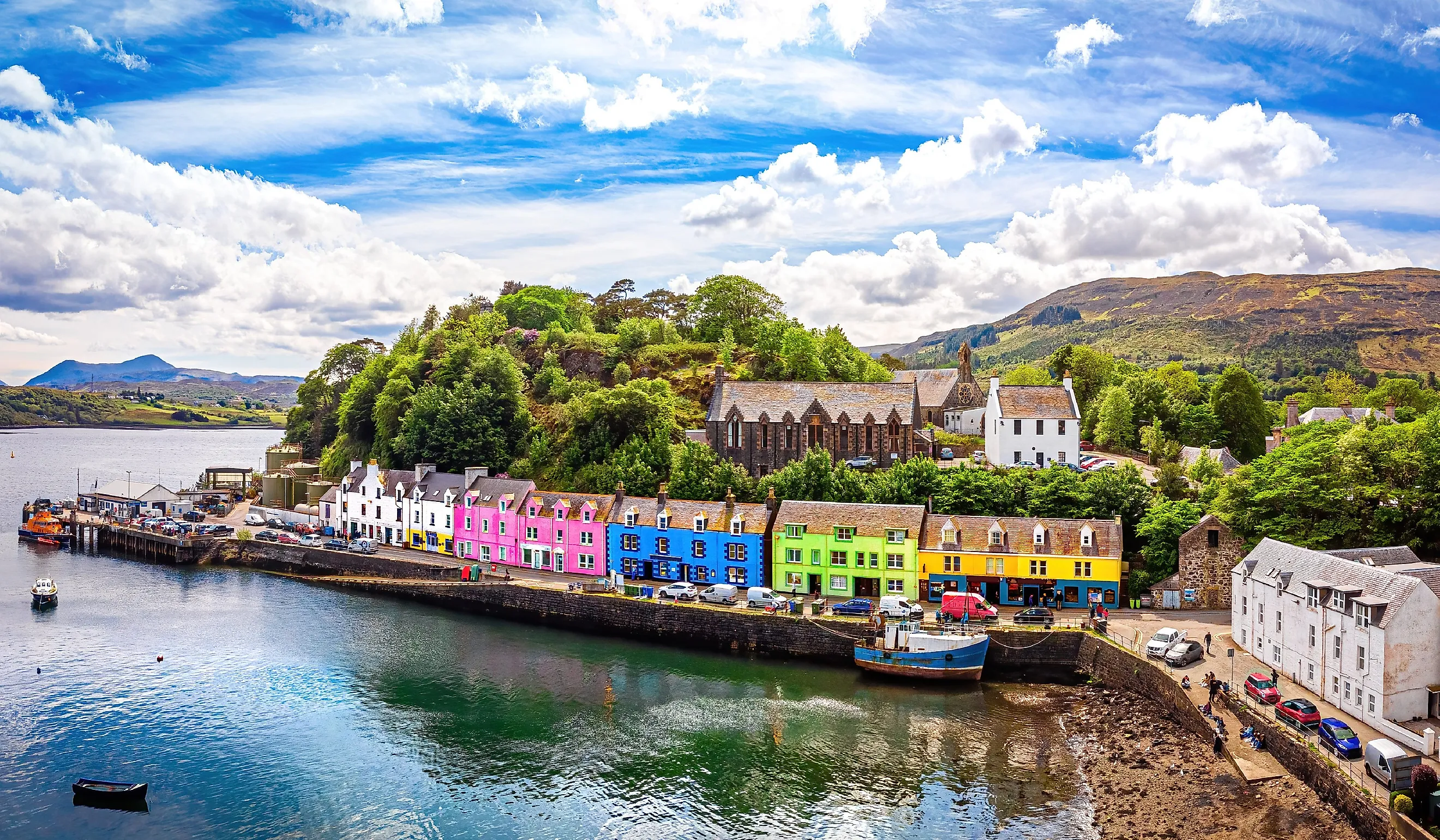
Between its moody coastline and craggy Highlands carved by ancient glaciers, Scotland is filled with small towns whose settings feel closely tied to the surrounding landscape. In towns like Portree and Tobermory, visitors are charmed by colorful buildings hugging rugged coastlines. Meanwhile, towns like Kinlochleven and Fort William combine historic town centers with easy access to stunning outdoor experiences. Each of these eleven adorable towns reflects a different side of Scotland’s geography and history that will leave you wanting more.
Oban

Oban is a seaside town on the west coast of Scotland, fronted by miles of coastline, and backed by the rolling hills of the West Highlands. McCaig’s Tower looms high above the town on the top of Battery Hill. The tower has a circumference of 200 meters, with varying wall height to accommodate the shape of the hilltop it was built on. The tower features a small garden in the center and a viewing platform on the west side, which looks out onto the water and the surrounding islands.
The Oban Distillery is one of Scotland’s oldest licensed distilleries. Visitors can gain insight into the whisky-making process through guided tours accompanied by a tasting of their single malt. Make the short but steep hike to the top of Battleship Hill for panoramic views of the Isle of Mull and Isle of Lismore.
Pitlochry

Pitlochry is a small town on the River Tummel that is regarded as the gateway to the Scottish Highlands. The town is surrounded by some of Scotland’s most iconic peaks, like the conical Schiehallion. Queens View is just outside of town and is regarded as one of the most popular viewpoints in Scotland, opening up on the horizon, west along Loch Tummel. On clear days, the view extends so far that the mountains of Glencoe on the West Coast are visible.
The Pitlochry Festival Theatre has long had a reputation as the theatre in the hills. Throughout the year, the theatre hosts a full program of festivals, workshops, exhibitions, tours, and talks. The Bridge Restaurant serves everything from traditional Scottish dishes to international cuisine, utilizing only fresh and locally sourced ingredients to craft its menu items.
Fort William

Fort William is on the shores of Loch Linnhe in Scotland’s West Highlands. It is known as the outdoor capital of the United Kingdom, popular among hillwalkers who are drawn to Ben Nevis, the highest mountain in Britain, which looms over the town. But you do not have to be a mountaineer to tackle Ben Nevis. The Mountain Path is one of the most accessible routes and is suitable for beginners. Views from the top open up to the surrounding Grampian Mountains.
Alternatively, ride the Jacobite Train, which departs near Ben Nevis and passes through other impressive natural wonders like Loch Morar, the deepest freshwater loch in Britain, and River Morar, the shortest river in Britain. Crannog Restaurant serves up fresh seafood caught from local Scottish waters, paired with local beers and fine wines.
Portree

Portree is the largest town on the Isle of Skye in the Inner Hebrides. It is flanked by rolling hills and a sheltered deep-water bay. Portree Harbor is the focal point of the town and the first place visitors will disembark from their cruise and immediately see a view of colorful terrace houses across the water. The Portree Color House Viewpoint is one of the most sought-after sights in Portree and is easily accessible from Portree Harbor.
The Lump is a rocky outcrop above the harbor in which the Apothecary's Tower sits atop. The tower is of neoclassical style and stands solitary, with its origin dating back to 1835. The views at the top expand over Loch Portree and stretch south to the Cuillin Hills. Birch Coffee is reminiscent of Melbourne cafes and coffee, but with a flair from the Scottish Highlands and islands.
Kinlochleven

Kinlochleven is a quiet town at the head of Loch Leven. It is surrounded by the Mamores Mountains and provides easy access to the outdoors. Grey Mare’s Tail Waterfall is an easy local hike. Kinlochleven’s past as the site of an aluminum smelting plant is commemorated in town with the placement of the historic Pelton Wheel. Loch Leven is flanked on both sides by some of the highest mountains in the Scottish Highlands. There is a picnic area along the road between Glencoe and Kinlochleven that is easily accessible from the road.
Fort Augustus

Fort Augustus is situated where the end of Loch Ness flows into the Caledonian Canal, where boats sail through and rise up the canal lock staircase. The entrance to the canal is marked by the Pepper Pot Lighthouse. The Pepper Pot Lighthouse is among the smallest in the United Kingdom, characterized by a short and round tower with a conical roof.
Embark on a tour with Cruise Loch Ness and explore the water on day and evening cruises, high-speed boat tours, and private charters. During each tour, visitors will learn of the history of the loch, spot wildlife, and even enjoy a drink at an onboard bar. The Clansman Centre is housed inside a 19th-century schoolhouse. Once inside, visitors can experience 17th-century Highland traditions in a recreated Highland turf house. Interactive and informative recreations are carried out by a costumed clansman who recreates times gone by.
Plockton

Plockton is on a sheltered bay overlooking Loch Carron in the Scottish Highlands. Although not a tropical environment, Plockton has New Zealand cabbage trees (which resemble palm trees) growing out of sea-facing gardens. Since the 1960’s, the trees have lined the central Harbor Street of town. Walk along the coastline around the other side of the bay to reach Duncraig Castle, a castle from the 1860s.
Sample a taste of the coast at the Plockton Inn Seafood Restaurant, which serves locally sourced oysters, mussels, fish, and Plockton Prawns that are acquired at the pier, straight off the fishing boats. Set out to sea with Calum’s Seal Trips, where passengers have the opportunity to observe seals sunning themselves on the rock and swimming through the waters, as well as otters and different species of seabird.
Tobermory

Tobermory is the main town on the Isle of Mull that originated as a fishing port. It is characterized by colorfully painted buildings on Main Street and high woodland-covered hills encompassing the bay. The Mull Museum is also on Main Street and is packed with artifacts from Mull’s history, including working implements used by craftsmen, documents about the wreck of a Spanish galleon that wrecked in the harbor, and Mull’s role as a naval harbor during World War II.
Walk the path towards the Tobermory Lighthouse, which is built on a small islet joined to the keeper’s house and the shore by a bridge. The path winds through woodlands interspersed with vistas of the sea and shore. The Tobermory Distillery has been producing single malt scotch whisky for over 220 years, making it one of the oldest working distilleries in Scotland. Join a tour to learn how the whisky is produced, and even sample some.
Dunkeld

Dunkeld is on the banks of the River Tay, with a rich cultural heritage as an early center of Celtic Christianity, and is filled with many historic buildings, such as the Dunkeld Cathedral. The cathedral and its grounds are accessible to the public, who can view paintings dating back to the 1500’s on the bell tower’s ground floor.
Wander through the Hermitage, a stretch of Perthshire forest that is home to Douglas firs that are among the tallest in Britain. Walk along paths following the River Braan to reach Black Linn Falls, where salmon can be seen jumping in autumn. Enjoy a meal at Z’s Bistro and Terrace Garden, which serves classic meals with a modern flair, highlighted by the ambiance provided by a wood-burning stove.
Largs

Largs is on the coast of the Firth of Clyde, sheltered behind the northern tip of the island of Great Cumbrae. The hills to the east of town helped name it, which translates as “hillside” in Scottish Gaelic. Kelburn Castle and Estate features walks, waterfalls, and gorges on the hills behind town. Although the castle was built in the 13th century, its walls received a makeover by a team of graffiti artists from Brazil.
Walk along the seafront by the Largs Promenade to see the Pencil Monument. The monument was erected in 1912 to commemorate the Battle of Largs in 1263, when the Scots defeated King Haco of Norway. To learn more about the town’s history, visit the Largs Museum, which houses artifacts and archives from the town’s past.
Ullapool

Ullapool is a coastal town on the shores of Loch Broom, amidst the Highlands. The Knockan Crag National Nature Reserve is just thirteen miles outside of town. It features an open-air visitor center that is illustrated by informative displays describing the history and geology of the surrounding Coigach and Assynt hills, which are viewable at the top of the trail.
The Ferry Boat Inn is a traditional pub and seafood restaurant where people come to enjoy great food and drinks paired with views of Loch Broom. An Talla Solais houses a gallery, ceramics facilities, artist’s studios, and hosts three exhibitions per year that showcase Highland art. For panoramic views of Ullapool and Loch Broom, hike to the top of Ullapool Hill.
Scotland’s Adorable Small Towns
These 11 towns reflect the range of landscapes and traditions found across Scotland, from coastal communities to settlements beneath the Highlands’ glacial valleys. In places like Kinlochleven, steep mountain scenery dominates the horizon, while Fort Augustus remains closely tied to Highland culture and the waterways of the Great Glen. Along the west coast, Oban reflects Scotland’s maritime identity through its harbor and island connections. Together, these towns show how geography continues to shape daily life in Scotland, influencing everything from architecture and local traditions to food and travel routes.