9 Prettiest Small Towns In England
The prettiest small towns in England look much as they did centuries ago. In Castle Combe, honey-colored stone cottages still line the lane down to a medieval bridge over the Bybrook. In Lavenham, timber-framed houses lean at odd angles above streets washed in Suffolk pink. In Clovelly, cars are banned, so deliveries come down the cobbled hill by sledge. In Keswick, a market square that has traded since the 13th century sits within sight of the fells around Derwentwater. Preserved stone, timber, and cobble are what put these nine on the list, and each keeps its own version of it.
Castle Combe, Wiltshire

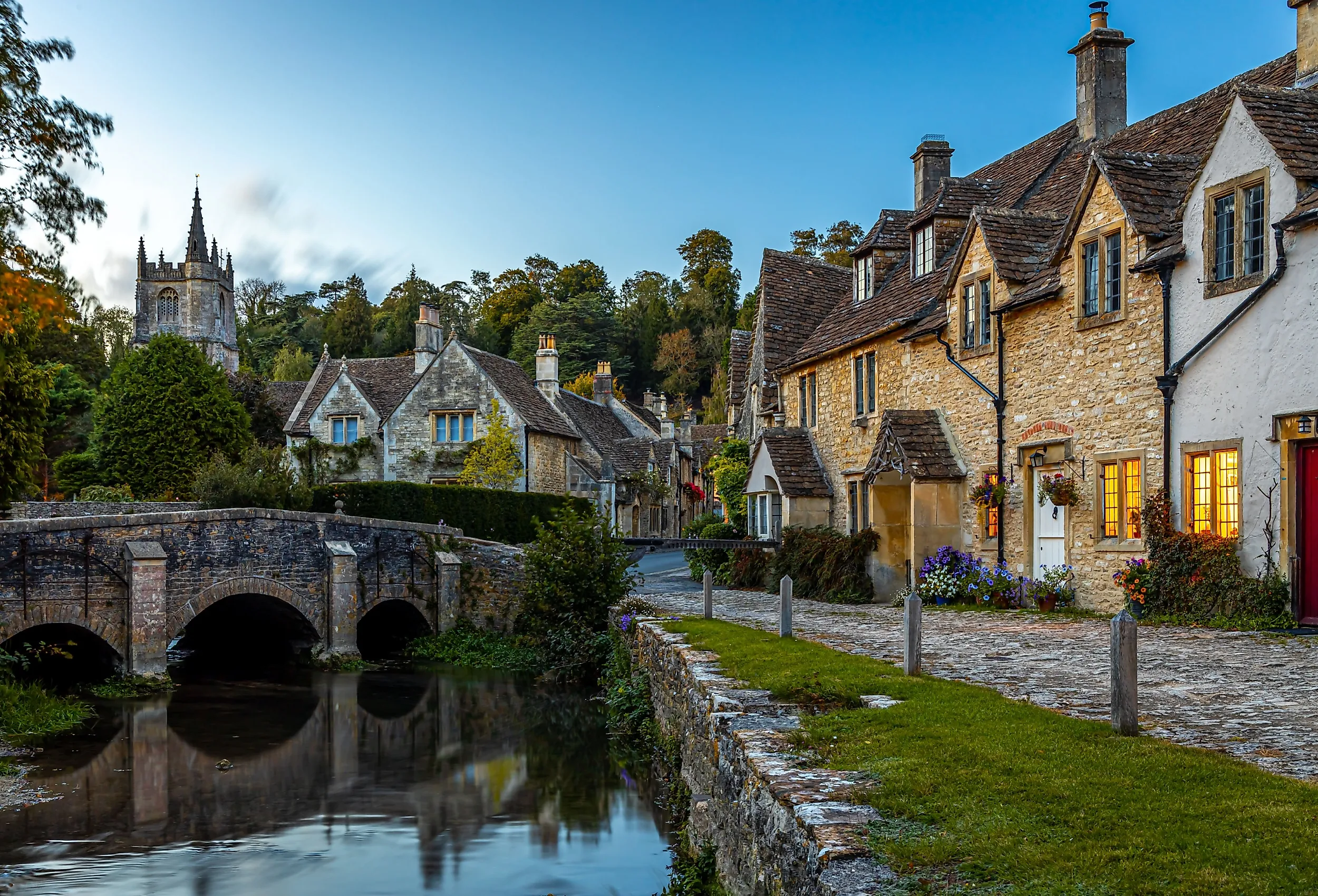
Castle Combe has no castle. The one that once crowned the hill was abandoned long ago, and villagers carried off most of its stones for their own houses. What remains is a village that many people call the prettiest in England, and one of the most photographed too. The cottages along the brook are all a couple of centuries old at least, built from the pale local stone. A short walk leads to the old bridge over the River Bybrook, the spot most visitors come to see. The Street runs down toward it, past the Little Picnic Shop, where you can pick up classic scones and a pot of English tea. Up in the market square stands St Andrew's Church, with parts dating to the 13th century, alongside the Market Cross, where a weekly market was held from the 1300s. Locals and visitors still gather around it to talk and take in the view.
Bibury, Gloucestershire

Bibury's most familiar sight is Arlington Row, a line of steep-roofed stone cottages beside the River Coln, built around 1380 as a wool store and turned over to weavers in the 1600s. William Morris once called Bibury the most beautiful village in England, which is part of why people still argue over whether it or Castle Combe deserves the crown. The village lies about an hour from Castle Combe, and it is home to one of the oldest trout farms in the country, where you can feed the fish or try to catch your own. The Swan Hotel makes a good next stop for afternoon tea, its bar looking out over the Coln under antler chandeliers. If the weather cooperates, pack a picnic for the riverbank instead. A short drive away, the giraffes and zebras at Cotswold Wildlife Park and Gardens near Burford roam open parkland among the gardens.
Rye, East Sussex

Mermaid Street is the reason most people photograph Rye. The cobbled lane climbs past the Mermaid Inn, a coaching inn with medieval roots and a good pot of tea, and at dusk the lamps give the whole street a soft glow. Rye sits on a hill above the Sussex marshes, close to the English Channel. Camber Castle stands in a nature reserve between the town and Winchelsea, reachable by a mile-long footpath, with guided interior tours on select Saturdays in summer. For the town's history, the Rye Castle Museum sits by the Ypres Tower, a 13th-century fort you can climb for a view over the rooftops and a look at the old smuggler's signaling lamp. At the Rye Heritage Centre, a sound-and-light show plays across the Rye Town Model, walking visitors through the lanes and pointing out the hidden passages along the way.
Clovelly, Devon

Clovelly bans cars, so deliveries still come down the cobbled hill by sledge. The village was royal land in the Norman era, held for William the Conqueror's queen, and it has passed through only three families since the 13th century. Its owner, John Rous, personally approves every new resident, and only a few hundred people live here year-round. Visitors pay an entry fee at the top, then walk down past whitewashed cottages to the harbor at the bottom. That harbor is where people gather and swim in the warm months, and where dolphins and seals turn up to the delight of onlookers, with the Bristol Channel stretching out beyond. Anglers fish into the evening as the cottage lights catch the calm water. The village keeps its fishing past alive with the Lobster and Crab Feast around the start of September and the Herring Festival in November. The village donkeys, once the workhorses of that steep hill, are now one of its most-loved sights.
Bourton-on-the-Water, Gloucestershire

The River Windrush runs straight through the middle of Bourton-on-the-Water, crossed by a series of low stone footbridges that earned the village its Venice-of-the-Cotswolds nickname. Pale stone cottages line the banks, some of them centuries old and fronted by flowerbeds. The channels were once working water for mills and local traders, and now they are a place to picnic and stroll. The Bakery on the Water sits right at the river's edge, a good spot for a cinnamon roll and a slow half-hour. About a mile out, the 17th-century Slaughters Manor House serves finger sandwiches and tea. Back in the village, the Dragonfly Maze sends families chasing clues through a hedge maze to find a hidden golden dragonfly. Bourton also keeps a one-ninth-scale Model Village, a stone replica of the real place so detailed it includes a tiny model of the model.
Polperro, Cornwall

Polperro stacks its cottages up the green hillsides above a working fishing harbor on Cornwall's south coast. In summer, the houses fill with flowers you can pick out from across the water. Chapel Rock, also called Peak Rock, stands at the harbor mouth, and nearby Chapel Pool holds deep blue-green water. The village made its living for centuries on pilchards and on smuggling, a history laid out at the Heritage Museum of Smuggling and Fishing above the harbor. The Polperro Arts Foundation displays paintings, ceramics, and other locally produced art at Polperro Village Hall in The Coombes. Down by the water, the South West Coast Path leads out toward Talland Bay for a swim, or you can take a boat out to see the harbor from the sea.
Lavenham, Suffolk

Half the fun of Lavenham is the color. Many of its medieval timber-framed houses lean at odd angles and wear a soft shade known as Suffolk pink, a wash that traditionally came from natural pigments and still fuels plenty of local lore. The Crooked House earns its name with a serious tilt and a warm ochre front that turns up in a lot of travel photos. The town grew rich on the wool trade in the 1400s, and that money built the Church of St Peter and St Paul, a well-preserved medieval church with stained glass and ornate arches. Walking the lanes is the main event, and local guides can point you to the best-kept corners. The Lavenham Woodland Walk passes the church and the old railway line. Harry Potter fans will recognize the village too, since Lavenham stood in for the fictional Godric's Hollow and the timber-framed De Vere House played the Potter family cottage.
Shaftesbury, Dorset

Gold Hill drops steeply out of the center of Shaftesbury, a cobbled lane lined with old stone cottages that opens onto a wide view of the Blackmore Vale. Plenty of couples rate the outlook from the top among the most romantic in the county. St Peter's Church stands on the hill, as does the Sun and Moon Cottage, now part of the Gold Hill Museum, which houses exhibitions covering the town's long history. The ancient Abbey sits nearby and hosts the Gold Hill Fair each year. Wildlife is close at hand, too. Castle Hill, a short walk from the center, mixes woodland and wetland and supports more than 40 bird species, along with butterflies and dragonflies. For the widest view of all, a balloon ride lifts off over the Dorset countryside.
Keswick, Cumbria

Derwentwater sits just south of Keswick, and it draws most visitors first. The Keswick Launch runs trips around the water, while the Derwent Water Marina rents kayaks and runs dragon-boat sessions. The market town itself has held a market in its square since the 13th century, and today more than 60 stalls sell food, crafts, and local goods. Two museums round out a rainy day. The Derwent Pencil Museum builds its story around a replica of the Seathwaite mine that first produced Borrowdale graphite, and the Keswick Museum runs events and exhibitions throughout the year. Just outside town, an easy walk leads to the Castlerigg Stone Circle, a Neolithic ring of standing stones set against the fells and thought to be some 5,000 years old.
Beauty in the Heart of England
England's prettiest small towns tend to hold their beauty in details kept up across centuries. Clovelly's car-free lanes still run down to a working harbor. Bourton-on-the-Water keeps its low stone bridges over the Windrush. Keswick sits within reach of the fells around Derwentwater. Each of the nine is distinct, yet all combine historic streets, memorable settings, and local character that residents have chosen to preserve rather than replace.