9 Nicest Small Towns In Portugal
Small Portuguese towns have become popular with travelers in recent years, largely thanks to their great weather and friendly locals. Portugal also features several natural wonders and historic sites throughout its towns and villages. Tavira, for instance, is home to Castelo de Tavira, where Portuguese history is palpable. These ruins represent a magnificent castle once built and inhabited by the Moors. In Portugal’s oldest chartered town, Ponte de Lima, you can walk the Ponte Romana bridge or experience the ‘avenue of plane trees,’ Avenida dos Platanos. If you have always wanted to know more about the Portuguese way of life or just want to explore the country’s landscapes, the following nice towns should be your starting point.
Monsaraz

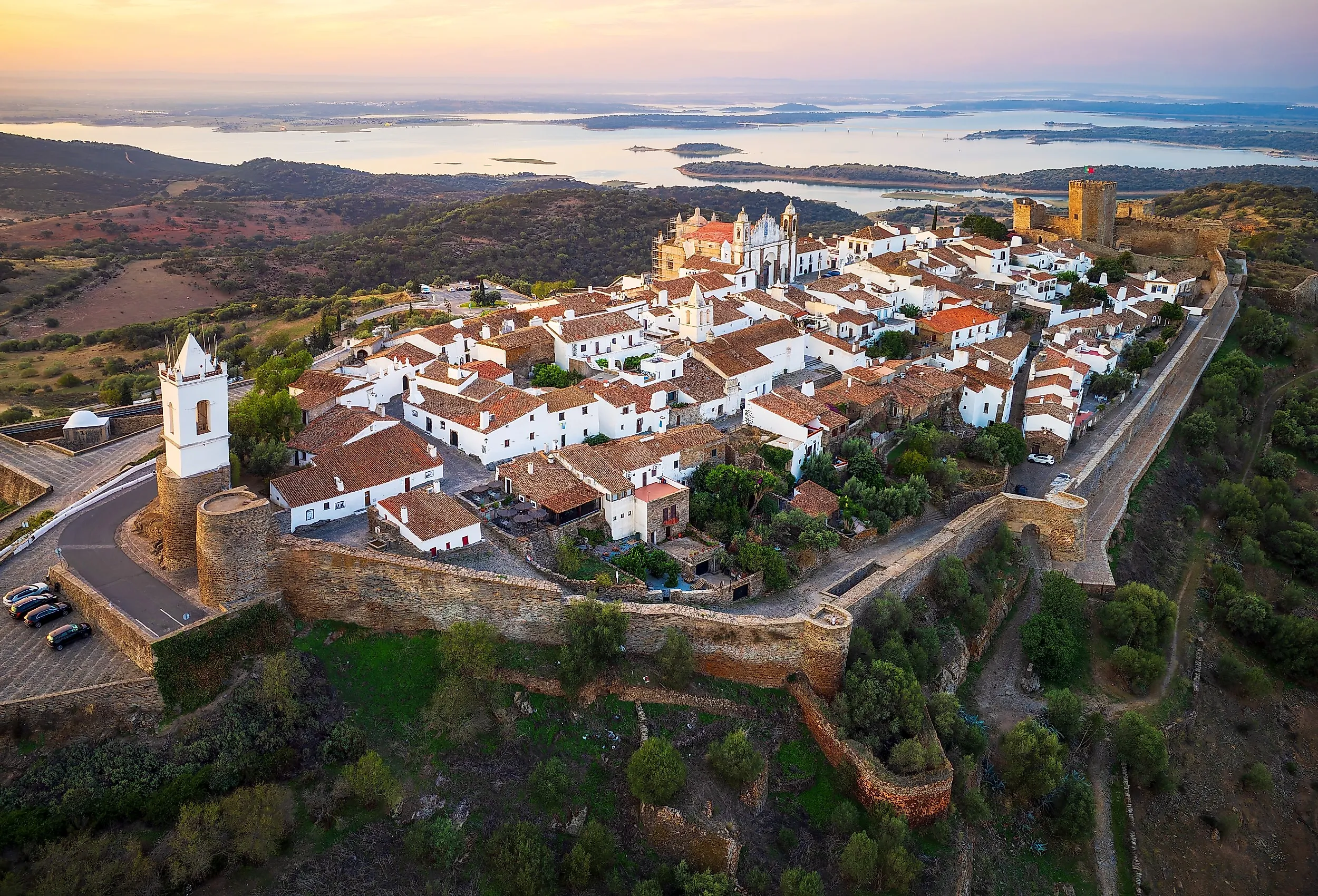
Monsaraz is a fortified village that boasts a castle and medieval buildings. It is as traditionally Portuguese as you would expect, with hills of olive trees and vineyards covering the countryside before you even reach the village. It is important to note that you cannot drive into Monsaraz, so you would have to park outside. When you get to the village, the first thing you will want to do is stroll the cobblestone streets. These streets are steep since Monsaraz sits on a hill, but the views of the wider Alentejo region are so worth the effort.
At the southern end of the village, you will find Monsaraz Castelo, where the wall walk and tower offer even more views, especially over the Alqueva lakes to the east and the village below. These lakes offer great spots for watching the sunrise, but if you are not an early bird, you can always catch the night sky from the Alqueva Lake Observatory (OLA), 15 kilometers away from Monsaraz. If you want an experience that is a little more unusual, head to Cromeleque do Xerez to see the 50 megaliths that are reminiscent of the famous Stonehenge.
Marvão

Marvão is the epitome of a nice town, with endless views and incredible history. It was once a border town that led to Spain and was the center of several battles. When the Christians won the town back from the Moors in 1190, the walls of the town were eventually extended and the ruined castle rebuilt.
Today, these walls that still surround the town make for a beautiful picture, as does the historic castle. The Castle of Marvão is the top attraction, and you can visit for a nominal entrance fee. Outside the castle, you can see the municipal museum, which is housed in the 15th-century church of Santa Maria. There are several displays to view, including artifacts from Roman times and the Stone Age. After your castle grounds tour, you can head to the southern end of Marvao to explore the Chafurdão. These round ‘huts’ are made of stone and feature thatched roofs. They are found across the Alentejo region and date back to the Iron Age. If you want to see more of the area surrounding this small town, make your way to Serra da São Mamede National Park, where you will find hiking trails and river beaches.
Tavira

More fun times in nice towns await in stunning Tavira, located in the world-famous Algarve region. The town center is built around the Gilão River and is a great place to sit and look out over the water. There are also several terraces along the streets where you can have a bite to eat while enjoying the view. Near the town’s Moorish castle, you will find Restaurante A Ver Tavira, where you can enjoy fine dining from a rooftop terrace that overlooks the city. After a delicious meal, take a stroll through Jardim Publico de Tavira to see the on-site music chapel. Or take a walk along the river to see the fishing boats come and go. If you visit during the summer, you can take a return boat trip to Tavira Island to explore the stunning beaches and the Ria Formosa Natural Park.
Óbidos

Óbidos is a beautiful medieval town with whitewashed houses in central Portugal. The ramparts surrounding Óbidos are a great place to walk, but only if you are not afraid of heights. If you prefer staying on ground level, you can wander through the stunning bookstore in São Tiago Church. Or head to the mural at Porta da Vila, which was once the main entrance of Óbidos, to take a couple of selfies. You can also take in some of the natural wonders surrounding Óbidos if you take a boat trip along the Silver Coast or visit the Ecovia da Lagoa to see the flamingos during migration (in winter). And, if you visit in the summer, you can get a first-hand glimpse of what the town was like in medieval times when you join the Mercado Medieval festival. The festival includes reenactments, jousting, roasted meats, and mead.
Guimarães

Largo da Oliveira square in the nice town of Guimarães was named after an ancient olive tree. Legend has it that the tree once came back to life after it was blessed with holy oil. The tree that now stands in the same spot as the ancient tree is a big tourist draw and a good place to take a couple of vacation pictures. Other must-see places include the sign at the end of the main street that reads Aqui Nasceu Portugal, which means Portugal Was Born Here. It is believed that Guimarães is the birthplace of Portugal because Afonso Henriques was born here (the first king of the country), and the Battle of São Mamede was fought here.
You can also visit the Castle of Guimarães, which stands on top of a hill in the town’s historic center. The castle was built in the 10th century and is one of the most historically significant buildings in the country. If you want a bit of an outdoor adventure, take the cable car to Monte da Penha, a green hill just outside the town’s historic center. Here, you can enjoy the walking trails and pick a scenic spot for a lazy picnic.
Pinhão

Pinhão is nice for several reasons, especially because it is in the center of the Douro Valley wine region, which features terraced vineyards and a beautiful river. Before you get to the wineries, stop by the Pinhão train station to see the azulejo tiles that depict the town’s wine history. Then, head to Quinta do Bomfim for an excellent wine tasting and views over the Douro River. You can also experience the river up close by going on a boat tour. A traditional Rabelo Boat will get you out on the water, and you will have more opportunities for local wine tasting as well. After your boat trip and seeing the terraced vineyards around the river, you can go hiking on the trails that surround Pinhão. One of the best trails is the Trilho Miradouro Casal de Loivos, which stretches 7 kilometers to a lookout point where you can see across the valley.
Lindoso

Everything about Lindoso is nice, especially its picturesque location in the Peneda-Geres National Park. This small village once helped protect Portugal during several military battles, and today, its history is displayed throughout the granaries, the old stone town, and the medieval castle. Lindoso Castle was built in the 13th century as an extra defense against those who wanted to invade Portuguese borders. The castle is perched on a hilltop that overlooks the village and the Lima River valley. You can tour the castle and pay a small fee to see the museum inside its main tower.
If you walk the ancient walls, you will see the Lindoso granaries next door. The granaries number more than 50 and date back to the 17th and 18th centuries. You might, at first glance, think they are graves, because each one is topped with a cross. The crosses were added in the hopes that they would keep evil spirits at bay. After viewing the granaries, you can take a trip through the streets to see the old parish church and the old stone houses.
Ponte de Lima

Ponte de Lima is considered Portugal’s oldest village and is famous for its gorgeous setting and excellent wines. It is also known for its strange legends, including the one about the Roman troops that were too scared to cross the Lima River. They believed it to be the River Lethe or River of Forgetfulness, which is one of the rivers that flow in the Underworld. The soldiers were terrified that they would lose their memories until Decimus Junius Brutus Callaicus crossed the river himself and called each soldier over by name.
Today, you can see the depiction of this legend in the 24 Roman soldier statues on one side of the Lima River in the village and a statue of General Callaicus on the other side. You can also walk across the Ponte Romana bridge that stretches across the river and was built in the 1st century. In the Old Town, you can see the infamous Plane Tree Avenue and the Noble Fountain. And, for something out of the ordinary, you can visit the Portuguese Toy Museum, which sits on the other side of the bridge, to see long-forgotten dolls, trains, and toy soldiers. End a great day in Ponte de Lima at the Theme Arnado Park, near the museum, to stroll among several gardens, including a Labyrinth Garden and a Roman Garden.
Estremoz

Estremoz is the historic ‘white city’ that was once the stomping grounds of royalty. The town is named for its white marble buildings and because it is responsible for at least 90% of white marble production. You will see white marble everywhere in this pretty town, including the imposing Estremoz Castle. King Dinis I ordered the castle to be built for his wife, Isabel of Aragon. From the castle, you can head to the 17th-century fortress to see the original drawbridge at Evora Gate or the eagles and griffins drawings that decorate the Currais Gate. At the Galeria Elapedra, you can spend a couple of hours admiring unique sculptures. Just outside of Estremoz, you can take the Serra d’Ossa Walkways, which will take you on a 3-kilometer round-trip through the forest. And, at the nearby Vila Vicosa, you can see the marble wonder that is the famous ducal palace.
Take a Timeless Journey Through Portugal’s Nicest Towns
Once you find yourself in Portugal, you will be drawn by the marble of Estremoz and the misty peaks in the Peneda-Geres. In each town, you will find something that links to the intrinsic soul that is Portugal, whether legendary or factual. In Ponte de Lima, you can check out Theme Arnado Park, and in Guimaraes, you can trace a king’s steps. And, beyond the history of Portugal, you will find its magic in a glass of unforgettable Douro wine and a lively conversation in a village square.