The Oldest Cities in Europe
Europe's claim to host the oldest continuously inhabited cities in the Western world depends entirely on what counts as "continuous habitation." The strictest definition requires unbroken urban settlement at one site, with archaeological evidence at each layer running through to the present. A looser definition counts continuous human presence on a single site, even where the political or cultural identity of the inhabitants changed. The ten cities below all have credible claims by at least one of those standards. Plovdiv is the most commonly cited consensus pick for the oldest in Europe, but Matera (with Paleolithic cave dwellings), Argos (with archaeological evidence from the 5th millennium BC), and Athens all have credible counterarguments. The dates given for each city below reflect the most defensible archaeological evidence, not promotional claims.
Plovdiv, Bulgaria (about 6000 BC)
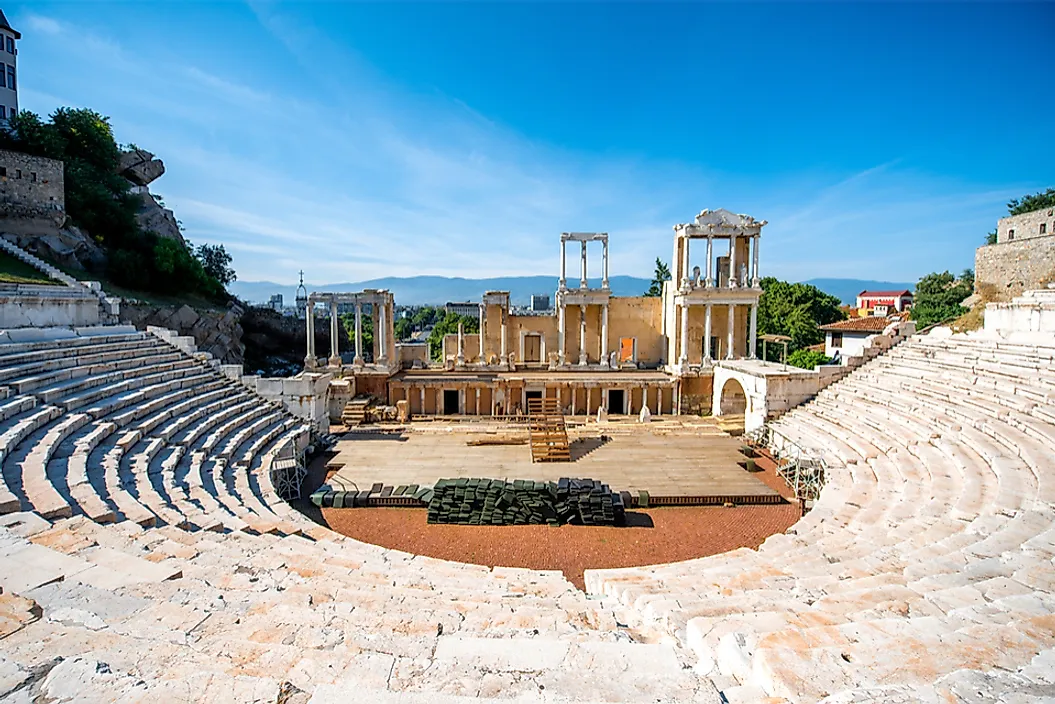
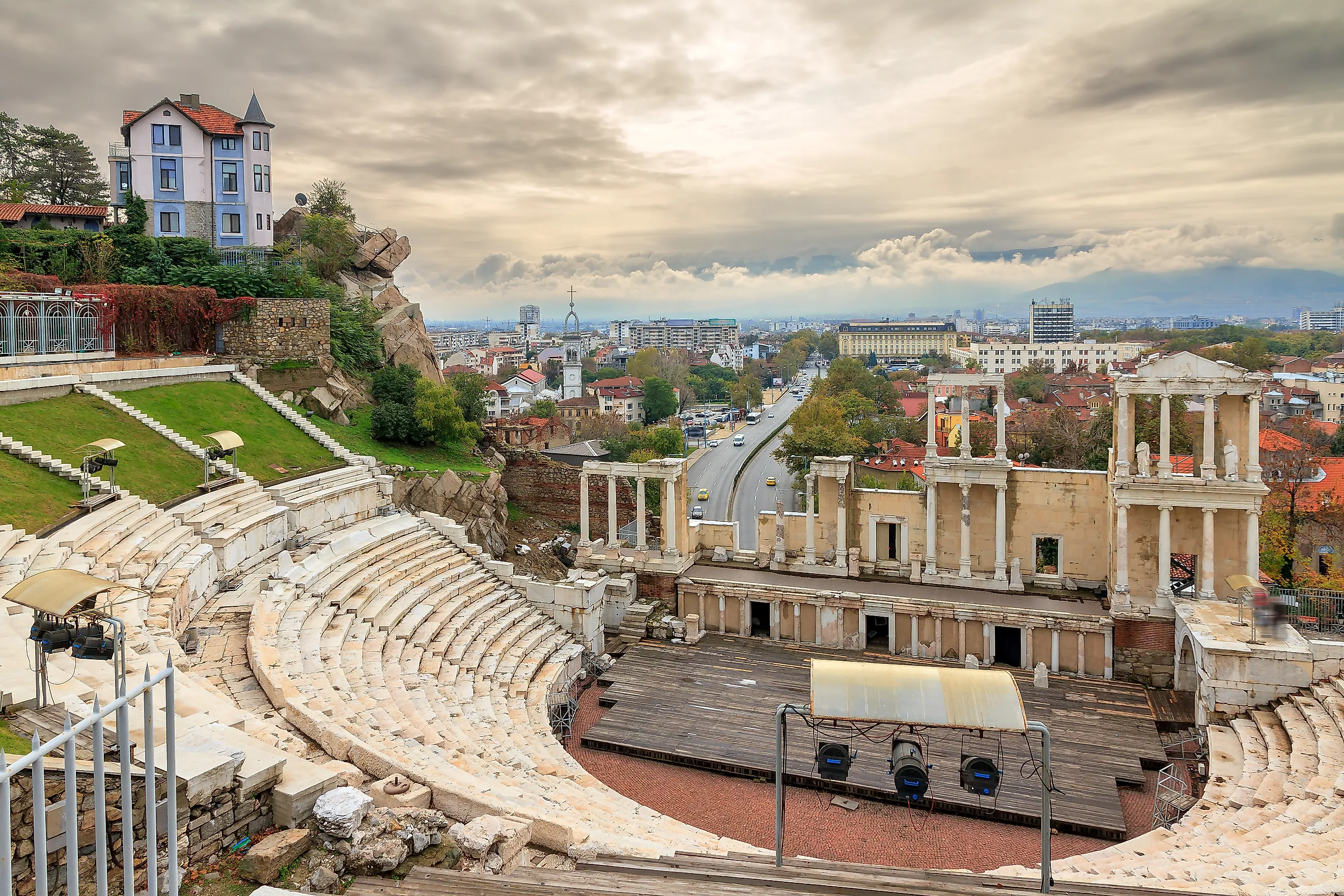
Plovdiv sits on the upper Thracian Plain in southern Bulgaria, straddling the Maritsa River, with the central city built across and around seven syenite hills. Prehistoric settlement evidence on the site goes back to the 6th millennium BC, making Plovdiv the most commonly cited candidate for the oldest continuously inhabited city in Europe. Greek colonists named it Philippopolis in 342 BC after Philip II of Macedon (father of Alexander the Great) captured the existing Thracian town and refounded it. The Romans took the city in 46 AD and made it the capital of the province of Thrace; the Roman theatre, built under Emperor Trajan in the second century, is still in use today and seats roughly 6,000. Plovdiv was the European Capital of Culture in 2019, sharing the designation that year with Matera. The city was sacked twice in the third century (by the Goths in 250 AD and again in 251 AD at the Battle of Abritus, in which Emperor Decius died) and again by the Huns under Attila in 441 to 442 AD. Modern population is about 340,000, making Plovdiv Bulgaria's second-largest city after Sofia.
Argos, Greece (about 5000 BC)

Argos sits in the Argolid plain of the Peloponnese, eleven kilometers inland from its historic port at Nafplio. Archaeological evidence of continuous habitation on the site goes back roughly 7,000 years, and Argos is sometimes cited (as a competitor to Plovdiv) as the oldest continuously inhabited city in Europe. In Greek mythology, Argos was the kingdom of Perseus and the home of Hera (the major sanctuary of the goddess, the Heraion of Argos, stood on a nearby ridge). The city's strategic position made it the dominant power of the Argolid through the early Iron Age, before being eclipsed by Sparta. Argos remained influential through the Classical and Hellenistic periods; the orator Hegesias of Magnesia called Argos "the city of the dogs" for its competitive temperament. The modern city has a population of about 22,000 and merged in the 2011 Kallikratis administrative reform into the larger municipality of Argos-Mykines.
Athens, Greece (Neolithic Period)

The Acropolis of Athens shows evidence of Neolithic habitation from at least the 4th millennium BC, with continuous occupation since. Athens reached its political and cultural peak in the 5th century BC under Pericles, after the Persian Wars (490 to 479 BC), and produced Aeschylus, Sophocles, Euripides, Aristophanes, Socrates, Plato, and Aristotle within the span of about 150 years. The city was named after Athena, the goddess of wisdom, who according to mythology beat Poseidon in a contest to become the patron of the city. The current population of the Athens metropolitan area is roughly 3.6 million, about a third of Greece's national population. The Parthenon (constructed 447 to 432 BC under the direction of Pericles and the architect Phidias) and the Acropolis Museum (opened 2009) are the two most visited sites. Athens hosted the first modern Olympic Games in 1896 and again in 2004.
Larissa, Greece (about 5000 BC)

Larissa is the capital of Thessaly, the broad agricultural plain in central Greece, and has Neolithic habitation evidence going back to the 5th millennium BC. The current city is the fifth-most populous in Greece with a 2021 census population of about 144,000. In Greek mythology, Larissa was the birthplace of Achilles (whose homeland Phthia lay in southern Thessaly) and was reputed to be the place where Hippocrates of Kos died sometime around 370 BC. The city sits on the Pineios River and was an important agricultural center under the Aleuadae, the local Thessalian aristocracy, in the Classical period. Modern Larissa is the commercial and transport hub of central Greece, connected to Thessaloniki and Athens by the main north-south rail and motorway corridors.
Thebes, Greece (Neolithic Period)

Thebes lies on the Boeotian plain about 70 kilometers north of Athens and was the dominant city of Boeotia from the late Bronze Age through the Classical period. The Mycenaean palatial center at the Kadmeia (the citadel hill at Thebes) has produced Linear B tablets (the syllabic script used to write Mycenaean Greek) from the 13th century BC, attesting to a substantial Bronze Age administrative center. Mythologically, Thebes was founded by Cadmus, the Phoenician prince who introduced the alphabet to Greece, and was the setting for the Oedipus cycle, the founding of Dionysian worship, and the Seven Against Thebes. The historical Theban hegemony was brief: under the generals Epaminondas and Pelopidas, Thebes defeated Sparta at the Battle of Leuctra on July 6 or August 6, 371 BC (the exact date is debated), ending Spartan dominance in Greece and inaugurating a decade of Theban supremacy. Alexander the Great destroyed Thebes in 335 BC after the city revolted against his accession, killing 6,000 of its inhabitants and selling the survivors into slavery. The city was refounded by Cassander in 316 BC and continued through the Byzantine period as a center of silk production.
Shkoder, Albania (about 2250 BC)

Shkoder, formerly Scodra (Latin) and Scutari (Venetian), sits at the southern end of Lake Shkoder near the Albanian-Montenegrin border, with the Albanian Alps rising to the east. The earliest settlement on the site dates to the Early Bronze Age, around the third millennium BC, with the population at that time identified as Illyrian. The city became the capital of the Labeatae tribe and later of the Illyrian kingdom under Queen Teuta in the 3rd century BC; her piracy in the Adriatic triggered the First Illyrian War with Rome (229 to 228 BC). Rozafa Castle, the strategic citadel on the rocky promontory above the city, has Illyrian, Roman, Byzantine, Venetian, and Ottoman building phases visible in its surviving walls. Modern Shkoder is Albania's fifth-largest city with about 78,000 residents, and is the cultural center of the Catholic minority within the country.
Chania, Greece (about 1700 BC)

Chania sits on the northwest coast of Crete and was the principal city of the western part of the island under successive Minoan, Mycenaean, Classical Greek, Roman, Byzantine, Venetian, and Ottoman rule. The Minoan city, called Kydonia (Linear B: Ku-do-ni-ja), appears on Linear B tablets from the second millennium BC and produced its own destruction layer around the time of the broader Late Bronze Age collapse. Under Venetian rule from 1252 to 1645, Chania was rebuilt with the city walls, the lighthouse, and most of the harbor that survive today; under Ottoman rule from 1645 to 1898, the city was renamed Hanya and several mosques (including the one at the harbor) were added. Chania was the capital of the autonomous Cretan State from 1898 to 1913, when the island reunited with Greece. The modern city has a population of about 54,000 in the municipality and is the second-largest urban area on Crete after Heraklion.
Nafplio, Greece (about 1400 BC)

Nafplio occupies a peninsula in the Argolic Gulf, with the medieval Palamidi fortress (built by the Venetians between 1711 and 1714) overlooking the modern town from a hilltop nearly 200 meters above sea level. The site appears in Egyptian topographical lists of Pharaoh Amenhotep III in the 14th century BC under what some scholars read as "Nuplija," and Mycenaean-era walls have been found in the city. Through the Middle Ages, Nafplio passed through Byzantine, Frankish (Frankokratia), Venetian, and Ottoman control; under Venice it was called Napoli di Romania, under the Ottomans Mora Yenişehir. Nafplio was the first capital of the Greek state after the War of Independence, from 1827 to 1834, until the seat of government moved to Athens. Governor Ioannis Kapodistrias was assassinated in Nafplio on October 9, 1831 outside the church of Saint Spyridon. The modern town has a population of about 14,000.
Cadiz, Spain (about 1100 BC)

Cadiz was founded by Phoenician colonists from Tyre (modern Lebanon) around 1100 BC under the name Gadir ("walled enclosure"), making it the oldest continuously inhabited city in Western Europe. Carthaginian, Roman (Gades), Visigothic, and Moorish (Qadis) rule followed, each leaving architectural traces. The city sits on a narrow sandbar that almost separates the Bay of Cadiz from the Atlantic; its harbor was the major Spanish point of departure for trade with the Americas through the 18th century, after Seville's silting up shifted the official monopoly south in 1717. Christopher Columbus sailed from Cadiz on his second voyage in 1493 and his fourth in 1502. The old town, the Casco Antiguo, retains its medieval and 18th-century street pattern within the surviving city walls and divides into the historic quarters of El Pópulo, La Viña, and Santa María. The Cathedral of Cadiz (begun 1722, completed 1838) anchors the waterfront.
Matera, Italy (about 7000 BC)

Matera, in the southern Italian region of Basilicata, has the most unusual continuous-habitation claim on this list. Its Sassi (literally "stones") are two cave-dwelling districts (Sasso Caveoso and Sasso Barisano) carved into the limestone walls of the Gravina ravine, with the elevated Civita ridge between them holding the cathedral and civic core. Archaeological evidence of continuous habitation in the Sassi caves goes back to at least the 7th millennium BC, with sparser evidence of Paleolithic human presence at least three millennia earlier. The argument for placing Matera among the oldest continuously inhabited settlements in the world (with Aleppo, Jericho, and Damascus) rests on the fact that the same cave-and-courtyard housing units have been continuously occupied across that span, even as the cultural and political identity of the inhabitants changed. Matera became known as the "Shame of Italy" in the early 20th century for the poverty and disease of the Sassi (about 15,000 to 18,000 residents in single-room cave houses without sanitation); the Italian state evacuated the Sassi between 1952 and 1968 and rehoused residents in new districts. The Sassi were named a UNESCO World Heritage Site in 1993, restoration began in the 1980s, and Matera was the European Capital of Culture in 2019, sharing the title with Plovdiv.
A Note On Ordering
Strict ranking of "oldest continuously inhabited cities" is misleading because the underlying claims rest on different evidence types. Plovdiv has the clearest archaeological case for continuous urban settlement (planned streets, defensive walls, public buildings) since the 6th millennium BC. Matera has the clearest case for continuous occupation of the same dwellings (the Sassi caves) over an even longer span, but the form of habitation differs from a conventional urban center. The Greek cities (Argos, Athens, Larissa, Thebes) all have Neolithic origins, Mycenaean Bronze Age phases, and continuous habitation through Classical, Hellenistic, Roman, Byzantine, Ottoman, and modern periods, but their century-by-century continuity is better established for some periods than others. Shkoder, Chania, Nafplio, and Cadiz are younger but have unbroken political and cultural records back to the second or third millennium BC. The honest answer to "which is the oldest" is that the question rewards whichever city's tourism office tells the story most convincingly.