9 Most Walkable Town Centers In Southern California
In a region that measures distance in freeway minutes, the most walkable town centers in Southern California measure it in blocks. Five blocks in Solvang frame a historic mission, wooden windmills, and Danish bakeries. Claremont weaves a citrus-era packing house, an indie bookstore, and a folk music venue within steps of an active rail line, and Avalon has made a seaside promenade its main thoroughfare. Each of these downtowns puts a museum, a market, and a sit-down meal inside the same walking radius. Mining equipment behind schist walls, a soda fountain pouring since 1915, and a 407-foot pier over Avalon Bay fill the4 blocks that follow.
Solvang

Solvang in Santa Barbara County is built for wandering, and the town's Danish roots unfold block by block, not in one concentrated attraction. The walk begins at Mission Santa Inés on the eastern edge of the village, founded in 1804 and still an active Roman Catholic parish, with tours of the church, the cloister garden, and a museum of religious garments and historic artifacts. A short walk into the quiet residential streets south of downtown reaches the Elverhøj Museum of History & Art on Elverhoy Way. Its exhibits chronicle the founding of Solvang, the stories of Danish-American settlers, and their Viking ancestry.
Copenhagen Drive takes over two blocks past the museum, its street lined with wooden windmills and half-timbered storefronts, a look that dates to a deliberate village redesign begun in 1946, not to the 1911 settlers. Solvang Park occupies the corner of 1st Street at the end of that stretch, a shaded green under mature trees. Solvang Restaurant is a one-minute walk from the park, and its specialty is æbleskiver, a fluffy Danish pastry ball dusted with powdered sugar and served with jam.
South Pasadena

About 15 minutes northeast of downtown Los Angeles, South Pasadena has held on to its early 20th-century aesthetic, which has made it a favorite setting for Hollywood productions. Fair Oaks Pharmacy stands on the corner of Mission Street and Fair Oaks Avenue, a working pharmacy since 1915 with a vintage soda fountain at a nostalgic lunch counter. Classic ice cream sundaes and hand-dipped milkshakes come across that counter. Mission Street continues to Meridian Avenue and the South Pasadena Farmers Market, open every Thursday year-round.
Just across the street, the South Pasadena Historical Museum occupies the 1887 Meridian Iron Works building. Permanent exhibits trace the town's early industries, transportation, and neighborhood life. That same stretch of Mission Street arrives at Garfield Park. A small rose garden opens the grounds, followed by a line of shade trees and an expansive lawn with walking paths and sports courts.
Monrovia

Old Town Monrovia is the town center here, and it turns into a pedestrian playground every Friday night. Portions of Myrtle Avenue close to vehicular traffic, giving way to the Monrovia Street Fair & Market. The multi-block event features a farmers' market, food trucks, and live music. Any other evening, Merengue Bakery & Cafe at 417 South Myrtle serves handmade Cuban pastries and sandwiches, the empanadas and papa rellenas among them. Library Park is three minutes up South Myrtle, a small green square with a bandshell that hosts concerts and community events in the summer.
The night ends at Basin 141 Social Bar and Kitchen, a block down South Myrtle from the park. The Basil Paloma muddles tequila with basil and grapefruit, and the local craft beer selection rotates through the year.
Claremont

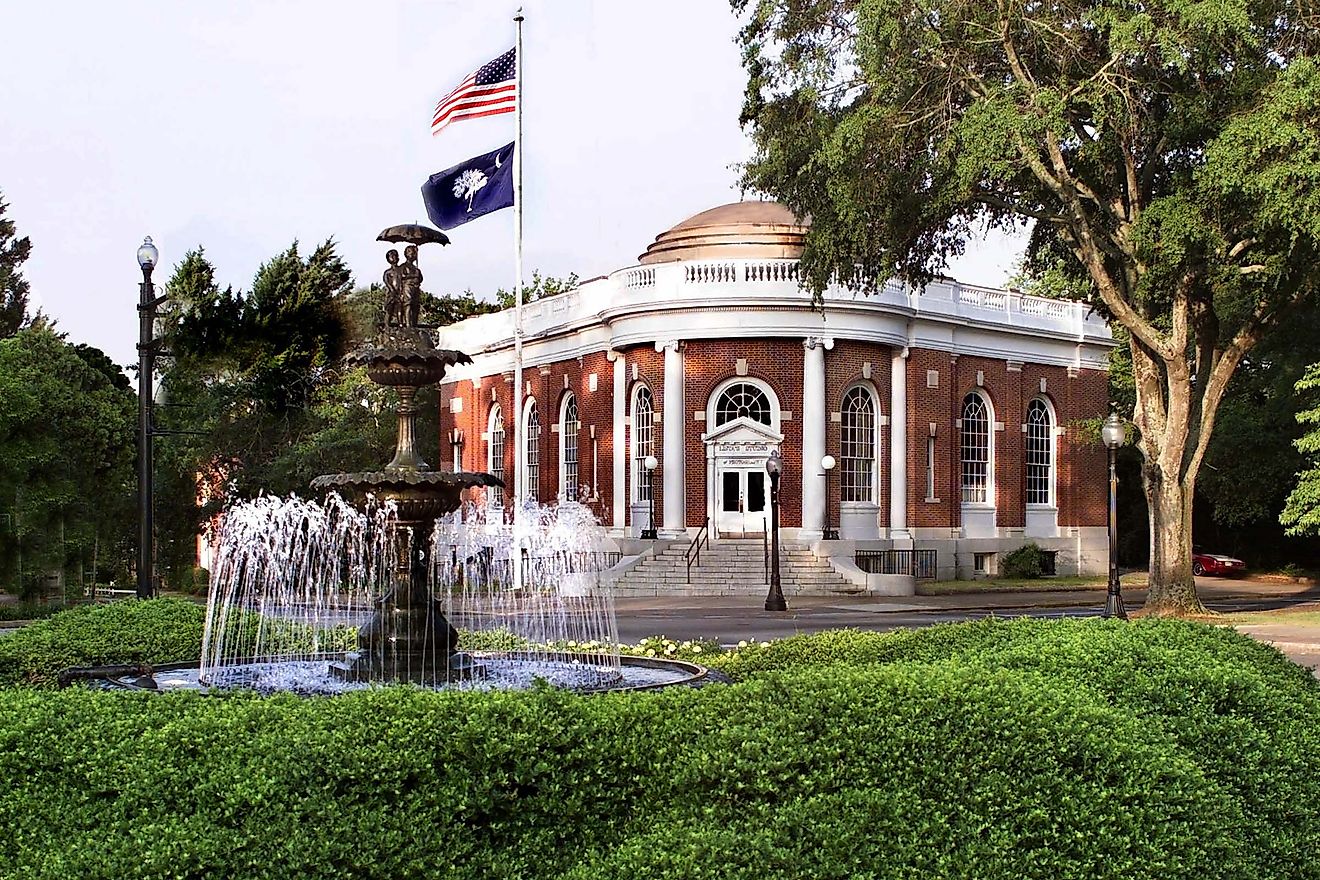
Claremont Village is a European-inspired town square spanning nearly 12 blocks, focused on independent and mom-and-pop shops with few large chains among them. The historic 1927 Santa Fe depot on West 1st Street houses the Claremont Lewis Museum of Art. Rotating exhibitions highlight the work of local artists inside a building that spent decades as a train station before art took over. West along the tracks is the Claremont Packing House, built in 1922 and the last of four packing houses that once lined the corridor. The former citrus facility now buzzes with art galleries, artisan eateries, and specialty shops, among them The Claremont Forum, a nonprofit bookshop whose shelves of pre-loved paperbacks fund books mailed to people in prison.
The evening's entertainment is a few blocks east at the Folk Music Center on North Yale Avenue. Charles and Dorothy Chase opened it in 1958, and their grandson, the musician Ben Harper, owns it now. Concerts and open mic nights take part of the calendar, and on quieter days its museum displays folk instruments that can be handled and played.
Big Bear Lake

Big Bear Lake has a compact town center at about 6,750 feet, closer in feel to a mountain ski town than to a Southern California downtown. Along Pine Knot Avenue, The Village gathers Alpine-style buildings full of galleries, sweet shops, and restaurants. The rustic Upstairs Mall, a second-story space on Village Drive, is where the crates of vintage vinyl and shelves of handmade goods have ended up. Pine Knot Avenue descends, the shops give way to the lake, and Pine Knot Marina rents luxury pontoon boats, kayaks, and stand-up paddleboards once feet need a rest.
A short walk west along the shoreline reaches Rotary Pine Knot Park. Paved pathways pass under large shade trees, and the benches face a clear view of the lake.
Julian

About an hour northeast of San Diego, Julian hides a former gold boomtown at 4,200 feet below Volcan Mountain and the Cuyamacas. On the western edge of the town center, the Julian Pioneer Museum stands on Washington Street. The former Treshil Blacksmith Shop, put up in 1888 behind schist walls two feet thick, is packed with original mining equipment, vintage clothing, and Victorian-era pianos. Two blocks on, Main Street carries the Julian Gold Rush Hotel, open since 1897 and billed as the oldest continuously operating hotel in Southern California, with Victorian-style rooms, antique furnishings, and heirloom quilts.
From the hotel, Main Street lines the downtown with antique stores, local bakeries, and gift shops. Julian Cider Mill specializes in fresh-pressed cider made with apples from the local Julian harvest. On the same stretch, Julian Pie Company makes traditional fruit pies, best enjoyed with a serving of ice cream.
San Juan Capistrano

San Juan Capistrano makes history easy to explore on foot, with its famous mission, old railway depot, and centuries-old homes packed into a few downtown blocks. The walk begins at Mission San Juan Capistrano, which turns 250 years old in 2026. Set on a ten-acre site, its highlights include the ruins of a massive stone church that collapsed in an earthquake in 1812, the central courtyard with its blooming flowers, and a museum of religious relics. Two minutes east down Verdugo Street is the San Juan Capistrano Depot. The 1894 brick station with its Spanish Revival arches still welcomes trains and is now also home to a farm-to-table restaurant.
Across the track is the Los Rios Historic District, the oldest residential neighborhood in California, where about 40 preserved adobe and wood-frame homes stand, three of them adobes dating to the 1790s. The walk ends at Ramos House Café on Los Rios Street. Set in a historic 1881 cottage, the cafe serves farm-fresh New American cuisine made entirely from scratch, and its Vodka Bloody Mary is the standard pairing with the two-course weekend brunch.
Dana Point

Dana Point's Lantern District is a pedestrian-friendly coastal village of Spanish-inspired architecture, red clay tiles, and white stucco walls. Shops and restaurants line the downtown along Del Prado Avenue, where the corner at Golden Lantern carries a Walk Score of 90. Breakfast arrives early at Bon Appetit Café, the eggs Benedict on the savory side of the menu and the French toast on the sweet. Old Golden Lantern leads toward Heritage Park, with a stop at Compass Point for cliffside views over the harbor.
The walk continues downhill to the Ocean Institute. Its touch tanks contain sea stars, hermit crabs, rays, and small sharks. The docked Spirit of Dana Point, a 118-foot replica of a 1770s privateer schooner, opens its sailors' quarters for tours. Baby Beach closes the day off Ensenada Place, a roped-off cove where the water is calm enough for swimming with children, paddleboarding, and kayaking.
Avalon

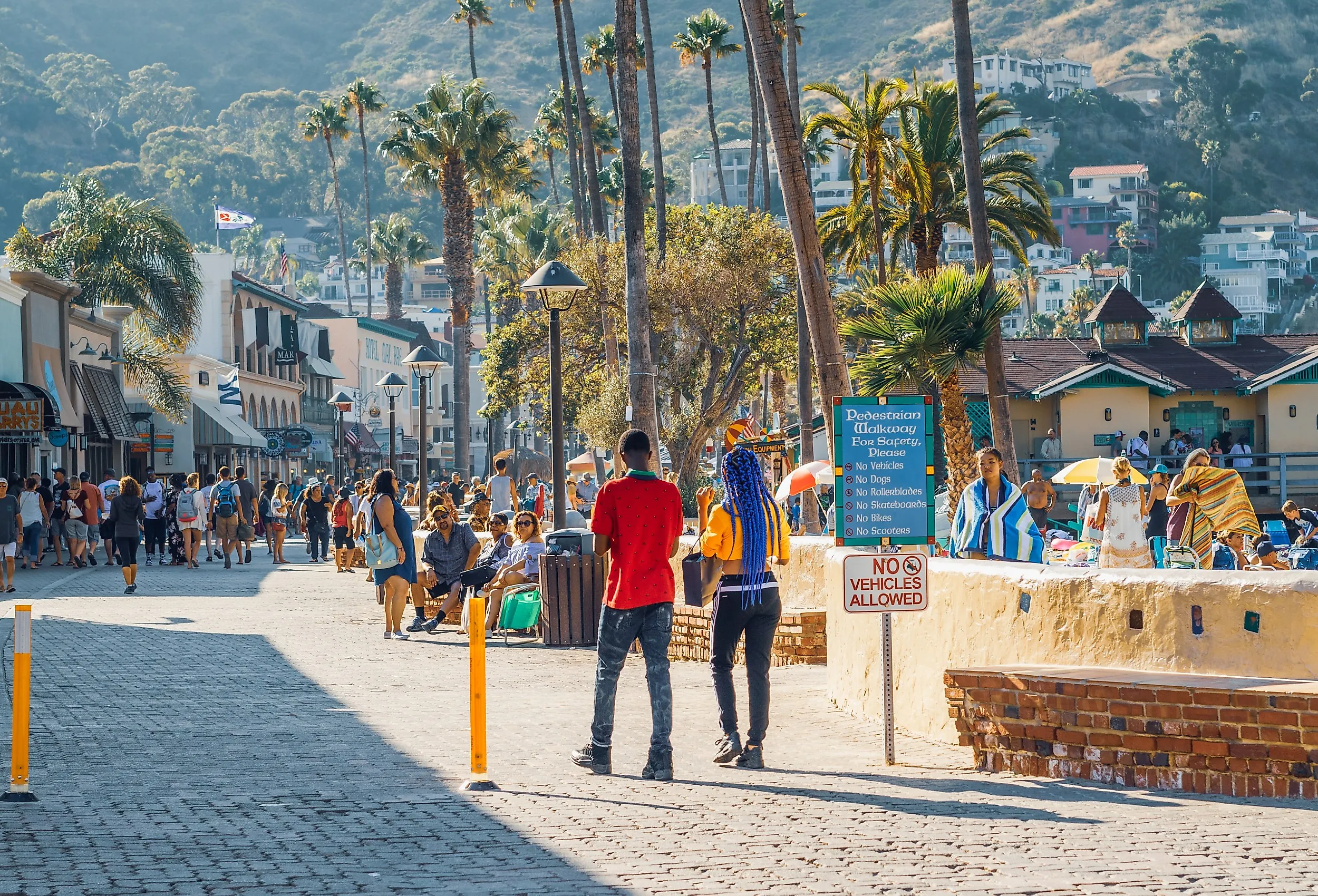
Accessible by passenger ferry or helicopter from the mainland, Avalon redefines the downtown scene with a waterfront promenade in place of a traditional street. The 407-foot Green Pleasure Pier spans the turquoise waters of Avalon Bay. Glass-bottom boats and yellow submarines carry passengers out over the underwater kelp forests to see the garibaldi, named California's state marine fish in 1995. Back on shore, Crescent Avenue curves along the harbor toward Metropole Avenue and the Catalina Museum for Art & History. Its galleries span about 8,000 years of local history, and an amphitheater hosts outdoor festivals and movie screenings.
Crescent Avenue carries on to the roundabout and St. Catherine Way, where the Catalina Casino stands over the water. Despite its name, the 1929 Art Deco building was never a gambling hall. A guided tour moves from a theater that still shows movies on Friday and Saturday evenings up to the world's largest circular ballroom on the top level. Past the Casino, the oceanside path finishes at Descanso Beach Club, where a beachside dinner and cocktail close out the day.
A Day On Foot In Southern California
Most of Southern California was never built with pedestrians in mind. The region developed around car-centric planning, but these walkable town centers prove that a piece of it was drawn for foot traffic first. Julian's grid was surveyed for a gold camp, Monrovia's for a rail town, South Pasadena's for a stop on what became Route 66. A day downtown in any of them leaves time for a museum, a browse through local shops, and a meal, all a few minutes from where the walk started.