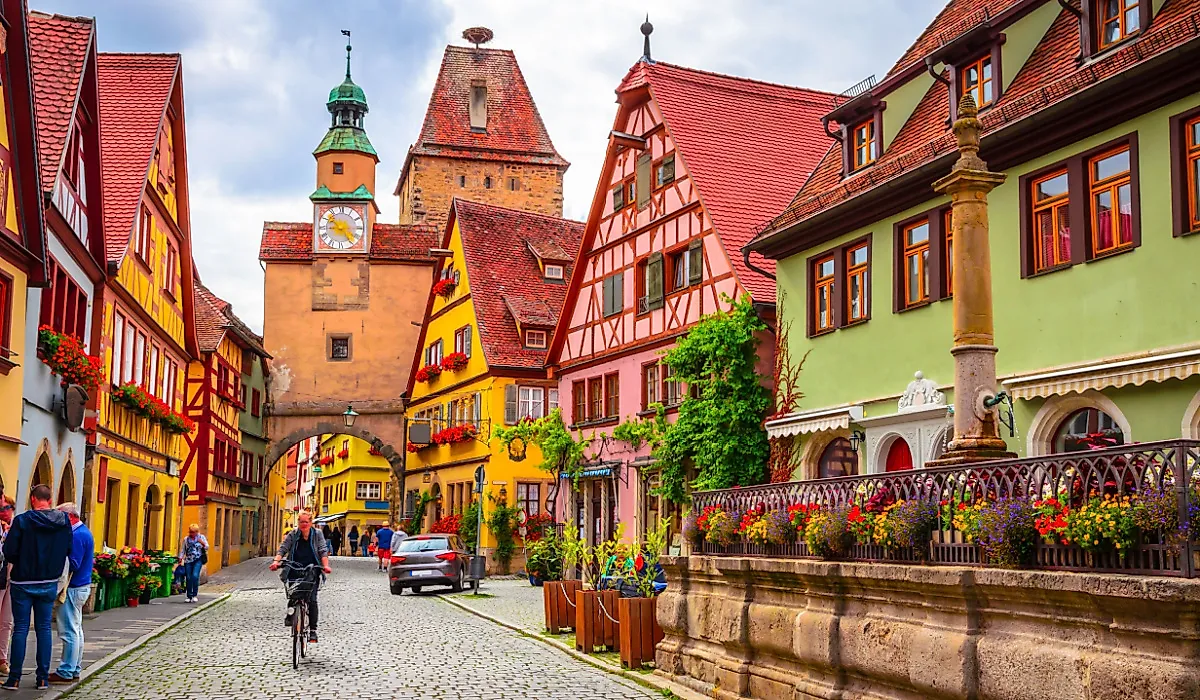
9 Best Towns In Germany For A Two-Day Recharge
Nine towns across Germany offer some of Europe's most rewarding two-day getaways. These are places where a historic center, a local specialty, and a walkable landscape fill a weekend without requiring a car or an itinerary. Meisenheim pedals a disused railway line through the Glan Valley. Goslar packs hundreds of half-timbered houses into a UNESCO-listed old town at the foot of the Harz. Gengenbach drapes flower boxes over Black Forest balconies and pours local Pinot from hillside vineyards. Each community delivers a complete recharge in 48 hours, with inns and guesthouses that keep visitors within the historic core rather than on a highway strip.
Meisenheim

Pedal-powered rail carts roll through the Glan Valley at Meisenheim in Rhineland-Palatinate, where the Draisine runs between Altenglan and Staudernheim along a disused railway line. The carts roll past meadows and stone bridges at a leisurely pace that matches the valley's rhythm, and the return trip lets riders coast back to town without pedaling up the hill. The Glan-Blies Radweg, a 130-kilometer cross-border cycling route, also passes through Meisenheim, connecting the town to France by bike.
The Altstadt survived the wars intact, leaving a dense cluster of half-timbered houses and the Schlosskirche castle church that dominates the town's skyline. The Glan Valley wine terraces produce crisp whites that local taverns serve by the glass, whether you order just wine or mixed with carbonated water as a Weinschorle. Romantik Hotel Meisenheimer Hof sits within the historic town wall, with 22 rooms named after local vineyards and a Michelin-starred restaurant housed in a centuries-old stone building. The hotel benefits from being within a five-minute walk of the railway station, the market square, and the riverside.
Goslar

A millennium of copper and silver mining shaped Goslar, a town in Lower Saxony at the northern edge of the Harz Mountains. The Rammelsberg Mine operated for 1,000 years before closing in 1988, and the UNESCO World Heritage site now runs underground tours through medieval tunnels and 20th-century shafts. The surface museum displays the machinery that extracted ore from the mountain, and the mine sits at the edge of town, reachable by bus or a 30-minute walk from the center.
The Kaiserpfalz, an 11th-century imperial palace, is the old town's main attraction, featuring the throne hall of Heinrich III and a chapel containing his heart. More than 1,500 half-timbered houses fill the streets between the palace and the river, many dating to the 15th century. Hotel Der Achtermann is housed in a historic building near the market square and puts the mine, the palace, and the Harz hiking trails within easy reach.
Rüdesheim am Rhein

The Drosselgasse packs 144 meters of wine taverns, restaurants, and shops into a lane barely wide enough for two pedestrians to pass, defining Rüdesheim am Rhein on the banks of the Rhine Gorge. The street operates from mid-morning until midnight during the summer, with live music spilling from courtyards and local Riesling poured straight from barrels. The Rüdesheimer Kaffee, a brandy-laced coffee topped with whipped cream, was invented here in the 1950s and is still served tableside in the Drosselgasse taverns with a theatrical flourish. The Seilbahn Rüdesheim lifts visitors over the vineyards to the Niederwalddenkmal, an 1883 monument overlooking the river and the hills of the Rheingau.
Hotel Traube Rüdesheim sits near the riverfront and provides a base for Rhine cruises, vineyard walks, and evening strolls back to the Drosselgasse for a Rüdesheimer Kaffee, all without needing a car.
Wernigerode

Steam trains depart from Wernigerode in Saxony-Anhalt, climbing through the Harz on the Harz Narrow-Gauge Railway to the Brocken summit, the highest peak in northern Germany. The trains run year-round, passing through forests of beech and spruce to the 1,141-meter summit in about two hours. Wernigerode Castle, rebuilt in the 19th-century Romantic style, offers tours of the grand halls and the armory collection.
The town hall, a 15th-century Gothic structure with elaborate timber framing, dominates the market square. Holzmarktstrasse preserves a row of 16th- to 19th-century merchant houses with carved facades. HKK Hotel Wernigerode stands near the old town and the railway station, making it possible to walk to the castle in the morning, catch the steam train after lunch, and return for dinner in the square.
Annweiler am Trifels

Richard the Lionheart was the most famous prisoner at Reichsburg Trifels, the 12th-century castle that crowns a sandstone crag above Annweiler am Trifels in Rhineland-Palatinate. The fortress now displays replicas of the Imperial Regalia, the crown jewels of the Holy Roman Empire that were stored here in the Middle Ages. The hike to the castle takes 45 minutes from town and delivers views across the Palatinate Forest, Germany's largest contiguous woodland and a UNESCO Biosphere Reserve.
The Altes Kaufhaus, a historic merchant house in the town center, anchors a compact old town of stone buildings and narrow lanes. The forest trails begin at the edge of town, offering day hikes through oak and pine without requiring a car. Jugendstilhotel Trifels, an Art Nouveau villa on the outskirts, provides 21 rooms with views of the Palatinate Forest and the three castle landmarks, plus a restaurant serving regional and organic cuisine, all within walking distance of both the castle trailhead and the forest paths.
Monschau

The Rotes Haus stands out with its 1760 pink facade and cantilevered oak spiral staircase in Monschau, a town in North Rhine-Westphalia perched above the Rur River gorge. The house museum displays the wealth of the cloth merchant who built the town in the 18th century. Monschau Castle, a 13th-century ruin above the old town, is free to visit and offers rooftop views of the half-timbered center and the surrounding hills.
The Mustard Mill, operating since 1882, produces 21 varieties of Monschau mustard from a stone building on the riverbank. The Panorama Weg circles above Monschau's old town on a 2.7-kilometer hike, with viewpoints over the medieval center. Haus Stehlings, a bed-and-breakfast in a historic building, and LOFT13, a modern loft on the Rur, are great accommodation options within a few minutes' walk of the castle, the mustard mill, and the gorge trail.
Rothenburg ob der Tauber
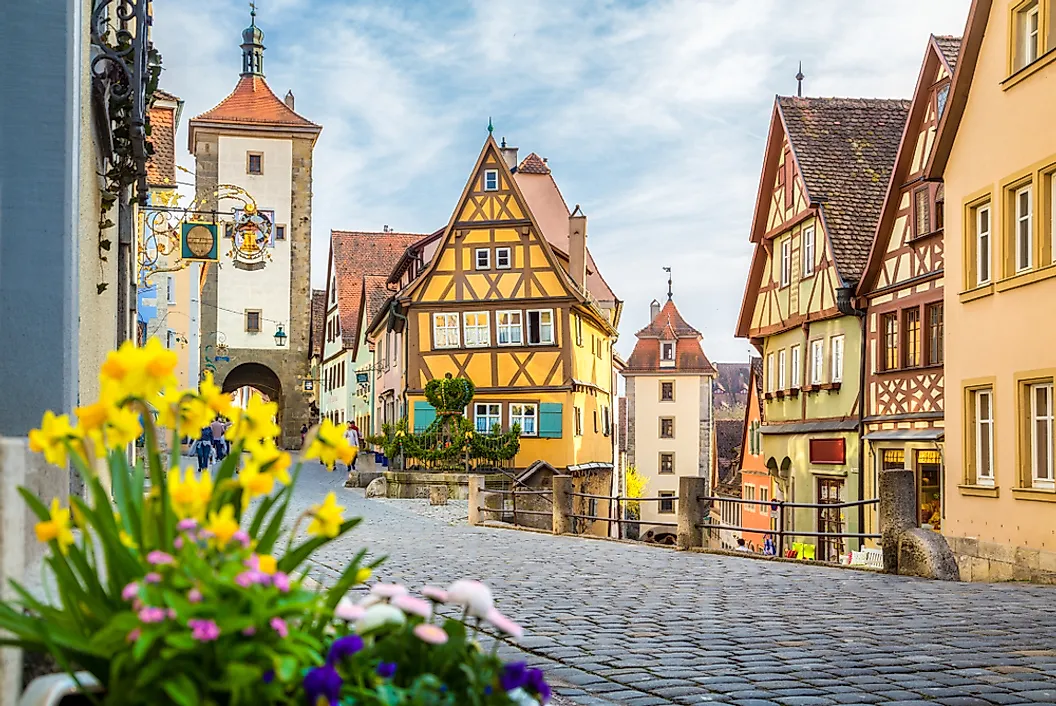
One of the most photographed junctions in Germany sits inside the walls of Rothenburg ob der Tauber in Bavaria, where the Plönlein fork creates a scene of half-timbered houses flanking a narrow lane that drops toward the Tauber River. The city walls, intact since the 14th century, offer covered walkways open to the public for a full circuit of the old town. St. Jakobskirche holds the Holy Blood altarpiece by Tilman Riemenschneider, a Gothic masterpiece carved in the early 1500s.
The Medieval Crime Museum fills a former monastery with historical legal instruments, torture devices, and court records that trace German law across centuries. After the day-trippers leave, the Night Watchman leads lantern-lit tours through the cobblestones, recounting the town's siege history and the legend of the master draught that saved Rothenburg from destruction in 1631. Hotel Eisenhut, located inside the walls, occupies four connected patrician houses and provides a base for wall walks, church visits, and evening strolls.
Gengenbach

The Kinzig River valley opens into Black Forest vineyards at Gengenbach in Baden-Württemberg, where flower-draped balconies and a baroque town hall define the center. The 18th-century town hall doubles as the world's largest Advent calendar during December, with 24 illuminated windows, but the facade dominates the square year-round. The Schwarzwald-Querweg Gengenbach-Alpirsbach trailhead is located at the town edge, offering day hikes into pine and fir forest.
The region produces Pinot Noir and Riesling on south-facing slopes, and local taverns pour by the glass. Shops in the old town, including Schwarzwald & Meer, sell Black Forest cuckoo clocks and wood crafts alongside the wine. The Kinzigtaler Jakobusweg, a pilgrimage route, passes through on its way to the Rhine. Weinhotel Pfeffer & Salz sits on the outskirts with vineyard views and a restaurant that pairs local vintages with regional venison and trout. Roser Suiten offers apartments in the town center, and both accommodations are within walking distance of the trails, the river, and the wine bars.
Cochem

Cochem sits in a bend of the Moselle River in Rhineland-Palatinate, where Reichsburg Cochem rises more than 100 meters above the river and town. The 11th-century fortress, rebuilt in the 19th-century neo-Gothic style, is open for tours of its interiors, including the Knight's Hall, Dining Hall, and Trophy Room. The Moselle promenade runs for kilometers through wine terraces planted with Riesling, and the Enderttor, a medieval town gate, marks the entrance to the old center of half-timbered houses and wine taverns.
The Cochem chairlift climbs to the Pinnerkreuz viewpoint for panoramic views of the river bend, the castle, and the opposite shore. Below the lift, the Weinhexe statue commemorates the local legend of witches who once guarded the vineyards. Hotel Zehnthof and Hotel Villa Vinum Cochem both occupy historic buildings near the river and provide bases for castle visits, river walks, and tastings at the hillside wineries that define the Moselle landscape.
A Uniquely German Recharge
A two-day getaway in Germany does not require a city itinerary or a highway chase. The rail cart in Meisenheim, the steam train in Wernigerode, and the Rüdesheimer Kaffee in the Drosselgasse all run on the same schedule: slow enough to walk, small enough to see in a weekend, and complete enough to feel like a real recharge. Whether the 48 hours unfold inside medieval walls, above a river gorge, or beneath a castle on a slate outcrop, these nine towns all offer their visitors an arrival on Friday evening and a full adventure completed by Sunday evening.