8 Serene Towns in Gulf Coast for a Weekend Retreat
No traffic lights, no high-rises, and clam boats where other beach towns park jet skis. That is an ordinary Saturday in plenty of Gulf Coast towns. Live oaks lean over the two-lane road into town. A ferry, not a bridge, carries the last cars back across the bay. The pavement gives out at a state park, and the sand takes it from there. The towns ahead skipped the building boom that took the rest of the coast.
Sanibel Island, Florida

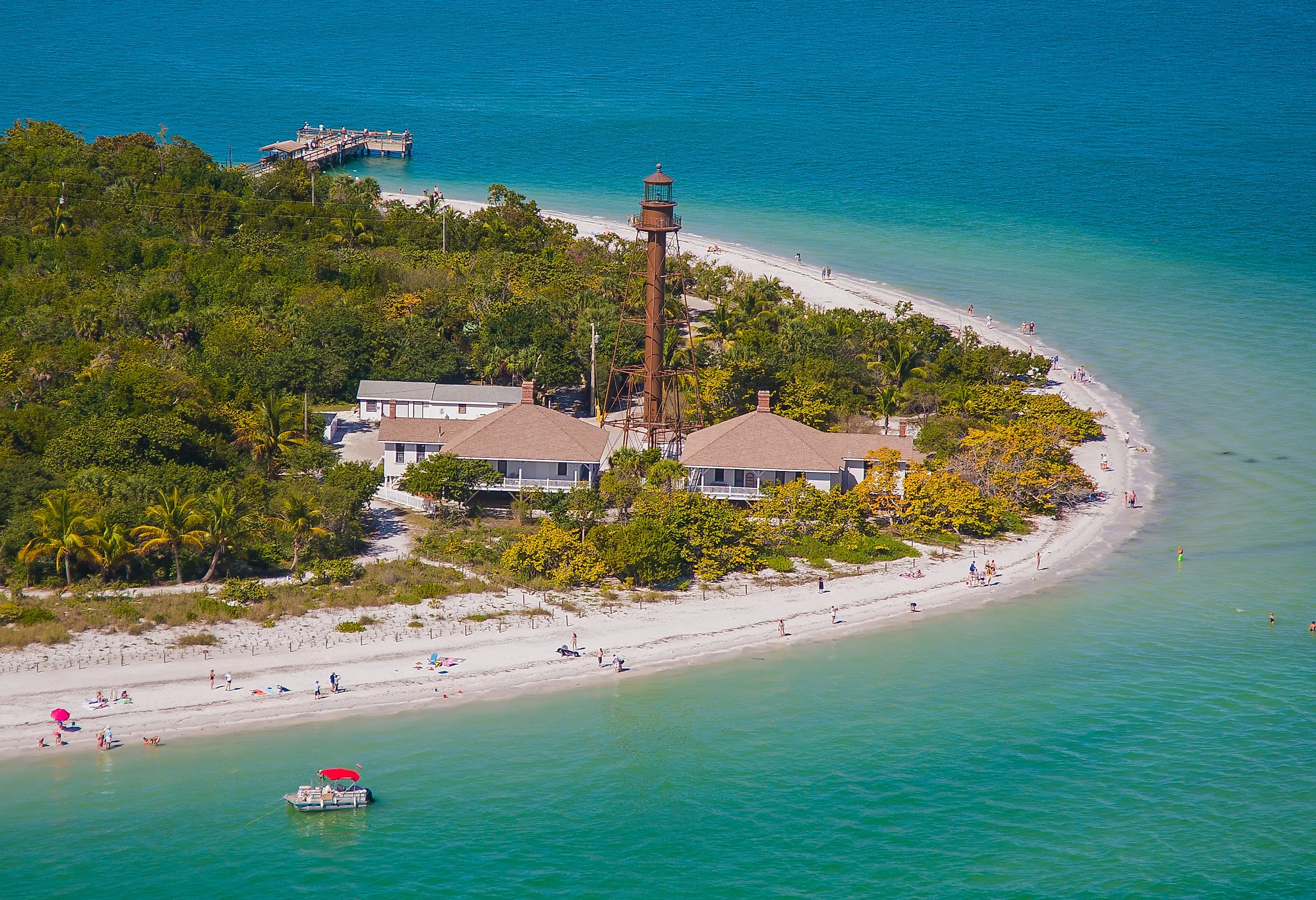
Sanibel never built up the way most Florida beach towns did. Building codes keep everything under the treeline, so the island is low and green from the water. The beaches face east to west, which loads them with shells. At low tide, shellers work Bowman's Beach bent over in the pose locals call the Sanibel stoop. Hurricane Ian flattened the island in 2022. The recovery is still going, but the island settled back down fast.
A few minutes inland, the J.N. "Ding" Darling National Wildlife Refuge protects part of the largest undeveloped mangrove ecosystem in the country. Wildlife Drive moves at a crawl, past alligators and mangrove tunnels. The Bailey-Matthews National Shell Museum and Aquarium puts a name to whatever washed up that morning. West Gulf Drive is low and residential, the loudest thing after dark being the surf.
Longboat Key, Florida

Longboat Key shares a barrier island with Sarasota but skips the nightlife and the commercial strip almost entirely. There is no real downtown, just residential lanes and beach accesses marked by small wooden signs. Joan M. Durante Park lies near the north end, where boardwalks thread through mangroves and the only traffic is wading birds. Whitney Beach and Beer Can Island, at the north tip, see almost no one.
A paved path follows Gulf of Mexico Drive, easy riding on a beach cruiser. Breakfast at the Blue Dolphin Cafe gets busy early and clears out by mid-morning. Sarasota is right across New Pass for anything the island does not have.
Pass Christian, Mississippi

Pass Christian Marina in Pass Christian, Mississippi.
Scenic Drive in Pass Christian follows two miles of waterfront under live oaks older than the houses behind them. Locals just call the town the Pass. The harbor dates to the mid-1800s and still works, shrimp boats beside the old yacht club. The Mississippi Sound out front barely moves most mornings, easy paddling before the afternoon wind.
A block off Davis Avenue, War Memorial Park spreads under more oaks, where the Saturday Pass Market draws the whole town. Davis Avenue rebuilt slowly after Hurricane Katrina, the small shops and Cat Island Coffeehouse coming back with it. Downtown wakes up on weekends and goes back to sleep by evening.
Dauphin Island, Alabama
Dauphin Island answers to the birds more than the tourists. The Audubon Bird Sanctuary is 164 acres of pine and marsh on the east end, with a half-mile loop down to Gaillard Lake. Each spring and fall, migrating birds drop in by the hundreds after crossing the Gulf.
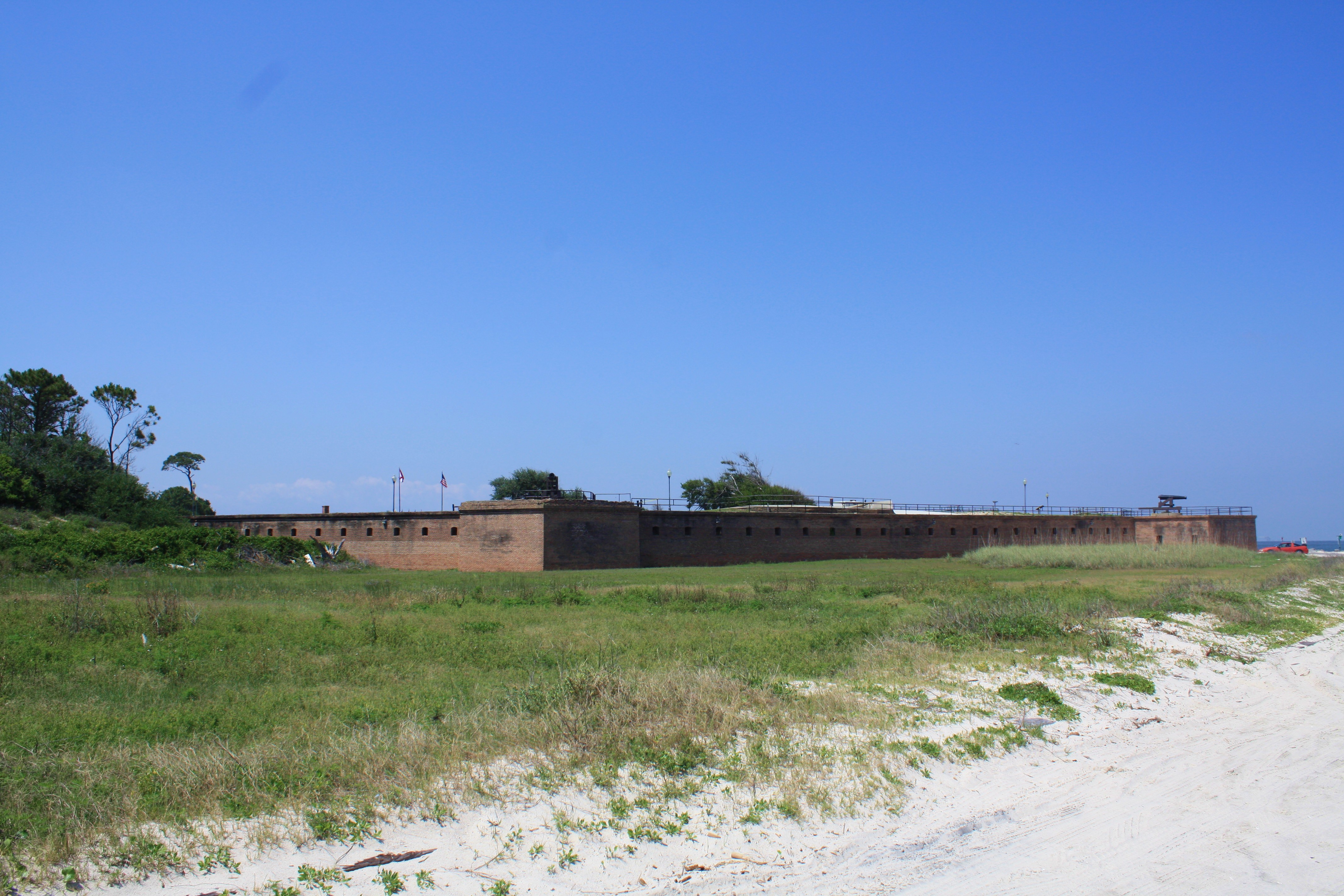
Fort Gaines guards the eastern tip, a brick fort from the mid-1800s that draws almost no one most days. The Mobile Bay Ferry crosses to Fort Morgan in a slow forty minutes, dolphins often pacing the boat. A bike path links the beach to the fort. The island is small enough to cross end to end on a bike.
Cedar Key, Florida

Cedar Key has no traffic light and no building tall enough to block a sunset. State Road 24 crosses miles of salt marsh and dead-ends at the water, three miles out in the Gulf. About 700 people live here, many getting around by golf cart. After a 1990s net ban, the island turned to clam farming, and the working docks on Dock Street still set the pace.
Half a mile offshore, Atsena Otie Key was the original townsite until an 1896 hurricane wiped it out. A kayak reaches it in about twenty minutes over shallow water. The Cedar Key National Wildlife Refuge scatters across thirteen small islands offshore, thick with nesting birds. Recent hurricanes have battered the clam leases. The town rebuilds again, slow and stubborn.
Anna Maria, Florida

Anna Maria occupies the far north tip of its island, where the Gulf meets the mouth of Tampa Bay at Bean Point. With no parking lot and no boardwalk out there, the crowds thin fast. Pine Avenue moves at golf-cart speed, and a free trolley handles the longer hauls. The Anna Maria Island Historical Museum is set in a former ice house.
A few steps down Pine Avenue, the Anna Maria Historic Green Village restored a cluster of century-old cottages and powers them with solar. South of town, Holmes Beach and Bradenton Beach barely stir. Sunset at the rebuilt City Pier is about as eventful as the evening gets.
Surfside, Texas

Surfside Beach is the overlooked end of a Texas coast better known for Galveston's crowds. Most weekenders drive right past it. On a weekday, miles of open sand carry hardly a footprint. The deeper water by the jetties pulls in a few surfers, but they clear out by mid-morning. At Surfside Jetty Park, anglers fish the channel as cargo ships slide past close enough to read the hull numbers.
Just inland, the Brazoria National Wildlife Refuge draws thousands of wintering waterfowl, a stop on the Great Texas Coastal Birding Trail. The Bluewater Highway hugs the coast north toward Galveston, an easy and empty drive. The road is straight and open, marsh on one side and the Gulf on the other.
Grand Isle, Louisiana

Grand Isle is the last stop on Louisiana Highway 1, the only inhabited barrier island in the state. The pavement ends at Grand Isle State Park, where a fishing pier and a long beach face the open Gulf. The island made its name on deep-sea fishing. The water is warm enough to swim most of the year. Hurricane Ida leveled much of it in 2021. The camps are going back up on their stilts.
Just up the road, Elmer's Island stretches out as an undeveloped wildlife refuge, nothing but dunes and shorebirds. The Lafitte Woods Preserve protects a patch of maritime live oak forest that draws migrating songbirds each spring. Across Barataria Pass on Grand Terre Island, the brick ruins of Fort Livingston have weathered storms since the mid-1800s, reachable only by boat.
Where The Gulf Turns The Volume Down
On this part of the coast, the schedule that matters is the tide chart, not an event calendar. Mornings go to a shelling beach or out on the water. Afternoons go nowhere in particular. By dark the harbor has cleared out and the porch lights are on. The only sound left is the Gulf working the sand. None of it is built to occupy every hour. The hours just stop racing. A few visits in, an empty afternoon stops feeling like nothing to do and starts feeling like the best part of the weekend.