8 Places Where People Are Moving To In Oklahoma In 2026
Oklahoma's growth is showing up most clearly around Oklahoma City and Tulsa where suburbs and edge cities are adding residents and new housing. The state reached 4,123,288 residents in the 2025 Census estimate, up from 4,095,393 in 2024 and 3,959,354 at the 2020 base. Newcastle and Edmond lead the Oklahoma City side as Piedmont and Mustang expand alongside. Yukon has also posted clear gains. Bixby and Jenks lead the Tulsa metro with Owasso close behind. The pattern shows residents choosing places with newer housing and stronger highway access.
Newcastle

Newcastle has one of the strongest city-level growth stories in Oklahoma. The city grew from a 2020 estimate base of 10,989 residents to 15,198 in 2025, which is a 38.3% increase. That growth reflects Newcastle's position southwest of Oklahoma City where residents can stay close to the metro while finding more room for new housing.
The biggest drivers are location and residential expansion. Newcastle sits near I-44 and the H.E. Bailey Turnpike giving residents a direct route toward Oklahoma City, Norman, and the broader southwest metro. The city's own community profile describes Newcastle as a fast-growing community just south of the Oklahoma City metro area and that shows in the way new housing is being added around town. Developments such as Riverview Estates and Pulchella point to the kind of larger-lot residential growth helping Newcastle absorb new residents. Newcastle's growth is not built around one single employer. Instead, the city is benefiting from residential expansion, Newcastle Public Schools, and its position as a southwest metro location for retail, commercial, light manufacturing, distribution, and business-services growth.
Piedmont

Piedmont grew 27.4% from a 2020 estimate base of 7,397 residents to about 9,424 residents in 2025. That growth shows how quickly smaller cities near Oklahoma City are adding residents when they have room for new housing. Piedmont's appeal starts with its scale. It is still a small city but it is growing quickly enough that public services, schools, and housing are already adjusting to the change.
The city's strongest growth driver is residential demand tied to schools and available land. Piedmont Public Schools' 2024 Student Investment Plan included a $112.98 million bond package with funding for new elementary and intermediate schools, saferoom spaces that double as classrooms, and other district projects. That kind of school investment is indicative of how population growth is already affecting daily life. New-home communities such as Northwood Village and other Piedmont developments give households options in the Piedmont school district while keeping them within reach of Oklahoma City, Yukon, and Edmond.
Mustang

Mustang saw a 23.4% increase from a 2020 estimate base of 19,917 residents to 24,571 in 2025. That growth makes Mustang one of the fastest-growing cities on the west side of the Oklahoma City metro. The city's location is a major part of the appeal sitting so close to State Highway 152, I-40, and the John Kilpatrick Turnpike.
Mustang is growing because it gives residents a suburban setting with strong metro access and enough local services to support day-to-day life. The SH-152 reconstruction project also points to Mustang's continued investment in one of its main east-west routes improving the corridor that connects residents to schools, businesses, and the broader Oklahoma City metro. New-home communities also show how residential demand is being absorbed inside and around the city.
Bixby

Bixby grew from a 2020 estimate base of 28,735 residents to 32,766 in 2025, a 14.0% increase. That makes Bixby one of the Tulsa area's strongest city-level growth stories. Its location south of Tulsa gives residents access to the larger metro, while downtown investment, new housing, and local restaurants give Bixby more of its own identity.
Bixby's growth is being shaped by newer housing, school appeal, Tulsa access, and improvements in the Downtown River District. Planning Design Group says the Bixby Downtown Master Plan helped lead to more than $14 million in public improvements in the district with a long-term goal of revitalizing the downtown core and spurring growth south of the Arkansas River. Cyntergy's streetscape work also notes new public improvements tied to the city's downtown vision. That indicates Bixby's growth is more than simple suburban expansion. The city is growing while also investing in public spaces, restaurants, retail areas, and a downtown that can support a fuller local routine.
Jenks

Jenks added more than 2,000 residents between the 2020 estimate base and 2025, rising from 25,977 to 28,175 residents. That 8.5% is smaller than Newcastle or Piedmont but Jenks remains one of the Tulsa area's most important growth cities because its population gains are matched by retail, entertainment, and riverfront development. The city sits along the Arkansas River and has direct access to south Tulsa, which keeps it tied to regional jobs while maintaining its own identity.
Jenks has several specific reasons for continued growth. Oklahoma Aquarium gives the city a major family and visitor destination while RiverWalk Tulsa and the riverfront area add restaurants, entertainment, and public space near the water. The newer Tulsa Premium Outlets development strengthens the city's retail base as well. KJRH reported that the outlet project was expected to add about 800 jobs after completion. Jenks officials were also looking at further development around the Oklahoma Aquarium campus. Jenks is growing because it offers more than just a shorter drive into the city. It gives residents Tulsa-area access without making the city feel dependent on Tulsa for everything, with its own schools, riverfront entertainment, retail, and new commercial growth.
Edmond

Edmond crossed the 100,000-resident mark in 2025, reaching 100,479 residents after a 6.4% increase from the 2020 estimate base. Edmond remains one of the Oklahoma City metro's most established growth centers because it already has the schools, parks, hospitals, restaurants, and commercial corridors that make it feel like its own city, not just an extension of Oklahoma City.
Edmond is already planning for where that growth will go next. The East Edmond 2050 Plan looks at several decades of growth east of I-35 and the city frames it as a visioning document for that part of Edmond. A newer mixed-use proposal, East Edmond 15A, includes plans for 4,500 homes, 120 acres of commercial space, and 200 acres of open space across 645 acres. That gives Edmond a specific growth marker beyond the population numbers. Edmond's growth is not just showing up in population totals. It is also shaping plans for future housing, commercial space, open land, and road needs.
Yukon

Yukon reached 27,599 residents in the 2025 Census estimate, giving the city a 16.8% increase from its 2020 estimate base of 23,635. The city benefits from its position along I-40 and the Kilpatrick Turnpike, while planned commercial development gives Yukon another reason to keep adding residents.
The clearest example of this growth is the Yukon Parkway area. The city announced that its council approved a tax increment financing district meant to catalyze long-term economic investment along Yukon Parkway. Population growth puts more demand on roads, utilities, retail space, and local services, and Yukon is planning around that next stage. The city already has a strong everyday commercial identity along Garth Brooks Boulevard, Main Street, and I-40, but the Yukon Parkway district points to where future growth may concentrate. Yukon's appeal comes from a familiar Oklahoma City metro formula. It offers housing, road access, schools, and growing commercial areas close to Oklahoma City while still giving residents more reasons to stay local for daily errands.
Owasso

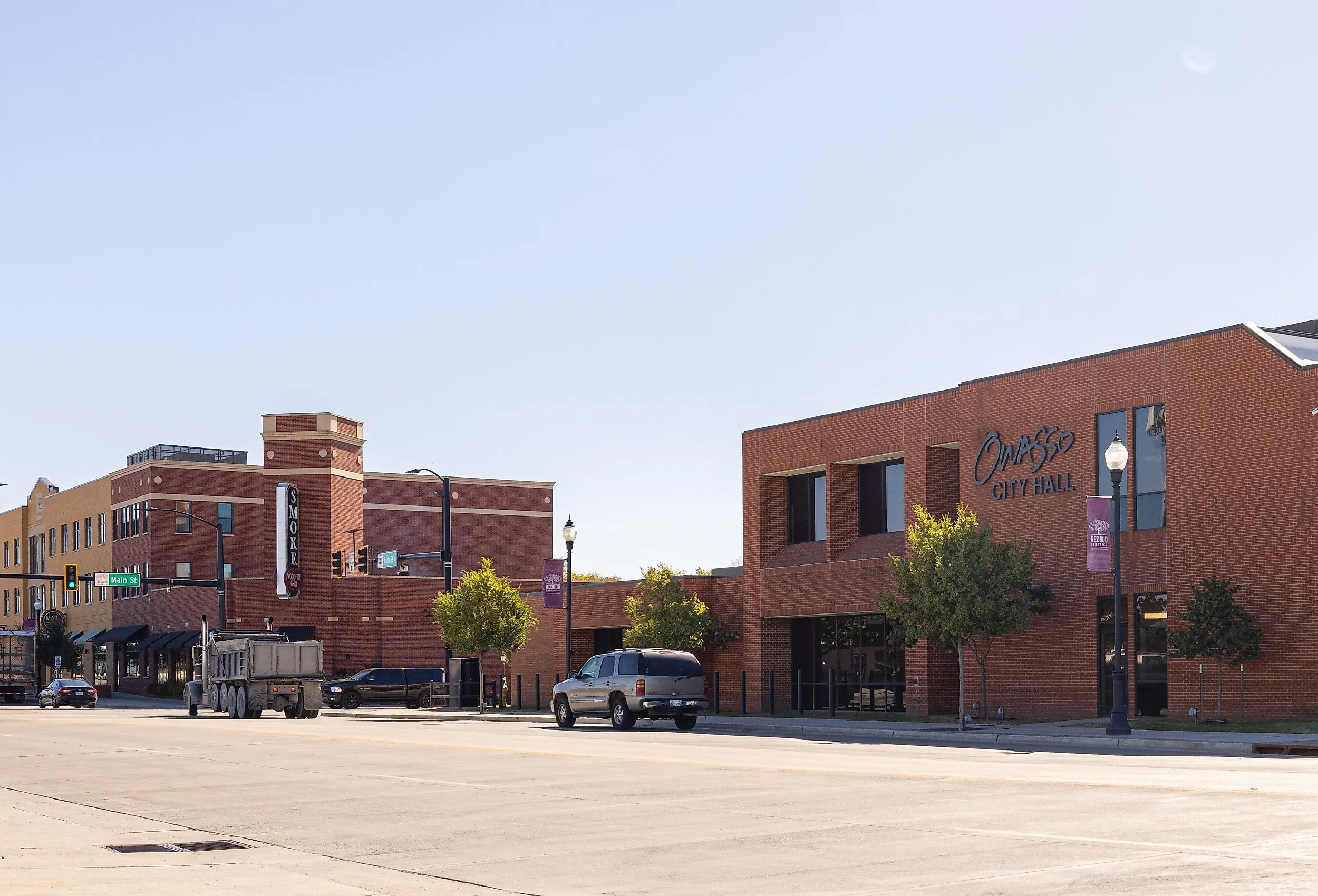
Owasso's population climbed to 43,117 in the 2025 estimate, up 12.7% from its 2020 estimate base. The city sits north of Tulsa and has become one of the metro's strongest suburban growth centers, with U.S. 169 giving residents a direct route into Tulsa and State Highway 20 connecting the city across the northern metro.
Owasso's growth is being supported by housing, retail, medical offices, schools, and highway-oriented commercial development. The city's economic development site describes Owasso as a retail hub with highways 75, 169, and 20 creating a strong regional draw for shoppers across a large trade area. Redbud Village shows how Owasso is planning for continued growth, with restaurants, retail, office lofts, multifamily housing, and senior living proposed along U.S. Highway 169 near the Tulsa Technology Center Owasso Campus. Owasso is attracting residents because it offers a suburban daily routine with enough commercial activity to keep much of it close to home.
Where Oklahoma's Growth Is Heading
Oklahoma's growth is becoming more concentrated in cities that can support new housing, commuter access, schools, and commercial investment. The Oklahoma City side is strongest in places such as Newcastle, Piedmont, Mustang, Edmond, and Yukon, while the Tulsa side shows up clearly in Bixby, Jenks, and Owasso. That movement will shape the next few years through new subdivisions, busier highway corridors, school-capacity needs, and continued investment in local commercial districts. Oklahoma's fastest-growing places are making it clear where residents are choosing to stay connected to the state's largest job markets while finding more room to build daily life.