8 Picture-Perfect Main Streets In South Carolina
Georgetown to Greer is a good four hours if you take it straight, and the main streets along the way don't have much in common except that people still use them. Front Street still backs onto the Sampit. Trade Street is still brick. You go to Beaufort for the water and Seneca for the cats on Ram Cat Alley, and nobody has to tell you the Newberry Opera House is worth the drive. These eight South Carolina downtowns hold up on foot.
Georgetown

Front Street runs along the Sampit River in Georgetown, the third oldest city in the state, with the Harborwalk behind it. The Rice Museum sits at the head of the street in the 1842 Old Market Building under the Town Clock. Here, visitors can view rice culture exhibits, the colonial Brown's Ferry Vessel and the Prevost Art Gallery. Farther down Front Street, the South Carolina Maritime Museum shows ship models and the Fresnel lens from the North Island lighthouse for free. The Kaminski House Museum at the other end runs docent tours of a house dating to about 1769, on a lawn above the river.
Beaufort

Bay Street in Beaufort faces the water and is lined with shops, galleries and restaurants. The Beaufort Art Association Gallery sells work by Lowcountry artists and hangs a new show every couple of months. Southurn Rose Carriage Tours run from Bay Street with 50 minute narrated rides through the antebellum and Victorian streets behind it. One block up on Craven Street, the Beaufort History Museum takes visitors through 500 years of the region inside the 1798 Beaufort Arsenal. Back on Bay Street, Saltus River Grill serves Lowcountry seafood and a raw bar on a patio above the water.
York

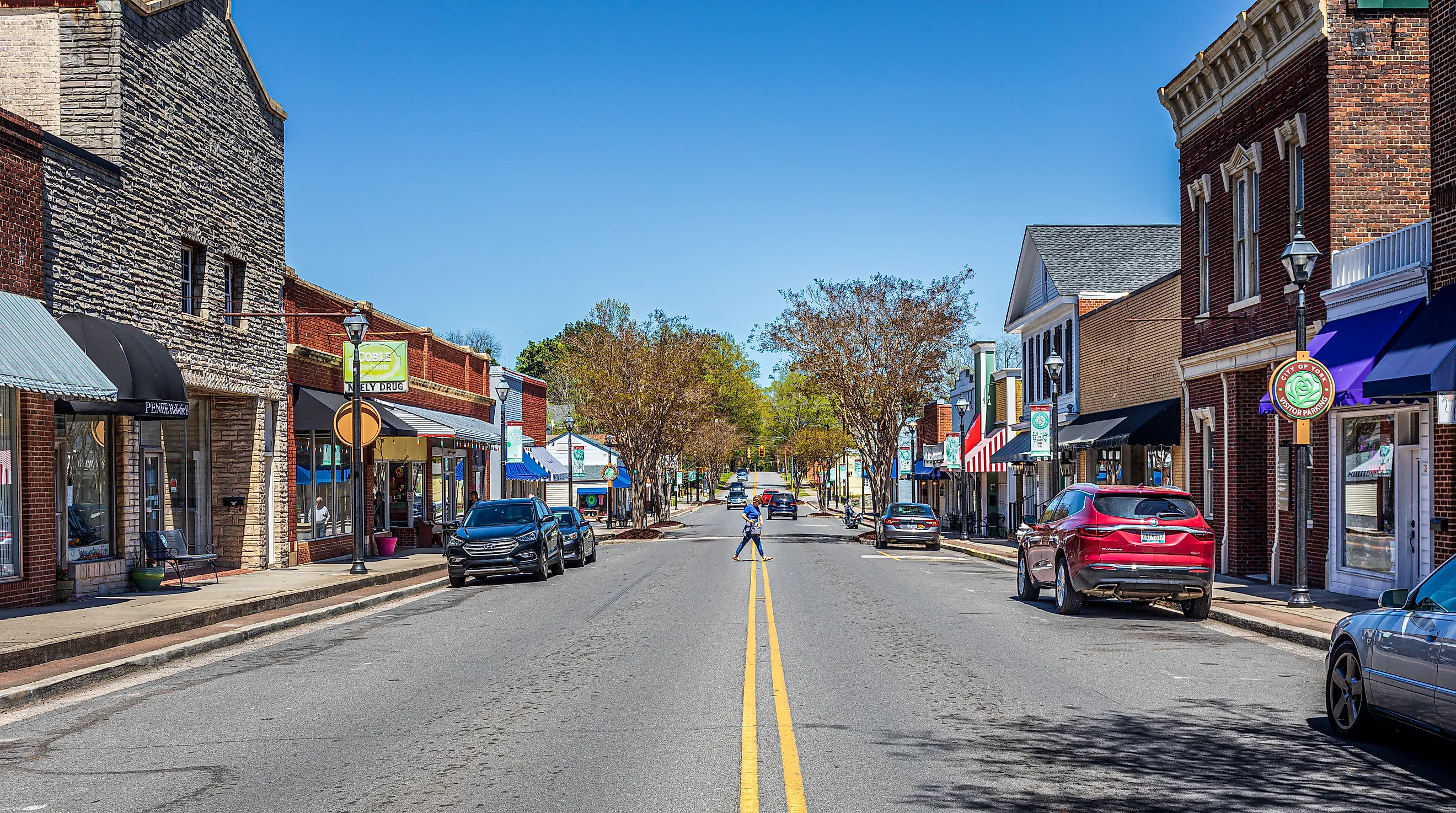
Congress Street runs through the historic district of York, the county seat since 1785 and once known as the Charleston of the Upcountry. A town clock stands over the commercial blocks, which hold about 180 contributing properties in Greek Revival, Gothic Revival, Victorian and Classical Revival brick. The York County Courthouse anchors the south end at 2 South Congress Street. Up the street, the Sylvia Theater screens films and hosts live music inside an early 20th century storefront, and the Yorkville Marketplace fills a 12,000 square foot boutique mall in the old commercial core. A few blocks east on Jefferson Street, the McCelvey Center occupies a former women's college and houses the Historical Center of York County and the 500 seat Lowry Family Theater.
Aiken

Downtown Aiken has parkways of flowering trees and shrubs planted down the middle of its streets, a layout the town has had since 1834. The Aiken Center for the Arts on Laurens Street hangs gallery shows, sells handmade work and runs classes and workshops. The Aiken County Farmers Market stands in the parkway on Williamsburg Street, built by the Farmers' Grange in 1930 and still selling from the 45 tables farm families built in the 1950s. Two blocks over on Newberry Street, the Aiken County Historical Museum takes up three floors of an 1860s house called Banksia. Its exhibits run from the Savannah River Site to a 1950s pharmacy to vintage fire engines, and it's free to visit.
Newberry

Main Street in Newberry runs through a commercial district of Greek Revival, Romanesque Revival, Neoclassical and Art Deco fronts. The Newberry Opera House sits a half block off it, built in 1881, with a 130 foot clock tower. The Newberry Arts Center moved to Main Street in 2026 and runs classes and an artisan shop of local work. The Newberry Museum a block off Main covers county history, and Wells Japanese Garden two blocks behind City Hall has a moon bridge, a teahouse and ponds laid out in 1930.
Abbeville

Abbeville is laid out around Court Square, with the county courthouse and the municipal building facing onto it. The square sits in the middle of a historic district of 528 properties. The Abbeville Opera House stands on the square, built in 1904 and it still uses the only hemp rope and pulley rigging left in a South Carolina theater. Across from the courthouse, the Old Bank Building of about 1865 is home to the welcome center that hands out the Historic Abbeville walking tour guidebook. The Belmont Inn on the corner opened in 1903 and still takes guests in 25 restored rooms.
Seneca

Ram Cat Alley in Seneca got its name from the cats that gathered around the Fred Hopkins Meat Market on the street in the early 1900s. Its 21 commercial buildings went up between 1887 and 1930. Twelve painted steel cats made by local artists move around the alley through the year as a scavenger hunt, with a companion set of murals under the covered walkway at Norton Thompson Park. The city closes the alley and North Townville Street for Jazz on the Alley on Thursday evenings from April through October. A few blocks off the alley, the Lunney Museum runs guided tours of a 1909 Arts and Crafts bungalow with its art glass and period rooms.
Greer

Trade Street runs on brick paving through Greer Station, the old downtown that grew up between two railroad lines after 1901. Blue Ridge Brewing Company has been brewing on Trade Street since 1995 and serves from a dog friendly patio. The Greer Heritage Museum a half block over on Main Street covers local history under a 1940 WPA mural of cotton and peach growing. Nearby, Greer City Park has 12 acres of ponds, an amphitheater and a fountain set to music.
These South Carolina towns are full of streets worth walking. Whether you're catching a show, buying oysters, or hearing a free concert in the street, there are plenty of ways to spend a day.