8 Perfect Destinations For A Long Weekend In Georgia
The best weekends in Georgia happen in the state's quieter corners. Tallulah Falls sits at the rim of a dramatic river gorge in the northeast corner. Helen rebuilt itself as a Bavarian-themed alpine village in 1969 and never looked back. Dahlonega struck the country's first major gold rush in 1828 and still wears the brick downtown that came with it. Darien preserves a coastal heritage that goes back to Scottish Highland settlement in 1736. The eight Georgia towns ahead are each a long weekend's worth of distinct local character.
Tallulah Falls

Tallulah Falls is a tiny community of fewer than 200 residents straddling Rabun and Habersham counties along the Tallulah River. The town's anchor is Tallulah Gorge State Park, which protects a two-mile-long gorge cut roughly 1,000 feet deep through the Blue Ridge plateau by the Tallulah River. A series of waterfalls (Hurricane Falls, Oceana Falls, L'Eau d'Or Falls, Bridal Veil Falls, and Tempesta Falls) drops the river through the gorge over a one-mile stretch. The Tallulah Gorge Rim Trail follows the canyon edge, and a free permit (issued daily, with a hard cap of 100) grants access to the suspension bridge that hangs 80 feet above the gorge floor on the river. The Jane Hurt Yarn Interpretive Center inside the park covers regional ecology, the protected species, and the gorge's history as a Vaudeville-era tourist destination.
Helen

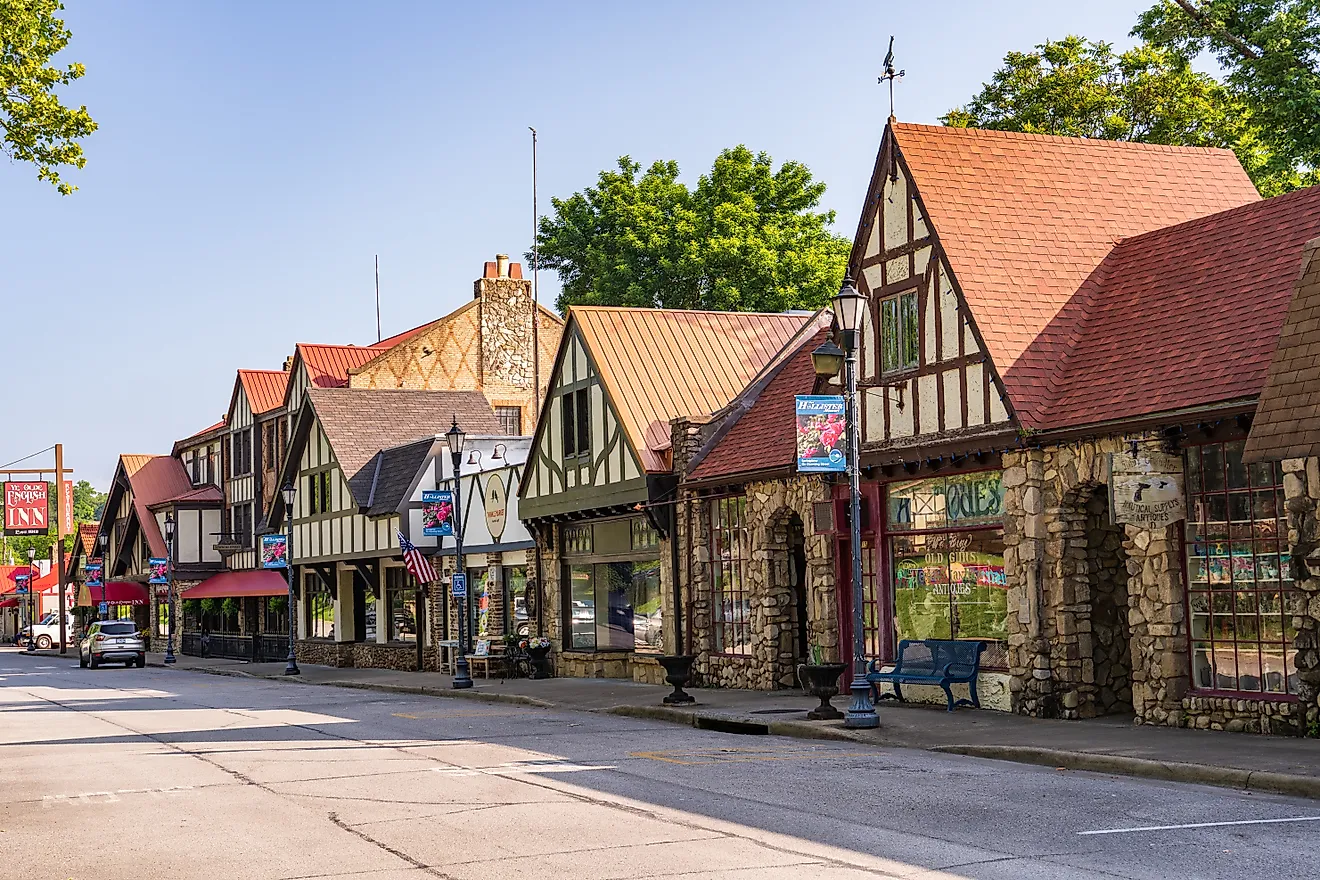
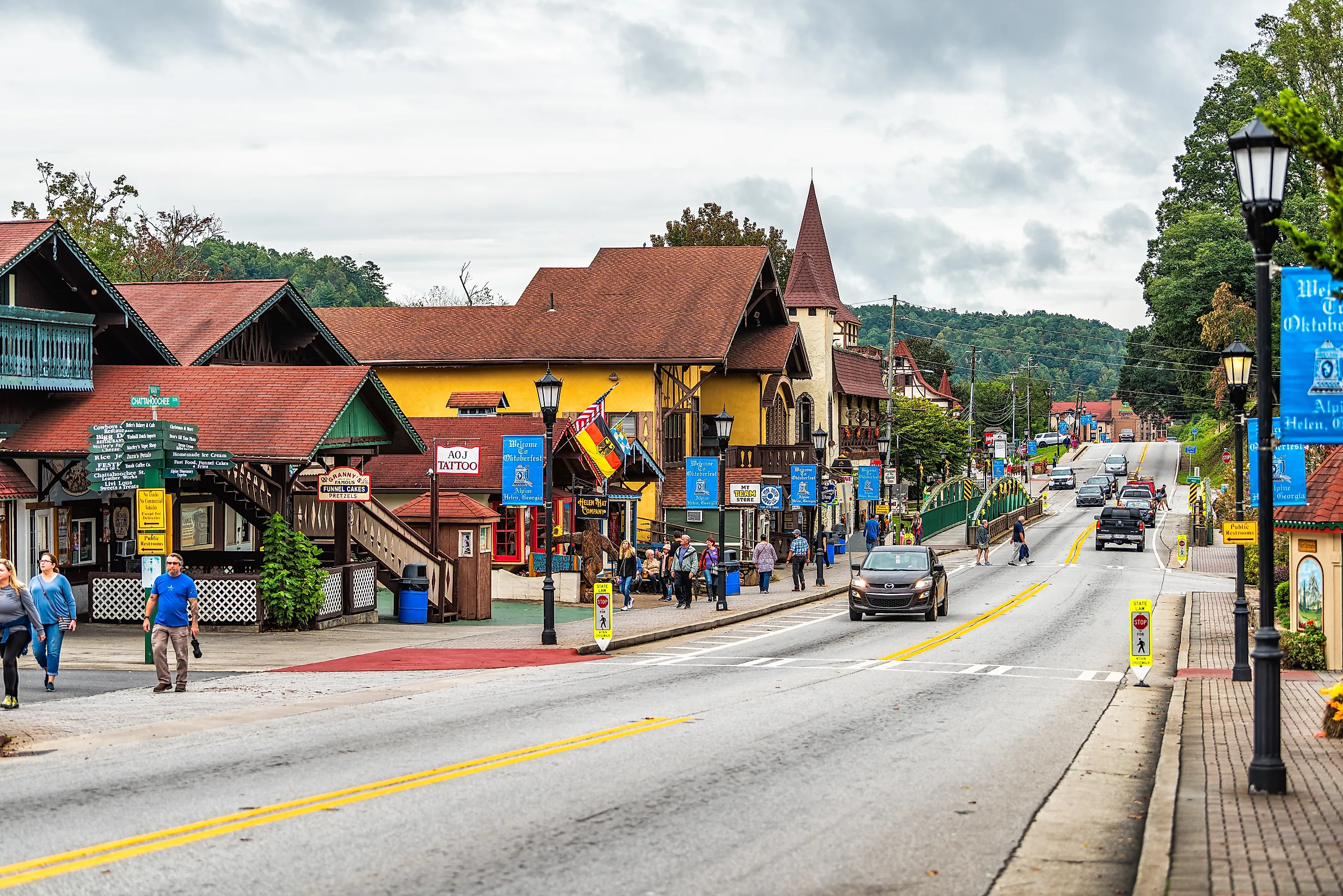
Helen sits along the Chattahoochee River in White County. The town was a struggling logging community in the 1960s when local business owners agreed to remodel every storefront to look like a Bavarian alpine village in 1969. The transformation has held, and Helen now draws more than two million annual visitors. The downtown holds painted alpine murals, beer halls, German bakeries, and Christmas markets. Unicoi State Park & Lodge just outside town covers fishing, birdwatching, zip-lining, and mountain biking access. Anna Ruby Falls inside the park drops in a double cascade where two creeks meet at the top of the falls. The Hardman Farm State Historic Site adds a 19th-century working dairy farm to the visit. Oktoberfest in Helen runs the longest Oktoberfest season in the United States, from early September through November.
Blue Ridge

Blue Ridge is the seat of Fannin County and the largest town in the North Georgia mountains. Chattahoochee National Forest surrounds the town with more than 300 miles of hiking trails and 100 miles of trout streams. Lake Blue Ridge inside the forest is open for swimming, boating, canoeing, kayaking, and paddleboarding from late spring through early fall. The Blue Ridge Scenic Railway runs vintage diesel and steam excursions out of downtown, crossing the Toccoa River and following the McKaysville-to-Tennessee right-of-way. Mercier Orchards on the edge of town runs you-pick apple, peach, and berry seasons that draw regional weekend crowds. Main Street holds working art galleries including High Country Art Gallery, boutiques, and dining at Harvest On Main. Blue Ridge Inn Bed & Breakfast handles the historic-lodging side.
Darien

Darien sits on the Georgia coast near the mouth of the Altamaha River. The town was founded in 1736 by Scottish Highlanders recruited by General James Edward Oglethorpe to defend the southern border of the British Colony of Georgia against Spanish Florida. Originally called New Inverness, it was renamed Darien in 1738. Fort King George Historic Site, located just east of town, preserves a reconstructed 1721 British outpost (the earliest English settlement in present-day Georgia). The Butler Island Rice Plantation site, a few miles south, covers the antebellum rice economy that shaped the Lowcountry. Two historic districts (West Darien and Vernon Square-Columbus Square) wrap the downtown with 19th-century brick storefronts. The Old City Jail Art Center & Museum runs rotating local-artist exhibits. Skipper's Fish Camp and B & J's Steaks & Seafood handle seafood dining along the waterfront. The annual Blessing of the Fleet each April honors the shrimping fleet that still works the Altamaha estuary.
Pine Mountain

Pine Mountain sits in western Georgia at the northern base of the Pine Mountain Range. The town is best known as the gateway to Callaway Resort & Gardens, a 2,500-acre garden and resort complex that includes 13,000 azaleas, the Cecil B. Day Butterfly Center, a Discovery Center for native wildlife, and 13 miles of paved walking and biking trails. F.D. Roosevelt State Park, the largest state park in Georgia at 9,049 acres, runs more than 40 miles of recognized hiking trails through Pine Mountain ridges. The Little White House State Historic Site, where President Franklin D. Roosevelt died on April 12, 1945, sits inside the state park and preserves the cottage where Roosevelt sought polio treatment at the nearby Warm Springs hot springs. The Pine Mountain Wild Animal Safari runs a drive-through park with bison, zebras, and giraffes. Chipley-Murrah House Bed & Breakfast handles historic downtown lodging.
Washington

Founded in 1780 and originally called Heard's Fort, Washington was the first town in the United States chartered with the name George Washington. The Wilkes County town sits in the Piedmont region of east-central Georgia about 100 miles east of Atlanta. The Washington-Wilkes Historical Museum holds local artifacts including a Confederate gun collection. The Robert Toombs House State Historic Site preserves the 1837 home of Robert Toombs, a US Senator and Confederate States Secretary of State. The Kettle Creek Battlefield outside town marks the February 14, 1779 Revolutionary War engagement where Patriot militia defeated a Loyalist force under James Boyd, the only significant Revolutionary battle won outright by Georgia militia. The Callaway Plantation Heritage Park preserves an 1869 plantation house and outbuildings. The Fitzpatrick Hotel on the courthouse square offers historic downtown lodging.
Dahlonega

Dahlonega takes its name from the Cherokee word "Dalonige," meaning "gold." The town was the site of the first major US Gold Rush in 1828, two decades before the California rush. The Dahlonega Gold Museum Historic Site, housed in the 1836 Lumpkin County Courthouse on the square, holds gold artifacts, mining equipment, and a 5-ounce gold nugget from the original rush. The University of North Georgia, founded in 1873 as North Georgia Agricultural College, anchors the town with one of the smallest land-grant campuses in the country and a long military tradition. Wolf Mountain Vineyards and Cavender Creek Vineyards both lead the North Georgia wine scene. The Dahlonega Arts & Wine Festival each May draws regional weekend crowds. The Holly Theatre on the square dates to 1948 and runs community theater productions.
Toccoa

Toccoa is the seat of Stephens County in the far northeastern corner of Georgia, at the base of the Blue Ridge Mountains. Toccoa Falls, on the campus of Toccoa Falls College, drops 186 feet and is one of the tallest free-falling waterfalls east of the Mississippi River. The falls is accessible by a short paved walking path through the college grounds. The Currahee Military Museum inside the original Toccoa railroad depot covers the World War II 506th Parachute Infantry Regiment of the 101st Airborne Division (the "Band of Brothers"), which trained at nearby Camp Toccoa on Currahee Mountain in 1942. The Stephens County Historical Museum holds local artifacts. The restored Ritz Theatre downtown runs film screenings and live performances. Lake Hartwell southeast of town and the Tugaloo River Water Trail nearby cover outdoor recreation. The Currahee Military Weekend each fall honors the WWII paratroopers with reenactments and veteran appearances.
Why These Eight Georgia Towns Hold Up
Each of the eight communities above runs a different version of Georgia's small-town story. Tallulah Falls and Toccoa cover the dramatic mountain-gorge and waterfall corner. Helen and Blue Ridge anchor the German-themed alpine and trout-stream sides of North Georgia. Dahlonega holds the 1828 gold-rush history that put the region on the map. Pine Mountain pairs FDR's presidential retreat with a major resort garden. Washington preserves the post-Revolutionary federal town of the same name. Darien protects the oldest European settlement on the Georgia coast. Together they make a strong case that Georgia rewards visitors who skip Atlanta and head for the smaller communities scattered across its corners.