8 Main Streets Where Massachusetts Comes Alive
Two centuries of foot traffic and salt air have worn the cobblestones down the middle of Nantucket's Main Street smooth. Whaling merchants once counted their money along that stretch; a few blocks of Newburyport went up in brick after fire took the wooden waterfront in 1811; granite crews in Rockport cut the stone that paved half of Boston. These are the working downtowns that grew up around wharves, mills, and rail depots, and people still shop, eat, and gather on them rather than tour them behind a rope line. The eight main streets below reward an afternoon spent on foot. Each one still sits at the center of its town.
Chatham

English settlers began buying land here from the Monomoyick around 1656, and the community that became Chatham grew up on farming and fishing, with its commerce along what is now Main Street. The town has since become one of Cape Cod's most popular destinations, though the maritime character survives downtown in the preserved storefronts and nautical detailing.
Boutiques, restaurants, galleries, and landmarks sit close together along a walkable stretch of Main Street. Shoppers have picked up nautical home decor and Cape Cod gifts at the Mayflower Shop for decades, and the Chatham Squire is a reliable stop for fresh seafood and a casual meal. The Chatham Orpheum Theater opened in 1916; it went dark for years before an extensive restoration brought it back in 2013, and films play there again today. Just past the southern end of Main Street, Chatham Lighthouse has stood since 1808, and the Coast Guard runs free summer tours from the grounds, with wide views of the Atlantic Ocean.
Concord

A 17th-century grist mill once turned near Concord's Main Street, surrounded by blacksmiths, hatmakers, and tanneries. By the 19th century, the Concord Mill Dam Company had reshaped the downtown, putting up new buildings and selling lots along Main Street. Many of those buildings still stand, filled now with the restaurants, shops, and small businesses that hold the street at the center of town.
Booksellers at the Concord Bookshop have stocked classics and work by local authors since 1940. A short walk down the street, the staff at Main Streets Market & Cafe pour fresh coffee and cook all three meals, the menu running through burgers and seafood. For something sweeter, the chocolatiers at Gräem Nuts and Chocolate make handcrafted chocolate bark, roasted nut mixes, and dried fruit. Boutiques round out the stretch, among them Happy on Main, with its seasonal jewelry and shoes.
Great Barrington

Great Barrington was settled in 1726 and began as a manufacturing town before the Berkshire Railroad made it a trade center. A major fire tore through Railroad Street, which branches off Main Street, in 1896, and other blazes hit the district around the same time. Builders rebuilt the commercial blocks that burned, and the downtown became a busy Berkshire destination.
Shops, cafes, and restaurants line a walkable spread of Main Street, and the town's calendar reaches beyond the storefronts. Organizers of the Berkshire International Film Festival bring filmmakers and audiences downtown each spring. Fuel Coffee makes a good first stop for a latte before a browse through the shelves at Yellow House Books or the cheese and charcuterie counter at Rubiner's Cheesemongers. For dinner, the kitchen at The Prairie Whale plates seasonal dishes built around locally sourced ingredients.
Hudson

Shoe factories made Hudson. Known first as Feltonville, the town grew into one of Massachusetts' major shoe-manufacturing centers by the mid-1800s, later branching into textile and box factories. Factory jobs and the railroad brought workers to town, and the housing and the commercial spine of Main Street followed. Many of the 19th-century brick buildings still stand, home now to restaurants, breweries, cafes, and boutiques.
These days the draw is food and drink. The Vintage Cafe is the spot for breakfast and coffee, and cooks at The Rail Trail Flatbread Co. turn out handcrafted pizzas later in the day. Medusa Tap Room & Kitchen stays open into the evening, with craft beers and a menu of appetizers, sandwiches, and tacos. The shops hold their own too, among them Islay's Terrace Studio & Shop, where local artisans supply the gifts and home decor.
Nantucket

During the 18th and 19th centuries, whalers and merchants knew Nantucket as the "Whaling Capital of the World." As the industry boomed, cobblestone streets and Federal-style buildings filled in around the harbor, and Main Street served as the commercial center for sailors, merchants, and ship owners. The whaling trade eventually fell away, and the town rebuilt its downtown for visitors while keeping the historic bones.
Locally owned shops, galleries, and eateries sit along that cobblestone stretch in the salt breeze. Mitchell's Book Corner is a longtime favorite, with a deep book selection alongside signings and events. At Four Winds Craft Guild, island artisans show handmade jewelry, pottery, baskets, and artwork, while the weavers at Nantucket Looms specialize in handwoven throws and gifts. Between stops, locals head to Lemon Press for coffee, smoothies, Persian dishes, and cocktails.
Newburyport

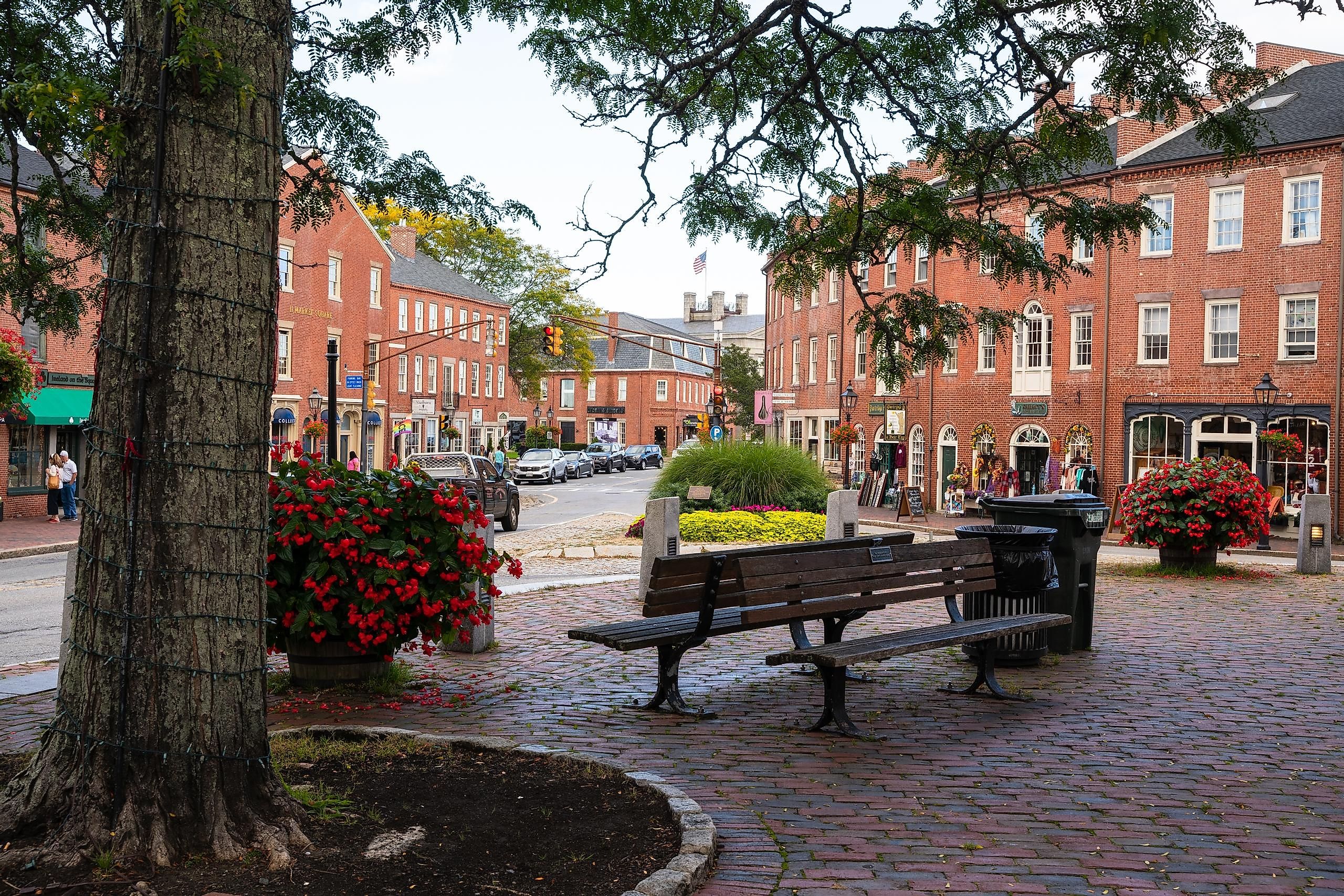
Settled in the 1630s, Newburyport grew into a major fishing and trading port on the Merrimack River, with its downtown clustered around State Street and Market Square. The Great Fire of 1811 leveled much of that district, and builders rebuilt it in the brick that still lines the streets. A renewal push in the 1970s remade the historic center into the shopping and dining destination it is now.
Follow State Street toward Market Square and you pass cafes, restaurants, bars, boutiques, and river views, all set against brick sidewalks and well-kept storefronts. The Coffee Factory is a popular stop for sandwiches and locally roasted coffee before a browse through nearby shops like Soak & Shoreline, with its seasonal goods, bath and beauty products, and loungewear. At Brine Oysters, Crudo, and Chops the kitchen leans on the seaside heritage with fresh seafood, and the bartenders at Bar25 NBPT mix cocktails a few steps from the water.
Provincetown

Commercial Street grew up along Cape Cod Harbor as Provincetown took shape as a fishing and maritime community. In the early years, fishermen used the side streets branching off it as landing spots to unload the daily catch. As the town spread, Commercial Street became its main artery and arts hub, and it now runs past historic buildings, galleries, restaurants, and shops.
Commercial Street stays busy year-round, and events like the Provincetown Book Festival and the Canteen Holiday Market pull in locals and visitors alike. The galleries mark the town's standing as an arts destination, among them the Julie Tremblay Gallery, with its range of paintings, sculpture, and photography. At The Shell Shop, the seaside roots show in a huge collection of shells and coastal souvenirs. On the water, the bartenders at the Aqua Bar keep a long list of cocktails, beers, and wines, while the cooks at The Squealing Pig plate wings, calamari, fish and chips, sandwiches, and other pub standards.
Rockport

Shipbuilding, fishing, and granite quarrying built Rockport, and those industries shaped the town's economy for generations. Main Street took hold as the heart of downtown and now forms part of the Rockport Downtown Main Street Historic District, its preserved buildings standing alongside an active arts and cultural scene.
Galleries, studios, and performance venues line the street, and the creative pull is no accident. Cape Ann's coastal light and harbor views have drawn painters for generations, part of what made Rockport one of the state's best-known art colonies. Curators at the Rockport Art Association & Museum rotate exhibitions by regional artists, and the Shalin Liu Performance Center puts concerts on stage with the Atlantic behind the players. Feather & Wedge suits an upscale dinner before a show, and next door the counter at Robin's Nest scoops fresh gelato for a wander through the galleries.
Where Massachusetts History Meets Main Street
What ties these eight streets together is that people still use them. A visit might mean coffee and a bookstore one afternoon and a waterfront dinner or a live concert the next, and the mix shifts with the seasons as festivals and holiday markets fill the sidewalks. The whaling money, the shoe factories, and the granite quarries are gone, but the downtowns that money built are still working downtowns, which is what makes an afternoon on any of them worth the walk.