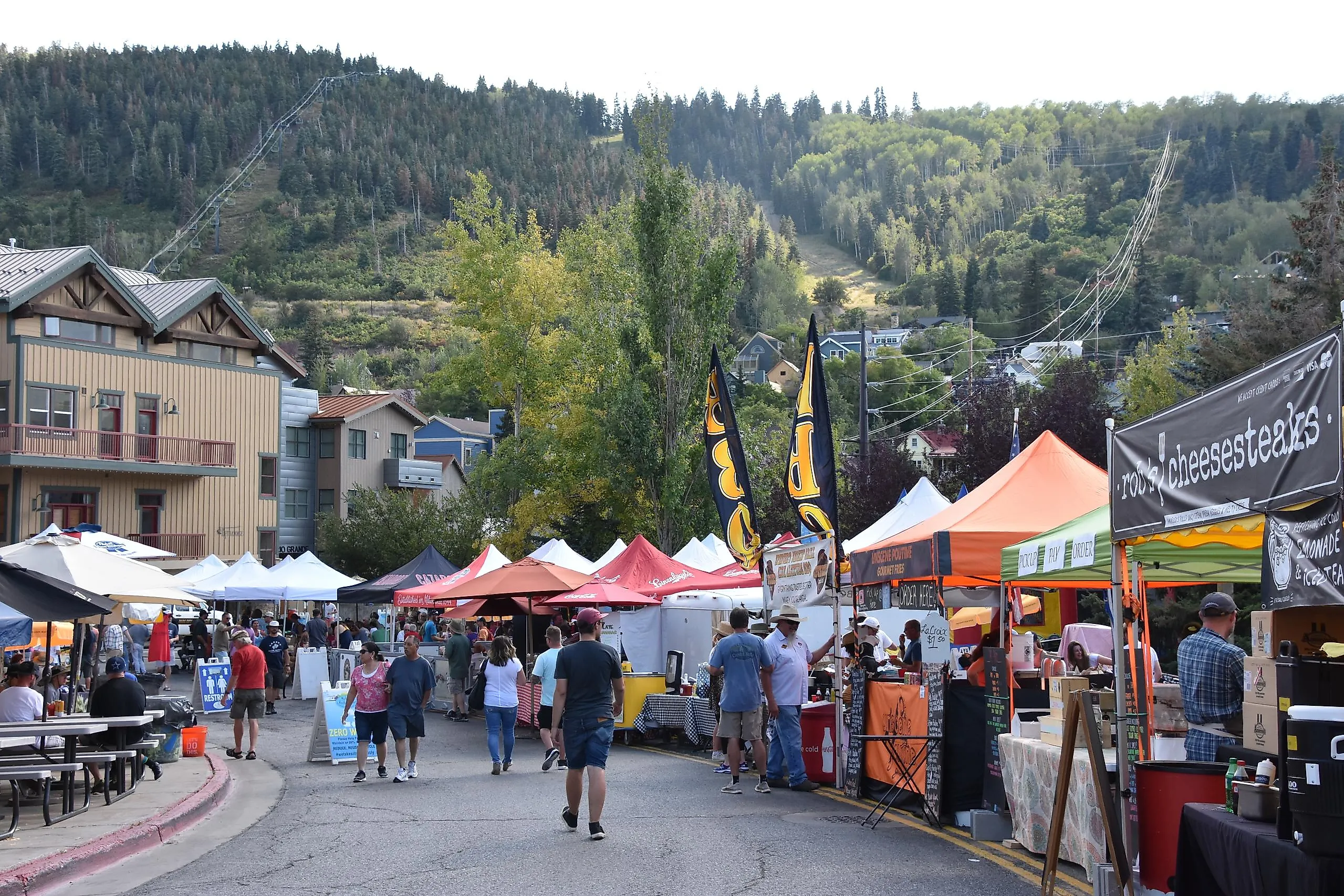
7 Towns in the Rockies with Vibrant Downtown Areas
A good downtown in the Rockies shows itself with an antler arch over the square or a brick opera house on the main street. A gondola climbs the mountain off the last block of shops. Steam drifts off a hot springs pool a block from the bars. On a summer night, a band plays and the brick plaza becomes a dance floor. The crowds swell in season and empty out between, but the downtown is the constant.
Jackson, Wyoming

Four arches of shed elk antlers mark the corners of Jackson's town square. Galleries and boutiques line the wooden boardwalks around it. The Million Dollar Cowboy Bar seats drinkers on saddle-topped barstools. The 1941 Wort Hotel still books live music on the corner.
All summer, actors stage the Jackson Hole Shootout on the square six evenings a week. It is the longest continuously running gunfight reenactment in the US. The cast walks over from the Jackson Hole Playhouse a block away. Grand Teton and Yellowstone are a short drive out. Jackson is also the most expensive town in Wyoming, in the wealthiest county in the country, and the people working the square mostly commute in over the pass.
Telluride, Colorado

Telluride's downtown is a National Historic District. The Victorian storefronts along Colorado Avenue date to the late 1800s mining boom. The Sheridan Opera House has staged shows for over a century, and the old miners' hospital is now the historical museum. A free gondola lifts off the main street to Mountain Village, no charge.
Telluride packs its festival season into a few downtown blocks. Bluegrass takes over Town Park each June, and the Film Festival books the theaters over Labor Day. On those festival weekends, the box canyon fits far more people than its few streets were built for. Up the canyon, Bridal Veil Falls drops 365 feet, and the slopes open for winter.
Whitefish, Montana

Every February, Whitefish marches a Winter Carnival parade down Central Avenue. The Arts Festival takes the same streets in early July. The town dates to 1904, with a compact, walkable core of shops and cafes.
The 1928 Great Northern depot at the north end of downtown is now the free Whitefish Museum. Railroad and logging crews built the bars and storefronts along Central Avenue. In July, Glacier-bound traffic backs up through downtown, and short-term rentals have priced out a lot of longtime locals. The ski resort climbs Big Mountain, and the 47-mile Whitefish Trail starts minutes off the avenue in the Montana forest.
Taos, New Mexico

More than 80 galleries cluster within a few blocks of the Plaza in Taos. Low adobe buildings ring the open square, with shops and summer music. The Harwood Museum of Art is a short walk off the Plaza, with works from the Taos colony and a room of Hispanic santos. Adobe lines nearly every street downtown.
On summer Thursdays, free concerts play the Plaza gazebo for Taos Plaza Live. Hotel La Fonda de Taos, the only hotel on the Plaza, shows D.H. Lawrence's once-banned paintings. The Fiestas de Taos claim the square each July, fiesta queen and all. Taos Pueblo lies just north, lived in for a thousand years and closed to outsiders for about ten weeks every late winter, with the gorge bridge and ski valley under New Mexico's highest peak farther out.
Canmore, Alberta

Canmore closes its main street to cars all summer and hands it to walkers and an open-air market. Cafes and patios line the downtown blocks. The Canmore Museum and the old Mounted Police barracks tell the coal and railway history a block off the strip. The town started in 1883 as a railway stop and took its name from King Malcolm III of Scotland.
The Canmore Folk Music Festival lands in downtown Centennial Park every August long weekend, the longest-running folk festival in Alberta since 1978. A free concert on the Friday spills out onto the streets. Canmore is also one of the most expensive towns in Canada, and the main blocks can feel hollow on a winter weeknight when the weekend homes stand empty. The Three Sisters and Mount Rundle stand at the end of every downtown street, and the 1988 Olympic Nordic trails lie farther up the valley.
Steamboat Springs, Colorado

The Pro Rodeo Series rides into downtown Steamboat Springs on summer weekends. Century-old brick buildings line Lincoln Avenue, the main drag. Western-wear shops and saloons share the blocks with the restaurants.
Old Town Hot Springs steams in the middle of downtown, fed by mineral water year-round. F.M. Light and Sons has sold western wear from the same Lincoln Avenue storefront since 1905, with a model horse out front. Between ski season and summer, the town drops into mud season, when many of the downtown restaurants close for a few weeks. Steamboat Resort climbs Mount Werner a few miles out, under the dry snow it trademarked as "Champagne Powder."
Fernie, British Columbia

Brick buildings line the downtown streets of Fernie, with cafes and taphouses below. An independent movie theater shows films a few doors down. The 1911 courthouse still stands on the main blocks. The taphouses pour for the plaid-and-toque crowd after a day on the hill.
Most of downtown dates to 1908, rebuilt in fireproof yellow brick after a fire leveled the town in 90 minutes. The Arts Station, the old CPR depot, is now home to a gallery and a 100-seat theater, with free concerts in the square on summer Wednesdays. Twice a year, after the ski hill closes and again before the snow, the town drops into a quiet shoulder season. Fernie Alpine Resort and the Elk River start where the storefronts end.
Main Street, Mountain Time
Mountain scenery gets the postcards, but these towns put their energy at street level. Jackson clears its square for the evening gunfight. Canmore gives its main street to walkers every summer. Steamboat puts a rodeo a block from the shops, and Fernie pours its beer under a 1911 courthouse. A few are pricey, and some go dark between seasons. What lasts is the row of storefronts at the bottom of the climb.