The 10 Hottest Cities In Europe
The hottest city in Europe is not Athens, and it is not on the Mediterranean at all. It is Cordoba, in southern Spain, an inland city where a typical July afternoon reaches about 37 degrees Celsius (99 degrees Fahrenheit), where 10 to 15 days each July clear 40 degrees, and where in July 2022 the monthly average high hit 40.4 degrees, the highest ever recorded for a European city of over 100,000 people. Spain owns most of this ranking, the Balkans supply the challengers, and every city on the list has spent centuries designing its life around the same daily fact: the afternoon is not your friend. Here are Europe's ten hottest cities, ranked by how hot they reliably get, not by any single scorching day.
The Guadalquivir Furnace
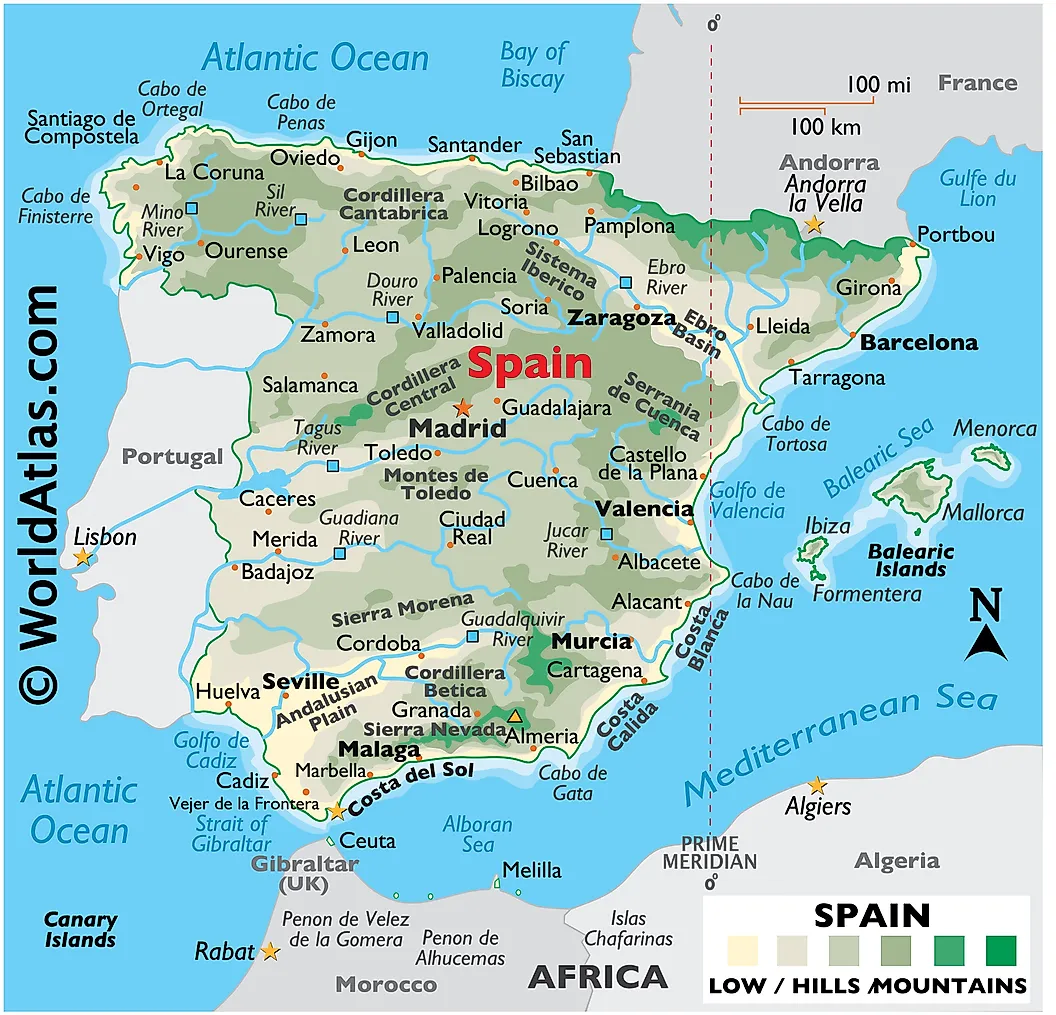
Cordoba and Seville sit in the Guadalquivir Valley, a lowland trap where the Sierra Morena to the north and the Baetic ranges to the south wall out cooler air while the summer subtropical high keeps the sky cloudless for weeks. The Atlantic breeze that rescues the Spanish coast gives up long before it gets here. Cordoba, at roughly 37 degrees Celsius for a normal July high, has recorded 46.9 degrees at its airport station, and the locals respond with the oldest technology available: thick stone walls, shaded patios, and a July exodus toward the coast that empties whole neighborhoods.

Seville, downstream at about 36 degrees, has turned heat management into civic policy. In 2022 it became the first city in the world to give heat waves official names, starting with Zoe, on the logic that a named threat gets taken seriously. And the region saves its best nickname for little Ecija between them, known for centuries as la sarten de Andalucia: the frying pan of Andalusia. When your neighbors are Cordoba and Seville and you are still the frying pan, you have earned the title.
The Rest Of Spain's Oven

Spain does not stop at two. Badajoz, on the Portuguese border in Extremadura, runs a typical July high around 35 degrees Celsius with rainfall in July that barely registers. Murcia, in the arid southeast, holds around 34 degrees in one of the driest corners of the continent. And Madrid, at about 33 degrees, proves altitude only helps at night: Europe's highest major capital, at about 650 meters (2,130 feet), bakes through the afternoon and then cools sharply after dark, the classic rhythm of the high Spanish plateau. Four of the ten hottest cities in Europe fly the same flag, which settles the continental argument before it starts.
The Balkan Heat Belt

Athens holds the eastern flank at about 34 degrees Celsius for a typical July afternoon and is often described as the hottest capital on the European mainland. Greece's capital compounds the climate with concrete: dense construction and scarce green space trap heat overnight, which is why in 2021 Athens appointed Europe's first chief heat officer, a job title that says everything about where summers are headed.

Podgorica, capital of Montenegro, comes in around 33 degrees, cooked in a basin near Lake Skadar about 22 miles from the Adriatic, with the Rumija massif blocking the sea's moderating breath. Skopje, capital of North Macedonia, sits in a similar mountain-rimmed valley at about 32 degrees. And Albania's Tirana just misses the table while managing a genuine oddity: it is simultaneously one of Europe's wettest capitals by annual rainfall and one of its hottest in high summer, because nearly all that rain falls when the sun is off duty.
The Island And The Boot
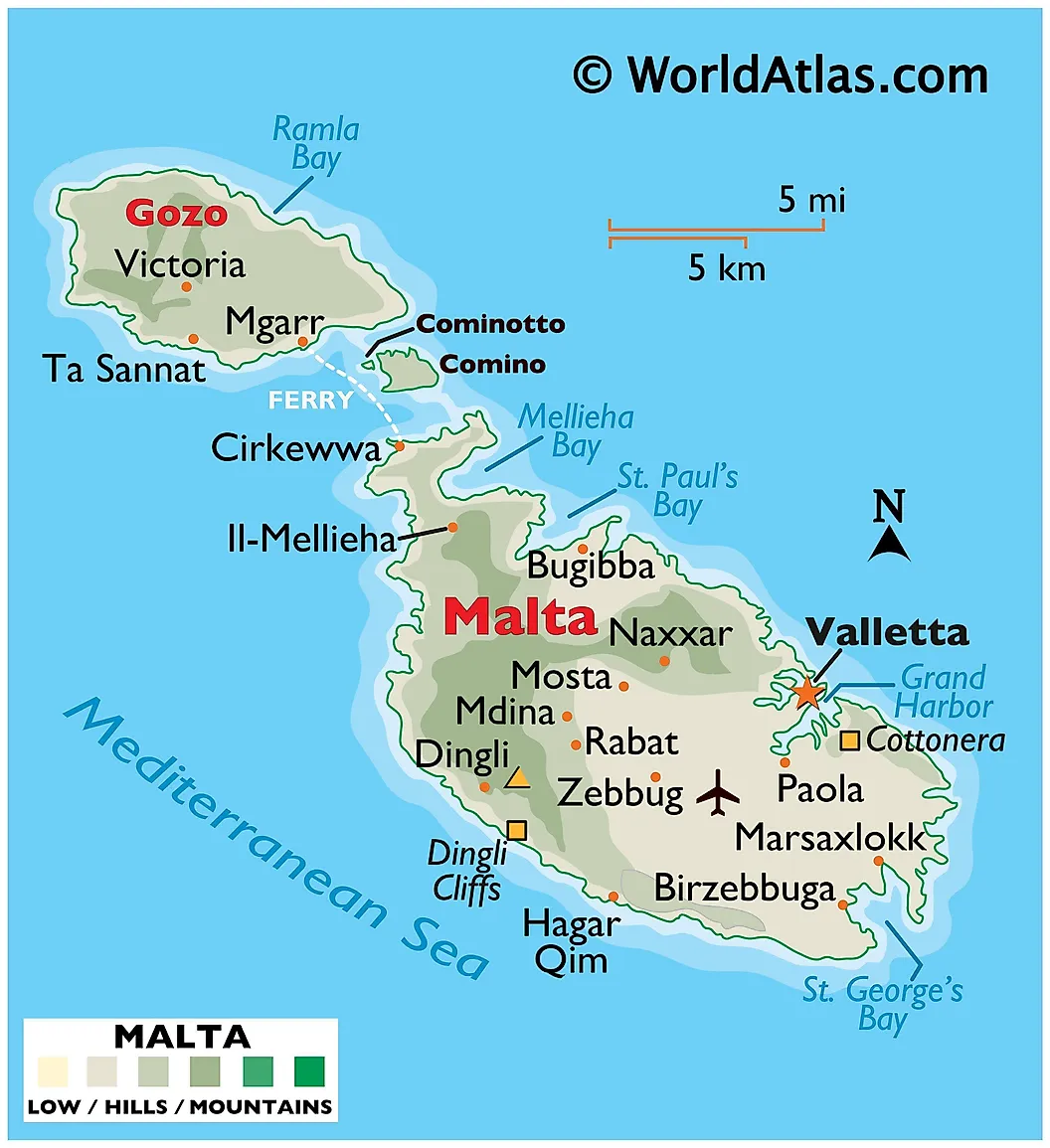
Valletta rounds out the list at about 32 degrees Celsius, and raw numbers undersell Malta: surrounded by a warm sea, the capital pairs its heat with humidity that makes July feel heavier than the thermometer admits, in exchange for winters so mild they qualify as a rumor. Rome closes the top ten at roughly 31 degrees, where the heat arrives with big-city extras: sun-soaked stone, crowds, and the famous nasoni drinking fountains, which run cold all summer and explain themselves within five minutes of any July afternoon walk in the Italian capital.
Europe Is Heating Faster Than Anywhere

The ranking above is a moving target, because Europe is the fastest-warming continent, heating at roughly twice the global average rate according to the World Meteorological Organization and the EU's Copernicus climate service. The continent's all-time temperature record, 48.8 degrees Celsius (119.8 degrees Fahrenheit), was set near Syracuse in Sicily on August 11, 2021, and has been formally verified by the WMO. Research points the same direction: a 2018 Newcastle University study of 571 European cities projected substantially worse heat waves and droughts across southern Europe in the decades ahead, with cities like Almeria, Malaga, Athens, Madrid, and Lisbon among the most exposed. The named heat waves and heat officers are early adaptations, and the cities on this list are effectively running the pilot program for everyone else.
Ranked By The Reliable Afternoon
A record heat wave can strike anywhere; what defines these ten cities is the heat that shows up on schedule. Cordoba wins because its ordinary July would be another city's emergency, Spain stacks the top half through simple geography, and the Balkan capitals prove a mountain basin can out-bake a beach. The table below ranks them by typical July afternoon temperatures.
The 10 Hottest Cities In Europe
| Rank | City | Country | Typical July Afternoon High (°C) |
|---|---|---|---|
| 1 | Cordoba | Spain | ~37 |
| 2 | Seville | Spain | ~36 |
| 3 | Badajoz | Spain | ~35 |
| 4 | Murcia | Spain | ~34 |
| 5 | Athens | Greece | ~34 |
| 6 | Podgorica | Montenegro | ~33 |
| 7 | Madrid | Spain | ~33 |
| 8 | Skopje | North Macedonia | ~32 |
| 9 | Valletta | Malta | ~32 |
| 10 | Rome | Italy | ~31 |
Figures are rounded long-term July climate normals drawn from national meteorological services; cities on adjacent ranks with matching values are effectively tied.