7 Main Streets Where Atlantic Coast Comes Alive
From the Canadian north to the beaches of Florida, the Atlantic Coast is defined by salt air, fishing boats, and a history dating back to the first settlers on the continent. These thriving towns showcase grand Victorian mansions in Cape May, an iconic red fishing shack in Rockport, and the quiet charm of a Canadian fishing village in Saint Andrews. What makes these small towns come alive are the same things that make them stand out, whether that be the bustling boardwalk in Rehoboth Beach or the pirate artifacts found in Beaufort. These 7 main streets are where the vibrant life and history of the Atlantic coast come alive.
Commercial Street (Provincetown, Massachusetts)

Provincetown sits at the very tip of Cape Cod. For centuries, it was a prosperous Portuguese fishing community with Commercial Street as its bustling main drag. By the early 20th century, the town had become a magnet for writers, painters, and playwrights of all types. Today, Provincetown is both a celebrated arts town and a landmark example of Atlantic coastal culture and community.

Walking the full length of Commercial Street, you'll find art galleries, fish houses, and quirky boutiques that coexist in cheerful harmony. In the late afternoon, you can take your pick of the fresh-caught fish and lobster brought in by the fishing fleet. Make sure to climb the historic Pilgrim Monument for amazing views of the Cape and the town below.
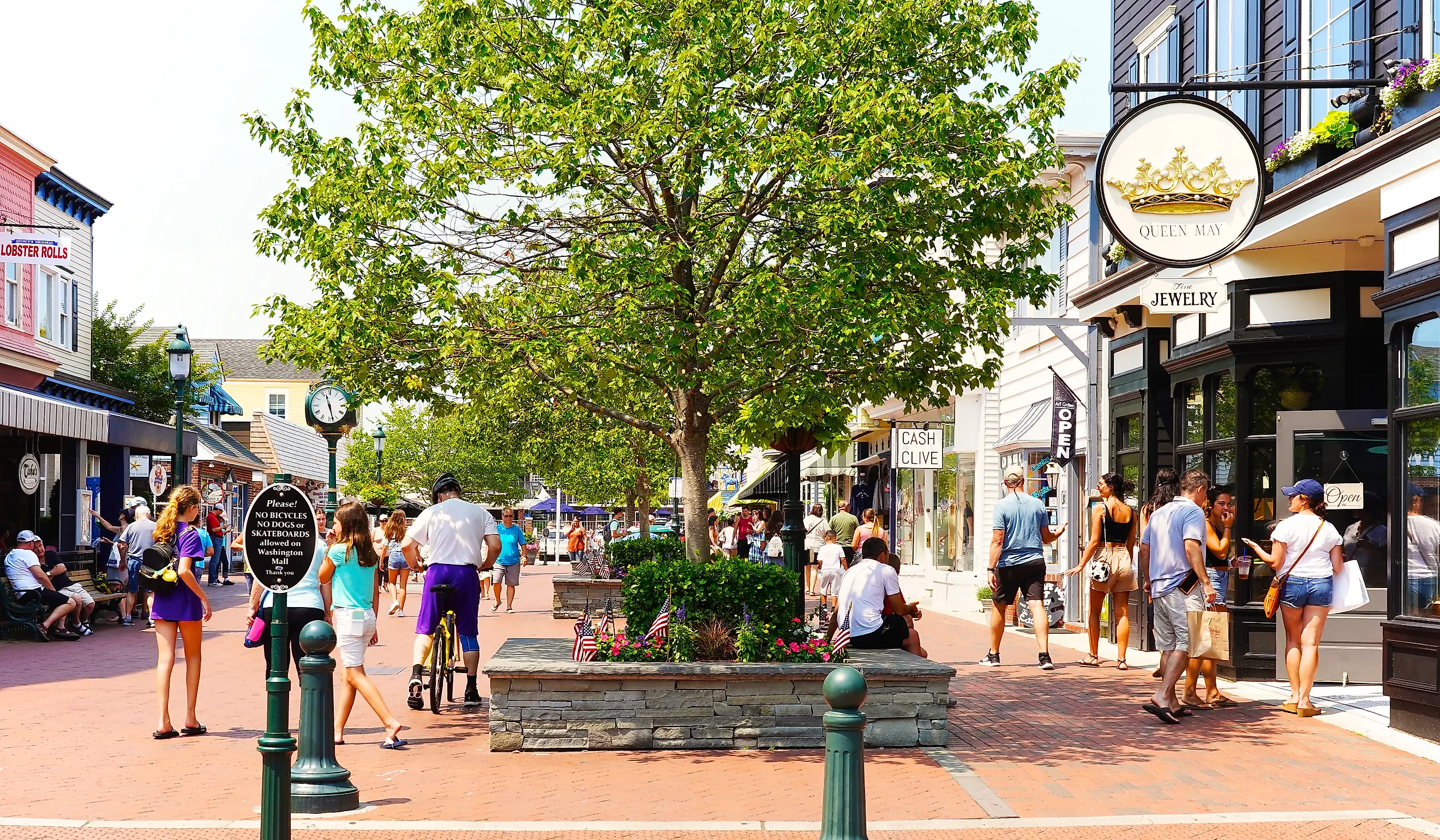
Washington Street Mall (Cape May, New Jersey)

Cape May is one of the oldest seaside resort towns in the US, attracting tourists as far back as the early 1800s. Back then, everyone, from Philadelphia politicians to farmers from the south, arrived by steamboat to enjoy the town's many beaches.

Washington Street, the town's main commercial corridor, was reimagined in the 1970s as a pedestrian mall, which saved Cape May's historic downtown from demolition and sparked a preservation renaissance that transformed the town into a National Historic Landmark City. The street is closed to car traffic, purpose-built to be pedestrian-friendly and easily accessible from all directions. You'll find plenty of art galleries, restaurants, and vintage boutiques housed in some of the best-preserved Victorian architecture in the US. Be sure to climb to the top of Cape May Lighthouse to take in the sweeping views of the Delaware Bay and the Atlantic.
Main Street (Rockport, Massachusetts)

Rockport's Main Street developed as the natural hub of what was then a hardworking fishing and quarrying town. By the late 19th century, artists had discovered the village's dramatic rocky coastline and the iconic red fishing shack known as Motif No. 1, apparently the most-painted building in America. Rockport slowly transformed into a beloved arts colony, attracting artists from around the world. While the original building was destroyed and subsequently rebuilt in 1978, the tiny red fishing shack remains one of the most iconic features of the town.

Speaking of art, no walk down Main Street is complete without visiting the Rockport Art Association & Museum. It's a perfect encapsulation of how the town's coastal charm has inspired generations. Bearskin Neck splits off from Main Street and is lined with more galleries, chowder shacks, and fantastic views of the Atlantic coast.
Water Street (Saint Andrews, New Brunswick)

Saint Andrews by-the-Sea is one of the oldest towns in Canada, founded in 1783 by British Loyalists who sailed north after the American Revolution. Water Street became the commercial spine of this loyalist town and thrived for centuries. Today, several 19th-century heritage buildings are remarkably intact. When the Canadian Pacific Railway arrived, Saint Andrews reinvented itself as a fashionable summer resort town for wealthy city folks.

After taking in all the shops, restaurants, and heritage architecture on Water Street, walk to Katy's Cove or Ministers Island, or get on the water and take a whale-watching tour from the town wharf into the Bay of Fundy to potentially see some of the world's most majestic creatures up close.
Thames Street (Newport, Rhode Island)

Newport was founded in 1639 and quickly grew into one of the most prosperous coastal towns in colonial America, rivalling Boston and New York in trade. Thames Street was the waterfront heart of that commerce, lined with counting houses, taverns, and chandleries. It quickly declined, but in the 1880s, it was reborn as the summer playground of America's wealthiest families, who built legendary mansion cottages on the hills above the town.

When you arrive, take your time and explore the boutiques, seafood restaurants, and historic taverns along Thames Street. Make sure to walk the Cliff Walk, a 3.5-mile trail that traces the coastline behind the Gilded Age mansions, with dramatic ocean views throughout. Finally, visit Bowen's Wharf just off Thames Street for fresh oysters, harbor views, and access to sailing charters and bay tours.
Rehoboth Avenue (Rehoboth Beach, Delaware)

Rehoboth Beach was established in 1873 as a Methodist camp whose Methodist origins gave way to a secular resort town by the early 20th century. Rehoboth Avenue became the town's lively commercial main street as the town became a favorite escape for Washington, D.C. residents.

A stroll on Rehoboth Avenue from the bandstand to the ocean will bring you past ice cream parlors, independent shops, and casual seafood spots that define the town's easy-going character. One thing you must try is Thrasher's French Fries, a Rehoboth institution for over 90 years. Or if fries aren't your thing, try the award-winning blue crab dishes at one of Rehoboth's many seafood restaurants.
Front Street (Beaufort, North Carolina)

Beaufort is one of the oldest towns in North Carolina, incorporated in 1722. Front Street runs along Taylor's Creek, facing Carrot Island, and has been the town's waterfront commercial heart for three centuries. Beaufort was a prosperous port in the colonial era and is deeply connected to the famous pirate Blackbeard, whose flagship, the Queen Anne's Revenge, was discovered just offshore in 1996.

There's still plenty to do for foodies, such as sampling the fresh-caught clams, shrimp, and blue crabs at the waterfront restaurants along Front Street. Nature lovers will enjoy taking a ferry or kayaking across Taylor's Creek to Carrot Island to see the free-roaming wild horses up close. Finally, make sure to visit the North Carolina Maritime Museum to see artifacts from Blackbeard's Queen Anne's Revenge and to learn more about Beaufort's storied history.
Each of these 7 legendary Atlantic coast main streets is shaped by its unique relationship with everything from fishermen, artists, Gilded Age socialites, founding fathers, and notorious pirates. History here is alive in the buildings you walk past, in the food on your plate, and in the salty air in the breeze. Whether you visit them all in one grand coastal journey or discover them one summer at a time, these main streets reveal the sense of a place that has known itself since the beginning of time, glad to share that knowledge with anyone who shows up and is willing to pay attention.