7 Breathtaking Towns to Visit in New England
Eastport, Maine, is the easternmost city in the United States, and the largest tidal whirlpool in the Western Hemisphere churns just off its shore. That is the kind of thing New England keeps in its small towns without making much noise about it. Bennington has the tallest structure in Vermont and the grave of Robert Frost within a short walk of each other. Monhegan Island has no cars, nine miles of trails, and cliffs dropping 160 feet into the Atlantic. Newport has a cliff-edge footpath that runs behind the back lawns of Gilded Age mansions. Seven towns, seven very specific reasons to go.
Bennington, Vermont

Bennington was chartered in 1749, the first town in what became Vermont, and the Bennington Battle Monument marks it from a distance. The obelisk runs 306 feet, which makes it the tallest structure in the state. Here is the twist: the 1777 battle it commemorates was fought about ten miles west, across the line in New York. What stood on this ground was the supply depot the British were marching toward, and failing to take it helped set up the American victory at Saratoga.
Old First Church anchors the green in Old Bennington. The congregation gathered in 1762, making it the first Protestant congregation in the state, though the meetinghouse you see went up in 1805. Robert Frost is buried in the cemetery behind it. Up the road, the Bennington Museum holds the world's largest collection of Grandma Moses folk art, alongside a 1925 Martin Wasp automobile built in town and one of the oldest surviving American flags. Covered bridges cross the Walloomsac River just outside the village, and the galleries and theater downtown keep the place from feeling like a museum piece.
Eastport, Maine

About 1,300 people live on Moose Island, and a causeway means you can drive there. The Old Sow whirlpool sits in the Western Passage offshore, roughly 250 feet across when it is working, driven by a 20-foot tidal range pushing water between Passamaquoddy Bay and the Bay of Fundy. Time your visit for about three hours after low tide and you can watch it from the waterfront.
Maine's sardine industry ran more than a dozen canneries here in the late 1800s, and the money built the downtown, where 29 buildings are on the National Register. Raye's Mustard Mill still grinds mustard seed on granite stones, the last traditional stone-ground mustard mill in the country. The WaCo Diner has been serving since 1924 and bills itself as the oldest diner in Maine. Eastport Windjammers runs whale-watching trips of about three hours, Shackford Head State Park climbs to a headland 173 feet above Cobscook Bay, and the Tides Institute and Museum of Art anchors an arts scene improbably large for the population. On New Year's Eve the town drops a giant sardine.
Madison, Connecticut

Madison sits on the Connecticut shoreline with about 18,000 residents and a town green big enough to lose a frisbee on. The E.C. Scranton Memorial Library faces it, and the downtown around it runs to bookshops, a small cinema, and cafes rather than chains.
The real draw is Hammonasset Beach State Park at the east end of town, the largest shoreline park in Connecticut, with roughly two miles of sand plus salt marsh, woodland, and a boardwalk out over the wetlands. Nature Center exhibits explain what lives in the marsh; the campground fills fast in July. Beyond the beach, town-owned woodland trails start within a few minutes of the shops, which is the part people underestimate.
Monhegan Island, Maine

Monhegan lies about ten miles offshore, covers roughly a square mile, and has no cars. Ferries run from Port Clyde, New Harbor, and Boothbay, and they do not take vehicles. Lobster boats still work out of the harbor, and the village clusters at one end of the island: a handful of inns, a store, a couple of galleries.
Everything else is the Wildlands. Ted Edison, son of the inventor, helped form Monhegan Associates in 1954, and the land trust now protects about three-quarters of the island and maintains roughly nine miles of trails. Follow them east and you reach White Head and Black Head, cliffs standing about 160 feet over the water and among the highest in Maine. Seals haul out on the ledges below and black guillemots nest on the rock. At Lobster Cove the rusting hull of the tugboat D.T. Sheridan has been on the beach since it grounded in 1948. Painters have worked here since the mid-1800s, and the Monhegan Museum of Art and History, up by the lighthouse, shows what they made of it.
Newport, Rhode Island

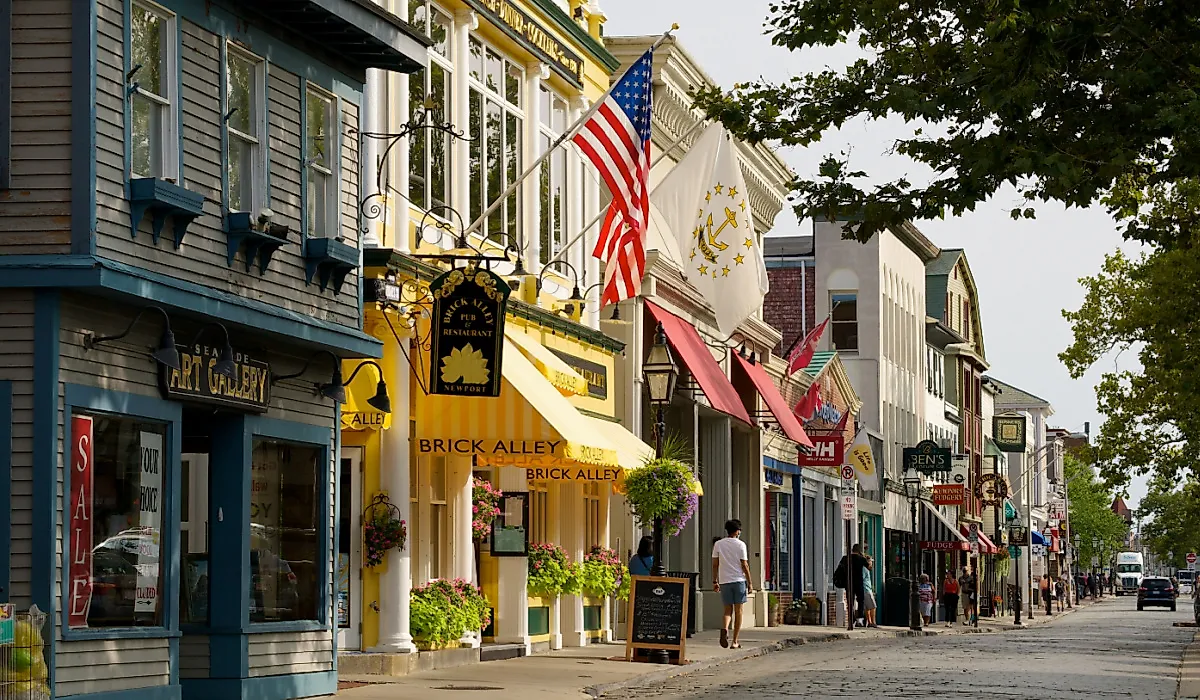
The Cliff Walk runs three and a half miles along the eastern shore with the Atlantic on one side and the back lawns of Bellevue Avenue on the other. That is the whole appeal of Newport in one path: the summer houses that America's richest families built during the Gilded Age are open to anyone with a ticket, and the footpath past them is free.
The Preservation Society maintains the big houses, The Breakers and Marble House among them, as museums. Ocean Drive loops about ten miles around the point for anyone who would rather see it from a bike. Down on Thames Street the working harbor takes over, with taverns that predate the mansions by a century and a half, and the wharves still full of boats.
North Conway, New Hampshire

The Conway Scenic Railroad still runs out of North Conway's 1874 station, a Victorian building with a cupola that looks too ornate for a town this size, because when it was built the railroad was betting on tourists. That bet paid off. Trains head north into Crawford Notch on excursions that hang over the drop-offs.
The White Mountains do the rest. The Kancamagus Highway starts in Conway and runs 34.5 miles west through the national forest, and in October the traffic on it is a spectacle of its own. Cathedral Ledge and Whitehorse Ledge draw rock climbers to granite faces right above the valley. Cranmore Mountain sits at the edge of the village for skiing, with a mountain coaster running in summer, and the Eastern Slope branch of the New England Ski Museum covers how the sport took hold in these valleys. Schouler Park hosts free summer concerts, and the swimming holes on the Saco River handle August.
Siasconset, Massachusetts

Locals call it Sconset, and it sits about seven miles east of Nantucket town at the far end of the island. It began as a fishing station, and the oldest cottages are exactly what that suggests: small, weathered, shingled, now buried under climbing roses that bloom in early summer. A paved bike path runs out along Milestone Road, which is the best way to arrive.
The Bluff Walk starts near the village and follows a public right of way north between the cottages and the edge of the bluff, with the ocean below and other people's gardens beside you. It ends near Sankaty Head Light, the red-banded tower that was moved back from the eroding bluff in 2007 because the cliff was coming for it. The beach at the bottom of Milestone Road has lifeguards and no amenities whatsoever, and the surf runs heavy.
Picking Between Them
These seven split cleanly by what you want the trip to cost you in effort. Newport, Bennington, and North Conway you can drive to and work in a weekend. Madison rewards a day of doing very little. Eastport takes real commitment, since it is about as far northeast as the country goes, and that is exactly why the whirlpool and the mustard mill still feel like discoveries. Monhegan and Sconset both require leaving the car behind, which turns out to be the point: an island with no roads and a village where the best path runs behind the houses give you the version of New England that cannot be seen through a windshield.