6 Old-Timey Mining Towns In California
Between 1848 and the early twentieth century, California had all sorts of mining camps chasing gold through creek beds and river gravels, then into quartz ledges buried in the hills. Hydraulic monitors blasted slopes, and stamp mills operated in narrow canyons. Some mining camps vanished when the ore ran out. Others were rebuilt or gradually turned into county seats. More than anything, these towns survived, molded and shaped by mining. Look at Placerville’s blocks that sprang up from the ashes of fires, or Sierra City’s granite sliced by old ditches. These parts of history still influence daily life, long after the stamp mills have gone quiet. Read on to learn about 6 old-timey mining towns in California!
Downieville

Gold discoveries along the North Yuba River in 1849 turned this steep canyon into one of the largest settlements in the northern Sierra. Placer claims came first, then hydraulic operations chewed into nearby hillsides and pushed debris through long ditches or wooden flumes. Profits funded brick commercial blocks and hotels, while stone buildings rose along Main Street. One of the town’s earliest, a 1852 stone store that survived repeated fires, now houses the Downieville Museum. Here, claim maps hang beside old equipment and survey tools, plus it has photographs taken before floods and fires reduced the population.
Main Street runs next to the Downie River, with classic, old-time buildings for people to see. Many head to eat or relax at Two Rivers Cafe, where you can grab things like burgers or pizza after spending the day outdoors. There are many excellent hikes available near the town, like the Second Divide Trail, as an example, or the further off Frazier Falls Trail. Summer weekends feel far removed from the old gold boom era, with rafts drifting down the river and mountain bikers arriving for the Downieville Downhill route.
Sutter Creek

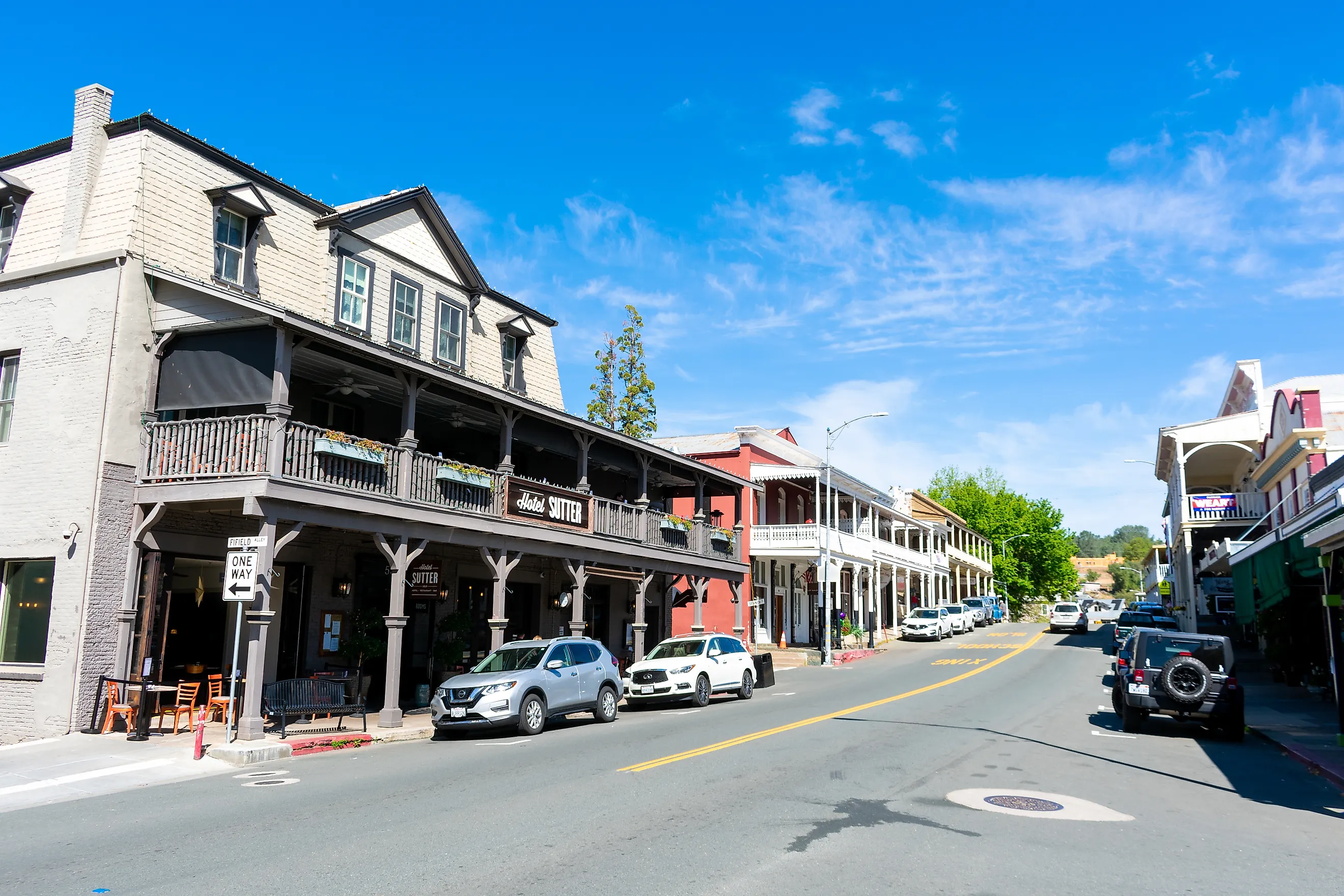
Gold seekers first worked the creek near this town during the early 1850s, yet the real money sat in quartz veins buried in the hills above town. Soon after it was discovered, shafts multiplied. Stamp mills pounded ore along the outskirts. Foundries kept drills and stamp heads moving across Amador County. When extraction finally slowed, the town’s storefronts stayed busy, and the town survived, which explains how its core still has that classic 19th-century look and feel.
If you are passing through, stop at the Hotel Sutter in the middle of town, and appreciate how even now, the commercial core revolves around this classic heritage building. The Knight Foundry museum sits just past the edge of downtown, with its casting pits and drive belts that once fueled mines across the Mother Lode. Head south from Sutter Creek toward Jackson to tour the Kennedy Gold Mine, where the massive headframe and surface mining structures remain. It is one of the best places in the region to really take in that old mining history.
Angels Camp

Every May, the Calaveras County Fair & Jumping Frog Jubilee bustles with people, all coming to see the frog jumping contest. The spectacle grew out of a mining camp that Mark Twain turned into a national joke in the 1860s. When the mining camp started, miners worked placer pits along Angels Creek, but soon enough, companies dug deeper and set up stamp mills to smash the tough rock hauled straight from the hills nearby. Shops along Main Street kept trading after major operations shut down, and the center of town never completely emptied.
Begin your visit at the Angels Camp Museum, where its galleries trace Gold Rush history through wagon collections and interactive displays set across landscaped historic grounds today. Head back toward Main Street for lunch at Pickled Porch Cafe, or head over and browse Nellie Lou’s Antiques. Then, swing through nearby Vallecito and take the ride over to the Natural Bridges Trail, a walk that goes right alongside the creek and passes some eye-catching limestone shapes. Or, you can drive south to Carson Hill, which used to be a Gold Rush mining spot where fenced-off shafts and piles of old stone are scattered around the hills.
Placerville

Miners crowded the ravines around today’s Placerville in 1848 to wash flakes and nuggets from Weber Creek, a rush that earned the camp its first nickname, Hangtown, for its vigilant justice. Wooden sluices lined the stream banks. Hydraulic monitors later tore into nearby hillsides once surface gravel ran thin, and tunnels followed hard rock deposits upslope. While that vigilant justice earned the camp a rough reputation, mining was what shaped the town far more, establishing a permanent and stable commercial district.
The town’s Main Street is home to blocks of brick buildings, some rebuilt after repeated nineteenth-century fires. Stop by the El Dorado County Historical Museum, where they display pick heads, claim notices, and some old maps for all to see. If you stroll over to the Fountain and Tallman Soda Works Building, you will spot stone walls and iron fittings that stuck around from the 1850s bottling site serving miners. Grab lunch at Buttercup Pantry or Powell’s Steamer Co., then just head east for a quick drive to the El Dorado Trail, a bike and walking route that heads right through the local foothills.
Sierra City

Miners pursued gold finds around the Sierra Buttes into cold, high-altitude ravines in 1850, where they were digging in icy streams and river gravels, and discoveries there led to the founding of Sierra City. Early miners worked along the upper North Yuba River, beginning with placer deposits before tunneling into nearby slopes, as surface gold was exhausted. An avalanche destroyed the original settlement in 1853, forcing the town to rebuild at a lower elevation.
When you come through town, head over to Main Street to see all sorts of old-timey buildings. After, head up the hill to visit the Kentucky Mine Historic Park and Museum. There, you can observe old stone foundations and fenced mine shafts. Then, head over to Sardine Lake Resort for some seasonal eats right in the high-elevation lakes near Sierra Butte. Kick up your feet at Sorracco’s Saloon, home inside a historic hotel building, and get some refreshing drinks. Or, try out the Red Moose Cafe & Inn, which has meals and lodging for travelers and locals in town.
Weaverville

Weaverville was founded in 1850 during the California gold rush and once had more than 10,000 residents at its peak. Logging and gold mining once drove the economy, though tourism and government employment now play the largest roles. Mining history is not hard to spot around the historic district and inside places like the Jake Jackson Museum, where stamp-mill demos and changing exhibits nail down the past. Some may say the Taoist Joss House, which started in 1853 and got a new look in 1874, is still open for visitors and stands as California’s oldest continually used Chinese temple, and an anchor for Chinese-American heritage in the region.
People love to visit the long-running Weaverville Hotel, a place with a reputation for classic American luxury coupled with modern features. If you need a nice morning coffee, Mamma Llama Eatery and Cafe offers a cup to start your day off on a relaxed note. The town also has some serious energy to it, as weekends get busy with live music at Trinity County Brewing Company. Lastly, drive to the trailheads at the Weaverville Joss House State Historic Park, where, during springtime, creekside paths fill with purple lupine flowers.
Mining’s story is one of the crucial forces that shaped California as we know it today. It influenced where people started towns, which direction streets went, and even which communities stuck around after the wild chase for gold faded. Now, if you feel an urge to explore some of California’s most legendary mining towns, these towns are the place to be! Snag your mining gear, hop in the car, and roll out.