6 Hawaii Towns Where Time Stands Still
When spending time in Hawaii, it helps to understand the Aloha Spirit, a way of life rooted in care for others and the world around us. In Kaunakakai, visitors can stroll along the state’s longest pier and stop at Kanemitsu Bakery for its famous “hot bread”. In Hana, the reward for navigating the winding Hana Highway is Waiʻānapanapa State Park, where striking black sand beaches and sea caves highlight Maui’s rugged coastline. If you want a Hawaii town where time seems to stand still, you should consider the 6 communities below.
Hanalei, Kauai

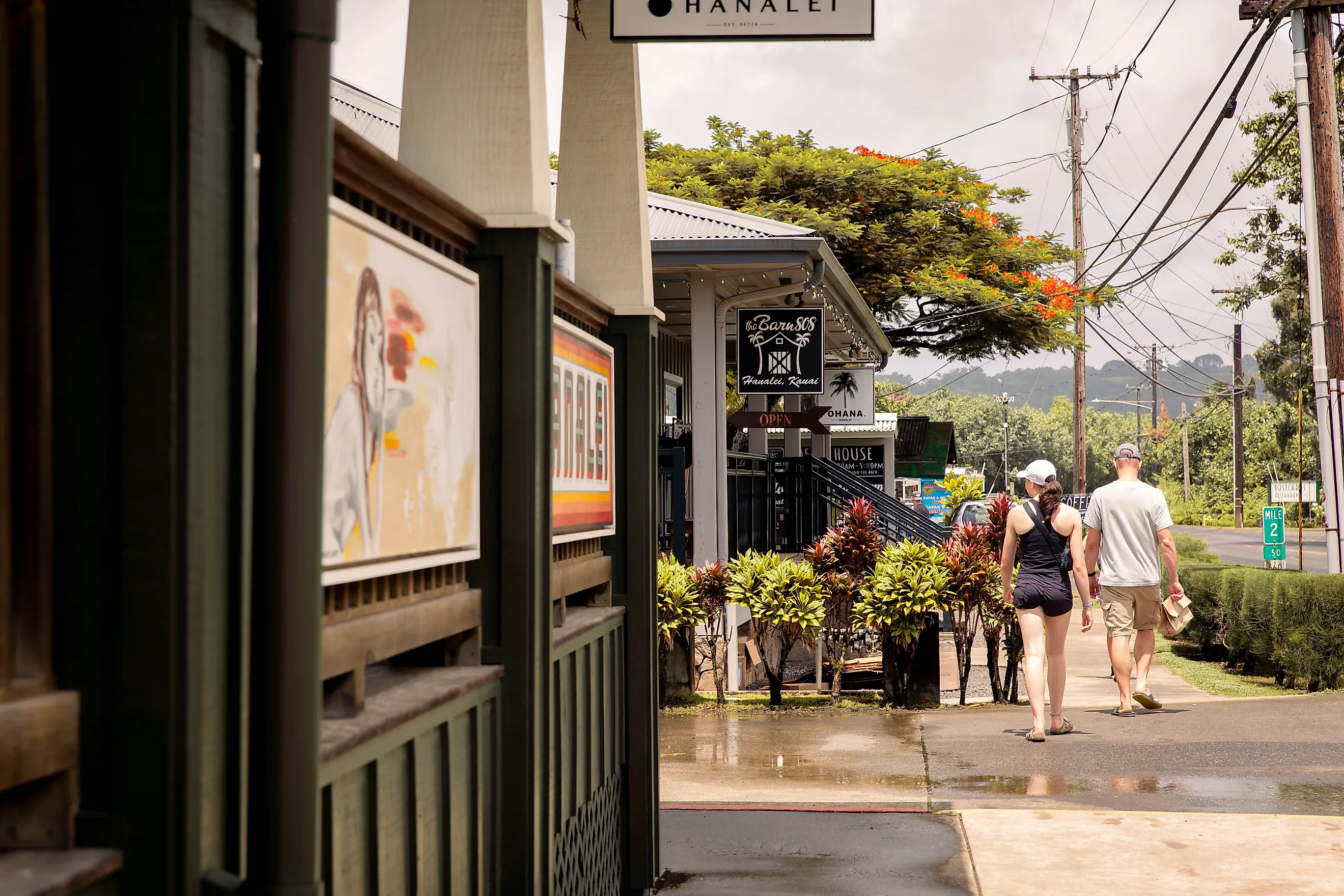
Sitting on a horseshoe-shaped bay between lush mountains and Kauai’s north shore, Hanalei stands front and center to represent the “kindness, expressed with tenderness” that is an aspect of the Aloha Spirit. Hanalei’s natural beauty is preserved by strict building regulations and the single-lane bridge, which keeps the hustle and bustle of the outside world at bay. The town itself has a rich history of fishing and farming taro. More modern influences brought cattle rearing, rice farming, and the sandalwood trade to this peaceful town. The construction of the Hanalei Pier in 1892 helped to support the booming rice industry, and thus earned itself a concrete facelift in 1912.
In Hanalei’s downtown, the e Waiʻoli Huiʻia Church, constructed in 1834 by missionaries, proves its luster to this day, being one of the most photographed historic buildings in the entire state. The greatest marvel of the region proves to be Hanalei Bay, a shore worthy of gnarly tides for surfing in the winters, and tranquil waters for swimming in the summer months.
Lānaʻi City, Lānaʻi

Towering 1,700 feet (0.5km) above sea level, Lānaʻi City sits in the heart of Lanai, the Pineapple Island. Built in the 1920s to house plantation workers, this city served as a firm foothold for Dole’s contentious enterprise in Hawaii (providing a massive share of the world's commercial pineapple supply for several decades).
While the reputation for its founders is far from harmonious, Lānaʻi City serves as a testament to the Aloha Spirit element of Lōkahi, “unity, expressed with harmony." The resilience and togetherness of the people, from modern plantation workers to ancient fishing practices captures the essence of this virtue perfectly.
An attraction that begs not to be overlooked, The Lānaʻi Cat Sanctuary, is the perfect spot for animal lovers. Home to hundreds of cats, this is the place for feline hospitality. For a deep dive into the transition from ancient fishing village to pineapple plantation, stop by the Lānaʻi Culture & Heritage Center. When seeking a retreat from the coastal heat, Dole Park is the place to be, serving as a respite during the high heat of summer.
Hawi, Big Island

On the northern tip of the Big Island, Hawi’s bright and colorful storefronts and welcoming art community serve as an exemplar of "agreeableness, expressed with pleasantness” that is Oluʻolu, another aspect of the Aloha Spirit.
Once the bustling and rugged core of the Kohala Sugar Company, Hawi’s old plantation buildings have been converted into galleries and boutiques. Near Hawi, in the village of Kapaʻau, King Kamehameha I was born. He unified the Hawaiian islands into one royal kingdom. The King Kamehameha Statue, erected in 1880, proudly stands for his legacy in nearby Kapaʻau.
The perfect stop for any coffee lover, the Kohala Coffee Mill is a commercial staple of the town, serving Kona coffee and tropical ice creams out of a historic building. After getting yourself refreshed and caffeinated, a short hike to the scenic Pololū Valley Lookout is home to some of the most beautiful views in the state. Looking out over the steep cliffs of the Kohala coast, the crystal blue of the sky meets the lush green of the forests in the seafoam-turquoise waters.
Kaunakakai, Molokai

On the appropriately nicknamed “the friendly isle of Molokai, Kaunakakai is home to a warm and vibrant community. Embodying the Aloha element of Haʻahaʻa (humility, expressed with modesty), the town itself is a stalwart beacon of resistance to modernity. Lacking traffic lights and hosting simple wooden storefronts, Kaunakakai remains true to its people and its heritage. Kaunakakai is the perfect place to slow things down.
In the 1860s, King Kamehameha V erected a vacation home on Molokai, planting the Kapuāiwa Coconut Grove, one of the last royal coconut groves of Hawaii. The massive palms feel symbolic of the town’s resistance to change and preservation of heritage. The longest pier in the state, Kaunakakai Pier, extends beyond the reef and serves as a stopping point for many fishermen and inter-island ferries. Ask anyone in this fairy-tale-esque town where to go for an evening snack, and they will point you toward Kanemitsu Bakery. Famous for its “hot bread,” a large, pillowy, and sweet white-flour bun, served hot and stuffed with cream cheese and fruit jams. This comforting treat will have you ready to float your way to the next island by the evening.
Hana, Maui

To get to Hana, many vistors navigate the famous 52 mile (84 kilometer) Hana Highway, which winds over 600 curves and dozens of single-lane bridges, but this Hawaiian odyssey is worth every turn. The “patience, expressed with perseverance” of Ahonui (another element of Aloha) somewhat speaks for itself in the journey alone; in its remoteness, it has tightly preserved its cultural traditions. While the world around it sped up, Hana stayed Hana.
Hana served for decades as a major sugar plantation on Maui, before pivoting to cattle ranching in the 1940s with the opening of the Hana Ranch. The Hasegawa General Store (established in 1910) serves as the backbone for the community. Family-run and operated, they sell everything from snacks to tackle. When seeking an exploration of the community’s history and artifacts, the Hana Cultural Center is the place to be, hosting vintage photography and quilts of yore.
The unparalleled beauty of Hana’s remote environment is displayed in the Waiʻānapanapa State Park. From the beautiful coastline, which plays host to striking black-sand beaches and sea caves, to the burial sites of ancient Hawaiian ancestors, this wonder of nature should not be passed over.
Kōloa, Kauai

Kōloa is the site of Hawaii’s first successful sugar mill, established in 1835. The Old Sugar Mill Monument sits as a tribute that fueled the island's economy for over a century. This booming sugar production brought immigrants from China, Japan, and the Philippines, shaping Hawaii’s modern multicultural identity and tying all of the values of the Aloha Spirit together.
The Koloa Heritage Trail is the perfect escape for a 10-mile self-guided trail that hits 14 significant sites, including the ruins of the original sugar mill. Additionally, with its East and Southeast Asian influences, you can find one of the oldest Buddhist temples in the United States, Koloa Jodo Mission, standing the test of time and illustrating the diverse spiritual heritage of the plantation workers. Meanwhile, Old Koloa Town’s well-preserved plantation era architecture makes it an appealing destination to walk through history, while perusing local arts and crafts.
Embracing the Aloha Spirit
Hawaii is far from a simple archipelago that functions on “island time,” it is a diverse mix of environments, culture, and history that beget any visitor to slow down and embrace the virtues of the Aloha Spirit; showing kindness to locals and fellow travelers, practicing humility in these small towns, and demonstrating patience with the wildlife (and the weather), are what separate tourism from immersion. When you find yourself immersed in Hawaiian nature, sitting on one of its beautiful beaches, or wading through the jungle on a hike, remember the virtues that compose the Aloha Spirit. Slow down and enjoy yourself.