This Is The Most Welcoming Town In Hawaii
Hilo stands out for the way daily life still runs through its downtown streets, long-standing markets, and family-run restaurants. About 45 minutes from Hawai‘i Volcanoes National Park, the town has grown as a working center shaped by fishing and agriculture, sustained by families who have lived here for generations. Residents still grab their morning coffee at Ken’s House of Pancakes, swap stories at the Kinoole Farmers Market on Saturdays, and support independent shops that have lined these streets for years. That continuity is what gives Hilo its reputation as one of the most welcoming towns in Hawaii, a place where daily life unfolds in public and newcomers fit in naturally.
A Downtown Built Around Local Life

Hilo’s historic downtown runs along the edge of Hilo Bay in a stretch of plantation-era storefronts that now hold art galleries, cafes, and long-standing local businesses. Shops like Sig Zane Designs, known for their Hawaiian prints and cultural motifs, and Big Island Candies, a beloved confectionery that has produced its signature macadamia shortbread and chocolates since 1977, reflect the district's deep-rooted local ownership.

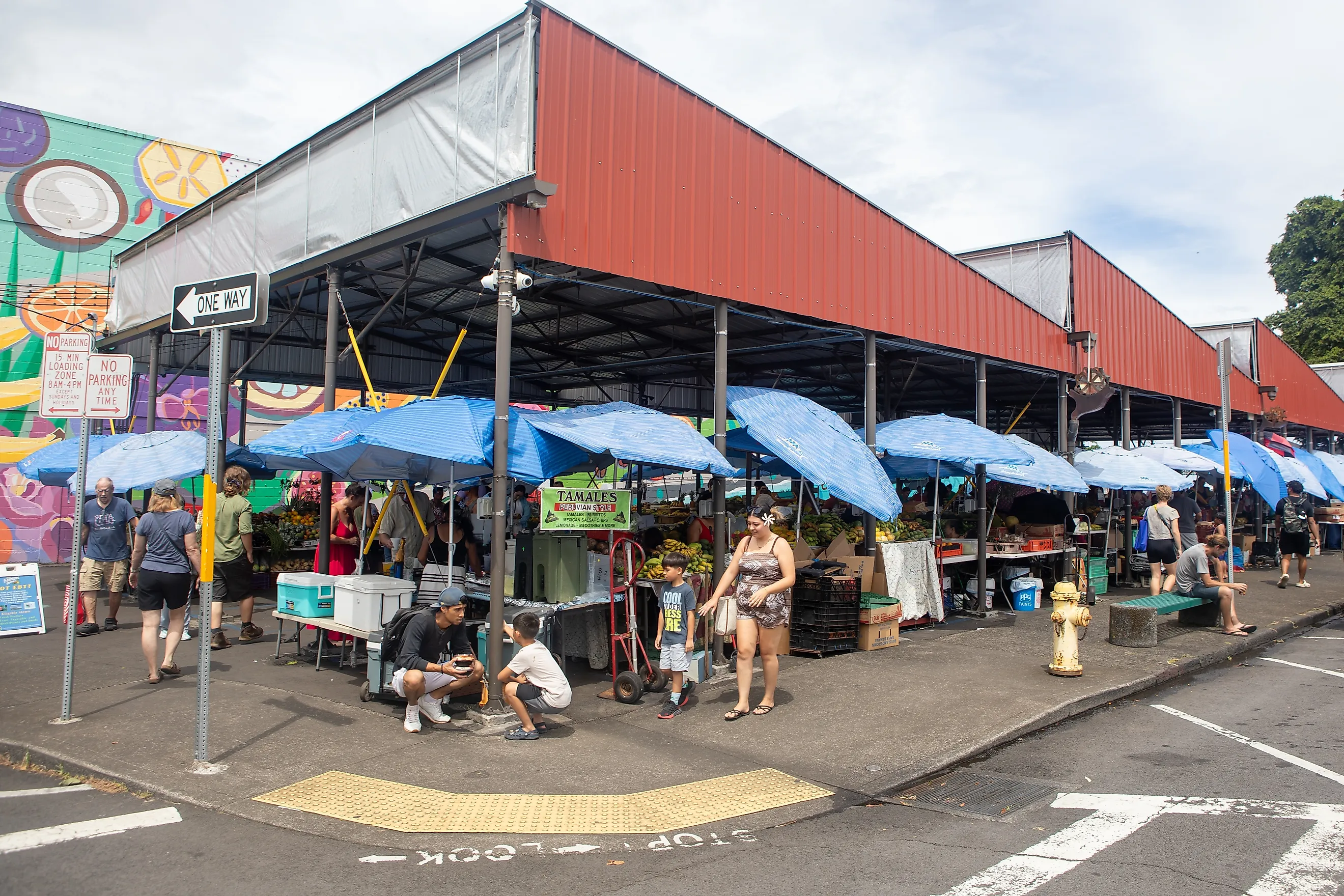
A few blocks inland, the Hilo Farmers Market is open seven days a week, with the largest “big market days” on Wednesdays and Saturdays, with rows of tropical fruit stalls, island jams, orchid growers, and handmade crafts such as koa wood and etched glass, alongside hot food vendors. Residents come for papayas, poke bowls, and flowers, greeting farmers by name and enjoying samples.
Around it, art centers such as Wailoa Center showcase Big Island artists and host community events. Together, they show how Hilo’s downtown continues to run on local makers, growers, and shopkeepers rather than national chains.
Where Hilo Locals Go to Eat
Food in Hilo reflects the same local continuity. Long-running spots like Cafe 100, established in 1946 and known for the classic Hawaiian comfort dish Loco Moco, still draw multi-generational families and travelers alike. Newer restaurants such as Moon and Turtle bring contemporary island cooking into intimate, chef-run spaces.
Along the waterfront, Hilo Bay Cafe faces directly onto Hilo Bay, with wide windows and an open lanai overlooking the shoreline. The kitchen focuses on locally sourced fish and produce, and by sunset, most of the tables are taken.
Festivals and Traditions

Hilo’s annual calendar is filled with events rooted in community traditions, many of which you can experience throughout the year. The most recognized is the Merrie Monarch Festival, a weeklong celebration of hula, Hawaiian language, and cultural practices held each spring at the Edith Kanaka‘ole Stadium. The festival’s internationally respected hula competition brings together top hālau (hula schools) from across Hawaii and beyond, with performances judged on traditional chant, dance, and costume. Although it draws audiences from the United States and around the world, much of the participation and support comes from local island residents.
Other long-standing traditions continue to bring residents together throughout the year. Hilo Bayfront Beach Park area regularly hosts canoe regattas such as the Moku O Hawai’i Outrigger Canoe races, along with fishing tournaments, and seasonal fairs.
Scenic Natural Landmarks

You do not have to plan a long outing to see Hilo’s natural landmarks, as several of the island’s best-known spots sit within a few minutes of downtown. Just up the road from downtown Hilo along the Wailuku River, Rainbow Falls drops approximately 80 feet over a lava cave, and you can reach the main overlook from a short, paved path near the parking area. On sunny mornings, mist often catches the light, forming rainbows above the falls. Interpretive signs at the lookout share local legends about the cave beneath the falls, adding cultural context to the quick stop. Along the bayfront, Liliʻuokalani Gardens spans 24.67 acres of shoreline, with arched bridges, koi ponds, and shaded walking paths. Many locals and tourists come here for walks, shoreline fishing, and family picnics, with wide views across Hilo Bay toward Mauna Kea on clear days.

Just upstream from Rainbow Falls, Boiling Pots shows another side of the Wailuku River, where tiered lava basins fill and churn during heavy rains. Overlooks and short trails provide safe viewpoints of this volcanic landscape, adding another easy natural stop within minutes of town. After storms, the surging water levels make the churning “pots” particularly dramatic to watch from the fenced viewpoints. Swimming is unsafe here, and there are no lifeguards on duty, so it is best to simply enjoy the views from the overlooks and trails within Wailuku River State Park.
Small Towns to Visit Nearby

About an hour north of Hilo, Honokaʻa sits along the Hamakua Coast, with a single main street lined with early-1900s wooden storefronts. The restored Honokaʻa People’s Theatre still shows movies, and most of the shops and cafes remain locally owned.
Visitors can park once and walk the length of downtown in minutes, stopping at a local bakery or a family-run restaurant such as Andrade’s Honokaa Cafe before continuing. A short drive beyond town leads to Waipiʻo Valley Lookout, one of the island’s most dramatic coastal viewpoints, often paired with a stop in Honokaʻa for lunch or supplies.
Closer to Hilo, Laupāhoehoe sits on a narrow point of land formed by old lava flows. At Laupāhoehoe Point Beach Park, people come to fish from the rocks, set up picnic tables under the pavilions, or watch the surf roll in against the cliffs. A small train museum near the park documents the sugar-era railway that once ran along this stretch of coast. Stops like this along the Hamakua Coast reflect the island's slower, rural side, which still shapes daily life outside Hilo.
Why Hilo Feels So Welcoming

Hilo’s welcoming feel comes from continuity, not curated tourist gloss. Many businesses are still family-run, and it is common to see the same faces behind counters at decades-old spots like Cafe 100 or at neighborhood markets like the Hilo Farmers Market, where residents stop in daily. Community events from Merrie Monarch Festival to weekend canoe regattas along Hilo Bayfront are organized primarily for local participation, with visitors naturally blending into the crowd.
For travelers, that creates a different kind of experience in Hawai’i. You are not entering a resort zone designed for visitors but a working coastal town where everyday routines continue unchanged. After a few days, the familiarity becomes noticeable, from greeting the same barista to recognizing vendors at the market. That familiar pace is what makes Hilo feel genuinely welcoming, and why many visitors feel at home.